Custom Walk in Leiden, Netherlands by cleggellen_3ca434 created on 2025-12-21
Guide Location: Netherlands » Leiden
Guide Type: Custom Walk
# of Sights: 6
Tour Duration: 1 Hour(s)
Travel Distance: 2.2 Km or 1.4 Miles
Share Key: HQX97
Guide Type: Custom Walk
# of Sights: 6
Tour Duration: 1 Hour(s)
Travel Distance: 2.2 Km or 1.4 Miles
Share Key: HQX97
How It Works
Please retrieve this walk in the GPSmyCity app. Once done, the app will guide you from one tour stop to the next as if you had a personal tour guide. If you created the walk on this website or come to the page via a link, please follow the instructions below to retrieve the walk in the app.
Retrieve This Walk in App
Step 1. Download the app "GPSmyCity: Walks in 1K+ Cities" on Apple App Store or Google Play Store.



Step 2. In the GPSmyCity app, download(or launch) the guide "Leiden Map and Walking Tours".
Step 3. Tap the menu button located at upper right corner of the "Walks" screen and select "Retrieve custom walk". Enter the share key: HQX97

1) Molen de Valk (Windmill de Valk) (must see)
Nineteen mills have been built on the walls of Leiden. Only the Windmill de Valk stands today. The original mill, De Valck (the Falcon) was built in 1611 on the Valkenburger bulwark. It was replaced by a wooden tower mill in 1667. In 1743 a higher tower mill was installed. The mill had to be high above neighboring houses to catch the wind.
The ground floor of the mill and the two attached buildings held kitchens and living quarters for two families. Bedrooms were located on the first and second floors. The third floor was used for storage. The actual milling took place from the fourth floor (46 feet high) to the top of the mill (92 feet high).
The uppermost floor is called the cap loft. The cap, or roof of the mill, can be turned to catch favorable winds. A large round bearing with rollers is used. The sail axle turns in the cap. It has a nine-foot brake wheel and brake pads. The cap loft is closed to the public. The rolling wheels and gears make things a tad risky for tourists.
The hoisting loft holds the hoisting machinery that lifts sacks of grain to the top of the mill. Inside the mill is a system of hatches in a line, one above the other. The grain is hoisted through the hatches into silos. Grain is poured from the silos to the grinding stones in the stone loft. Only one pair of stones is used today.
The grinding loft is the miller's workplace. From the loft gallery, he judges the wind and turns the cap accordingly. By adjusting the sails, he can control the speed of the mill. Here is where the sacks are filled, weighed, and tested.
In the Windmill de Valk, the first, second, and third floors are exhibition rooms. The first floor holds the exhibit "The Mill, the symbol of Holland." The second floor tells the story of the Leiden Millers' guilds and the history of de Valk. The third floor features the entire history of milling and the different types of mills.
The living room is a formal family room, a parlor. The Windmill de Valk was turned into a municipal museum in 1966.
The ground floor of the mill and the two attached buildings held kitchens and living quarters for two families. Bedrooms were located on the first and second floors. The third floor was used for storage. The actual milling took place from the fourth floor (46 feet high) to the top of the mill (92 feet high).
The uppermost floor is called the cap loft. The cap, or roof of the mill, can be turned to catch favorable winds. A large round bearing with rollers is used. The sail axle turns in the cap. It has a nine-foot brake wheel and brake pads. The cap loft is closed to the public. The rolling wheels and gears make things a tad risky for tourists.
The hoisting loft holds the hoisting machinery that lifts sacks of grain to the top of the mill. Inside the mill is a system of hatches in a line, one above the other. The grain is hoisted through the hatches into silos. Grain is poured from the silos to the grinding stones in the stone loft. Only one pair of stones is used today.
The grinding loft is the miller's workplace. From the loft gallery, he judges the wind and turns the cap accordingly. By adjusting the sails, he can control the speed of the mill. Here is where the sacks are filled, weighed, and tested.
In the Windmill de Valk, the first, second, and third floors are exhibition rooms. The first floor holds the exhibit "The Mill, the symbol of Holland." The second floor tells the story of the Leiden Millers' guilds and the history of de Valk. The third floor features the entire history of milling and the different types of mills.
The living room is a formal family room, a parlor. The Windmill de Valk was turned into a municipal museum in 1966.
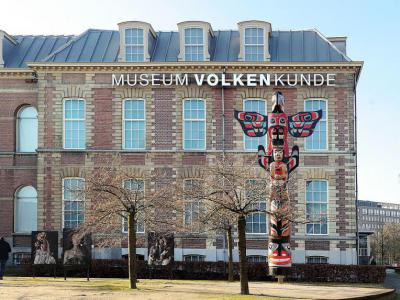
2) Wereldmuseum Leiden (World Museum) (must see)
The National Museum of Ethnology in Leiden, now known as the World Museum (Wereldmuseum Leiden), is a premier Rijksmuseum in the Netherlands. Located in the historic university city of Leiden, it is a cornerstone of the National Museum of World Cultures, alongside its sister institutions in Amsterdam and Rotterdam. Established with a mission beyond the simple accumulation of curiosities, the museum has consistently emphasized scientific research, public presentation, education, and cultural preservation since its inception.
The museum's origins date back to 1816 with the Royal Cabinet of Rarities in The Hague. In the 1830s, Philipp Franz Balthasar von Siebold contributed around 5,000 Japanese artifacts, forming the core of the museum’s collection and cementing Leiden as a center for ethnographic studies.
The museum officially opened in 1837 under the name Ethnographic Museum (Museum voor Volkenkunde). Its early collections also included significant acquisitions from Jan Cock Blomhoff and Johannes Gerhard Frederik van Overmeer Fischer, whose contributions were merged with Siebold’s gift to form a comprehensive representation of Japanese culture. These collections were drawn from Japan's isolationist period when foreign trade and interaction were confined to the island of Dejima.
Siebold’s influence extended beyond Leiden. In 1843, he advocated for the establishment of ethnographic institutions across European colonial powers, seeing them as crucial tools for understanding colonized peoples, fostering public interest, and enhancing trade relations. His vision shaped the museum's mission to provide deeper insights into global cultures.
Today, the museum’s collection spans the globe, with artifacts from Africa, China, Indonesia, Japan, Korea, Latin America, North America, Oceania, and Asia. These objects illustrate the historical evolution of diverse cultures and underscore the museum's commitment to representing humanity's shared heritage.
Rebranded as World Museum (Wereldmuseum) in 2023, the institution continues to engage audiences with its vast and evolving collections. Its legacy as the first European museum to present ethnography as a scientific and cultural pursuit remains central to its identity. By connecting past and present, the museum inspires dialogue and understanding of world cultures, making it an invaluable resource for researchers, students, and the public alike.
The museum's origins date back to 1816 with the Royal Cabinet of Rarities in The Hague. In the 1830s, Philipp Franz Balthasar von Siebold contributed around 5,000 Japanese artifacts, forming the core of the museum’s collection and cementing Leiden as a center for ethnographic studies.
The museum officially opened in 1837 under the name Ethnographic Museum (Museum voor Volkenkunde). Its early collections also included significant acquisitions from Jan Cock Blomhoff and Johannes Gerhard Frederik van Overmeer Fischer, whose contributions were merged with Siebold’s gift to form a comprehensive representation of Japanese culture. These collections were drawn from Japan's isolationist period when foreign trade and interaction were confined to the island of Dejima.
Siebold’s influence extended beyond Leiden. In 1843, he advocated for the establishment of ethnographic institutions across European colonial powers, seeing them as crucial tools for understanding colonized peoples, fostering public interest, and enhancing trade relations. His vision shaped the museum's mission to provide deeper insights into global cultures.
Today, the museum’s collection spans the globe, with artifacts from Africa, China, Indonesia, Japan, Korea, Latin America, North America, Oceania, and Asia. These objects illustrate the historical evolution of diverse cultures and underscore the museum's commitment to representing humanity's shared heritage.
Rebranded as World Museum (Wereldmuseum) in 2023, the institution continues to engage audiences with its vast and evolving collections. Its legacy as the first European museum to present ethnography as a scientific and cultural pursuit remains central to its identity. By connecting past and present, the museum inspires dialogue and understanding of world cultures, making it an invaluable resource for researchers, students, and the public alike.

3) Hortus Botanicus (Botanical Garden) (must see)
The Botanical Garden is one of the oldest gardens in the Netherlands and one of the oldest in the world. It is located in the southwestern part of the historical center of Leiden, by the old Observatory. The Garden was authorized for the University of Leiden in 1587. It was intended for the benefit of medical students. Famous Botanist Carolus Clusius was appointed Prefect.
The original Garden, set up by Clusius, held more than one thousand species of plants. There were many new plants brought by the Dutch East India Company. Today there are more than 10,000 species from around the world thriving in different beds. There is a flesh-eating collection and collections of ancient cycads.
The University works with the Netherlands Centre for Biodiversity in the research and cultivation of endangered species of plants. Botanical Garden dates from 1744. Tropical greenhouses are from 1938 and a Winter Garden from 2000.
The Japanese Garden, which opened in 1990, reflects the exchange of plants and knowledge among cultures. The jewel in the crown of the Botanical Garden, the Amazon Water Lily, may be worshiped in the Victoria Greenhouse. A reconstruction of Clusius' original garden, based on a plant list dating from the end of the 16th century, was opened in 2009.
Once only open to students and serious researchers, the Botanical Garden is now open to the public. Admire the gardens and greenhouses and visit the cafe terrace for lunch. The Botanical Garden is also available for wedding ceremonies.
The original Garden, set up by Clusius, held more than one thousand species of plants. There were many new plants brought by the Dutch East India Company. Today there are more than 10,000 species from around the world thriving in different beds. There is a flesh-eating collection and collections of ancient cycads.
The University works with the Netherlands Centre for Biodiversity in the research and cultivation of endangered species of plants. Botanical Garden dates from 1744. Tropical greenhouses are from 1938 and a Winter Garden from 2000.
The Japanese Garden, which opened in 1990, reflects the exchange of plants and knowledge among cultures. The jewel in the crown of the Botanical Garden, the Amazon Water Lily, may be worshiped in the Victoria Greenhouse. A reconstruction of Clusius' original garden, based on a plant list dating from the end of the 16th century, was opened in 2009.
Once only open to students and serious researchers, the Botanical Garden is now open to the public. Admire the gardens and greenhouses and visit the cafe terrace for lunch. The Botanical Garden is also available for wedding ceremonies.
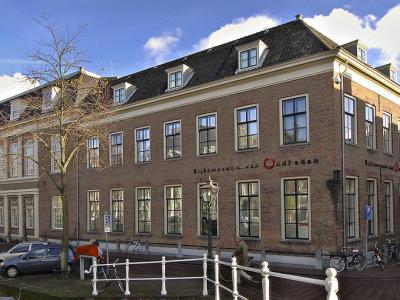
4) Rijksmuseum van Oudheden (National Museum of Antiquities) (must see)
Situated by the Rapenburg, the most beautiful canal in Leiden is a historical mansion townhouse and an old almshouse. Together, they are the National Museum of Antiquities and the National Center for Archeology. The museum is one of the five oldest museums in the Netherlands, founded by King William I in 1818.
The museum has a collection of more than 150,000 artifacts in five presentations of Rome, Egypt, Greece, Asia Minor, and the early Low Countries. The reception area is the 2000-year-old Temple of Taffeh, commissioned by the Roman Emperor Augustus. It was transported stone by stone to the museum lobby.
The museum has two rooms for rent for meetings and events; the Trojans Room and the Leemans Room. The rooms have a capacity of up to 400 visitors. The Leemans Room is next to the Temple Room. It can hold up to 70 people and it has a grand piano.
The museum features a world-class collection of Egyptian mummies and sarcophagi. The five different presentations have replicas, reconstructions, films, and media. The museum has the most extensive collection of Dutch archeological objects. They cover the history of the Netherlands from pre-historic times to the late Middle Ages.
The museum has a collection of more than 150,000 artifacts in five presentations of Rome, Egypt, Greece, Asia Minor, and the early Low Countries. The reception area is the 2000-year-old Temple of Taffeh, commissioned by the Roman Emperor Augustus. It was transported stone by stone to the museum lobby.
The museum has two rooms for rent for meetings and events; the Trojans Room and the Leemans Room. The rooms have a capacity of up to 400 visitors. The Leemans Room is next to the Temple Room. It can hold up to 70 people and it has a grand piano.
The museum features a world-class collection of Egyptian mummies and sarcophagi. The five different presentations have replicas, reconstructions, films, and media. The museum has the most extensive collection of Dutch archeological objects. They cover the history of the Netherlands from pre-historic times to the late Middle Ages.
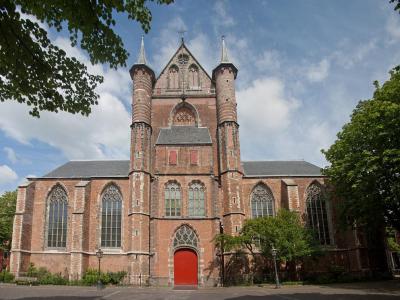
5) Pieterskerk (Saint Peter Church) (must see)
The Dutch word for "images storm" refers not to the weather, but to the inundations of violent iconoclasts that accompanied the Calvinist Reformation in the Netherlands in the 16th century. All Catholic art and images were stripped and looted from the churches. Stained glass windows were boarded up.
The pre-Reformation Saint Peter Church dated from about 1100 when the counts of Holland built a chapel on the site. The chapel was rebuilt in 1121. The current Church was completed in 1570, after 180 years of building. It opened for its first Protestant service in 1572.
Famed Dutch painter Rembrandt grew up and lived in the neighborhood of Saint Peter Church. His parents were married in the church in 1589. They are buried in front of the pulpit. Rembrandt frequented the church throughout his life. He was buried in Westerkerk in Amsterdam, in 1669.
In 1807 a devastating gunpowder explosion obliterated what was left of the stained glass windows. A major restoration was undertaken in 1880. The Saint Peter's Church was deconsecrated in 1971. With Government assistance, a long-term restoration was completed in 2010. Many artifacts, including a mummy, were unearthed.
John Robinson, the pastor of the "Pilgrim Fathers" of America, was buried in Saint Peter's Church. On October 3rd, each year, the people of Leiden offer thanks to God for saving the city in the Spanish siege of 1573. The proceedings are followed by eating herring and white bread with lots of beer.
The pre-Reformation Saint Peter Church dated from about 1100 when the counts of Holland built a chapel on the site. The chapel was rebuilt in 1121. The current Church was completed in 1570, after 180 years of building. It opened for its first Protestant service in 1572.
Famed Dutch painter Rembrandt grew up and lived in the neighborhood of Saint Peter Church. His parents were married in the church in 1589. They are buried in front of the pulpit. Rembrandt frequented the church throughout his life. He was buried in Westerkerk in Amsterdam, in 1669.
In 1807 a devastating gunpowder explosion obliterated what was left of the stained glass windows. A major restoration was undertaken in 1880. The Saint Peter's Church was deconsecrated in 1971. With Government assistance, a long-term restoration was completed in 2010. Many artifacts, including a mummy, were unearthed.
John Robinson, the pastor of the "Pilgrim Fathers" of America, was buried in Saint Peter's Church. On October 3rd, each year, the people of Leiden offer thanks to God for saving the city in the Spanish siege of 1573. The proceedings are followed by eating herring and white bread with lots of beer.

6) Burcht van Leiden (Fort of Leiden) (must see)
"Take the high ground" has long been a sound military doctrine. The viscount of Leiden, Halewijn I, understood this. He built the Fort of Leiden in 1060. But this was the Netherlands. There were no "high grounds." The fort was built as a keep, a round fortified tower. The structure's high ground was a motte, an artificial hill.
In the 11th century, the keep was rebuilt, first with volcanic tuff stone and finally with bricks. It was raised to a height of 30 feet by the 12th century. Ada of Holland, the daughter of Dirk VII, Count of Holland, took up residence in the keep. She and her husband, Louis II, Count of Loon, fought to keep her father's legacy.
The Fort of Leiden was captured by Ada's uncle William. Ada was evicted. In the 13th century, the castle became less and less important as a defense asset of Leiden. The city grew up around the base of the fort. The keep's interior, built against the inner walls, was partially dismantled. By the 17th century, it was merely a romantic symbol.
In 1651, it was decided to change the fort into a water tower for the city. The piping system leading to the city squares is still intact today. In 1662, a new portal, designed by architect Rombout Verhulst, was installed. Two other gates to the keep exist. At the south gateway, a plaque in Latin teaches basic grammar to Leiden students.
In the 11th century, the keep was rebuilt, first with volcanic tuff stone and finally with bricks. It was raised to a height of 30 feet by the 12th century. Ada of Holland, the daughter of Dirk VII, Count of Holland, took up residence in the keep. She and her husband, Louis II, Count of Loon, fought to keep her father's legacy.
The Fort of Leiden was captured by Ada's uncle William. Ada was evicted. In the 13th century, the castle became less and less important as a defense asset of Leiden. The city grew up around the base of the fort. The keep's interior, built against the inner walls, was partially dismantled. By the 17th century, it was merely a romantic symbol.
In 1651, it was decided to change the fort into a water tower for the city. The piping system leading to the city squares is still intact today. In 1662, a new portal, designed by architect Rombout Verhulst, was installed. Two other gates to the keep exist. At the south gateway, a plaque in Latin teaches basic grammar to Leiden students.
