Custom Walk in Vancouver, Canada by darryl_moir4847 created on 2026-02-03
Guide Location: Canada » Vancouver
Guide Type: Custom Walk
# of Sights: 5
Tour Duration: 1 Hour(s)
Travel Distance: 2.4 Km or 1.5 Miles
Share Key: UAN4E
Guide Type: Custom Walk
# of Sights: 5
Tour Duration: 1 Hour(s)
Travel Distance: 2.4 Km or 1.5 Miles
Share Key: UAN4E
How It Works
Please retrieve this walk in the GPSmyCity app. Once done, the app will guide you from one tour stop to the next as if you had a personal tour guide. If you created the walk on this website or come to the page via a link, please follow the instructions below to retrieve the walk in the app.
Retrieve This Walk in App
Step 1. Download the app "GPSmyCity: Walks in 1K+ Cities" on Apple App Store or Google Play Store.



Step 2. In the GPSmyCity app, download(or launch) the guide "Vancouver Map and Walking Tours".
Step 3. Tap the menu button located at upper right corner of the "Walks" screen and select "Retrieve custom walk". Enter the share key: UAN4E
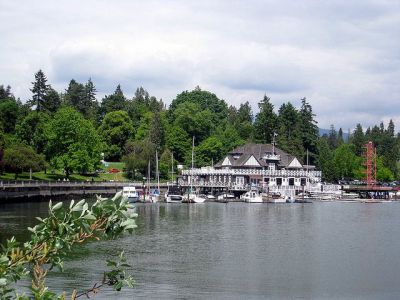
1) Stanley Park (must see)
Stanley Park, positioned in downtown Vancouver, is a sprawling urban park that spans 1,001 acres, surpassing the size of New York City's Central Park by approximately ten percent. Drawing a crowd of around two and a half million visitors annually, the park offers opportunities for cycling, skating, and leisurely strolls along its 5.5-mile seawall path.
One of the park's standout characteristics is its abundant collection of ancient trees, with nearly half a million trees gracing the landscape, some of which boast ages in the hundreds of years. The park is bordered by the Pacific Ocean on nearly all sides and encompasses Beaver Creek and Beaver Lake, vital habitats for indigenous waterfowl and various wildlife species like beavers, geese, ducks, herons, and swans. In harmonious coexistence, modern recreational facilities intermingle with untouched natural spaces, including the iconic seawall path and an extensive network of approximately 120 miles of trails.
In addition to its remarkable old growth trees and natural ecosystems, Stanley Park is adorned with an array of monuments and sculptures. Among these are a statue honoring the poet Robert Burns, the captivating "Girl in a Wetsuit" by Elek Imredy, towering totem poles, the historical Lumberman's Arch, a reproduction of the RMS Empress of Japan's figurehead, and more.
While Vancouver's attractions entice many tourists, a sojourn to the city would remain incomplete without a tranquil stroll through the enchanting wooded expanse of Stanley Park.
Why You Should Visit:
Great place for play and picnics and family outings which affords beautiful views of downtown, the mountains, the sea, and Lion's Gate Bridge – and it's all free.
With old growth forests, lakes, trails, and beaches, this park is quirkily enough as pleasant to stroll around as it is to pass through.
Tip:
Be aware of the arrows and symbols. There are some paths that are strictly for pedestrians, and some paths that are one-way.
It's important to plan where you start and end your journey as the Stanley Park Seawall walk is one-way.
Make sure you get a map so you can see all of your options!
One of the park's standout characteristics is its abundant collection of ancient trees, with nearly half a million trees gracing the landscape, some of which boast ages in the hundreds of years. The park is bordered by the Pacific Ocean on nearly all sides and encompasses Beaver Creek and Beaver Lake, vital habitats for indigenous waterfowl and various wildlife species like beavers, geese, ducks, herons, and swans. In harmonious coexistence, modern recreational facilities intermingle with untouched natural spaces, including the iconic seawall path and an extensive network of approximately 120 miles of trails.
In addition to its remarkable old growth trees and natural ecosystems, Stanley Park is adorned with an array of monuments and sculptures. Among these are a statue honoring the poet Robert Burns, the captivating "Girl in a Wetsuit" by Elek Imredy, towering totem poles, the historical Lumberman's Arch, a reproduction of the RMS Empress of Japan's figurehead, and more.
While Vancouver's attractions entice many tourists, a sojourn to the city would remain incomplete without a tranquil stroll through the enchanting wooded expanse of Stanley Park.
Why You Should Visit:
Great place for play and picnics and family outings which affords beautiful views of downtown, the mountains, the sea, and Lion's Gate Bridge – and it's all free.
With old growth forests, lakes, trails, and beaches, this park is quirkily enough as pleasant to stroll around as it is to pass through.
Tip:
Be aware of the arrows and symbols. There are some paths that are strictly for pedestrians, and some paths that are one-way.
It's important to plan where you start and end your journey as the Stanley Park Seawall walk is one-way.
Make sure you get a map so you can see all of your options!
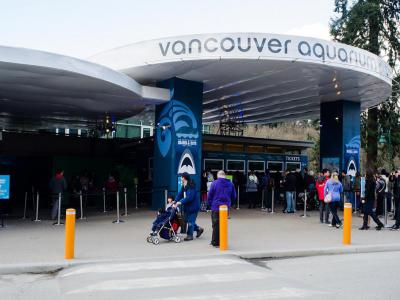
2) Vancouver Aquarium (must see)
The Vancouver Aquarium stands as a prominent highlight within Stanley Park. Beyond its role as a popular tourist destination, this expansive public aquatic center also serves as a pivotal hub for the study and preservation of marine life. Encompassing an impressive area of nearly 100,000 square feet, the aquarium showcases a captivating array of exhibits that collectively hold around 10,000,000 liters of water, spread across 166 distinct displays.
The exhibition spaces at the Vancouver Aquarium encompass a diverse range of aquatic ecosystems and species from various geographical regions. Notable areas include the Pacific Canada Pavilion, which accommodates an array of fish originating from the Strait of Georgia. The Arctic Canada exhibit is home to enchanting Beluga whales, arctic fish, and invertebrates. Meanwhile, The Wild Coast section features captivating displays of Pacific White-sided dolphins, sea otters, harbor porpoises, and a selection of interactive exhibits showcasing invertebrates.
The Tropic Zone introduces visitors to tropical species, highlighted by the presence of a vibrant green sea turtle. Lastly, the Amazon Rainforest exhibit presents an immersive experience, housing Amazonian fish, invertebrates, snakes, caimans, sloths, birds, and an array of other captivating species. Notably, the Vancouver Aquarium proudly houses the sole captive harbor porpoise in the world, known by the name Daisy.
The captivating creatures and captivating scenes of the Vancouver Aquarium have earned their place in television shows, movies, and viral online content. Its interactive displays and engaging exhibits have transformed it into one of Vancouver's premier tourist draws.
Why You Should Visit:
There are significant interior spaces that concentrate on certain ecosystems, with an intense focus on the local environment and the types of life in British Columbia's waters.
There are outdoor areas as well, where different instructional shows occur, providing additional context for the life on display and their behaviors in the wild.
If you are hungry there are a cafeteria (featuring sustainably caught fish), café, and ice cream stand, and for shopping, there's a souvenir & gift shop.
The added bonus is that just outside is one of the best parks in the world, so there's no shortage of experiences after you've ended your visit.
Tip:
Check the aquarium website for additional information on activities for the family such as behind the scene interactive 'touch' exhibits.
You can buy your tickets either online or at the automated booths to the left outside the aquarium for a discount and to skip the queue.
The exhibition spaces at the Vancouver Aquarium encompass a diverse range of aquatic ecosystems and species from various geographical regions. Notable areas include the Pacific Canada Pavilion, which accommodates an array of fish originating from the Strait of Georgia. The Arctic Canada exhibit is home to enchanting Beluga whales, arctic fish, and invertebrates. Meanwhile, The Wild Coast section features captivating displays of Pacific White-sided dolphins, sea otters, harbor porpoises, and a selection of interactive exhibits showcasing invertebrates.
The Tropic Zone introduces visitors to tropical species, highlighted by the presence of a vibrant green sea turtle. Lastly, the Amazon Rainforest exhibit presents an immersive experience, housing Amazonian fish, invertebrates, snakes, caimans, sloths, birds, and an array of other captivating species. Notably, the Vancouver Aquarium proudly houses the sole captive harbor porpoise in the world, known by the name Daisy.
The captivating creatures and captivating scenes of the Vancouver Aquarium have earned their place in television shows, movies, and viral online content. Its interactive displays and engaging exhibits have transformed it into one of Vancouver's premier tourist draws.
Why You Should Visit:
There are significant interior spaces that concentrate on certain ecosystems, with an intense focus on the local environment and the types of life in British Columbia's waters.
There are outdoor areas as well, where different instructional shows occur, providing additional context for the life on display and their behaviors in the wild.
If you are hungry there are a cafeteria (featuring sustainably caught fish), café, and ice cream stand, and for shopping, there's a souvenir & gift shop.
The added bonus is that just outside is one of the best parks in the world, so there's no shortage of experiences after you've ended your visit.
Tip:
Check the aquarium website for additional information on activities for the family such as behind the scene interactive 'touch' exhibits.
You can buy your tickets either online or at the automated booths to the left outside the aquarium for a discount and to skip the queue.
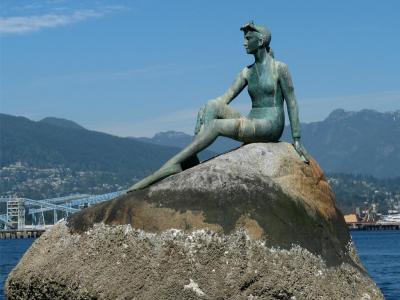
3) Girl in a Wetsuit
Girl in a Wetsuit is one of the attractions in Stanley Park. This bronze statue was intended to mimic Copenhagen's famous statue of Hans Christian Andersen's Little Mermaid. When the Park was unable to secure the rights to replicate the Copenhagen statue, Hungarian sculptor and painter Elek Imredy was commissioned to make a modern variation of it for Stanley Park, instead.
Girl in a Wetsuit is a life-sized bronze statue of a girl seated on a boulder, located just before Lumberman's Arch and the waterfront park. Instead of resembling Copenhagen's Little Mermaid, the Girl in a Wetsuit is a modern variation wearing swim fins, a wetsuit, and a diving mask. The statue was placed on June 9th of 1972, and has remained in place ever since.
At first blush, it's easy to mistake the Girl for a harbor seal. When the water level is high, she appears to be hovering on the surface of the water. Canada geese swim nearby, and seagulls perch on the Girl's head and knees. Over the years, the bronze statue has weathered to a subtle verdigris patina, that matches the blue-green of the water and the moss clinging to the boulder.
Girl in a Wetsuit is a life-sized bronze statue of a girl seated on a boulder, located just before Lumberman's Arch and the waterfront park. Instead of resembling Copenhagen's Little Mermaid, the Girl in a Wetsuit is a modern variation wearing swim fins, a wetsuit, and a diving mask. The statue was placed on June 9th of 1972, and has remained in place ever since.
At first blush, it's easy to mistake the Girl for a harbor seal. When the water level is high, she appears to be hovering on the surface of the water. Canada geese swim nearby, and seagulls perch on the Girl's head and knees. Over the years, the bronze statue has weathered to a subtle verdigris patina, that matches the blue-green of the water and the moss clinging to the boulder.
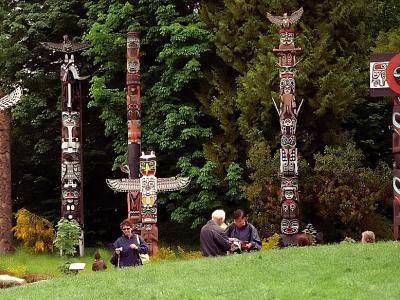
4) Brockton Point Totem Pole
One of the well-known attractions within Vancouver's Stanley Park is the First Nations art enclave located near Brockton Point. This area features an assemblage of nine totem poles, along with other significant Indigenous artworks and a charming gift shop. The origins of the totem pole collection in Stanley Park date back to the 1920s when the Vancouver Parks Board commenced the acquisition of these poles, envisioning the creation of a replicated First Nations village within the park's grounds.
In 1924, four totem poles from Alert Bay were placed at Lumbermen's Arch, including pieces from the late 1880s. More totem poles were added from Haida Gwaii and Rivers Inlet in the 1920s-1930s. In 1962, these totem poles were moved to Brockton Point due to road construction. Many originals have been replaced by replicas, with authentic ones preserved in museums. A notable addition in 2009 was carved by a Squamish Nation member with deep ancestral ties to Stanley Park.
Totem poles, carved from western red cedar, represent Indigenous peoples' coat of arms in British Columbia. Each pole, whether real or mythical, holds specific meanings. For instance, the eagle signifies dominion over the skies, the whale symbolizes mastery over the sea, the wolf embodies the spirit of the land, and the frog represents the intermediary connection between land and water.
This site ranks among the most frequented and photographed locales within the park and even the entirety of Vancouver. It stands as an essential destination for tourists, particularly those traveling from abroad, offering an authentic and captivating glimpse into the First Nations' rich artistic heritage.
In 1924, four totem poles from Alert Bay were placed at Lumbermen's Arch, including pieces from the late 1880s. More totem poles were added from Haida Gwaii and Rivers Inlet in the 1920s-1930s. In 1962, these totem poles were moved to Brockton Point due to road construction. Many originals have been replaced by replicas, with authentic ones preserved in museums. A notable addition in 2009 was carved by a Squamish Nation member with deep ancestral ties to Stanley Park.
Totem poles, carved from western red cedar, represent Indigenous peoples' coat of arms in British Columbia. Each pole, whether real or mythical, holds specific meanings. For instance, the eagle signifies dominion over the skies, the whale symbolizes mastery over the sea, the wolf embodies the spirit of the land, and the frog represents the intermediary connection between land and water.
This site ranks among the most frequented and photographed locales within the park and even the entirety of Vancouver. It stands as an essential destination for tourists, particularly those traveling from abroad, offering an authentic and captivating glimpse into the First Nations' rich artistic heritage.
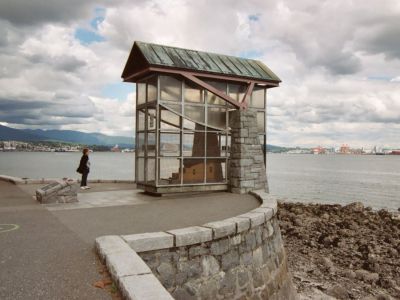
5) The 9 O'clock Gun
The 9 O'clock Gun, an original twelve-pound muzzle-loaded naval cannon forged in 1816, has an intriguing history. Initially designed for naval purposes, it found a new role in 1894 when it was relocated to Stanley Park. Its mission: to sound an alert for fishermen as a signal marking the end of Sunday fishing activities at 6 PM.
In the passage of time, as the need for fishermen's warnings diminished, the cannon transformed into a broader utility. Its resounding boom transitioned into a time signal for the general populace and provided a precise calibration reference for ships' clocks while docked in Vancouver. A curious footnote: before the 9 O'clock Gun's reign, lighthouse keeper William Jones would ignite a stick of dynamite for similar purposes.
Today, the cannon has evolved into a nightly tradition. At 9 PM PST, it faithfully erupts in a controlled explosion. Without fail, black powder is loaded into it each day, and an electric trigger ignites the charge every evening. Its uninterrupted performance has been almost flawless, barring five exceptional instances: during WWII, the gun was commandeered and held as a "ransom" for a donation to the BC Children's Hospital; in 2007, a labor strike silenced it; UBC engineering students once inexplicably adorned it with a coat of red paint; and on May 20th, 2011, it boomed without apparent cause.
Presently, the cannon resides within a secure enclosure crafted from stone and metal, shielding it from theft or tampering. Prominent signs caution pedestrians about its thunderous report, ensuring the safety of those nearby.
In the passage of time, as the need for fishermen's warnings diminished, the cannon transformed into a broader utility. Its resounding boom transitioned into a time signal for the general populace and provided a precise calibration reference for ships' clocks while docked in Vancouver. A curious footnote: before the 9 O'clock Gun's reign, lighthouse keeper William Jones would ignite a stick of dynamite for similar purposes.
Today, the cannon has evolved into a nightly tradition. At 9 PM PST, it faithfully erupts in a controlled explosion. Without fail, black powder is loaded into it each day, and an electric trigger ignites the charge every evening. Its uninterrupted performance has been almost flawless, barring five exceptional instances: during WWII, the gun was commandeered and held as a "ransom" for a donation to the BC Children's Hospital; in 2007, a labor strike silenced it; UBC engineering students once inexplicably adorned it with a coat of red paint; and on May 20th, 2011, it boomed without apparent cause.
Presently, the cannon resides within a secure enclosure crafted from stone and metal, shielding it from theft or tampering. Prominent signs caution pedestrians about its thunderous report, ensuring the safety of those nearby.
