Custom Walk in Rotterdam, Netherlands by ntcarrier_f77b4 created on 2026-02-05
Guide Location: Netherlands » Rotterdam
Guide Type: Custom Walk
# of Sights: 11
Tour Duration: 3 Hour(s)
Travel Distance: 5.4 Km or 3.4 Miles
Share Key: 469LT
Guide Type: Custom Walk
# of Sights: 11
Tour Duration: 3 Hour(s)
Travel Distance: 5.4 Km or 3.4 Miles
Share Key: 469LT
How It Works
Please retrieve this walk in the GPSmyCity app. Once done, the app will guide you from one tour stop to the next as if you had a personal tour guide. If you created the walk on this website or come to the page via a link, please follow the instructions below to retrieve the walk in the app.
Retrieve This Walk in App
Step 1. Download the app "GPSmyCity: Walks in 1K+ Cities" on Apple App Store or Google Play Store.



Step 2. In the GPSmyCity app, download(or launch) the guide "Rotterdam Map and Walking Tours".
Step 3. Tap the menu button located at upper right corner of the "Walks" screen and select "Retrieve custom walk". Enter the share key: 469LT
1) Markthal (Market Hall) (must see)
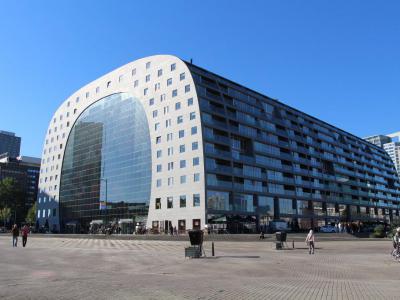
The Market Hall is a multi-use complex that combines apartments, offices, retail spaces, and one of Rotterdam’s most popular markets, all under a single monumental arch. Opened in 2014, the building is celebrated for its dramatic horseshoe-shaped arch and its massive glass facades composed of smaller window panels. A 34-metre high steel cable structure supports these glass walls, making it Europe’s largest cable-supported glass façade. Beneath it lies an extensive underground parking garage that adds to its functional design.
Inside, visitors are greeted by a space of vivid artwork covering the interior arch. Created by Dutch artists Arno Coenen and Iris Roskam, Horn of Plenty depicts giant fruits, vegetables, fish, flowers, and insects in dazzling colour. The digital artwork was so enormous that the artists had to borrow computing power from Pixar Studios. This spectacular mural has earned the Market Hall nicknames such as “The Largest Artwork in the World” and “The Sistine Chapel of Rotterdam”.
During the building’s construction, archaeologists unearthed the remains of a 10th-century farmstead, including a house with two stoves and several fireplaces. A small exhibition beside the central staircases displays these finds, offering visitors a glimpse of Rotterdam’s early settlement history.
Today, the Market Hall stands as the largest indoor market in the Netherlands. It hosts more than 100 produce stalls, 15 food shops, and eight restaurants. Shoppers can browse local cheeses, fresh fish, fruit and vegetables, poultry, flowers, and plants. For those eager to sample their purchases, plenty of indoor seating areas are available—making the Market Hall both a culinary destination and a modern architectural icon.
Inside, visitors are greeted by a space of vivid artwork covering the interior arch. Created by Dutch artists Arno Coenen and Iris Roskam, Horn of Plenty depicts giant fruits, vegetables, fish, flowers, and insects in dazzling colour. The digital artwork was so enormous that the artists had to borrow computing power from Pixar Studios. This spectacular mural has earned the Market Hall nicknames such as “The Largest Artwork in the World” and “The Sistine Chapel of Rotterdam”.
During the building’s construction, archaeologists unearthed the remains of a 10th-century farmstead, including a house with two stoves and several fireplaces. A small exhibition beside the central staircases displays these finds, offering visitors a glimpse of Rotterdam’s early settlement history.
Today, the Market Hall stands as the largest indoor market in the Netherlands. It hosts more than 100 produce stalls, 15 food shops, and eight restaurants. Shoppers can browse local cheeses, fresh fish, fruit and vegetables, poultry, flowers, and plants. For those eager to sample their purchases, plenty of indoor seating areas are available—making the Market Hall both a culinary destination and a modern architectural icon.
2) Kubuswoningen (Cube Houses)
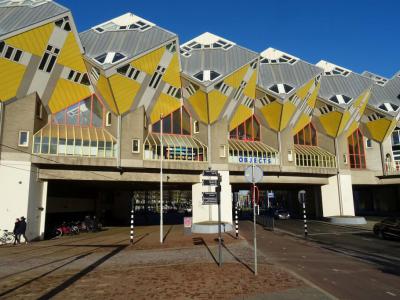
Few buildings capture Rotterdam’s spirit of creativity quite like the Cube Houses, the city’s most playful architectural experiment. Designed by Dutch architect Piet Blom, these yellow cubes seem to balance on their tips, tilted 45 degrees as if defying gravity. Blom’s goal was to create an “urban forest”, where each cube represents a tree and together they form a sculptural canopy above the streets below.
Built in the 1980s as part of a larger urban renewal project, the Cube Houses were conceived in collaboration with city planners who wanted to bring life and imagination back to Rotterdam. Each Cube House rises three stories high. The lower level contains a kitchen and living room, the middle floor holds two bedrooms and a bathroom, and the top level often serves as a small garden, workspace, or viewing area.
The complex also functions as a pedestrian bridge across a busy intersection, maintaining a car-free environment. Around the cubes, visitors will find a lively community of cafés, restaurants, small offices, studios, and even a playground.
Those curious about what life is like inside one of these tilted wonders can visit the Show Cube Museum, which offers a peek into their design and history. And for the truly adventurous, a few of the cubes have been converted into overnight accommodations—perfect for anyone eager to experience Rotterdam from a slightly different angle.
Built in the 1980s as part of a larger urban renewal project, the Cube Houses were conceived in collaboration with city planners who wanted to bring life and imagination back to Rotterdam. Each Cube House rises three stories high. The lower level contains a kitchen and living room, the middle floor holds two bedrooms and a bathroom, and the top level often serves as a small garden, workspace, or viewing area.
The complex also functions as a pedestrian bridge across a busy intersection, maintaining a car-free environment. Around the cubes, visitors will find a lively community of cafés, restaurants, small offices, studios, and even a playground.
Those curious about what life is like inside one of these tilted wonders can visit the Show Cube Museum, which offers a peek into their design and history. And for the truly adventurous, a few of the cubes have been converted into overnight accommodations—perfect for anyone eager to experience Rotterdam from a slightly different angle.
3) The Destroyed City
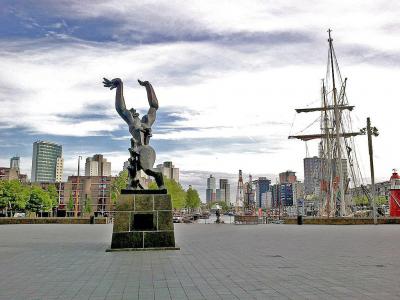
The Destroyed City is a bronze memorial sculpture in Rotterdam. It commemorates the German bombing of Rotterdam on 14 May 1940, which destroyed the medieval center of the city. Unveiled in 1953, it was designated as a Dutch National Monument in 2010. It is the largest sculpture by the Russian-born French sculptor Ossip Zadkine, his best-known work.
The 6.5 meters (21 feet) tall sculpture portrays a human figure by a tree stump. The figure raises its hands, head thrown back as if crying in grief, with a hole in its chest. This absence of a heart symbolizes Rotterdam's center destruction. Zadkine called it "A cry against tyranny's brutality". It's likened to Picasso's Guernica art. The sculpture stands on a 2 meters (6.5 feet) high granite plinth.
Created from 1951-1953 in Paris by Susse Frères foundry, the bronze sculpture was a gift to the city with its location chosen by Zadkine. The donor's identity was revealed in 1978. The modern piece sparked controversy, notably with Jan Tillema, Rotterdam's Director of Public Works, branding it a "demonic scourge." Despite objections, the gift was accepted, and Tillema designed the plinth. The statue's installation, including the plinth, incurred a cost of 24,500 guilders.
On May 15, 1953, Gerard van Walsum, the mayor of Rotterdam, unveiled it on Plein 1940, where it remains by the Maritime Museum Rotterdam. It was shifted 60 meters (200 feet) in 1975 and restored in 2007 after temporary removal for construction in 2005.
The 6.5 meters (21 feet) tall sculpture portrays a human figure by a tree stump. The figure raises its hands, head thrown back as if crying in grief, with a hole in its chest. This absence of a heart symbolizes Rotterdam's center destruction. Zadkine called it "A cry against tyranny's brutality". It's likened to Picasso's Guernica art. The sculpture stands on a 2 meters (6.5 feet) high granite plinth.
Created from 1951-1953 in Paris by Susse Frères foundry, the bronze sculpture was a gift to the city with its location chosen by Zadkine. The donor's identity was revealed in 1978. The modern piece sparked controversy, notably with Jan Tillema, Rotterdam's Director of Public Works, branding it a "demonic scourge." Despite objections, the gift was accepted, and Tillema designed the plinth. The statue's installation, including the plinth, incurred a cost of 24,500 guilders.
On May 15, 1953, Gerard van Walsum, the mayor of Rotterdam, unveiled it on Plein 1940, where it remains by the Maritime Museum Rotterdam. It was shifted 60 meters (200 feet) in 1975 and restored in 2007 after temporary removal for construction in 2005.
4) Maritime Museum of Rotterdam (must see)
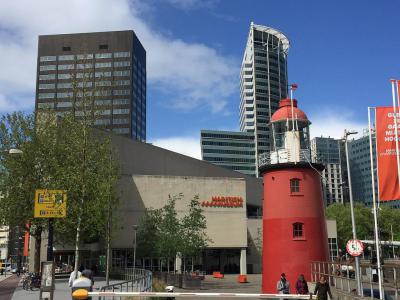
The Maritime Museum Rotterdam focuses on the city’s maritime and shipping history, offering visitors both modern exhibits and access to an extensive collection of artifacts. Founded in 1874 by Prince Henry of the Netherlands, it consists of two linked components: the indoor museum and the adjacent Museum Harbour.
Inside the museum, exhibitions designed for all ages include stories of ships, offshore platforms and maritime innovation. Among the standout pieces are the Mataró ship model, over six centuries old and Europe’s oldest ship model; The Itinerario by the Dutch explorer Jan Huygen van Linschoten, one of the world’s most important travel journals; pen‑and‑ink drawings by Willem van de Velde the Younger, a renowned Dutch maritime artist; and a set of sea charts by Joan Blaeu, a leading 17th‑century cartographer. The museum’s collection spans over one million objects, covering six centuries of Dutch maritime history.
The Museum Harbour offers an outdoor experience in the oldest and largest museum harbour in the Netherlands, located where the port of Rotterdam first took shape. Visitors can explore historic vessels such as steam tugs, a grain elevator, and the red cast‑iron lighthouse known as the Low Light of the Hook of Holland, which once guided ships up the New Waterway. In addition to its permanent collection, the museum hosts rotating exhibitions, educational programs, and special events aimed at exploring Rotterdam's pivotal role in global shipping and trade.
Tip: Some of the ships in the outer harbour section can be boarded and explored free of charge. A café and museum shop are available on site, and the museum’s library houses the Netherlands’ most comprehensive maritime‑related book collection, open by appointment for rare materials.
Inside the museum, exhibitions designed for all ages include stories of ships, offshore platforms and maritime innovation. Among the standout pieces are the Mataró ship model, over six centuries old and Europe’s oldest ship model; The Itinerario by the Dutch explorer Jan Huygen van Linschoten, one of the world’s most important travel journals; pen‑and‑ink drawings by Willem van de Velde the Younger, a renowned Dutch maritime artist; and a set of sea charts by Joan Blaeu, a leading 17th‑century cartographer. The museum’s collection spans over one million objects, covering six centuries of Dutch maritime history.
The Museum Harbour offers an outdoor experience in the oldest and largest museum harbour in the Netherlands, located where the port of Rotterdam first took shape. Visitors can explore historic vessels such as steam tugs, a grain elevator, and the red cast‑iron lighthouse known as the Low Light of the Hook of Holland, which once guided ships up the New Waterway. In addition to its permanent collection, the museum hosts rotating exhibitions, educational programs, and special events aimed at exploring Rotterdam's pivotal role in global shipping and trade.
Tip: Some of the ships in the outer harbour section can be boarded and explored free of charge. A café and museum shop are available on site, and the museum’s library houses the Netherlands’ most comprehensive maritime‑related book collection, open by appointment for rare materials.
5) Witte de Withstraat Street (must see)
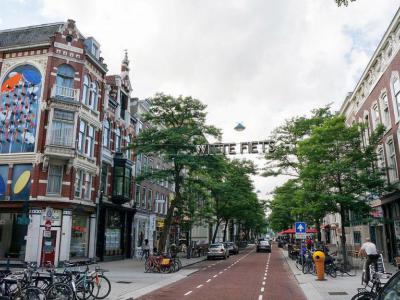
Witte de Withstraat Street, spanning approximately 320 meters, was named after Witte Cornelisz de With, a 17th-century Dutch naval officer. During the 1990s, its transformation into an "Art Axis" — a designated cultural and artistic district linking the Park Museum and the Maritime Museum — helped reshape its identity as one of the city’s cultural and nightlife centres.
Here, you'll find Rotterdam Bazar, a lively restaurant offering international dishes; Vivu, which serves delicious Vietnamese cuisine; and Oliva, known for its Italian fare. For a casual bite, Bagel Bakery is the perfect stop for a bagel and a quick coffee. The highly regarded burger spot Ter Marsch & Co serves some of the Netherlands’ best hamburgers. For a different vibe, the Nieuw Rotterdams Café, housed in a grand former newspaper building, offers a stylish setting for cocktails or dinner.
The shopping scene is as diverse as the food offerings. You'll discover independent boutiques like Betsy Palmer, a well-known shoe shop, and RSI The Attraction, which specializes in adventure gear such as skateboards, snowboards, and kites.
Artists and gallery-goers will feel right at home here, too. Kunstinstituut Melly hosts international exhibitions and educational programs. Other galleries in the area include Ecce Gallery and van Eijk Gallery, which features modern art, ceramics, and sculpture. Around the side streets, you’ll also encounter murals and street-art installations.
In earlier decades, the street had a rougher reputation, once home to less savory cafés and illegal gambling houses in the 1970s. However, its revival has helped shape Witte de Withstraat Street into a hub for art, design, and nightlife energy.
Here, you'll find Rotterdam Bazar, a lively restaurant offering international dishes; Vivu, which serves delicious Vietnamese cuisine; and Oliva, known for its Italian fare. For a casual bite, Bagel Bakery is the perfect stop for a bagel and a quick coffee. The highly regarded burger spot Ter Marsch & Co serves some of the Netherlands’ best hamburgers. For a different vibe, the Nieuw Rotterdams Café, housed in a grand former newspaper building, offers a stylish setting for cocktails or dinner.
The shopping scene is as diverse as the food offerings. You'll discover independent boutiques like Betsy Palmer, a well-known shoe shop, and RSI The Attraction, which specializes in adventure gear such as skateboards, snowboards, and kites.
Artists and gallery-goers will feel right at home here, too. Kunstinstituut Melly hosts international exhibitions and educational programs. Other galleries in the area include Ecce Gallery and van Eijk Gallery, which features modern art, ceramics, and sculpture. Around the side streets, you’ll also encounter murals and street-art installations.
In earlier decades, the street had a rougher reputation, once home to less savory cafés and illegal gambling houses in the 1970s. However, its revival has helped shape Witte de Withstraat Street into a hub for art, design, and nightlife energy.
6) Het Nieuwe Instituut
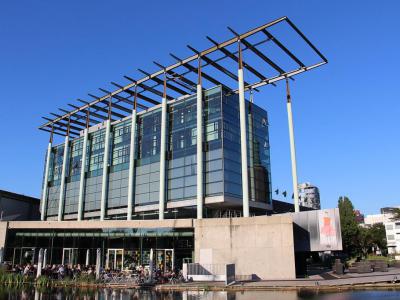
Het Nieuwe Instituut functions as a museum dedicated to the realms of architecture, design, and digital culture. It also serves as a dynamic platform for fostering creativity within the industry. The institution curates exhibitions and facilitates discussions spanning various design fields, including graphic design, product design, gaming, fashion, interior and architectural design, urban planning, and landscape architecture.
Established on January 1, 2013, through the merger of the Netherlands Architecture Institute (NAI), Premsela Institute for Design and Fashion, and the Virtual Platform Institute for e-culture, it has become a prominent hub.
A pivotal facet of the institute's endeavors involves the curation of an extensive collection of archives chronicling the history of Dutch architecture. This remarkable compilation encompasses both historical and contemporary architectural achievements, making it a must-visit destination for anyone exploring Rotterdam.
Why You Should Visit:
An absolute must for lovers of urban planning, design, and architecture.
The building itself is one of the best-preserved houses in the Nieuwe Bouwen style, the Dutch branch of architectural Modernism.
Entry ticket also includes admission to the remarkable Sonneveld House around the corner, a 1930s marvel of design.
Tip:
Check out the Institute's great café – open to the public without needing to visit the exhibits.
Established on January 1, 2013, through the merger of the Netherlands Architecture Institute (NAI), Premsela Institute for Design and Fashion, and the Virtual Platform Institute for e-culture, it has become a prominent hub.
A pivotal facet of the institute's endeavors involves the curation of an extensive collection of archives chronicling the history of Dutch architecture. This remarkable compilation encompasses both historical and contemporary architectural achievements, making it a must-visit destination for anyone exploring Rotterdam.
Why You Should Visit:
An absolute must for lovers of urban planning, design, and architecture.
The building itself is one of the best-preserved houses in the Nieuwe Bouwen style, the Dutch branch of architectural Modernism.
Entry ticket also includes admission to the remarkable Sonneveld House around the corner, a 1930s marvel of design.
Tip:
Check out the Institute's great café – open to the public without needing to visit the exhibits.
7) Kunsthal (Art Hall) (must see)
Art Hall is an art museum that opened in 1992. The museum features a variety of temporary exhibits throughout seven exhibition spaces. In addition, the museum has a cafe.
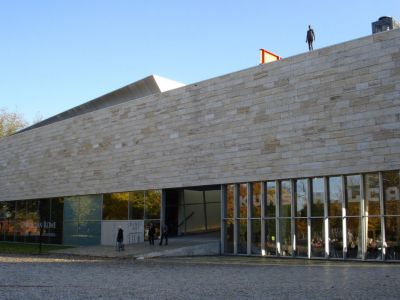
Koolhaas designed the museum. The architecture is distinctive, and the building resembles a box while the interior has a sloping, spiraling floor. The main gallery is designed to appear like it is hovering above street level. Koolhaas used unique materials such as raw concrete, corrugated plastic, galvanized steel, and roughly sawn tree trunks.
Exhibitions range from 20th-century artists to modern artists. Exhibitions have included exhibits focusing on artists such as Andy Warhol, Chuck Close, and Arne Quinze. In addition, the museum often features current event art exhibits like the recent Drawn: Rotterdam! One-And-A-Half-Meter-Society which focused on the Covid-19 pandemic.
The Art Hall is adjacent to the Museum Park, a beautifully landscaped outdoor area. The park has sculptures and an artistic bridge to nowhere.
Tip:
The outside museum park is great for a stroll and less touristy than expected – visit the Rose Garden!
Koolhaas designed the museum. The architecture is distinctive, and the building resembles a box while the interior has a sloping, spiraling floor. The main gallery is designed to appear like it is hovering above street level. Koolhaas used unique materials such as raw concrete, corrugated plastic, galvanized steel, and roughly sawn tree trunks.
Exhibitions range from 20th-century artists to modern artists. Exhibitions have included exhibits focusing on artists such as Andy Warhol, Chuck Close, and Arne Quinze. In addition, the museum often features current event art exhibits like the recent Drawn: Rotterdam! One-And-A-Half-Meter-Society which focused on the Covid-19 pandemic.
The Art Hall is adjacent to the Museum Park, a beautifully landscaped outdoor area. The park has sculptures and an artistic bridge to nowhere.
Tip:
The outside museum park is great for a stroll and less touristy than expected – visit the Rose Garden!
8) Noorse Kerk
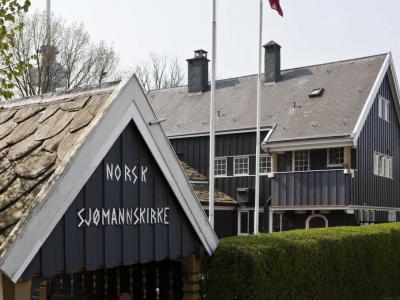
The Noorse Kerk (Norwegian Church) holds the distinction of being the largest wooden edifice in the Netherlands. Constructed in 1914 by skilled Norwegian carpenters, this remarkable structure was crafted using imported materials and wood from Norway. Its architectural blueprint draws inspiration from the thirteenth-century Norwegian stave churches, embodying the ideals of the Nationalist Romantic movement within Norwegian architectural history.
Inside the church, the wooden walls and ceiling are adorned with murals featuring warm earthy hues, skillfully painted by Norwegian artist and restorer Domenico Erdman (1879-1940). The color palette encompasses shades of red-brown, blue, brown, and green, all outlined in black contours. On the eastern wall, three stained glass windows grace the interior, sequentially depicting scenes: The miraculous fishing haul, Jesus pacifying the tempest, and Jesus walking on water alongside Peter. Fashioned by Limburg glazier Max Weiss in 1951, these windows add a vibrant touch to the ambiance.
The Norwegian Church's strategic location, ease of access, and charming setting render it an excellent choice for hosting weddings. Furthermore, its environment proves conducive to lectures, meetings, and family gatherings. Facilities are thoughtfully appointed, featuring a spacious kitchen, multiple dining tables, and all the necessities to facilitate dinners or buffets.
Inside the church, the wooden walls and ceiling are adorned with murals featuring warm earthy hues, skillfully painted by Norwegian artist and restorer Domenico Erdman (1879-1940). The color palette encompasses shades of red-brown, blue, brown, and green, all outlined in black contours. On the eastern wall, three stained glass windows grace the interior, sequentially depicting scenes: The miraculous fishing haul, Jesus pacifying the tempest, and Jesus walking on water alongside Peter. Fashioned by Limburg glazier Max Weiss in 1951, these windows add a vibrant touch to the ambiance.
The Norwegian Church's strategic location, ease of access, and charming setting render it an excellent choice for hosting weddings. Furthermore, its environment proves conducive to lectures, meetings, and family gatherings. Facilities are thoughtfully appointed, featuring a spacious kitchen, multiple dining tables, and all the necessities to facilitate dinners or buffets.

9) De Pannenkoekenboot
De Pannenkoekenboot, also known as the Pancake Boat, stands as one of Rotterdam's finest offers for both dining and sightseeing pleasure. At an affordable rate, patrons can indulge in an all-you-can-eat pancake feast coupled with a 75-minute cruise around the harbor.
This vintage vessel boasts a dual-deck design, complete with expansive windows, wooden accents, tables seating four to six people, and an outdoor space for relishing the fresh breeze post a hearty meal of dinner pancakes, dessert pancakes, and optionally available ice cream.
Onboard the Pannenkoekenboot Rotterdam, visitors can savor limitless pancakes within a relaxed ambiance, set against the stunning panorama of the Rotterdam skyline and the bustling harbor. Guests can select from three cruise options: the 75-Minute Cruise, the Family Cruise (a 2.5-hour afternoon voyage during weekends), and the Pancake Cruise (a 2.5-hour journey on Saturday evenings).
The pancake buffet encompasses a range of flavors, including classic, apple, and bacon pancakes, accompanied by a variety of toppings such as cheese, ham, fruits, preserves, and applesauce. For the Family and Pancake Cruises, additional offerings like chicken shoarma, beef meatballs, and hot vegetables are provided. A spacious ball pit is available for the entertainment of young ones.
Furthermore, the option to charter the Pannenkoekenboot for sizable groups outside the regular sailing schedules is viable, whether it's for a celebratory evening with an elaborate buffet or a custom-designed day excursion. Collaborating with the captain, guests can tailor their very own boat trip experience.
This vintage vessel boasts a dual-deck design, complete with expansive windows, wooden accents, tables seating four to six people, and an outdoor space for relishing the fresh breeze post a hearty meal of dinner pancakes, dessert pancakes, and optionally available ice cream.
Onboard the Pannenkoekenboot Rotterdam, visitors can savor limitless pancakes within a relaxed ambiance, set against the stunning panorama of the Rotterdam skyline and the bustling harbor. Guests can select from three cruise options: the 75-Minute Cruise, the Family Cruise (a 2.5-hour afternoon voyage during weekends), and the Pancake Cruise (a 2.5-hour journey on Saturday evenings).
The pancake buffet encompasses a range of flavors, including classic, apple, and bacon pancakes, accompanied by a variety of toppings such as cheese, ham, fruits, preserves, and applesauce. For the Family and Pancake Cruises, additional offerings like chicken shoarma, beef meatballs, and hot vegetables are provided. A spacious ball pit is available for the entertainment of young ones.
Furthermore, the option to charter the Pannenkoekenboot for sizable groups outside the regular sailing schedules is viable, whether it's for a celebratory evening with an elaborate buffet or a custom-designed day excursion. Collaborating with the captain, guests can tailor their very own boat trip experience.
10) Euromast Tower (must see)
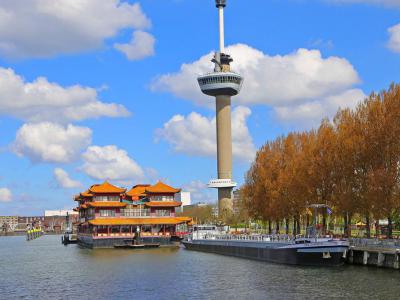
Euromast is an observation tower that was built for the 1960 Floriade International Garden Festival. The imposing structure was originally 101-meters (331-feet) tall and was Rotterdam's tallest building. In 1970, the Space Tower antennae was added, and the building is now 185-meters (606-feet) tall.
The tower is built on an underground 4,200,000-pound concrete block for stability. The crow's nest observation platform is 96 meters (315 feet) tall. The observation platform is home to a restaurant that serves brunch, lunch, and dinner.
Visitors can take an elevator to the Euroscoop at the top of the 185-meter-tall (606-foot-tall) tower. Adventurous travelers can even spend the night in the Euromast. There are several luxury suites.
Thrill-seekers can abseil or cable glide down the Euromast. Abseiling will allow you to walk down the outside wall in a climbing harness. Cable gliding is much more exciting. Guests hang from a cable track while zooming down at speeds up to 100 kilometers per hour (62 miles per hour).
The tower is built on an underground 4,200,000-pound concrete block for stability. The crow's nest observation platform is 96 meters (315 feet) tall. The observation platform is home to a restaurant that serves brunch, lunch, and dinner.
Visitors can take an elevator to the Euroscoop at the top of the 185-meter-tall (606-foot-tall) tower. Adventurous travelers can even spend the night in the Euromast. There are several luxury suites.
Thrill-seekers can abseil or cable glide down the Euromast. Abseiling will allow you to walk down the outside wall in a climbing harness. Cable gliding is much more exciting. Guests hang from a cable track while zooming down at speeds up to 100 kilometers per hour (62 miles per hour).
11) Erasmusbrug (Erasmus Bridge) (must see)
Erasmus Bridge crosses the Nieuwe Mass River. This combination cable-stayed and bascule bridge was completed in 1996. The modern bridge was named after Desiderius Erasmus, a Renaissance humanist and Catholic priest. Erasmus was born in Rotterdam in 1446 and is considered one of the greatest scholars of the northern Renaissance.
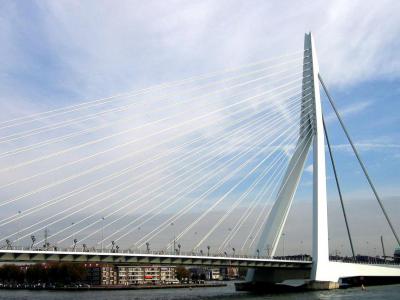
Erasmus Bridge is Rotterdam's most iconic landmark and is featured in the city's logo. The bridge is 802 meters (2,631 feet) long. The cable-stayed portion has a 139-meter (456-foot) asymmetrical bent pylon with an eye-catching horizontal base. This striking feature has earned it "The Swan" nickname.
The south portion of the bridge has an 89-meter (292-foot) long bascule bridge to allow large ships to pass under the bridge.
The bridge has been featured in films and events. It was in Jackie Chan's 1998 film Who Am I?. Several planes dramatically flew under the bridge during the 2005 Red Bull Air Race.
Erasmus Bridge is Rotterdam's most iconic landmark and is featured in the city's logo. The bridge is 802 meters (2,631 feet) long. The cable-stayed portion has a 139-meter (456-foot) asymmetrical bent pylon with an eye-catching horizontal base. This striking feature has earned it "The Swan" nickname.
The south portion of the bridge has an 89-meter (292-foot) long bascule bridge to allow large ships to pass under the bridge.
The bridge has been featured in films and events. It was in Jackie Chan's 1998 film Who Am I?. Several planes dramatically flew under the bridge during the 2005 Red Bull Air Race.
