Custom Walk in Barcelona, Spain by beth_saunders1_add6f created on 2026-02-11
Guide Location: Spain » Barcelona
Guide Type: Custom Walk
# of Sights: 5
Tour Duration: 2 Hour(s)
Travel Distance: 4.9 Km or 3 Miles
Share Key: LXKRR
Guide Type: Custom Walk
# of Sights: 5
Tour Duration: 2 Hour(s)
Travel Distance: 4.9 Km or 3 Miles
Share Key: LXKRR
How It Works
Please retrieve this walk in the GPSmyCity app. Once done, the app will guide you from one tour stop to the next as if you had a personal tour guide. If you created the walk on this website or come to the page via a link, please follow the instructions below to retrieve the walk in the app.
Retrieve This Walk in App
Step 1. Download the app "GPSmyCity: Walks in 1K+ Cities" on Apple App Store or Google Play Store.



Step 2. In the GPSmyCity app, download(or launch) the guide "Barcelona Map and Walking Tours".
Step 3. Tap the menu button located at upper right corner of the "Walks" screen and select "Retrieve custom walk". Enter the share key: LXKRR
1) Park Guell (must see)
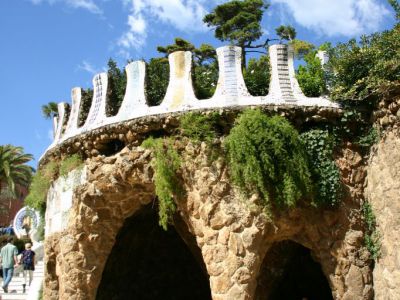
A treasure bestowed with the prestigious UNESCO World Heritage status, Park Güell stands as a testament to Antoni Gaudí's imaginative brilliance, representing the zenith of his naturalist phase and captivating the essence of his whimsical style. Originally envisioned in the 1890s as a grand garden city for Barcelona's affluent families, this visionary project remained unfinished. However, the marvel we behold today emerged through the dedicated efforts between 1910 and 1914, finally unveiling its allure to the public in 1922.
Nestled upon the picturesque slopes of Carmel Hill, Park Güell unfolds as a mesmerizing landscape adorned with Gaudí's ingenious creations. Among them, a pair of enchanting pavilions, a tiled salamander, and the world's longest bench beckon visitors into a realm reminiscent of a storybook. Noteworthy among these structures is the "Casa del Guarda" (Caretaker's House), crafted with meticulous detail.
While access to the Monumental Area, showcasing Gaudí's most remarkable works, requires a ticket, the verdant expanses surrounding this realm are open for exploration and free to wander. Venture into the Room of a Hundred Columns, a cavernous hall adorned with 84 gracefully curved pillars, originally conceived as the estate's marketplace. Above, the Gran Plaça Circular offers an open expanse with a sinuous balcony of mosaic patterns that offers breathtaking panoramic views of the city.
At the park's entry, two pavilions crafted by Gaudí greet visitors, while the Casa Museu Gaudí, a gingerbread-style abode that served as Gaudí's residence from 1906 to 1926, was built by architect Francesc Berenguer.
Why You Should Visit:
Amazing park with mesmerizing tiled designs, boasting a vibrant palette of colors. Perfect for any day when you seek to bask in the beauty of the outdoors.
Tip:
Within the park, you have the opportunity to capture the ultimate Barcelona photograph, presenting two enticing options: the iconic mosaic-covered salamander, a symbol of the park's charm, and the breathtaking vistas from the Gran Plaça Circular.
Nestled upon the picturesque slopes of Carmel Hill, Park Güell unfolds as a mesmerizing landscape adorned with Gaudí's ingenious creations. Among them, a pair of enchanting pavilions, a tiled salamander, and the world's longest bench beckon visitors into a realm reminiscent of a storybook. Noteworthy among these structures is the "Casa del Guarda" (Caretaker's House), crafted with meticulous detail.
While access to the Monumental Area, showcasing Gaudí's most remarkable works, requires a ticket, the verdant expanses surrounding this realm are open for exploration and free to wander. Venture into the Room of a Hundred Columns, a cavernous hall adorned with 84 gracefully curved pillars, originally conceived as the estate's marketplace. Above, the Gran Plaça Circular offers an open expanse with a sinuous balcony of mosaic patterns that offers breathtaking panoramic views of the city.
At the park's entry, two pavilions crafted by Gaudí greet visitors, while the Casa Museu Gaudí, a gingerbread-style abode that served as Gaudí's residence from 1906 to 1926, was built by architect Francesc Berenguer.
Why You Should Visit:
Amazing park with mesmerizing tiled designs, boasting a vibrant palette of colors. Perfect for any day when you seek to bask in the beauty of the outdoors.
Tip:
Within the park, you have the opportunity to capture the ultimate Barcelona photograph, presenting two enticing options: the iconic mosaic-covered salamander, a symbol of the park's charm, and the breathtaking vistas from the Gran Plaça Circular.
2) Casa Mila (Mila House) (must see)
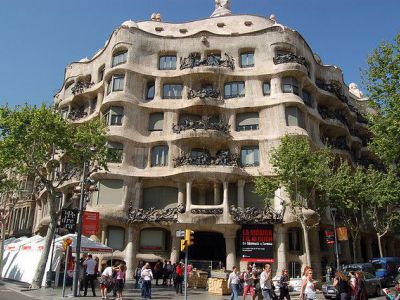
Milà House, commonly known as La Pedrera ("The Stone Quarry"), is a modernist masterpiece designed by Antoni Gaudí and located on Gràcia Boulevard in Barcelona. Constructed between 1906 and 1912 for Roser Segimón and her husband Pere Milà, its nickname derives from its stony, fortress-like appearance. Gaudí, however, viewed the structure as a living body, with columns as bones and stone as flesh.
The building’s wavy stone façade and wrought iron balconies were highly controversial at the time for their unconventional design. Gaudí introduced several innovative features, such as a self-supporting façade, free-plan floors, and an underground garage. The structure, inspired by natural forms, incorporates curved surfaces and catenary arches in the attic, while its layout around courtyards ensures natural light reaches all nine stories. The distinctive roof terrace, with sculptural chimneys and skylights, offers panoramic views of the city and is known as "the garden of warriors."
Following initial criticism and conflicts with Roser Segimón over the aesthetic details, Milà House has undergone significant changes throughout its history. Originally intended as a private residence, it was later sold, converted into apartments, and eventually fell into disrepair. It was restored in the 1980s, regaining its original colors and features, and was declared a UNESCO World Heritage Site in 1984.
Today, Milà House serves as a cultural center, featuring an exhibition on Gaudí’s life and work, showcasing models, drawings, and photographs of his architectural creations. The fourth floor showcases a recreation of an early 20th-century apartment, giving insight into the lifestyle of affluent families of that period.
Milà House is a testament to Gaudí’s architectural innovation and his challenge to conventional design norms. Over the years, it has inspired many modern buildings worldwide, including the Guggenheim Museum in New York City and Disney Concert Hall in Los Angeles. Today, it stands as one of Barcelona’s most iconic landmarks, attracting visitors from around the world to experience Gaudí’s visionary creativity firsthand.
Tip:
To avoid waiting in line, try and book your ticket online in advance and, if possible, visit around sunset when the lights are on, allowing you to experience the surreal audiovisual show. During the summer months, jazz and flamenco concerts are often held here, which is quite a treat as well.
The building’s wavy stone façade and wrought iron balconies were highly controversial at the time for their unconventional design. Gaudí introduced several innovative features, such as a self-supporting façade, free-plan floors, and an underground garage. The structure, inspired by natural forms, incorporates curved surfaces and catenary arches in the attic, while its layout around courtyards ensures natural light reaches all nine stories. The distinctive roof terrace, with sculptural chimneys and skylights, offers panoramic views of the city and is known as "the garden of warriors."
Following initial criticism and conflicts with Roser Segimón over the aesthetic details, Milà House has undergone significant changes throughout its history. Originally intended as a private residence, it was later sold, converted into apartments, and eventually fell into disrepair. It was restored in the 1980s, regaining its original colors and features, and was declared a UNESCO World Heritage Site in 1984.
Today, Milà House serves as a cultural center, featuring an exhibition on Gaudí’s life and work, showcasing models, drawings, and photographs of his architectural creations. The fourth floor showcases a recreation of an early 20th-century apartment, giving insight into the lifestyle of affluent families of that period.
Milà House is a testament to Gaudí’s architectural innovation and his challenge to conventional design norms. Over the years, it has inspired many modern buildings worldwide, including the Guggenheim Museum in New York City and Disney Concert Hall in Los Angeles. Today, it stands as one of Barcelona’s most iconic landmarks, attracting visitors from around the world to experience Gaudí’s visionary creativity firsthand.
Tip:
To avoid waiting in line, try and book your ticket online in advance and, if possible, visit around sunset when the lights are on, allowing you to experience the surreal audiovisual show. During the summer months, jazz and flamenco concerts are often held here, which is quite a treat as well.
3) Passeig de Gracia (Gracia Avenue) (must see)
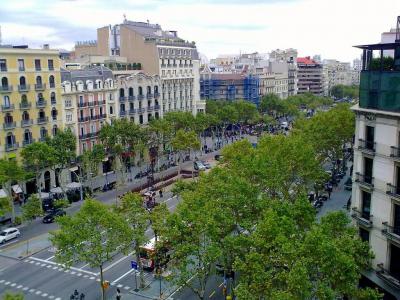
Gràcia Boulevard, located in the heart of Barcelona’s Eixample district, is one of the city’s most significant shopping and business areas. Formerly known as "Jesus Road", it was initially a rural lane connecting Barcelona to the then-separate town of Gràcia. The avenue’s development began in 1821 but was delayed by epidemics and eventually resumed in 1827. The 42-meter-wide boulevard soon became a favorite spot for the aristocracy to showcase their horse-riding skills and luxurious carriages.
By the early 1900s, Gràcia Boulevard had transformed into the city’s most fashionable street. The architect Pere Falqués i Urpí designed its renowned wrought-iron benches and street lamps in 1906, largely adding to its unique charm.
During the Spanish Civil War, the Basque government was based here, and the Catalan poet Salvador Espriu lived in Casa Fuster (at Number 132). Today, Gràcia Boulevard is the most expensive street in Barcelona and Spain, comparable to the Champs-Élysées in Paris or 5th Avenue in New York City. The avenue is lined with upscale stores, though more affordable dining options can be found in its side streets.
More notably, the avenue is home to remarkable Modernist architecture by famous architects such as Antoni Gaudí, Josep Puig i Cadafalch, and Lluís Domènech i Montaner, concentrated along the main street and some of the adjacent streets as well. Major highlights include Gaudí's “La Pedrera” building and the so-called “Block of Discord,” a cluster of Modernist masterpieces. With most mansions here belonging to Barcelona's wealthiest citizens of the late 19th and early 20th centuries, there's no shortage of richly and tastefully decorated facades to behold. Buildings, balconies, stained-glass windows, and carved doors are all within sight.
Day or night, Gràcia Avenue offers a fantastic opportunity for architecture buffs to crane their necks. In addition to these, the Gaudí-designed pavement tiles depicting abstract sea creatures make it a top destination for strollers, offering a visual feast of Barcelona’s rich urban heritage.
Tip:
This boulevard is particularly magical in summer when the locals compete between themselves decorating the streets as part of the Gràcia Festival, which, together with the live music played everywhere, makes it a really fun place to be.
By the early 1900s, Gràcia Boulevard had transformed into the city’s most fashionable street. The architect Pere Falqués i Urpí designed its renowned wrought-iron benches and street lamps in 1906, largely adding to its unique charm.
During the Spanish Civil War, the Basque government was based here, and the Catalan poet Salvador Espriu lived in Casa Fuster (at Number 132). Today, Gràcia Boulevard is the most expensive street in Barcelona and Spain, comparable to the Champs-Élysées in Paris or 5th Avenue in New York City. The avenue is lined with upscale stores, though more affordable dining options can be found in its side streets.
More notably, the avenue is home to remarkable Modernist architecture by famous architects such as Antoni Gaudí, Josep Puig i Cadafalch, and Lluís Domènech i Montaner, concentrated along the main street and some of the adjacent streets as well. Major highlights include Gaudí's “La Pedrera” building and the so-called “Block of Discord,” a cluster of Modernist masterpieces. With most mansions here belonging to Barcelona's wealthiest citizens of the late 19th and early 20th centuries, there's no shortage of richly and tastefully decorated facades to behold. Buildings, balconies, stained-glass windows, and carved doors are all within sight.
Day or night, Gràcia Avenue offers a fantastic opportunity for architecture buffs to crane their necks. In addition to these, the Gaudí-designed pavement tiles depicting abstract sea creatures make it a top destination for strollers, offering a visual feast of Barcelona’s rich urban heritage.
Tip:
This boulevard is particularly magical in summer when the locals compete between themselves decorating the streets as part of the Gràcia Festival, which, together with the live music played everywhere, makes it a really fun place to be.
4) Palau de la Musica Catalana (Palace of Catalan Music) (must see)
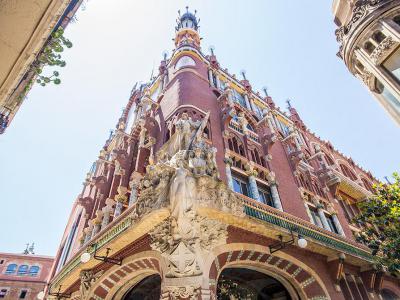
The Palace of Catalan Music in Barcelona, designed by Lluís Domènech i Montaner, is a hallmark of Catalan Art Nouveau architecture. Built between 1905 and 1908 for the Orfeó Català choral society, it was inaugurated in 1908 and awarded the Barcelona City Council’s 1909 prize for best building. The Palace represents a unique blend of curves, floral motifs, and advanced materials like steel framing.
The exterior features a fusion of Spanish and Arabic architectural elements, including exposed red brick, iron, mosaics, and stained glass. Two colonnades with colorful tiles and busts of composers, such as Bach, Beethoven, and Wagner, adorn the façade. Inside, the concert hall-Europe’s only auditorium illuminated entirely by natural light during daytime-seats around 2,200 people. Among other elements, it features a large stained-glass skylight by Antoni Rigalt and sculptures by artists like Eusebi Arnau and Lluís Bru, portraying themes of choral and classical music.
The Palace's main attraction is on the first floor, where modernist artistry is showcased through a spectacular stained glass ceiling and intricately decorated surfaces. The highlights include three-dimensional muses emerging from the walls and a stunning proscenium featuring Valkyries in motion. Despite its visual beauty, the hall’s glass walls present acoustic challenges, as noted by certain critics. Nevertheless, the Palace remains a symbol of Catalan modernism and a must-visit landmark in Barcelona.
Major renovations between 1982 and 1989 restored it to its original grandeur while adding modern amenities like dressing rooms, a library, and an archive in an adjoining six-story building. Further restoration in 2006–2008 included reinstalling the lantern and other ornamental features.
To fully appreciate the craftsmanship, guided tours are recommended and often require advance booking. For a more casual experience, visitors can enjoy coffee or tapas at the foyer bar, while admiring the detailed interior. Presently a UNESCO World Heritage Site since 1997, the Palace hosts over half a million visitors each year, drawn by its architectural splendor and vibrant cultural programs ranging from classical music to jazz, with top-notch lighting making each show a memorable experience.
Tip:
Don't forget to bring opera glasses or binoculars to fully appreciate the details, and be sure to check out the café on the ground floor for a pleasant treat.
Daily Tours:
10 am–3:30 pm (advance booking recommended)
The exterior features a fusion of Spanish and Arabic architectural elements, including exposed red brick, iron, mosaics, and stained glass. Two colonnades with colorful tiles and busts of composers, such as Bach, Beethoven, and Wagner, adorn the façade. Inside, the concert hall-Europe’s only auditorium illuminated entirely by natural light during daytime-seats around 2,200 people. Among other elements, it features a large stained-glass skylight by Antoni Rigalt and sculptures by artists like Eusebi Arnau and Lluís Bru, portraying themes of choral and classical music.
The Palace's main attraction is on the first floor, where modernist artistry is showcased through a spectacular stained glass ceiling and intricately decorated surfaces. The highlights include three-dimensional muses emerging from the walls and a stunning proscenium featuring Valkyries in motion. Despite its visual beauty, the hall’s glass walls present acoustic challenges, as noted by certain critics. Nevertheless, the Palace remains a symbol of Catalan modernism and a must-visit landmark in Barcelona.
Major renovations between 1982 and 1989 restored it to its original grandeur while adding modern amenities like dressing rooms, a library, and an archive in an adjoining six-story building. Further restoration in 2006–2008 included reinstalling the lantern and other ornamental features.
To fully appreciate the craftsmanship, guided tours are recommended and often require advance booking. For a more casual experience, visitors can enjoy coffee or tapas at the foyer bar, while admiring the detailed interior. Presently a UNESCO World Heritage Site since 1997, the Palace hosts over half a million visitors each year, drawn by its architectural splendor and vibrant cultural programs ranging from classical music to jazz, with top-notch lighting making each show a memorable experience.
Tip:
Don't forget to bring opera glasses or binoculars to fully appreciate the details, and be sure to check out the café on the ground floor for a pleasant treat.
Daily Tours:
10 am–3:30 pm (advance booking recommended)
5) Catedral de Barcelona (Barcelona Cathedral) (must see)
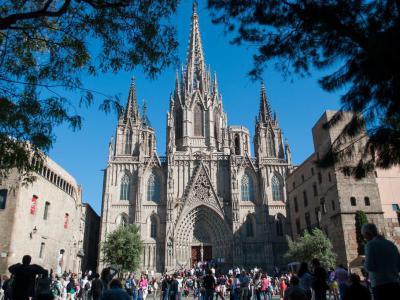
The Cathedral of the Holy Cross and Saint Eulalia, commonly known as Barcelona Cathedral, is a delightful combination of a church, mini-park, and a house of prayer, offering a serene alternative to the renowned La Sagrada Família. As the seat of the Archbishop of Barcelona, it was primarily constructed between the 13th and 15th centuries.
The cathedral has a pseudo-basilica layout with five aisles and a raised high altar. It is dedicated to Saint Eulalia, a young martyr whose relics are housed in the white marble sarcophagus inside the crypt. An intriguing feature is the presence of 13 geese in the cloister, symbolizing Saint Eulàlia's age at the time of her death.
Inside, the cathedral showcases choir stalls adorned with the coats-of-arms of the Order of the Golden Fleece. The Chapel of the Holy Sacrament contains a cross associated with the 1571 Battle of Lepanto and has been reconstructed to hold the tomb of San Olegarius, a former bishop of Barcelona.
The cathedral’s origins trace back to an early Christian and Visigothic complex that was damaged during a Muslim attack on Barcelona in 985. It was replaced with a Romanesque church in 1046 before the current Gothic cathedral began construction in 1298. The cathedral took 150 years to complete yet its neo-Gothic façade, featuring gargoyles and other mythical creatures, was finished only in 1913. Unlike many other churches in Barcelona destroyed during the Civil War, this Gothic temple was spared.
An exemplary piece of Catalan Gothic architecture, emphasizing balanced proportions over verticality, the cathedral measures 93 meters long, 40 meters wide, and 28 meters high at its central nave, with bell towers reaching 54 meters and the central peak at 70 meters.
The Cathedral of Barcelona is also famous for giving rise to the unique Catalan tradition of "dancing egg." Observed during the feast of Corpus Christi (also known as the Solemnity of the Most Holy Body and Blood of Christ), this tradition features an egg balanced on a water fountain’s jet.
The cathedral's cloister contains a gift shop. Cellular phones have been banned from the Chapel of Lepanto and other chapels. While exploring the cathedral's interior, make sure to venture up to the lofty roof terrace. You will be rewarded with views of the cathedral's towers, pinnacles, cimborio, and the Cloister, and a 360-degree view of the city!
Tip:
Cathedral Visit (including Choir entrance + Access to the rooftop, Chapter hall, and Virtual Audio guide) is €9.00.
Cathedral + Museum (including Choir entrance + Access to the rooftop + Chapter hall + Virtual Audio guide + Museum) is €15.00.
The cathedral has a pseudo-basilica layout with five aisles and a raised high altar. It is dedicated to Saint Eulalia, a young martyr whose relics are housed in the white marble sarcophagus inside the crypt. An intriguing feature is the presence of 13 geese in the cloister, symbolizing Saint Eulàlia's age at the time of her death.
Inside, the cathedral showcases choir stalls adorned with the coats-of-arms of the Order of the Golden Fleece. The Chapel of the Holy Sacrament contains a cross associated with the 1571 Battle of Lepanto and has been reconstructed to hold the tomb of San Olegarius, a former bishop of Barcelona.
The cathedral’s origins trace back to an early Christian and Visigothic complex that was damaged during a Muslim attack on Barcelona in 985. It was replaced with a Romanesque church in 1046 before the current Gothic cathedral began construction in 1298. The cathedral took 150 years to complete yet its neo-Gothic façade, featuring gargoyles and other mythical creatures, was finished only in 1913. Unlike many other churches in Barcelona destroyed during the Civil War, this Gothic temple was spared.
An exemplary piece of Catalan Gothic architecture, emphasizing balanced proportions over verticality, the cathedral measures 93 meters long, 40 meters wide, and 28 meters high at its central nave, with bell towers reaching 54 meters and the central peak at 70 meters.
The Cathedral of Barcelona is also famous for giving rise to the unique Catalan tradition of "dancing egg." Observed during the feast of Corpus Christi (also known as the Solemnity of the Most Holy Body and Blood of Christ), this tradition features an egg balanced on a water fountain’s jet.
The cathedral's cloister contains a gift shop. Cellular phones have been banned from the Chapel of Lepanto and other chapels. While exploring the cathedral's interior, make sure to venture up to the lofty roof terrace. You will be rewarded with views of the cathedral's towers, pinnacles, cimborio, and the Cloister, and a 360-degree view of the city!
Tip:
Cathedral Visit (including Choir entrance + Access to the rooftop, Chapter hall, and Virtual Audio guide) is €9.00.
Cathedral + Museum (including Choir entrance + Access to the rooftop + Chapter hall + Virtual Audio guide + Museum) is €15.00.
