Custom Walk in Nassau, Bahamas by cynthiaknutson8154 created on 2026-02-17
Guide Location: Bahamas » Nassau
Guide Type: Custom Walk
# of Sights: 7
Tour Duration: 2 Hour(s)
Travel Distance: 4.6 Km or 2.9 Miles
Share Key: GL73H
Guide Type: Custom Walk
# of Sights: 7
Tour Duration: 2 Hour(s)
Travel Distance: 4.6 Km or 2.9 Miles
Share Key: GL73H
How It Works
Please retrieve this walk in the GPSmyCity app. Once done, the app will guide you from one tour stop to the next as if you had a personal tour guide. If you created the walk on this website or come to the page via a link, please follow the instructions below to retrieve the walk in the app.
Retrieve This Walk in App
Step 1. Download the app "GPSmyCity: Walks in 1K+ Cities" on Apple App Store or Google Play Store.



Step 2. In the GPSmyCity app, download(or launch) the guide "Nassau Map and Walking Tours".
Step 3. Tap the menu button located at upper right corner of the "Walks" screen and select "Retrieve custom walk". Enter the share key: GL73H
1) Straw Market (must see)
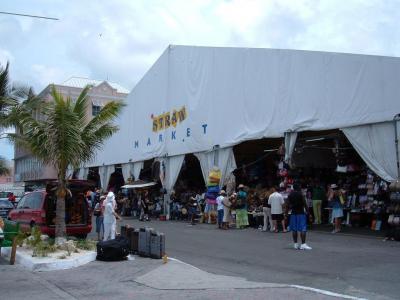
Nassau Straw Market is one of the city’s best-known marketplaces and reflects a long tradition of Bahamian straw work. Long before it became a tourist attraction, straw weaving formed part of everyday island life, with baskets and braided items used for fishing, storage, and carrying produce. The Straw Market itself became firmly established as a public market in the mid-20th century, when rising tourism created demand for handmade goods that visitors could easily carry home.
The original market structure was destroyed by fire in 2001. Its replacement, a two-story building completed in 2011, introduced a more organized layout with mostly covered walkways and partially air-conditioned interior areas, offering relief from heat and rain while preserving the informal feel of a traditional market.
Inside, the market unfolds as a dense grid of hundreds of small vendor stalls, many operated by the same families for generations. Straw bags, hats, and baskets remain the core products, but visitors will also see wood carvings, shell jewelry, paintings, spices, and small locally inspired food items. A mix of handmade crafts and mass-produced souvenirs fills the aisles.
Bargaining is customary and usually friendly rather than confrontational. Prices are rarely fixed, and polite conversation often leads to better deals. A useful tip is to walk through the market once before buying—many stalls sell similar items, and prices can vary. Vendors are often happy to explain how straw items are made or how long a particular piece took to weave.
The original market structure was destroyed by fire in 2001. Its replacement, a two-story building completed in 2011, introduced a more organized layout with mostly covered walkways and partially air-conditioned interior areas, offering relief from heat and rain while preserving the informal feel of a traditional market.
Inside, the market unfolds as a dense grid of hundreds of small vendor stalls, many operated by the same families for generations. Straw bags, hats, and baskets remain the core products, but visitors will also see wood carvings, shell jewelry, paintings, spices, and small locally inspired food items. A mix of handmade crafts and mass-produced souvenirs fills the aisles.
Bargaining is customary and usually friendly rather than confrontational. Prices are rarely fixed, and polite conversation often leads to better deals. A useful tip is to walk through the market once before buying—many stalls sell similar items, and prices can vary. Vendors are often happy to explain how straw items are made or how long a particular piece took to weave.

2) Senor Frog
Senor Frog in Nassau is a popular bar and restaurant that offers a unique and fun experience to both locals and tourists. Situated on the waterfront, guests can enjoy splendid views of the sea while indulging in great Mexican food and drinks.
One of the things that sets Senor Frog apart is its friendly and casual atmosphere that caters to people of all ages. Whether you're with your grandma, kids or friends, you're sure to have fun here. The staff at Senor Frog's is dedicated to making sure that everyone has a great time and enjoys the party music that fills the air.
The restaurant's philosophy is to let go and just have fun, and this is reflected in the lively and vibrant ambiance of the place. Smiles are free at Senor Frog's, and guests are encouraged to let loose and enjoy themselves.
Senor Frog's is not just another restaurant and bar chain; it specializes in entertainment, and this is evident in its unique concept and design. With restaurants in various locations throughout the United States, Mexico, and the Caribbean, Senor Frog's has been a popular destination for over 20 years.
If you're in Nassau, make sure to visit Senor Frog's for a memorable experience. Enjoy the famous Yard-Glass Margaritas, dance to the party music, and let yourself go in a friendly and casual atmosphere. Senor Frog's is a place where you can expect the unexpected, and anything can happen!
One of the things that sets Senor Frog apart is its friendly and casual atmosphere that caters to people of all ages. Whether you're with your grandma, kids or friends, you're sure to have fun here. The staff at Senor Frog's is dedicated to making sure that everyone has a great time and enjoys the party music that fills the air.
The restaurant's philosophy is to let go and just have fun, and this is reflected in the lively and vibrant ambiance of the place. Smiles are free at Senor Frog's, and guests are encouraged to let loose and enjoy themselves.
Senor Frog's is not just another restaurant and bar chain; it specializes in entertainment, and this is evident in its unique concept and design. With restaurants in various locations throughout the United States, Mexico, and the Caribbean, Senor Frog's has been a popular destination for over 20 years.
If you're in Nassau, make sure to visit Senor Frog's for a memorable experience. Enjoy the famous Yard-Glass Margaritas, dance to the party music, and let yourself go in a friendly and casual atmosphere. Senor Frog's is a place where you can expect the unexpected, and anything can happen!
3) Bay Street (must see)
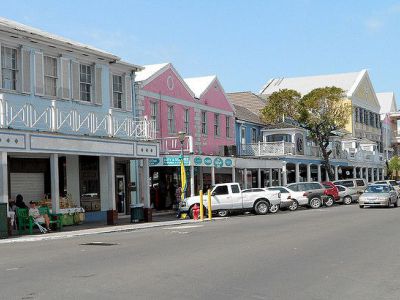
Bay Street is Nassau’s main commercial thoroughfare and its busiest shopping street. Running parallel to the harbor, it blends everyday retail with tourist-oriented shops. As you walk along the street, you’ll pass stores selling jewelry, watches, designer handbags, spirits, and souvenirs, alongside smaller vendors offering locally made crafts and beachwear.
The street also serves as a connective spine for many of downtown Nassau’s historical and cultural sites. Along or just off Bay Street are attractions such as the Pirates of Nassau Museum, the Nassau Public Library—housed in a former Carnegie Library building—Rawson Square, Parliament Square, and the Pompey Museum of Slavery & Emancipation. Toward the waterfront, tour operators and kiosks line the harbor side, offering short boat excursions, snorkeling trips, and island-hopping tours.
Retail highlights include several long-established cigar shops specializing in premium Cuban-style and Caribbean cigars, as well as duty-free stores popular with cruise visitors. Just off Bay Street, the Nassau Straw Market adds a more informal atmosphere, where bargaining is expected and straw goods, handicrafts, and souvenirs are sold in dense rows of stalls.
Dining options along Bay Street range from casual cafes to sit-down restaurants and bars. Many menus feature Bahamian staples such as conch fritters alongside familiar international dishes. For a more concentrated local food scene, Arawak Cay’s Fish Fry is located about one mile west of Rawson Square, where a cluster of restaurants serves traditional Bahamian cuisine in a lively setting.
The street also serves as a connective spine for many of downtown Nassau’s historical and cultural sites. Along or just off Bay Street are attractions such as the Pirates of Nassau Museum, the Nassau Public Library—housed in a former Carnegie Library building—Rawson Square, Parliament Square, and the Pompey Museum of Slavery & Emancipation. Toward the waterfront, tour operators and kiosks line the harbor side, offering short boat excursions, snorkeling trips, and island-hopping tours.
Retail highlights include several long-established cigar shops specializing in premium Cuban-style and Caribbean cigars, as well as duty-free stores popular with cruise visitors. Just off Bay Street, the Nassau Straw Market adds a more informal atmosphere, where bargaining is expected and straw goods, handicrafts, and souvenirs are sold in dense rows of stalls.
Dining options along Bay Street range from casual cafes to sit-down restaurants and bars. Many menus feature Bahamian staples such as conch fritters alongside familiar international dishes. For a more concentrated local food scene, Arawak Cay’s Fish Fry is located about one mile west of Rawson Square, where a cluster of restaurants serves traditional Bahamian cuisine in a lively setting.
4) Queen's Staircase (must see)
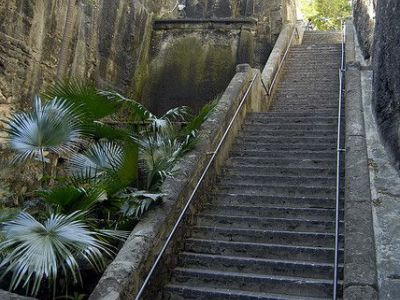
Queen’s Staircase, often referred to as the 66 Steps, was hand-carved out of solid limestone in the late 18th century, most likely between 1793 and 1794, and provides a direct pedestrian route up Bennet’s Hill to Fort Fincastle. Although only 65 steps are visible today, the missing 66th step was buried during later paving works at the base of the staircase.
The staircase was created during a period when the British colony was strengthening its defenses against potential foreign threats in the Caribbean. Rather than responding specifically to pirate attacks, it formed part of a broader defensive network that included Fort Fincastle, Fort Montagu, and Fort Charlotte. Fort Fincastle stands at the highest elevation of the three, and the staircase functioned as a practical shortcut between the town below and the hilltop fortification.
The carving was carried out by enslaved Africans, using only hand tools to cut directly through the limestone cliff. One lesser-noted detail is that the chisel marks left by this work are still visible along the walls, offering a rare, tactile reminder of the labor involved. In the mid-19th century, the staircase was renamed in honor of Queen Victoria, who reigned from 1837 to 1901, reflecting the colony’s continued ties to the British Crown.
The water feature that runs alongside the staircase and the surrounding garden setting are later additions. Today, high stone walls, shade, and flowing water give the staircase a cool, grotto-like atmosphere. Although it still leads to Fort Fincastle, Queen’s Staircase is now appreciated less as a military route and more as one of Nassau’s atmospheric historic passages.
The staircase was created during a period when the British colony was strengthening its defenses against potential foreign threats in the Caribbean. Rather than responding specifically to pirate attacks, it formed part of a broader defensive network that included Fort Fincastle, Fort Montagu, and Fort Charlotte. Fort Fincastle stands at the highest elevation of the three, and the staircase functioned as a practical shortcut between the town below and the hilltop fortification.
The carving was carried out by enslaved Africans, using only hand tools to cut directly through the limestone cliff. One lesser-noted detail is that the chisel marks left by this work are still visible along the walls, offering a rare, tactile reminder of the labor involved. In the mid-19th century, the staircase was renamed in honor of Queen Victoria, who reigned from 1837 to 1901, reflecting the colony’s continued ties to the British Crown.
The water feature that runs alongside the staircase and the surrounding garden setting are later additions. Today, high stone walls, shade, and flowing water give the staircase a cool, grotto-like atmosphere. Although it still leads to Fort Fincastle, Queen’s Staircase is now appreciated less as a military route and more as one of Nassau’s atmospheric historic passages.
5) Fort Fincastle (must see)
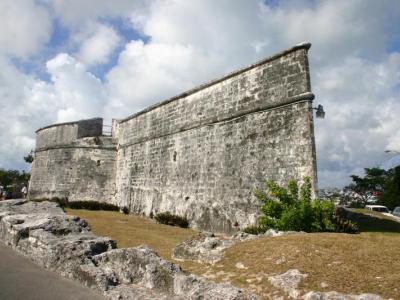
Fort Fincastle was constructed in 1793 using cut limestone and occupies the summit of Bennet’s Hill, a position selected for its clear command over Nassau and the harbor. The fort was commissioned by John Murray, then Governor of The Bahamas. Most visitors arrive on foot via the historic Queen’s Staircase, which emerges at the base of the fort and leads directly into the outer grounds.
Viewed from above, the fort’s circular form is often said to resemble a paddle-wheel steamer. The structure was designed to mount approximately a dozen cannons, though there is no record of the fort ever firing its guns in combat. For a short period in the early 19th century, the fort also served as a lighthouse, before navigational duties were transferred to later harbor lights.
Once inside the fort grounds, the main viewing area is reached by walking along the outer parapet, where the low stone walls open outward toward the city and sea. Looking west, you can see the dense layout of historic downtown Nassau, with its low-rise buildings and street grid spreading outward from the harbor. Turning south, the view opens toward Nassau Harbor itself, where cruise ships and smaller vessels trace the same maritime routes once monitored by the fort’s garrison. To the east, Paradise Island comes into view across the water, its shoreline and bridges clearly visible from this elevated position.
Interpretive information panels are positioned along the inner walls and near the cannon mounts. These panels explain the fort’s construction, its relationship to other defensive sites such as Fort Charlotte and Fort Montagu, and the strategic importance of Bennet’s Hill. Together, the viewpoints and signage help visitors understand how Fort Fincastle functioned within Nassau’s wider system of coastal defenses while offering one of the clearest panoramic perspectives in the city.
Viewed from above, the fort’s circular form is often said to resemble a paddle-wheel steamer. The structure was designed to mount approximately a dozen cannons, though there is no record of the fort ever firing its guns in combat. For a short period in the early 19th century, the fort also served as a lighthouse, before navigational duties were transferred to later harbor lights.
Once inside the fort grounds, the main viewing area is reached by walking along the outer parapet, where the low stone walls open outward toward the city and sea. Looking west, you can see the dense layout of historic downtown Nassau, with its low-rise buildings and street grid spreading outward from the harbor. Turning south, the view opens toward Nassau Harbor itself, where cruise ships and smaller vessels trace the same maritime routes once monitored by the fort’s garrison. To the east, Paradise Island comes into view across the water, its shoreline and bridges clearly visible from this elevated position.
Interpretive information panels are positioned along the inner walls and near the cannon mounts. These panels explain the fort’s construction, its relationship to other defensive sites such as Fort Charlotte and Fort Montagu, and the strategic importance of Bennet’s Hill. Together, the viewpoints and signage help visitors understand how Fort Fincastle functioned within Nassau’s wider system of coastal defenses while offering one of the clearest panoramic perspectives in the city.
6) John Watling’s Distillery
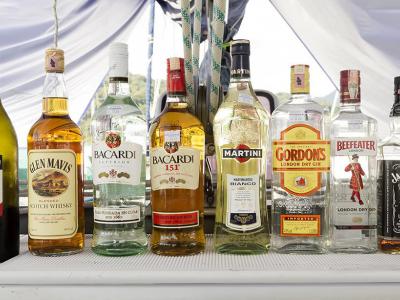
John Watling's Distillery is located on the Buena Vista Estate, which was founded in 1789. The distillery is named after John Watling, a pirate captain who sailed Bahamian waters. John Watling was known as "the gentleman pirate" who observed the Sabbath and threw out gaming boards.
Buena Vista Estate overlooks Nassau harbor and has two acres of landscaped grounds. The beautiful estate features more than 300 years of antiques and prints that showcase the area's history and culture. Visitors will also find a well carved from limestone over 200 years ago.
The distillery has over 1,000 white oak barrels. Guests can tour the estate and watch the rums being bottled by hand. Guests can also taste the various liquors, which are known as the Spirit of The Bahamas. Try the Amber, Pale, or Beuna Vista Rum. The Red Turtle Vodka is filtered with Eleuthera's pink sands, and the Gin is infused with botanicals from Andros.
The on-site Red Turtle Tavern offers special hand-crafted Bahamian cocktails.
Buena Vista Estate overlooks Nassau harbor and has two acres of landscaped grounds. The beautiful estate features more than 300 years of antiques and prints that showcase the area's history and culture. Visitors will also find a well carved from limestone over 200 years ago.
The distillery has over 1,000 white oak barrels. Guests can tour the estate and watch the rums being bottled by hand. Guests can also taste the various liquors, which are known as the Spirit of The Bahamas. Try the Amber, Pale, or Beuna Vista Rum. The Red Turtle Vodka is filtered with Eleuthera's pink sands, and the Gin is infused with botanicals from Andros.
The on-site Red Turtle Tavern offers special hand-crafted Bahamian cocktails.
7) Arawak Cay (Fish Fry Street) (must see)
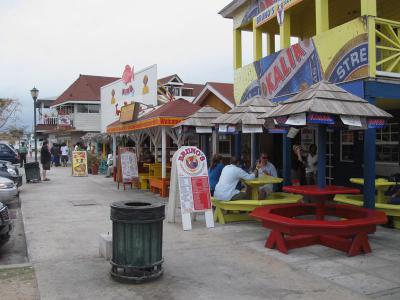
Arawak Cay is known as Fish Fry Street to all those who visit Nassau. Arawak Cay is the location of a wide number of Bahamian restaurants. Traditional food, including fried fish, dominate the cay. It is accessible from Arawak Cay Drive and Fish Fry Way.
Arawak Cay dates to 1969. Sand was taken from Nassau Harbour to build the cay as a tourist attraction. The original plan was to only provide restaurants and bars. However, Arawak Cay now offers a performance stage that features international and local music. The name comes from the original West Indian inhabitants of the island.
Though entertainment is on the menu, food is still the primary draw to Arawak Cay. Most restaurants specialize in seafood. Conch is a particularly popular dish though grilled ship and lobster tails are also easy to find. Most restaurants serve Bahamian beer and cocktails as well.
Arawak Cay dates to 1969. Sand was taken from Nassau Harbour to build the cay as a tourist attraction. The original plan was to only provide restaurants and bars. However, Arawak Cay now offers a performance stage that features international and local music. The name comes from the original West Indian inhabitants of the island.
Though entertainment is on the menu, food is still the primary draw to Arawak Cay. Most restaurants specialize in seafood. Conch is a particularly popular dish though grilled ship and lobster tails are also easy to find. Most restaurants serve Bahamian beer and cocktails as well.
