Custom Walk in Palma de Mallorca, Spain by fandalt_92874b created on 2026-02-26
Guide Location: Spain » Palma de Mallorca
Guide Type: Custom Walk
# of Sights: 5
Tour Duration: 3 Hour(s)
Travel Distance: 7.6 Km or 4.7 Miles
Share Key: XU75W
Guide Type: Custom Walk
# of Sights: 5
Tour Duration: 3 Hour(s)
Travel Distance: 7.6 Km or 4.7 Miles
Share Key: XU75W
How It Works
Please retrieve this walk in the GPSmyCity app. Once done, the app will guide you from one tour stop to the next as if you had a personal tour guide. If you created the walk on this website or come to the page via a link, please follow the instructions below to retrieve the walk in the app.
Retrieve This Walk in App
Step 1. Download the app "GPSmyCity: Walks in 1K+ Cities" on Apple App Store or Google Play Store.



Step 2. In the GPSmyCity app, download(or launch) the guide "Palma de Mallorca Map and Walking Tours".
Step 3. Tap the menu button located at upper right corner of the "Walks" screen and select "Retrieve custom walk". Enter the share key: XU75W
1) Església de Sant Nicolau (Church of Saint Nicolas)
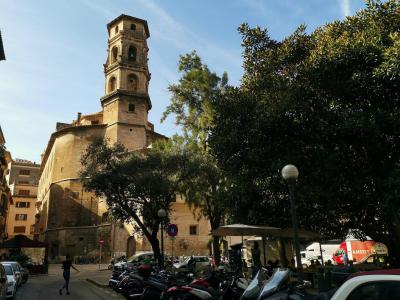
Nestled in the atmospheric labyrinth of Palma’s La Palma Baixa district, just off the elegant boulevard of Es Born, the Church of Saint Nicholas (Església de Sant Nicolau) offers a quiet and evocative experience amidst the city’s bustling historic heart. Founded in 1302 to ease the pressures of the large Santa Eulàlia parish, the original edifice was rebuilt in phases between 1309 and 1349, reflecting the community’s growth at a pivotal moment in Palma’s medieval urban development.
What you see today is largely the result of a comprehensive 17th-century reconstruction, which significantly reshaped the apse, roof, and interior decor. After its renovation and re‑sanctification in 1712, the church welcomed visitors into a structure that elegantly blends Gothic bones with Baroque flourishes. The basilica-style layout-with a single nave flanked by side chapels beneath Gothic vaults and lunettes-echoes its medieval origins, while floral motifs, carved pillars, and the Baroque altarpiece showcase later artistic embellishments.
Architectural highlights include a Catalan-Gothic façade characterised by a square front flanked by octagonal towers, Gothic portals attributed to Francesc Sagrera, and a rose window featuring Casa Amigó stained glass introduced during a later neo‑Gothic revival in the late 19th century by architect Joan Miquel Sureda y Verí. Inside, you’ll find the Gothic paintings of Saint Nicholas and Saint Maginus (by Miquel d’Alcanyís), a silver Gothic ciborium, and a richly decorated Baroque altarpiece, blending layers of Palma’s evolving art history.
For visitors craving a calm moment of reflection or a taste of Palma’s architectural richness, the Church of Saint Nicholas is a peaceful gem often overlooked by mainstream tours. Its intimate scale and layered history reward curiosity. Audio guides are available on-site, and they also play a modest role during Holy Week, serving as the starting point for one of Palma’s traditional processions on Holy Tuesday.
What you see today is largely the result of a comprehensive 17th-century reconstruction, which significantly reshaped the apse, roof, and interior decor. After its renovation and re‑sanctification in 1712, the church welcomed visitors into a structure that elegantly blends Gothic bones with Baroque flourishes. The basilica-style layout-with a single nave flanked by side chapels beneath Gothic vaults and lunettes-echoes its medieval origins, while floral motifs, carved pillars, and the Baroque altarpiece showcase later artistic embellishments.
Architectural highlights include a Catalan-Gothic façade characterised by a square front flanked by octagonal towers, Gothic portals attributed to Francesc Sagrera, and a rose window featuring Casa Amigó stained glass introduced during a later neo‑Gothic revival in the late 19th century by architect Joan Miquel Sureda y Verí. Inside, you’ll find the Gothic paintings of Saint Nicholas and Saint Maginus (by Miquel d’Alcanyís), a silver Gothic ciborium, and a richly decorated Baroque altarpiece, blending layers of Palma’s evolving art history.
For visitors craving a calm moment of reflection or a taste of Palma’s architectural richness, the Church of Saint Nicholas is a peaceful gem often overlooked by mainstream tours. Its intimate scale and layered history reward curiosity. Audio guides are available on-site, and they also play a modest role during Holy Week, serving as the starting point for one of Palma’s traditional processions on Holy Tuesday.
2) Olivar Market (must see)
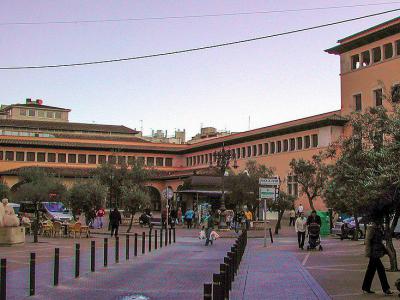
In the center of Palma de Mallorca sits the Olivar Market. If you like food, all kinds of food, this is definitely the place to be. How does one who has never been here know this? Watch the locals. See where they go for snacks, take-away, shopping, and meals-in-place. Follow them. Do as they do and enjoy.
Olivar Market has been in place since 1951. It has a full range of stalls, bars, restaurants and cafes and cafeterias. There are few supermarkets in Palma, so this is the go to place for residents and tourists. Sea food, sushi, meats, fresh fruit, vegetables and dairy products are all here.
On the ground floor (first floor in USA) find stalls for vegetables, meats and gourmet foods. There are escalators and elevators to the upper floor and the parking area. On the upper floor is a shopping arcade, a cooking school, hairdressing salon, restaurants and bars and boutiques, plus a supermarket, a children's area and a library.
Olivar Market has been in place since 1951. It has a full range of stalls, bars, restaurants and cafes and cafeterias. There are few supermarkets in Palma, so this is the go to place for residents and tourists. Sea food, sushi, meats, fresh fruit, vegetables and dairy products are all here.
On the ground floor (first floor in USA) find stalls for vegetables, meats and gourmet foods. There are escalators and elevators to the upper floor and the parking area. On the upper floor is a shopping arcade, a cooking school, hairdressing salon, restaurants and bars and boutiques, plus a supermarket, a children's area and a library.
3) Esglesia de Santa Catalina de Siena (Church of Santa Catalina de Siena)
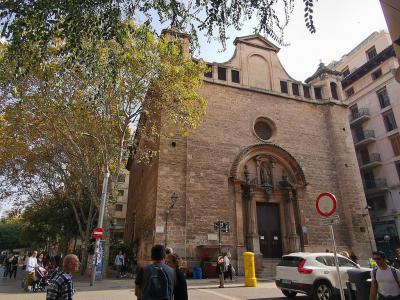
The Church of Santa Catalina de Siena at Carrer de Sant Miquel is a medieval temple, formerly Catholic, and is one of the oldest in Palma. It was founded by Joan Baptista Despuig, member of the Order of Santiago, who is buried inside the church, by the altar. Originally, the church was part of the Santa Catalina de Siena convent, and was built on the site of an old Muslim mosque. The latter (with minor modifications) was initially used, back in the 13th century, as a Christian temple until the construction of a new Gothic-style church began a century later.
The temple was dedicated to Santa Catalina, a nun who lived in the 14th century and was actively involved in the affairs of the Catholic Church. In fact, she was the one who convinced Pope Gregory XI to transfer the Holy See back to Rome.
In 1680, Francisco Herrera finalized the building in an Italian style. The renovations included expanded space and reorientation of the main portal towards Sant Miquel street. The typically Gothic single nave with side chapels, apse with a trapezoidal plan, and a half-barrel roof were complemented with the purely Baroque interior. The reconstruction was carried out in connection with the establishment of the Dominican Monastery of Santa Catalina in Ciutat de Mallorca in 1661.
Although in 1964 the church was declared a Historic Monument, two years later the demolition of the residential part of the monastery came underway. In 2002, the church was handed over to the Russian Orthodox parish of Natividad Cristo (the Nativity of Christ) affiliated to the Moscow Patriarchate.
The temple was dedicated to Santa Catalina, a nun who lived in the 14th century and was actively involved in the affairs of the Catholic Church. In fact, she was the one who convinced Pope Gregory XI to transfer the Holy See back to Rome.
In 1680, Francisco Herrera finalized the building in an Italian style. The renovations included expanded space and reorientation of the main portal towards Sant Miquel street. The typically Gothic single nave with side chapels, apse with a trapezoidal plan, and a half-barrel roof were complemented with the purely Baroque interior. The reconstruction was carried out in connection with the establishment of the Dominican Monastery of Santa Catalina in Ciutat de Mallorca in 1661.
Although in 1964 the church was declared a Historic Monument, two years later the demolition of the residential part of the monastery came underway. In 2002, the church was handed over to the Russian Orthodox parish of Natividad Cristo (the Nativity of Christ) affiliated to the Moscow Patriarchate.
4) Church of Santa Magdalena
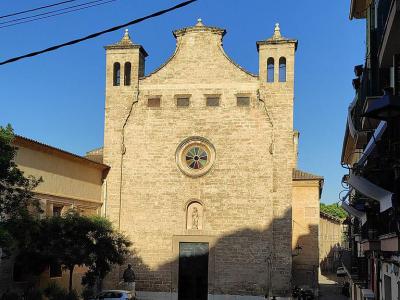
Located at Plaça de Santa Magdalena, next to the Convent of Santa Magdalena de Palma, the Church of Santa Magdalena is another impressive place of worship in Palma de Mallorca, dating back to the 14th century. It has been constructed in baroque style and in 1740 it has been completely rebuilt keeping its original design. It is the place where you can find the remains of Santa Catalina Tomàs. She was an orphan with a difficult childhood.
Catalina was brought up in the house of her uncle, where she worked as a servant and a shepherdess. At an early age, the girl wanted to join the religious life. Thus, at the age of 12, she went to the Convent of Saint Mary Magdalena with a request to become a nun. But, due to her age, the Convent refused and Catalina sat down on the stone and said she would not move away until she was accepted into the monastery. The stone that Catalina sat on has survived until present day. It is also believed that Catalina was a mystic and prophetess.
Catalina was brought up in the house of her uncle, where she worked as a servant and a shepherdess. At an early age, the girl wanted to join the religious life. Thus, at the age of 12, she went to the Convent of Saint Mary Magdalena with a request to become a nun. But, due to her age, the Convent refused and Catalina sat down on the stone and said she would not move away until she was accepted into the monastery. The stone that Catalina sat on has survived until present day. It is also believed that Catalina was a mystic and prophetess.

5) Castell de Bellver (Bellver Castle) (must see)
Bellver Castle (Castell de Bellver), perched atop the lush Puig de Sa Mesquida just 3 kilometers west of Palma’s historic core, offers visitors both architectural intrigue and breathtaking vistas. Built between 1300 and 1310 by order of King Jaume II of Mallorca and designed by Pere Salvà (who also worked on the Royal Palace of La Almudaina), this castle is one of the few truly circular fortresses in Europe-its round outer curtain wall, central courtyard, and three surrounding towers seamlessly define its rare form.
Originally conceived as a royal residence, Bellver Castle served the kings of Mallorca only briefly-Jaume II, Sanç I, and Jaume III all stayed for short periods. As political tides shifted, the fortress was repurposed: by the 18th century, it had become a military prison, holding notable figures such as Gaspar Melchor de Jovellanos, and continued in this function through Spain’s wars and civil conflicts until the early 20th century.
Today, the castle is a welcoming cultural icon under the care of Palma’s city government. Inside lies the City History Museum (Museu d’Història de la Ciutat), tracing Palma’s evolution from Roman and Moorish times through to the modern era, with displays of ceramics, maps, sculpture, and city artefacts. Visitors can stroll among the Gothic arches of the two‑level courtyard, climb to the rooftop terrace, and explore the structure’s hidden recesses-from former dungeons to a cistern within the courtyard well.
For tourists, Bellver Castle rewards both curiosity and wonder: artfully blending medieval Gothic elegance with formidable military design, it also offers panoramic views across the Bay of Palma, the Sierra de Tramuntana, and the city rooftops. Surrounded by pine‑clad forest and linked to the city via a scenic uphill walk or local bus route, it’s a must-see landmark whose name, meaning “beautiful view,” lives up to every bit of expectation.
Originally conceived as a royal residence, Bellver Castle served the kings of Mallorca only briefly-Jaume II, Sanç I, and Jaume III all stayed for short periods. As political tides shifted, the fortress was repurposed: by the 18th century, it had become a military prison, holding notable figures such as Gaspar Melchor de Jovellanos, and continued in this function through Spain’s wars and civil conflicts until the early 20th century.
Today, the castle is a welcoming cultural icon under the care of Palma’s city government. Inside lies the City History Museum (Museu d’Història de la Ciutat), tracing Palma’s evolution from Roman and Moorish times through to the modern era, with displays of ceramics, maps, sculpture, and city artefacts. Visitors can stroll among the Gothic arches of the two‑level courtyard, climb to the rooftop terrace, and explore the structure’s hidden recesses-from former dungeons to a cistern within the courtyard well.
For tourists, Bellver Castle rewards both curiosity and wonder: artfully blending medieval Gothic elegance with formidable military design, it also offers panoramic views across the Bay of Palma, the Sierra de Tramuntana, and the city rooftops. Surrounded by pine‑clad forest and linked to the city via a scenic uphill walk or local bus route, it’s a must-see landmark whose name, meaning “beautiful view,” lives up to every bit of expectation.
