Custom Walk in Fort Worth, Texas by jenthomae_72de89 created on 2026-03-03
Guide Location: USA » Fort Worth
Guide Type: Custom Walk
# of Sights: 10
Tour Duration: 7 Hour(s)
Travel Distance: 18.4 Km or 11.4 Miles
Share Key: X96QX
Guide Type: Custom Walk
# of Sights: 10
Tour Duration: 7 Hour(s)
Travel Distance: 18.4 Km or 11.4 Miles
Share Key: X96QX
How It Works
Please retrieve this walk in the GPSmyCity app. Once done, the app will guide you from one tour stop to the next as if you had a personal tour guide. If you created the walk on this website or come to the page via a link, please follow the instructions below to retrieve the walk in the app.
Retrieve This Walk in App
Step 1. Download the app "GPSmyCity: Walks in 1K+ Cities" on Apple App Store or Google Play Store.



Step 2. In the GPSmyCity app, download(or launch) the guide "Fort Worth Map and Walking Tours".
Step 3. Tap the menu button located at upper right corner of the "Walks" screen and select "Retrieve custom walk". Enter the share key: X96QX
1) Fort Worth Water Gardens (must see)
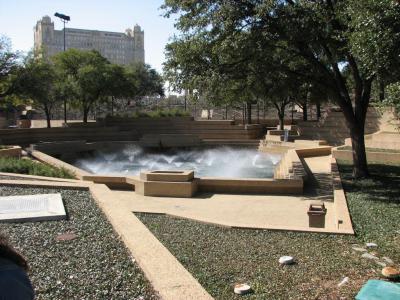
The Fort Worth Water Gardens is an urban park located in downtown Fort Worth. It was built in 1974 from a design by architects Philip Johnson and John Burgee. It is comprised of three pools of water, sitting areas and shade trees. It is a popular place for visitors and locals to stop and cool themselves in a tranquil location.
The primary attraction is the active pool, which has water cascading down 38-feet of steps to a small pool. Visitors are welcome to walk up and down the steps as they please. It is a good way to cool off from the heat of the Texas sun.
The other two pools are the meditation pool and the aerating pool. The meditation pool, known as the quiet pool, is a steep walk down a flight of stairs where the sound of the city is removed and replaced by trickling water. The aerating pool includes illuminated spray fountains, which are popular with children of all ages.
The 4.3 acre water park has been used in Hollywood films and music videos. The design makes the water gardens very popular with professional and amateur photographers. It often falls on lists of the most instagrammable places in Fort Worth.
The Fort Worth Water Gardens are located adjacent to the Fort Worth Convention Center. They are conveniently located near a number of points of interest like the historic St. Patrick Cathedral and the bustling downtown district of Sundance Square.
The park is open seven days a week from 7 AM through 10 PM.
The primary attraction is the active pool, which has water cascading down 38-feet of steps to a small pool. Visitors are welcome to walk up and down the steps as they please. It is a good way to cool off from the heat of the Texas sun.
The other two pools are the meditation pool and the aerating pool. The meditation pool, known as the quiet pool, is a steep walk down a flight of stairs where the sound of the city is removed and replaced by trickling water. The aerating pool includes illuminated spray fountains, which are popular with children of all ages.
The 4.3 acre water park has been used in Hollywood films and music videos. The design makes the water gardens very popular with professional and amateur photographers. It often falls on lists of the most instagrammable places in Fort Worth.
The Fort Worth Water Gardens are located adjacent to the Fort Worth Convention Center. They are conveniently located near a number of points of interest like the historic St. Patrick Cathedral and the bustling downtown district of Sundance Square.
The park is open seven days a week from 7 AM through 10 PM.
2) St. Patrick Cathedral
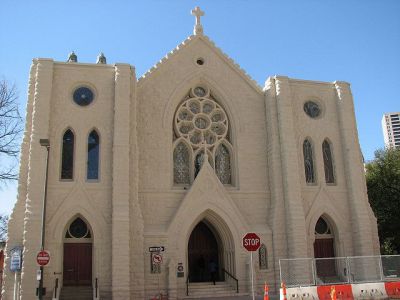
Saint Patrick Cathedral in Forth Worth is a Catholic Church and a Recorded Texas Historic Landmark. As a parish of the Diocese of Fort Worth, Saint Patrick Cathedral is the seat of the bishop. Construction on the building began in 1888 and completed in 1892. It was designed by architect James J. Kane in the Second Empire, Gothic Revival and Prairie architectural styles.
Visitors to Saint Patrick Cathedral will find that it is easy walking distance from Sundance Square. It is located at the corner of 12th and Throckmorton Streets in the heart of downtown Fort Worth. The Saint Patrick Cathedral Pastoral Center is located directly across 12th Street from the cathedral itself.
The church is open for mass on Sundays at 9:30 AM, 11 AM, 12:30 PM and 5 PM. Services at 8 AM are reserved for senior citizens. There is a 2:30 PM mass delivered in Spanish that is open to all. Daily mass takes place at 12:05 on Monday through Friday. Saturday mass is at 8 AM.
Saint Patrick Cathedral was named on the National Register of Historic Places in 1985.
Visitors to Saint Patrick Cathedral will find that it is easy walking distance from Sundance Square. It is located at the corner of 12th and Throckmorton Streets in the heart of downtown Fort Worth. The Saint Patrick Cathedral Pastoral Center is located directly across 12th Street from the cathedral itself.
The church is open for mass on Sundays at 9:30 AM, 11 AM, 12:30 PM and 5 PM. Services at 8 AM are reserved for senior citizens. There is a 2:30 PM mass delivered in Spanish that is open to all. Daily mass takes place at 12:05 on Monday through Friday. Saturday mass is at 8 AM.
Saint Patrick Cathedral was named on the National Register of Historic Places in 1985.
3) Fort Worth Japanese Garden (must see)
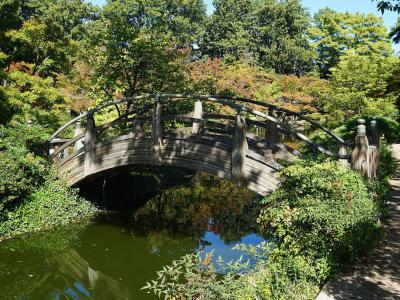
The Fort Worth Japanese Garden is a 7.5-acre landscape designed in the style of a traditional Japanese strolling garden. Built in a former gravel pit in the early 1970s, its transformation was led by Kingsley K. Wu. The garden integrates multiple design styles found in classical Japanese gardening, including hill-and-pond, dry landscape, tea garden, and enclosed garden formats. At its center lies a series of interconnected ponds surrounded by hills, bridges, walkways, and structures inspired by Japanese religious, imperial, and domestic architecture.
Distinct features include a karesansui-style dry garden modeled after Kyoto’s Ryoanji temple, a moon-viewing deck, and a Shinto shrine-inspired pavilion. An authentic Mikoshi-an ornate palanquin donated by Nagaoka-remains on display. The garden also contains two karesansui compositions intended to resemble rivers, one alluding to the Colorado River and the Grand Canyon. Visitors encounter cherry trees, bamboo groves, Japanese maples, and koi-filled ponds as they follow the winding paths. Additional structures, including a pagoda, viewing platforms, and the enclosed Suzuki Garden.
The garden hosts two seasonal festivals-spring and fall-focused on traditional Japanese arts and cultural demonstrations. These events are typically held around the Moon-Viewing Deck, which features an amphitheatre and a taijitu symbol embossed in concrete.
Distinct features include a karesansui-style dry garden modeled after Kyoto’s Ryoanji temple, a moon-viewing deck, and a Shinto shrine-inspired pavilion. An authentic Mikoshi-an ornate palanquin donated by Nagaoka-remains on display. The garden also contains two karesansui compositions intended to resemble rivers, one alluding to the Colorado River and the Grand Canyon. Visitors encounter cherry trees, bamboo groves, Japanese maples, and koi-filled ponds as they follow the winding paths. Additional structures, including a pagoda, viewing platforms, and the enclosed Suzuki Garden.
The garden hosts two seasonal festivals-spring and fall-focused on traditional Japanese arts and cultural demonstrations. These events are typically held around the Moon-Viewing Deck, which features an amphitheatre and a taijitu symbol embossed in concrete.
4) Kimbell Art Museum (must see)
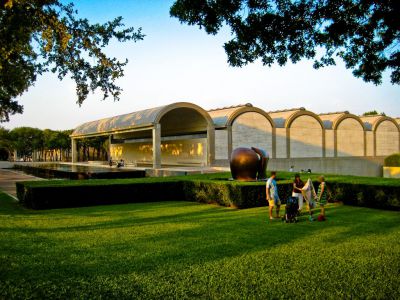
The Kimbell Art Museum in Fort Worth, hosts a small but excellent art collection as well as traveling art exhibitions, educational programs and an extensive research library. Its initial artwork came from the private collection of Kay and Velma Kimbell, who also provided funds for a new building to house it.
The building was designed by renowned architect Louis I. Kahn and is widely recognized as one of the most significant works of architecture of recent times. It is especially noted for the wash of silvery natural light across its vaulted gallery ceilings.
The European collection is the most extensive in the museum and includes Michelangelo's first known painting, The Torment of Saint Anthony, the only painting by Michelangelo on exhibit in the Americas.
The museum also houses a substantial library with over 59,000 books, periodicals and auction catalogs that are available as a resource to art historians and to faculty and graduate students from surrounding universities.
The building was designed by renowned architect Louis I. Kahn and is widely recognized as one of the most significant works of architecture of recent times. It is especially noted for the wash of silvery natural light across its vaulted gallery ceilings.
The European collection is the most extensive in the museum and includes Michelangelo's first known painting, The Torment of Saint Anthony, the only painting by Michelangelo on exhibit in the Americas.
The museum also houses a substantial library with over 59,000 books, periodicals and auction catalogs that are available as a resource to art historians and to faculty and graduate students from surrounding universities.
Sight description based on Wikipedia.
5) Fort Worth Stockyards National Historic District (must see)
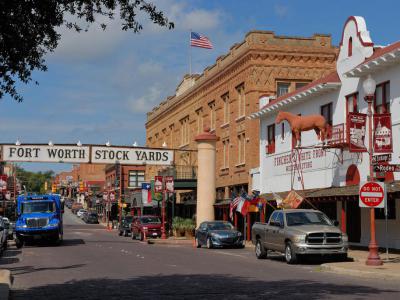
The Fort Worth Stockyards National Historic District, beginning in 1866 as a livestock market and bolstered by railroad access a decade later, evolved into a major cattle hub by the early 20th century. The Fort Worth Union Stockyards opened in 1890, followed by meatpacking operations from companies like Swift and Armour. By 1907, over a million cattle were traded annually. Though the industry declined by the mid-20th century, the area’s architectural core-including the Livestock Exchange Building, Cowtown Coliseum, and the Stockyards Hotel-remains intact, earning a place on the National Register of Historic Places in 1976.
The modern-day Stockyards district is centered on Western retail, food, and entertainment venues. Historic saloons, artisan bootmakers, and rodeo arenas offer visitors a chance to experience aspects of Texas’ cattle-driving heritage. The Cowtown Coliseum hosts weekly rodeos, and the daily cattle drives continue as a symbolic nod to the region’s ranching past. Horseback trail rides begin at the Stockyards Stables, while attractions like the Cowtown Cattlepen Maze and petting corral appeal to families. Museums such as the Texas Cowboy Hall of Fame and the Bull Riding Hall of Fame highlight rodeo culture and Western traditions.
Beyond livestock and rodeo, the district includes a mix of live music, Western performance, and heritage activities. The Cowtown Opry features musicians preserving Texas’ Western swing legacy, and the Second Rodeo Brewing venue hosts performances alongside house-made beer and open-air seating. The Grapevine Vintage Railroad connects the Stockyards to nearby communities, extending its reach as a heritage site. Visitors can also explore local history through the North Fort Worth Historical Society or take part in walking tours, including those focused on reported ghost sightings.
The modern-day Stockyards district is centered on Western retail, food, and entertainment venues. Historic saloons, artisan bootmakers, and rodeo arenas offer visitors a chance to experience aspects of Texas’ cattle-driving heritage. The Cowtown Coliseum hosts weekly rodeos, and the daily cattle drives continue as a symbolic nod to the region’s ranching past. Horseback trail rides begin at the Stockyards Stables, while attractions like the Cowtown Cattlepen Maze and petting corral appeal to families. Museums such as the Texas Cowboy Hall of Fame and the Bull Riding Hall of Fame highlight rodeo culture and Western traditions.
Beyond livestock and rodeo, the district includes a mix of live music, Western performance, and heritage activities. The Cowtown Opry features musicians preserving Texas’ Western swing legacy, and the Second Rodeo Brewing venue hosts performances alongside house-made beer and open-air seating. The Grapevine Vintage Railroad connects the Stockyards to nearby communities, extending its reach as a heritage site. Visitors can also explore local history through the North Fort Worth Historical Society or take part in walking tours, including those focused on reported ghost sightings.
6) Stockyards Station
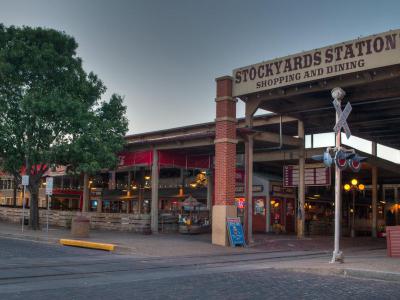
Stockyards Station is a shopping area located in the historic Stockyards district in Fort Worth. Visitors will find more than 20 unique shops, a wide number of restaurants and plenty of things to see and do. Stockyards Station is a great place to plan a full day walking tour as visitors take their time moseying through the Old West themed streets.
Stockyards Station is home to numerous shops that have nearly everything one could want as a souvenir from the Old West. Shops sell items like beef jerky, turquoise jewelry, cowboy hats, boots and more.
While in the Stockyards district, visitors can watch an Old West gunfight show, take part in the herd experience, watch daily cattle drive, listen to music, take in a comedy show or attend the rodeo. Afterward, they can sample jerky, steak, Texas chili or any number of dishes that one can only find in the American West.
Stockyards Station is home to numerous shops that have nearly everything one could want as a souvenir from the Old West. Shops sell items like beef jerky, turquoise jewelry, cowboy hats, boots and more.
While in the Stockyards district, visitors can watch an Old West gunfight show, take part in the herd experience, watch daily cattle drive, listen to music, take in a comedy show or attend the rodeo. Afterward, they can sample jerky, steak, Texas chili or any number of dishes that one can only find in the American West.
7) Cowtown Cattlepen Maze
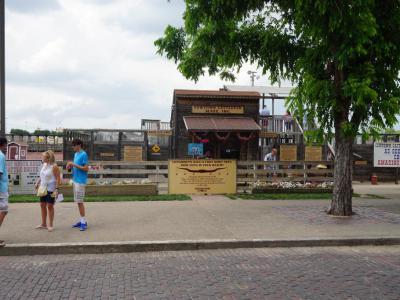
The Cowtown Cattlepen Maze offers an interactive experience modeled after the historic cattle pens of the Old West. Covering 5,400 square feet, the wooden maze features a network of twisting paths where visitors, especially families with children, can test their navigation skills. Participants aim to locate four checkpoints as quickly as possible, racing against the clock. A second-story observation deck provides a clear view of the entire structure, allowing spectators to follow the action or strategize their own routes before entering.
The maze is part of the Fort Worth Stockyards, a site with deep roots in cattle trading and ranching history. Once a key stop for cowboys driving herds along the Chisholm Trail, the Stockyards became a major livestock market in the late 19th and early 20th centuries. Though traditional trading has declined, the area now hosts a variety of activities that reflect its past.
The maze is part of the Fort Worth Stockyards, a site with deep roots in cattle trading and ranching history. Once a key stop for cowboys driving herds along the Chisholm Trail, the Stockyards became a major livestock market in the late 19th and early 20th centuries. Though traditional trading has declined, the area now hosts a variety of activities that reflect its past.
8) Exchange Avenue - Herd Cattle Drive
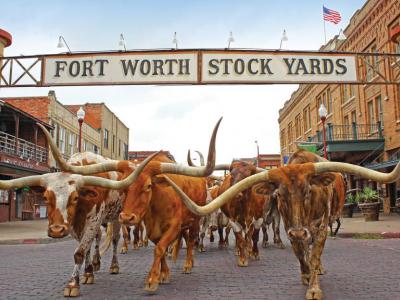
The Exchange Avenue Cattle Drive offers a direct look at Fort Worth’s ranching past through the daily appearance of the Fort Worth Herd. Each day at 11:30 a.m. and 4:00 p.m., a group of Texas Longhorns is guided down East Exchange Avenue by skilled drovers dressed in historically accurate gear. The event is designed to reflect the traditions of the 19th-century cattle drives that once defined the region’s economy and identity. Visitors can view the procession from sidewalks, nearby restaurants, or the lawn in front of the Livestock Exchange Building.
Before and after the drive, the steers are kept in public pens behind the Exchange Building, allowing for up-close viewing and photographs. Those interested in learning more can speak with the drovers-modern-day cattle handlers who share insights into their work and the historical background of the practice. They often offer steer trading cards as a keepsake.
Before and after the drive, the steers are kept in public pens behind the Exchange Building, allowing for up-close viewing and photographs. Those interested in learning more can speak with the drovers-modern-day cattle handlers who share insights into their work and the historical background of the practice. They often offer steer trading cards as a keepsake.
9) Cowtown Coliseum
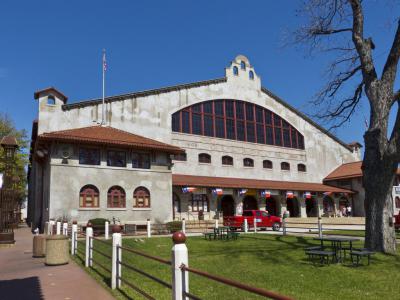
Cowtown Coliseum, built in 1908 and originally known as the Grand Coliseum, holds the distinction of being the first indoor arena in the United States designed for rodeo events. It has served as a longstanding venue for Western sports, live music, and local gatherings. The building was refurbished in 1986, preserving its early 20th-century architecture while adapting it for modern use. Over the decades, the Coliseum has hosted a range of public figures and performers, including presidential addresses from Theodore Roosevelt and Jimmy Carter, and concerts by Elvis Presley and Ike & Tina Turner.
The Coliseum is best known today for the Stockyards Championship Rodeo, held almost every Friday and Saturday since 1992. It also hosts competitions affiliated with the PRCA, Bill Pickett Invitational Rodeo, WRCA, and Bulls, Bands & Barrels. Bull riding plays a significant role in its programming: the PBR’s first event was held here in 1993.
In addition to its event schedule, Cowtown Coliseum houses the Texas Rodeo Cowboy Hall of Fame and the Bull Riding Hall of Fame. The arena also occasionally hosts concerts and local sports games, maintaining a varied year-round calendar.
The Coliseum is best known today for the Stockyards Championship Rodeo, held almost every Friday and Saturday since 1992. It also hosts competitions affiliated with the PRCA, Bill Pickett Invitational Rodeo, WRCA, and Bulls, Bands & Barrels. Bull riding plays a significant role in its programming: the PBR’s first event was held here in 1993.
In addition to its event schedule, Cowtown Coliseum houses the Texas Rodeo Cowboy Hall of Fame and the Bull Riding Hall of Fame. The arena also occasionally hosts concerts and local sports games, maintaining a varied year-round calendar.
10) Sundance Square (must see)
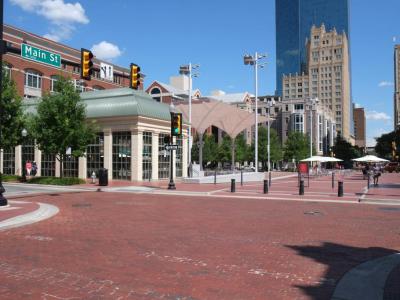
Sundance Square is a busy and bustling district located in downtown Forth Worth. It is a popular place for tourists because of ample entertainment, shopping, food and nightlife. It gets its name from Butch Cassidy's sidekick, the Sundance Kid. The two, along with their gang, would spend time in the area as they were evading the law.
Shoppers at Sundance Square will find more than a dozen unique boutiques to patronize. These shops sell clothing, jewelry, accessories, food items, tobacco and art. After perusing the shops, hungry tourists can find a restaurant that is guaranteed to please. Chain restaurants and local flavors are spread through Sundance Square.
There is no shortage of entertainment in this district. Sundance Square is the home of Bass Performance Hall, which offers concerts and theatre performances. Other entertainment venues include a jazz hall, comedy clubs, a movie theatre and a cigar bar, among others.
History lovers will enjoy seeing the former downtown Woolworth's Building, the Knights of Pythias Building and the Burk Burnett Building. All of these sites are listed on the National Register of Historic Places.
Shoppers at Sundance Square will find more than a dozen unique boutiques to patronize. These shops sell clothing, jewelry, accessories, food items, tobacco and art. After perusing the shops, hungry tourists can find a restaurant that is guaranteed to please. Chain restaurants and local flavors are spread through Sundance Square.
There is no shortage of entertainment in this district. Sundance Square is the home of Bass Performance Hall, which offers concerts and theatre performances. Other entertainment venues include a jazz hall, comedy clubs, a movie theatre and a cigar bar, among others.
History lovers will enjoy seeing the former downtown Woolworth's Building, the Knights of Pythias Building and the Burk Burnett Building. All of these sites are listed on the National Register of Historic Places.
