Custom Walk in Cologne, Germany by konamd4_2aae64 created on 2026-03-10
Guide Location: Germany » Cologne
Guide Type: Custom Walk
# of Sights: 9
Tour Duration: 3 Hour(s)
Travel Distance: 5.8 Km or 3.6 Miles
Share Key: JDYKN
Guide Type: Custom Walk
# of Sights: 9
Tour Duration: 3 Hour(s)
Travel Distance: 5.8 Km or 3.6 Miles
Share Key: JDYKN
How It Works
Please retrieve this walk in the GPSmyCity app. Once done, the app will guide you from one tour stop to the next as if you had a personal tour guide. If you created the walk on this website or come to the page via a link, please follow the instructions below to retrieve the walk in the app.
Retrieve This Walk in App
Step 1. Download the app "GPSmyCity: Walks in 1K+ Cities" on Apple App Store or Google Play Store.



Step 2. In the GPSmyCity app, download(or launch) the guide "Cologne Map and Walking Tours".
Step 3. Tap the menu button located at upper right corner of the "Walks" screen and select "Retrieve custom walk". Enter the share key: JDYKN
1) Groß St. Martin (Great St. Martin Church) (must see)
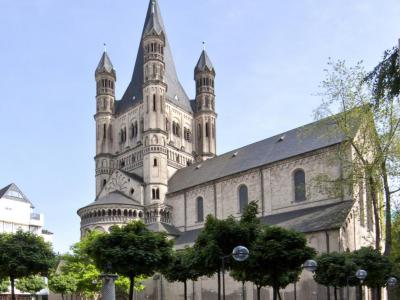
Ah, the Great Saint Martin Church-this seriously good-looking temple with a riverside address and medieval drama to spare is proof that if a building can survive fire, war, and questionable Baroque interior design choices, it deserves your full attention.
This Romanesque heavyweight was built between 1150 and 1250, and its iconic tower has been photobombing Old Town’s skyline ever since. But the site’s résumé goes way back. In Roman times, this spot was actually an island in the Rhine, where they built a humble chapel-probably to appease both the gods and the weather.
In the 10th century, a new church was built. In 1150: Boom. Fire. Ashes. Time to build again! By 1172, they’d got a fancy tri-apsidal structure. It survived another fire in 1185. But in 1378, the towers' roofs caught fire again, and by 1434, a storm decided to finish the job and blew them clean off. Truly, the medieval weather had no chill...
In the 1700s, someone got ambitious with the interior, adding Baroque decorations. Not everyone was thrilled. Some clergy officials thought it looked more Versailles than virtue, and out came the paintbrushes.
Then came the French in 1794. They stuck around for 20 years, turned the abbey into barracks, and eventually pulled the plug on the monastery altogether. Monks out, soldiers in. Not exactly a spiritual upgrade...
By 1847, restoration kicked off, and not a moment too soon. Because in World War II, the church took a beating-fires again, naturally-but was lovingly rebuilt between 1948 and 1985. Now, that’s what we call long-term commitment...
Pro tip:
The entrance plays hard to get-it’s tucked away at the back. And if you fancy ancient basements, head downstairs to see the Roman foundations. Because nothing says timeless like a church that’s literally built on history.
This Romanesque heavyweight was built between 1150 and 1250, and its iconic tower has been photobombing Old Town’s skyline ever since. But the site’s résumé goes way back. In Roman times, this spot was actually an island in the Rhine, where they built a humble chapel-probably to appease both the gods and the weather.
In the 10th century, a new church was built. In 1150: Boom. Fire. Ashes. Time to build again! By 1172, they’d got a fancy tri-apsidal structure. It survived another fire in 1185. But in 1378, the towers' roofs caught fire again, and by 1434, a storm decided to finish the job and blew them clean off. Truly, the medieval weather had no chill...
In the 1700s, someone got ambitious with the interior, adding Baroque decorations. Not everyone was thrilled. Some clergy officials thought it looked more Versailles than virtue, and out came the paintbrushes.
Then came the French in 1794. They stuck around for 20 years, turned the abbey into barracks, and eventually pulled the plug on the monastery altogether. Monks out, soldiers in. Not exactly a spiritual upgrade...
By 1847, restoration kicked off, and not a moment too soon. Because in World War II, the church took a beating-fires again, naturally-but was lovingly rebuilt between 1948 and 1985. Now, that’s what we call long-term commitment...
Pro tip:
The entrance plays hard to get-it’s tucked away at the back. And if you fancy ancient basements, head downstairs to see the Roman foundations. Because nothing says timeless like a church that’s literally built on history.
2) Chocolate Museum (must see)
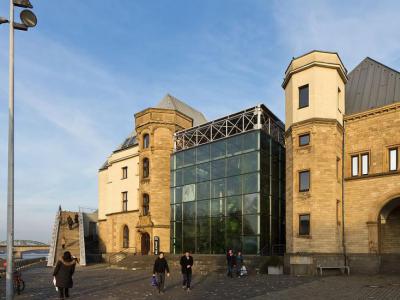
The Imhoff-Schokoladenmuseum was opened by Hans Imhoff on 31 October 1993. It is situated in the Cologne quarter Altstadt-Süd on the Rheinauhafen-peninsula. The exhibition shows the whole history of chocolate, from the beginning at the Olmecs, Maya and Aztecs until the contemporary products and their production methods. The museum belongs to the Top Ten of German museums with 5,000 guidances and 600,000 visitors a year.
A special attraction is the three-meter-high chocolate fountain, at which a woman dips wafers in the liquid chocolate and distributes them to visitors. Another interesting thing for visitors is the small tropiarium consisting of a glass cube with 10-meter edge length showing cacao trees of the species Theobroma cacao and Theobroma grandiflorum. Several production machineries were built as miniatures so that you can have a look at the production process of the small chocolate bars, which are given to the visitors at the entrance of the museum.
Why You Should Visit:
Gives a brief history of chocolate as well as more esoteric things like the religion & culture related to it. Great spot to view the Rhine river, too.
Tip:
Lots of free samples during visits and you can have your own personalized chocolate made.
A special attraction is the three-meter-high chocolate fountain, at which a woman dips wafers in the liquid chocolate and distributes them to visitors. Another interesting thing for visitors is the small tropiarium consisting of a glass cube with 10-meter edge length showing cacao trees of the species Theobroma cacao and Theobroma grandiflorum. Several production machineries were built as miniatures so that you can have a look at the production process of the small chocolate bars, which are given to the visitors at the entrance of the museum.
Why You Should Visit:
Gives a brief history of chocolate as well as more esoteric things like the religion & culture related to it. Great spot to view the Rhine river, too.
Tip:
Lots of free samples during visits and you can have your own personalized chocolate made.
3) Heumarkt (Hay Market) (must see)
Welcome to Cologne’s Hay Market-where the past smells faintly of hay, spice, and maybe a little too much fish.
Dating all the way back to Roman times, this square is one of Central Europe’s oldest markets. In the Middle Ages, it bloomed into a buzzing trade hub. Originally, Hay Market and Old Market were one big commercial jumble simply called the Old Market. But as the centuries marched on and city life got more complex, the two parted ways-amicably, we assume...
By the 13th century, Cologne was booming, with a population of over 40,000-massive by medieval standards. Hay Market, thanks to its prime location, became the go-to spot for everything from cheese to chickpeas. Traders hawked vegetables, fish, grain, spices, and yes, actual hay. In 1492, while Columbus was off looking for India, a grain scale was added here to keep the deals honest.
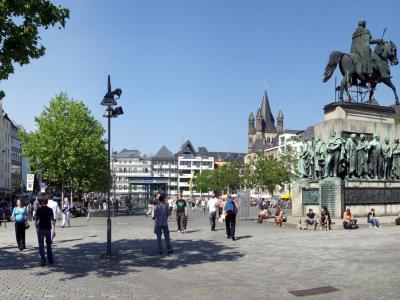
But this wasn’t just your average muddy medieval market. During the Renaissance, Hay Market leveled up in beauty, drawing comparisons to Venice’s St. Mark’s Square. Today, it’s still charming, paved in brick, framed by neatly trimmed trees, and peppered with restaurants that definitely know how to plate a schnitzel.
In 1580, the Cologne stock exchange took root here, too-proof that not just onions were traded. Closer to our days, in 1878, the square got a serious upgrade in the form of a dramatic equestrian statue of Prussia’s King Friedrich Wilhelm III. The Market Hall was added in 1904, and historic flair has been going strong here ever since.
Though nobody comes here for hay anymore, Hay Market is far from quiet. These days, it’s one of the city’s liveliest squares-packed with pubs, breweries, and cafés perfect for watching the world go by. And in winter, it transforms into a holiday wonderland with a cheerful Christmas market and a festive ice-skating rink.
Hay Market may have traded its wagons and wheat for lattes and selfies-but its spirit is very much alive and thriving.
Dating all the way back to Roman times, this square is one of Central Europe’s oldest markets. In the Middle Ages, it bloomed into a buzzing trade hub. Originally, Hay Market and Old Market were one big commercial jumble simply called the Old Market. But as the centuries marched on and city life got more complex, the two parted ways-amicably, we assume...
By the 13th century, Cologne was booming, with a population of over 40,000-massive by medieval standards. Hay Market, thanks to its prime location, became the go-to spot for everything from cheese to chickpeas. Traders hawked vegetables, fish, grain, spices, and yes, actual hay. In 1492, while Columbus was off looking for India, a grain scale was added here to keep the deals honest.
But this wasn’t just your average muddy medieval market. During the Renaissance, Hay Market leveled up in beauty, drawing comparisons to Venice’s St. Mark’s Square. Today, it’s still charming, paved in brick, framed by neatly trimmed trees, and peppered with restaurants that definitely know how to plate a schnitzel.
In 1580, the Cologne stock exchange took root here, too-proof that not just onions were traded. Closer to our days, in 1878, the square got a serious upgrade in the form of a dramatic equestrian statue of Prussia’s King Friedrich Wilhelm III. The Market Hall was added in 1904, and historic flair has been going strong here ever since.
Though nobody comes here for hay anymore, Hay Market is far from quiet. These days, it’s one of the city’s liveliest squares-packed with pubs, breweries, and cafés perfect for watching the world go by. And in winter, it transforms into a holiday wonderland with a cheerful Christmas market and a festive ice-skating rink.
Hay Market may have traded its wagons and wheat for lattes and selfies-but its spirit is very much alive and thriving.
4) Wallraf-Richartz Museum (must see)
The Wallraf–Richartz Museum is a prominent art museum. It is one of the three major museums in the city and boasts a collection of fine art from the medieval period to the early twentieth century. The museum's origins date back to 1824 when the comprehensive collection of medieval art from Ferdinand Franz Wallraf came to the city of Cologne by inheritance.
The first building was donated by Johann Heinrich Richartz, and the museum was opened in 1861, just after his death. The museum's collection was regularly expanded by donations, especially the Haubrich collection of contemporary art in 1946. In 1976, the collection was split, and the new Museum Ludwig took over the exhibition of 20th-century art.
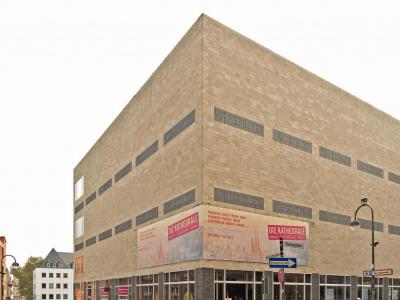
The current building, designed by Oswald Mathias Ungers, was opened in 2001 and is located near the Cologne City Hall.
The museum houses an impressive collection of Gothic paintings, including the Madonna in the Rose Bower by Stefan Lochner, which is considered typical of his style. Lochner's work usually has a clean appearance, combining the Gothic attention to long flowing lines with brilliant colors and a Flemish influence of realism and attention to detail. Another outstanding Gothic painting in the Wallraf-Richartz's collection is an Arrest of Jesus by the "Master of the Karlsruhe Passion."
It also boasts early Renaissance works, including an altarpiece from the Great Saint Martin Church in Cologne by Jacob van Utrecht. Among other early Renaissance works in the collection are the Adoration of the Child by an unknown artist, previously thought to have been painted by Hieronymus Bosch, and a panel of the Jabach Altarpiece by Albrecht Dürer.
The museum's collection includes works by Baroque and Rococo artists such as Rubens, Rembrandt, Jordaens, Frans Snyders, van Dyck, Frans Hals, Gerard van Honthorst, Pieter de Hooch, Gerard de Lairesse, François Boucher, Nicolas de Largillierre, Jean-Honoré Fragonard, Marguerite Gérard, and Giambattista Pittoni.
In addition, the museum also features works by impressionists such as Monet, Pissarro, Sisley, Gustave Caillebotte, and Berthe Morisot, whose Child among staked roses or "Kind zwischen Stockrosen" was painted in 1881. However, the museum made headlines in 2008 when it was revealed that a Monet painting, On the Banks of the Seine by Port Villez, was a forgery. X-ray and infrared testing revealed that a "colorless substance" had been applied to the canvas to make it appear older. Despite this discovery, the museum still has five authentic Monet paintings in its collection.
Why You Should Visit:
Especially noteworthy for its medieval paintings, but acts as an art glossary or an art-Wikipedia, or if you more prefer a virtual museum, where you can find all relevant data concerning the articles on art terms, historical events, personages, cities, museums, and churches.
Tip:
There's a big shop-cafeteria area downstairs where you can sit down for a break or when you've finished.
The first building was donated by Johann Heinrich Richartz, and the museum was opened in 1861, just after his death. The museum's collection was regularly expanded by donations, especially the Haubrich collection of contemporary art in 1946. In 1976, the collection was split, and the new Museum Ludwig took over the exhibition of 20th-century art.
The current building, designed by Oswald Mathias Ungers, was opened in 2001 and is located near the Cologne City Hall.
The museum houses an impressive collection of Gothic paintings, including the Madonna in the Rose Bower by Stefan Lochner, which is considered typical of his style. Lochner's work usually has a clean appearance, combining the Gothic attention to long flowing lines with brilliant colors and a Flemish influence of realism and attention to detail. Another outstanding Gothic painting in the Wallraf-Richartz's collection is an Arrest of Jesus by the "Master of the Karlsruhe Passion."
It also boasts early Renaissance works, including an altarpiece from the Great Saint Martin Church in Cologne by Jacob van Utrecht. Among other early Renaissance works in the collection are the Adoration of the Child by an unknown artist, previously thought to have been painted by Hieronymus Bosch, and a panel of the Jabach Altarpiece by Albrecht Dürer.
The museum's collection includes works by Baroque and Rococo artists such as Rubens, Rembrandt, Jordaens, Frans Snyders, van Dyck, Frans Hals, Gerard van Honthorst, Pieter de Hooch, Gerard de Lairesse, François Boucher, Nicolas de Largillierre, Jean-Honoré Fragonard, Marguerite Gérard, and Giambattista Pittoni.
In addition, the museum also features works by impressionists such as Monet, Pissarro, Sisley, Gustave Caillebotte, and Berthe Morisot, whose Child among staked roses or "Kind zwischen Stockrosen" was painted in 1881. However, the museum made headlines in 2008 when it was revealed that a Monet painting, On the Banks of the Seine by Port Villez, was a forgery. X-ray and infrared testing revealed that a "colorless substance" had been applied to the canvas to make it appear older. Despite this discovery, the museum still has five authentic Monet paintings in its collection.
Why You Should Visit:
Especially noteworthy for its medieval paintings, but acts as an art glossary or an art-Wikipedia, or if you more prefer a virtual museum, where you can find all relevant data concerning the articles on art terms, historical events, personages, cities, museums, and churches.
Tip:
There's a big shop-cafeteria area downstairs where you can sit down for a break or when you've finished.
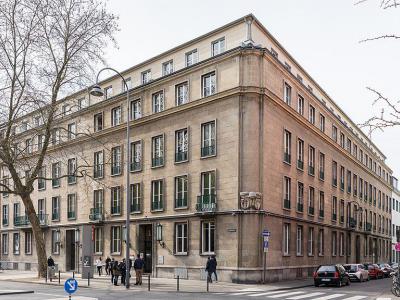
5) NS Documentation Center (must see)
In the heart of Cologne stands a building once marked by silence, now filled with testimony-the NS Documentation Center, housed in the former headquarters of the Cologne Gestapo. From 1935 to 1945, this unassuming structure served as a key site of Nazi terror. Known as the EL-DE Haus-a name derived from the initials of businessman Leopold Dahmen, who leased the still-unfinished building to the Nazis-it became a dark chapter in the city’s history.
Beneath its ground floor, ten prison cells were constructed in the basement. Today, that space endures as one of the most chilling and best-preserved Nazi detention sites in Germany. The Gestapo Prison memorial is now the country’s largest memorial dedicated to victims of Nazi persecution. More than 1,800 inscriptions-carved or written on the cell walls by prisoners-remain, bearing raw witness to suffering, hope, despair, and resistance.
The permanent exhibition above examines the rise and machinery of National Socialism, with a particular focus on Cologne’s experience under the regime. Visitors will encounter detailed accounts of Nazi propaganda, administrative structures, systemic racism, and the deportation and murder of the city’s Jewish population. Stories of local resistance movements also find their place here-quiet acts of defiance that stood against overwhelming force.
The Center functions not only as a museum but as a research institution. Its library and archives continue to support scholarship on the Nazi era, ensuring that this part of history remains rigorously studied and publicly accessible.
A word to visitors:
Take the audio guide-it’s essential for grasping the deeper context behind what you’ll see. Start your journey in the basement, among the cells, and work your way upward. Lockers are available free of charge to store bags, leaving you free to absorb the weight of this place with undivided attention.
Beneath its ground floor, ten prison cells were constructed in the basement. Today, that space endures as one of the most chilling and best-preserved Nazi detention sites in Germany. The Gestapo Prison memorial is now the country’s largest memorial dedicated to victims of Nazi persecution. More than 1,800 inscriptions-carved or written on the cell walls by prisoners-remain, bearing raw witness to suffering, hope, despair, and resistance.
The permanent exhibition above examines the rise and machinery of National Socialism, with a particular focus on Cologne’s experience under the regime. Visitors will encounter detailed accounts of Nazi propaganda, administrative structures, systemic racism, and the deportation and murder of the city’s Jewish population. Stories of local resistance movements also find their place here-quiet acts of defiance that stood against overwhelming force.
The Center functions not only as a museum but as a research institution. Its library and archives continue to support scholarship on the Nazi era, ensuring that this part of history remains rigorously studied and publicly accessible.
A word to visitors:
Take the audio guide-it’s essential for grasping the deeper context behind what you’ll see. Start your journey in the basement, among the cells, and work your way upward. Lockers are available free of charge to store bags, leaving you free to absorb the weight of this place with undivided attention.
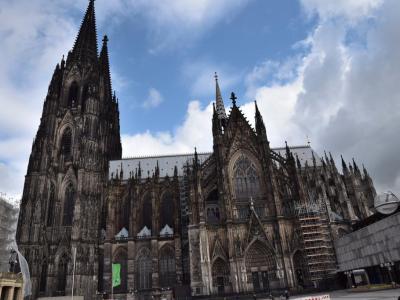
6) Kölner Dom (Cologne Cathedral) (must see)
The Cologne Cathedral - a place where Gothic ambition met a 600-year-long construction delay and still came out looking fabulous... Indeed, the magnitude of this building dwarfs your expectations and your camera’s field of view.
This towering masterpiece is Germany’s most visited landmark, with 20,000 people dropping by daily - not bad for a church that took over six centuries to finish. At 157 meters (that’s 515 feet for those who still think in feet), it’s the tallest twin-spired church on Earth, the second-tallest church in Europe, and the third tallest in the world. Clearly, Cologne doesn’t do things halfway...
Construction began in 1248, then took a casual break around 1560. The west tower wasn't completed until 1880, when 19th-century officials unearthed the original blueprints and reasoned, “Why not finish it?”
But the site’s sacred history runs much deeper than that. Since the 4th century, Christians have been building here. The "Old Cathedral" stood from 818 to 1248, and even earlier, a baptistery once graced the eastern end.
So, what kicked off this giant Gothic project? A golden box. Specifically, the Shrine of the Three Kings, believed to hold relics of the Three Wise Men (also known as the Magi - the ones who visited baby Jesus and offered him gifts). Its construction started at the eastern arm to house the shrine, then the west front followed - until everything just kind of stopped in 1473. The work-in-progress look lasted for centuries, complete with a giant crane stuck on top for 400 years. Talk about an eternal fixer-upper...
The cathedral's highlights include the 1322 black marble High Altar and that aforementioned blingy shrine, which began in 1190 and shines brighter than a royal wedding. There's also the 10th-century Gero Crucifix, the 1290 Milan Madonna, and a legal twist - a 13th-century stone tablet that once granted rights to Cologne’s Jewish residents.
And, of course, there are bells - eleven in total. The Saint Peter Bell, cast in 1922, was once the biggest free-swinging bell in the world. You’ll feel it before you hear it...
Insider Tip:
Don’t skip the rear mosaics - they're stunning. Brave the climb for sky-high views, or sneak into the underground parking to see the cathedral’s ancient roots... literally.
This towering masterpiece is Germany’s most visited landmark, with 20,000 people dropping by daily - not bad for a church that took over six centuries to finish. At 157 meters (that’s 515 feet for those who still think in feet), it’s the tallest twin-spired church on Earth, the second-tallest church in Europe, and the third tallest in the world. Clearly, Cologne doesn’t do things halfway...
Construction began in 1248, then took a casual break around 1560. The west tower wasn't completed until 1880, when 19th-century officials unearthed the original blueprints and reasoned, “Why not finish it?”
But the site’s sacred history runs much deeper than that. Since the 4th century, Christians have been building here. The "Old Cathedral" stood from 818 to 1248, and even earlier, a baptistery once graced the eastern end.
So, what kicked off this giant Gothic project? A golden box. Specifically, the Shrine of the Three Kings, believed to hold relics of the Three Wise Men (also known as the Magi - the ones who visited baby Jesus and offered him gifts). Its construction started at the eastern arm to house the shrine, then the west front followed - until everything just kind of stopped in 1473. The work-in-progress look lasted for centuries, complete with a giant crane stuck on top for 400 years. Talk about an eternal fixer-upper...
The cathedral's highlights include the 1322 black marble High Altar and that aforementioned blingy shrine, which began in 1190 and shines brighter than a royal wedding. There's also the 10th-century Gero Crucifix, the 1290 Milan Madonna, and a legal twist - a 13th-century stone tablet that once granted rights to Cologne’s Jewish residents.
And, of course, there are bells - eleven in total. The Saint Peter Bell, cast in 1922, was once the biggest free-swinging bell in the world. You’ll feel it before you hear it...
Insider Tip:
Don’t skip the rear mosaics - they're stunning. Brave the climb for sky-high views, or sneak into the underground parking to see the cathedral’s ancient roots... literally.
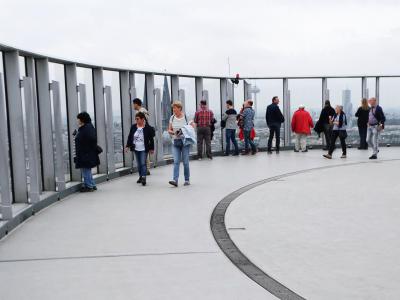
7) KölnTriangle Panorama (Triangle Observation Deck) (must see)
Perched atop the sleek KölnTriangle building, the Triangle Observation Deck isn’t just a fancy name-it’s a 103-meter-high front-row seat to Cologne in all its sprawling glory. The building itself is shaped like a Reuleaux triangle, which basically means someone got fancy with a geometry set and decided curves were cooler than corners. Bonus: Its double-skin south facade acts like the building’s lungs, breathing in fresh air for your convenience.
Up at the top, the observation deck delivers a full panoramic wow-factor. Directly across the Rhine, the Cologne Cathedral poses majestically like it knows it’s being watched (because it is). The deck is outdoors but protected by glass panels, so you can embrace the wind in your hair without worrying about losing your hat-or your dignity.
Feeling peckish after all that skyline admiration? There's a rooftop restaurant that serves up views and food, both equally worth savoring.
Whether you're a daytime wanderer or a dusk-chaser, the deck stays open from sun-up to starlight, letting you witness Cologne flip its switch from postcard-perfect to nighttime sparkle.
Up at the top, the observation deck delivers a full panoramic wow-factor. Directly across the Rhine, the Cologne Cathedral poses majestically like it knows it’s being watched (because it is). The deck is outdoors but protected by glass panels, so you can embrace the wind in your hair without worrying about losing your hat-or your dignity.
Feeling peckish after all that skyline admiration? There's a rooftop restaurant that serves up views and food, both equally worth savoring.
Whether you're a daytime wanderer or a dusk-chaser, the deck stays open from sun-up to starlight, letting you witness Cologne flip its switch from postcard-perfect to nighttime sparkle.
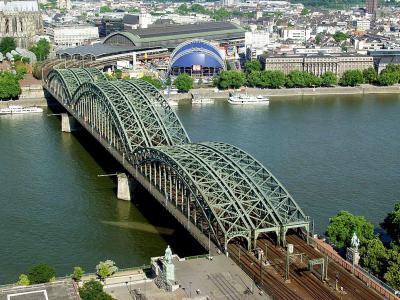
8) Hohenzollernbrücke (Hohenzollern Bridge) (must see)
The Hohenzollern Bridge-Cologne’s grand old crossing that’s equal parts iron, history, and sentimental hardware. Stretching across the Rhine like a steel spine, it’s the city’s most beloved blend of romance and railway precision.
Built in 1911 to replace the overworked Cathedral Bridge, this heavy-duty thoroughfare was Cologne’s answer to the rising tide of traffic. It handled trains, trams, cars, pedestrians-you name it. Its name is a royal nod to the House of Hohenzollern, the Prussian dynasty that once ruled over this corner of the world. In fact, the whole project was inaugurated by none other than Kaiser Wilhelm II, who likely admired it for being both majestic and punctual.
Watch your step-or your stirrup-because each end of the bridge is guarded by towering equestrian statues of German emperors and Prussian kings. On one side: Friedrich Wilhelm IV and Wilhelm I. On the other: Friedrich III and Wilhelm II. A cavalry of stone to usher you across.
Now, history took a turn in 1945 when German forces-perhaps not appreciating the bridge’s architectural flair-blew it up during their retreat. Luckily, the bridge rose from the ashes, rebuilt by 1959, and polished up again in the '80s. It still carries trains today-lots of them-and now features pedestrian paths and bike lanes too.
But wait-this is no longer just a bridge. Since 2008, it’s become Cologne’s unofficial temple of love. Couples attach padlocks to the railings, whisper sweet nothings, and toss the keys into the Rhine. By 2015, over half a million locks had been added. That’s a lot of commitment. And a lot of extra weight, too...
A place where steel meets sentiment, this is the best spot to gaze at the Cologne Cathedral from across the water-and maybe reflect on the nature of love, war, and urban planning...
Pro tip:
Go at night. The city lights up, the cathedral glows like a Gothic lantern, and the bridge hums with quiet magic. Trust us, it’s a whole different mood after sunset.
Built in 1911 to replace the overworked Cathedral Bridge, this heavy-duty thoroughfare was Cologne’s answer to the rising tide of traffic. It handled trains, trams, cars, pedestrians-you name it. Its name is a royal nod to the House of Hohenzollern, the Prussian dynasty that once ruled over this corner of the world. In fact, the whole project was inaugurated by none other than Kaiser Wilhelm II, who likely admired it for being both majestic and punctual.
Watch your step-or your stirrup-because each end of the bridge is guarded by towering equestrian statues of German emperors and Prussian kings. On one side: Friedrich Wilhelm IV and Wilhelm I. On the other: Friedrich III and Wilhelm II. A cavalry of stone to usher you across.
Now, history took a turn in 1945 when German forces-perhaps not appreciating the bridge’s architectural flair-blew it up during their retreat. Luckily, the bridge rose from the ashes, rebuilt by 1959, and polished up again in the '80s. It still carries trains today-lots of them-and now features pedestrian paths and bike lanes too.
But wait-this is no longer just a bridge. Since 2008, it’s become Cologne’s unofficial temple of love. Couples attach padlocks to the railings, whisper sweet nothings, and toss the keys into the Rhine. By 2015, over half a million locks had been added. That’s a lot of commitment. And a lot of extra weight, too...
A place where steel meets sentiment, this is the best spot to gaze at the Cologne Cathedral from across the water-and maybe reflect on the nature of love, war, and urban planning...
Pro tip:
Go at night. The city lights up, the cathedral glows like a Gothic lantern, and the bridge hums with quiet magic. Trust us, it’s a whole different mood after sunset.
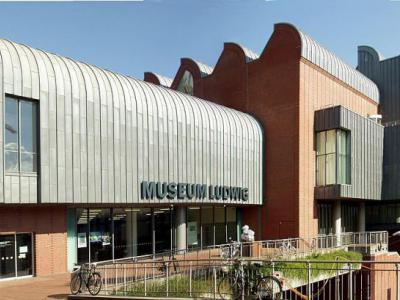
9) Museum Ludwig (must see)
If there's a place where Cologne’s sweet tooth for chocolate (figuratively speaking) meets a serious craving for modern art, it is definitely Museum Ludwig.
Indeed, this isn’t just any museum but a temple to Pop Art, Abstract dreams, and surreal oddities. Proudly housing one of Europe’s largest Picasso collections - yes, that very same Picasso - it has nearly 900 of his works displayed here. And if you feel your eyebrows lifting already, wait until you meet Warhol’s Brillo Boxes and Lichtenstein’s M-Maybe. Oh, and don’t peek too fast at George Segal’s eerily lifelike Restaurant Window - it just might blink back.
The museum owes its name (and its wildly valuable starter pack of 350 artworks) to Peter Ludwig - a man who turned cocoa into culture. This generous chocolatier donated pieces worth $45 million back in the day, giving Cologne a sugar rush of artistic prestige. Throw in a stellar modern art stash from Josef Haubrich and an unrivaled collection of early Russian avant-garde art - 600 works strong, the largest outside of Russia - and you've got yourself an art jackpot.
It is safe to say that Museum Ludwig doesn’t just display art, it stages it. Room after room opens like a theatrical act, each work granted space to breathe, stare you down, or whisper something strange.
And before you go, duck into the bookstore. It’s not your average fridge-magnet zone - it’s a literary goldmine stacked with gorgeous art books in multiple languages. One step in and suddenly, you're curating your own collection.
Modern, bold, and full of surprises - Museum Ludwig is Cologne’s ultimate plot twist!
Indeed, this isn’t just any museum but a temple to Pop Art, Abstract dreams, and surreal oddities. Proudly housing one of Europe’s largest Picasso collections - yes, that very same Picasso - it has nearly 900 of his works displayed here. And if you feel your eyebrows lifting already, wait until you meet Warhol’s Brillo Boxes and Lichtenstein’s M-Maybe. Oh, and don’t peek too fast at George Segal’s eerily lifelike Restaurant Window - it just might blink back.
The museum owes its name (and its wildly valuable starter pack of 350 artworks) to Peter Ludwig - a man who turned cocoa into culture. This generous chocolatier donated pieces worth $45 million back in the day, giving Cologne a sugar rush of artistic prestige. Throw in a stellar modern art stash from Josef Haubrich and an unrivaled collection of early Russian avant-garde art - 600 works strong, the largest outside of Russia - and you've got yourself an art jackpot.
It is safe to say that Museum Ludwig doesn’t just display art, it stages it. Room after room opens like a theatrical act, each work granted space to breathe, stare you down, or whisper something strange.
And before you go, duck into the bookstore. It’s not your average fridge-magnet zone - it’s a literary goldmine stacked with gorgeous art books in multiple languages. One step in and suddenly, you're curating your own collection.
Modern, bold, and full of surprises - Museum Ludwig is Cologne’s ultimate plot twist!
