Custom Walk in Coimbra, Portugal by lorriesp4_8e9f79 created on 2026-03-11
Guide Location: Portugal » Coimbra
Guide Type: Custom Walk
# of Sights: 7
Tour Duration: 2 Hour(s)
Travel Distance: 2.7 Km or 1.7 Miles
Share Key: CW889
Guide Type: Custom Walk
# of Sights: 7
Tour Duration: 2 Hour(s)
Travel Distance: 2.7 Km or 1.7 Miles
Share Key: CW889
How It Works
Please retrieve this walk in the GPSmyCity app. Once done, the app will guide you from one tour stop to the next as if you had a personal tour guide. If you created the walk on this website or come to the page via a link, please follow the instructions below to retrieve the walk in the app.
Retrieve This Walk in App
Step 1. Download the app "GPSmyCity: Walks in 1K+ Cities" on Apple App Store or Google Play Store.



Step 2. In the GPSmyCity app, download(or launch) the guide "Coimbra Map and Walking Tours".
Step 3. Tap the menu button located at upper right corner of the "Walks" screen and select "Retrieve custom walk". Enter the share key: CW889
1) Biblioteca Joanina (Joanina Library) (must see)
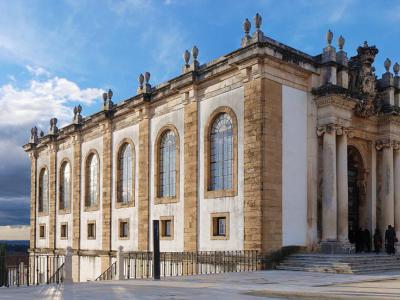
The Biblioteca Joanina is named for King John V, The king who loved books. He also loved libraries and he built them. Construction started in 1717 at the insistence of King John and the building was finished in 1728. The library collection was moved constantly before this, the collection growing and no place fit to hold it.
The reknowned architect Gaspar Ferreira is responsible for the design. The library consists of three sizable rooms lined with bookstands. Narrow corridors in the rooms carry the coats of arms of the various faculties of the University. Renovated several times, it is a Baroque creation of teams of artists working together.
The library collection has grown so much books published in the 20th century onwards are held in the Faculty of Letters building. The building was adapted as a library by Architect Albero Jose Pessoa, assisted by Horacio de Moura and Fernando Castelo Branco. The books dating from the 12th to 19th centuries remain in the Joanina Library.
The Biblioteca Joanina is the main attraction for library-loving visitors to the old campus. The interior is lavishly Baroque in style, sumptuously adorned in red and gold embellishments of arches and carvings. Painted panels on the ceilings are by Antonio Simoes Ribeiro and Vincente Nunes. Chinese elements are painted by Manuel De Silva.
Under the main floor is the "Prison" room. In days of yore offending Scholars and students were confined here. Respect for learning and study was taken seriously.
Books have enemies: humidity and insects. The Joanina library deals with these enemies in two ways. The effects of humidity are minimized by the use of hardwoods like teak and oak. These woods are not that tasty for bugs either. For those bugs and bookworms that get past the teak and the oak there are bats. Tiny bats that feed at night.
Why You Should Visit:
Don't worry about the bats. To spend some time in this beautiful place surrounded by the wisdom of the ages is a rare treat not available to everyone.
Tips:
Tours may be crowded. Come early.
The reknowned architect Gaspar Ferreira is responsible for the design. The library consists of three sizable rooms lined with bookstands. Narrow corridors in the rooms carry the coats of arms of the various faculties of the University. Renovated several times, it is a Baroque creation of teams of artists working together.
The library collection has grown so much books published in the 20th century onwards are held in the Faculty of Letters building. The building was adapted as a library by Architect Albero Jose Pessoa, assisted by Horacio de Moura and Fernando Castelo Branco. The books dating from the 12th to 19th centuries remain in the Joanina Library.
The Biblioteca Joanina is the main attraction for library-loving visitors to the old campus. The interior is lavishly Baroque in style, sumptuously adorned in red and gold embellishments of arches and carvings. Painted panels on the ceilings are by Antonio Simoes Ribeiro and Vincente Nunes. Chinese elements are painted by Manuel De Silva.
Under the main floor is the "Prison" room. In days of yore offending Scholars and students were confined here. Respect for learning and study was taken seriously.
Books have enemies: humidity and insects. The Joanina library deals with these enemies in two ways. The effects of humidity are minimized by the use of hardwoods like teak and oak. These woods are not that tasty for bugs either. For those bugs and bookworms that get past the teak and the oak there are bats. Tiny bats that feed at night.
Why You Should Visit:
Don't worry about the bats. To spend some time in this beautiful place surrounded by the wisdom of the ages is a rare treat not available to everyone.
Tips:
Tours may be crowded. Come early.
2) Arco de Almedina (Almedina Arch)
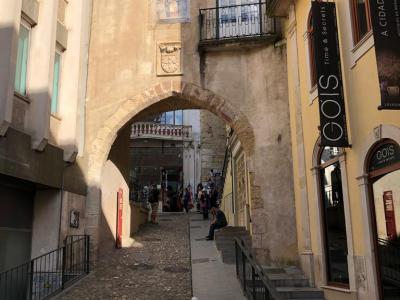
In the 11th century the Arab conqueror Almansor rebuilt the walls around the conquered city of Coimbra. Only three gates permitted entrance to the citadel. Since that time almost all of the wall with exception of one gate have gone missing. The Almedina Arch, with its tower, Almadina Tower, form the only surviving medieval gate.
The arch is a vaulted arch and tunnel. "Almedina" is derived from the Arabic word for "town." The arched tunnels were defensive choke points designed to slow invaders. The tower over the Almedina Arch provided additional defensive functions. It was also a center for meetings of the municipal council.
A bell at the top of the tower would announce meetings of the council. The bell would also announce openings and closings of the city gates. The bell routine was followed faithfully until 1870. The tower once held a small chapel dedicated to Our Lady of the Conception. Mass was celebrated in the chapel before meetings of the Council.
In 1835 a better space was found for meetings and the tower was used off and on by other entities. Since 1988 it has been used to house Municipal Historical Archives. Passing through the arch one finds the Rua de Cuebra Costas (Backbreak Street). This aptly named street is a steep, exhausting climb to the old Cathedral of Coimbra.
The arch is a vaulted arch and tunnel. "Almedina" is derived from the Arabic word for "town." The arched tunnels were defensive choke points designed to slow invaders. The tower over the Almedina Arch provided additional defensive functions. It was also a center for meetings of the municipal council.
A bell at the top of the tower would announce meetings of the council. The bell would also announce openings and closings of the city gates. The bell routine was followed faithfully until 1870. The tower once held a small chapel dedicated to Our Lady of the Conception. Mass was celebrated in the chapel before meetings of the Council.
In 1835 a better space was found for meetings and the tower was used off and on by other entities. Since 1988 it has been used to house Municipal Historical Archives. Passing through the arch one finds the Rua de Cuebra Costas (Backbreak Street). This aptly named street is a steep, exhausting climb to the old Cathedral of Coimbra.

3) Mercado Dom Pedro V (Dom Pedro V Market)
The Dom Pedro V Market (Mercado D. Pedro V) is Coimbra’s main market, dating back to 1867, and remains a hub for fresh produce, local flavors, and traditional commerce. Conveniently located near the city's key attractions, the market is a lively space where locals and visitors alike can explore a wide variety of fresh fruits, vegetables, fish, meats, cheeses, and cold cuts, sourced directly from Portuguese producers.
While the modernized interior ensures high standards of food safety and hygiene, the market retains its traditional charm, offering an authentic shopping experience. Small-scale farmers and vendors from the outskirts of Coimbra still set up shop here, providing a direct farm-to-table connection.
Adding to its accessibility, the Dom Pedro V Municipal Market Elevator connects the market to Padre Antonio Vieira Street, with a unique funicular-style lift system that eases movement between different levels of the city. Additionally, a funicular located at the market provides a convenient ride up to the upper town, making it a strategic stop for those exploring Coimbra’s historic center.
Beyond food, the market continues to position itself as a reference point for traditional commerce, offering a range of goods while reinforcing its identity as a cornerstone of Coimbra’s local economy. Whether you're looking for the freshest seasonal produce or simply want to soak in the lively market atmosphere, Dom Pedro V Market is an essential stop in the city.
While the modernized interior ensures high standards of food safety and hygiene, the market retains its traditional charm, offering an authentic shopping experience. Small-scale farmers and vendors from the outskirts of Coimbra still set up shop here, providing a direct farm-to-table connection.
Adding to its accessibility, the Dom Pedro V Municipal Market Elevator connects the market to Padre Antonio Vieira Street, with a unique funicular-style lift system that eases movement between different levels of the city. Additionally, a funicular located at the market provides a convenient ride up to the upper town, making it a strategic stop for those exploring Coimbra’s historic center.
Beyond food, the market continues to position itself as a reference point for traditional commerce, offering a range of goods while reinforcing its identity as a cornerstone of Coimbra’s local economy. Whether you're looking for the freshest seasonal produce or simply want to soak in the lively market atmosphere, Dom Pedro V Market is an essential stop in the city.

4) Jardim da Avenida Sá da Bandeira (Garden on the Avenida Sa da Bandeira)
A verdant artery running through the heart of Coimbra, the Garden on the Avenida Sa da Bandeira has been a focal point of the city's urban landscape since its inception in 1889. Designed by Porto landscaper Jacinto Matos as part of Coimbra’s expansion project, the garden was only completed in 1929. It features towering palm trees, rare exotic species, and meticulously arranged flowerbeds outlined by the iconic Portuguese cobblestone pavement.
Beyond its greenery, the garden is an open-air gallery, housing a collection of statues and monuments. Among them, the most striking is the Monument to the Fighters of the Great War, inaugurated on June 10, 1932. Sculpted in limestone by Luis Fernandes, with architectural contributions from António Varela, it honors Portuguese soldiers who perished in World War I, particularly in the Battle of La Lys. The design features four soldiers in uniform standing in formation around a column crowned by a projectile that bears Coimbra’s coat of arms.
The garden’s history is intertwined with Coimbra’s broader cultural and civic identity. It bridges two other historic green spaces-Jardim da Sereia and Jardim da Manga-while serving as a social and commemorative hub. Over time, its role has evolved from a landscaped retreat to a boulevard at the heart of the city, reflecting Coimbra’s architectural and historical layers.
In 2005, as part of urban restoration efforts, the war monument was relocated to its present position, ensuring its continued prominence in the cityscape. Today, the Garden on the Avenida Sa da Bandeira remains a testament to Coimbra’s past, balancing tranquility with historical remembrance amid the city's daily rhythm.
Beyond its greenery, the garden is an open-air gallery, housing a collection of statues and monuments. Among them, the most striking is the Monument to the Fighters of the Great War, inaugurated on June 10, 1932. Sculpted in limestone by Luis Fernandes, with architectural contributions from António Varela, it honors Portuguese soldiers who perished in World War I, particularly in the Battle of La Lys. The design features four soldiers in uniform standing in formation around a column crowned by a projectile that bears Coimbra’s coat of arms.
The garden’s history is intertwined with Coimbra’s broader cultural and civic identity. It bridges two other historic green spaces-Jardim da Sereia and Jardim da Manga-while serving as a social and commemorative hub. Over time, its role has evolved from a landscaped retreat to a boulevard at the heart of the city, reflecting Coimbra’s architectural and historical layers.
In 2005, as part of urban restoration efforts, the war monument was relocated to its present position, ensuring its continued prominence in the cityscape. Today, the Garden on the Avenida Sa da Bandeira remains a testament to Coimbra’s past, balancing tranquility with historical remembrance amid the city's daily rhythm.
5) Santa Cruz Park
Santa Cruz Park, also known as Jardim da Sereia (Garden of the Mermaid), is an 18th-century Baroque garden nestled in the heart of Coimbra. Originally part of the Santa Cruz Monastery, this green sanctuary sits at the top of Avenida Sa da Bandeira, offering a tranquil escape from the city's bustle.
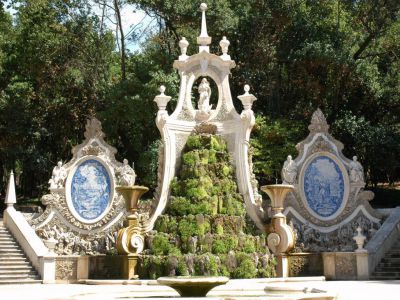
The park welcomes visitors through a grand triumphal arch, crowned by three statues symbolizing Faith, Hope, and Charity. A majestic staircase, lined with traditional azulejo-covered benches, leads to an ornate fountain, where a statue of Triton, the Greek sea god, opens his mouth toward a dolphin. Despite its name, the park’s most famous figure is not a mermaid but a Triton, adding a mythical touch to the scenery.
Beyond its elegant sculptures, Santa Cruz Park boasts lush greenery, including exotic trees, flower beds, and a cascading waterfall, creating a serene atmosphere for visitors. The park features picnic tables, making it a popular spot for both locals and university students looking for a quiet retreat.
Throughout the year, the park serves as a stage for academic gatherings, cultural events, and community activities, further solidifying its role in Coimbra’s social and historical fabric. Whether you're here for a peaceful stroll, a picnic, or to admire the Baroque artistry, Santa Cruz Park offers a perfect blend of history, nature, and relaxation in one of Portugal’s most charming cities.
The park welcomes visitors through a grand triumphal arch, crowned by three statues symbolizing Faith, Hope, and Charity. A majestic staircase, lined with traditional azulejo-covered benches, leads to an ornate fountain, where a statue of Triton, the Greek sea god, opens his mouth toward a dolphin. Despite its name, the park’s most famous figure is not a mermaid but a Triton, adding a mythical touch to the scenery.
Beyond its elegant sculptures, Santa Cruz Park boasts lush greenery, including exotic trees, flower beds, and a cascading waterfall, creating a serene atmosphere for visitors. The park features picnic tables, making it a popular spot for both locals and university students looking for a quiet retreat.
Throughout the year, the park serves as a stage for academic gatherings, cultural events, and community activities, further solidifying its role in Coimbra’s social and historical fabric. Whether you're here for a peaceful stroll, a picnic, or to admire the Baroque artistry, Santa Cruz Park offers a perfect blend of history, nature, and relaxation in one of Portugal’s most charming cities.
6) Aqueduto de Sao Sebastiao (Aqueduct of Saint Sebastian)
The Aqueduct of Saint Sebastian (Aqueduto de São Sebastião), commonly known as Arcos do Jardim (Garden Arches), is an architectural landmark in Coimbra. Situated on Martim de Freitas sidewalk, directly in front of the Botanical Garden of the University of Coimbra, this structure has been an integral part of the cityscape for centuries. It stands in the parish of Sé Nova, within the district and municipality of Coimbra.
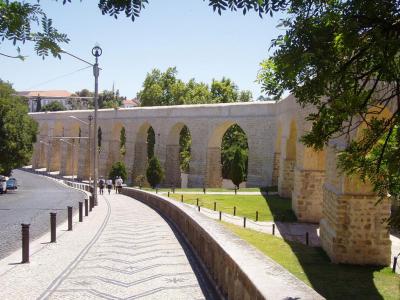
The site originally housed a Roman aqueduct supplying Coimbra’s upper part. The current structure, built between 1568 and 1570 under King Sebastian, is a Renaissance work by Italian architect Filipe Terzio. Reusing the ancient route, it spans between the former Monastery of Santana and Coimbra Castle, with 21 grand arches forming an imposing yet elegant sight.
A defining feature of the aqueduct is the Arch of Honor, crafted from stone and adorned with two sculptures at its summit. On its north side stands Sao Roque, while Sao Sebastiao, the structure’s namesake, is positioned on the south side. These statues add a religious and artistic dimension to the aqueduct’s functional purpose.
The aqueduct's primary function was to address water scarcity issues, particularly for the Colégio de Jesus-now part of the Faculty of Medicine at the University of Coimbra. It transported water from the Ribeira de Souselas through lead pipes into cisterns within the university premises, ensuring a continuous supply of fresh water. The design reflects influences from Roman engineering combined with Portuguese Renaissance aesthetics, resulting in a structure that has withstood the test of time.
The aqueduct stretches about a kilometer, its arches contrasting with the greenery of the Botanical Garden, which now surrounds it. Declared a National Monument in 1910, it remains a treasured landmark, showcasing Coimbra’s blend of history, culture, and architectural ingenuity while offering a scenic retreat for visitors and locals alike.
The site originally housed a Roman aqueduct supplying Coimbra’s upper part. The current structure, built between 1568 and 1570 under King Sebastian, is a Renaissance work by Italian architect Filipe Terzio. Reusing the ancient route, it spans between the former Monastery of Santana and Coimbra Castle, with 21 grand arches forming an imposing yet elegant sight.
A defining feature of the aqueduct is the Arch of Honor, crafted from stone and adorned with two sculptures at its summit. On its north side stands Sao Roque, while Sao Sebastiao, the structure’s namesake, is positioned on the south side. These statues add a religious and artistic dimension to the aqueduct’s functional purpose.
The aqueduct's primary function was to address water scarcity issues, particularly for the Colégio de Jesus-now part of the Faculty of Medicine at the University of Coimbra. It transported water from the Ribeira de Souselas through lead pipes into cisterns within the university premises, ensuring a continuous supply of fresh water. The design reflects influences from Roman engineering combined with Portuguese Renaissance aesthetics, resulting in a structure that has withstood the test of time.
The aqueduct stretches about a kilometer, its arches contrasting with the greenery of the Botanical Garden, which now surrounds it. Declared a National Monument in 1910, it remains a treasured landmark, showcasing Coimbra’s blend of history, culture, and architectural ingenuity while offering a scenic retreat for visitors and locals alike.
7) Jardin Botanique (Botanical Gardens) (must see)
In his career as King's Minister, the Marques de Pombal had to juggle a lot of new projects. One he must have loved was to be the energizing spirit behind the creation of the Botanical Garden of Coimbra. The project was meant to complement nature studies and medicine at the University of Coimbra.
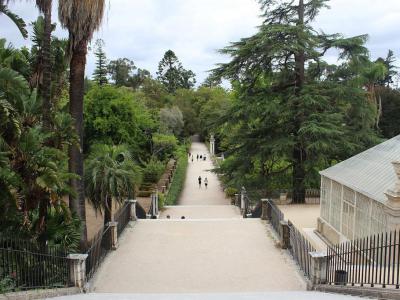
The garden is not small. It covers 32 acres divided into two parts. The first part, located in the highest part of the valley, is the more formal part, laid out in terraces. The lower terrace, The Central Square, is a European garden of the 18th century.
The next terrace is the Order Beds. Plants are cultivated for botany students and for exchange with other gardening institutions. Next come the Greenhouses. Tropical and subtropical plants are carefully tended according to their special needs of humidity and warmth.
The second part of the Botanical Gardens includes a former creek bed with an arboretum. The arboretum features a bamboo forest, shrubbery and rare trees including 51 types of eucalyptus. Fauna also live in the garden. Birds are sheltered in their natural surroundings. There are squirrels as well.
There are monumental statues in the garden. Dating from 1859, one of the oldest iron architecture buildings in Portugal is used for tropical plants including over twenty species of flesh-eating plants. Guided group tours must be booked in advance. No smoking and no flower picking, thanks.
The garden is not small. It covers 32 acres divided into two parts. The first part, located in the highest part of the valley, is the more formal part, laid out in terraces. The lower terrace, The Central Square, is a European garden of the 18th century.
The next terrace is the Order Beds. Plants are cultivated for botany students and for exchange with other gardening institutions. Next come the Greenhouses. Tropical and subtropical plants are carefully tended according to their special needs of humidity and warmth.
The second part of the Botanical Gardens includes a former creek bed with an arboretum. The arboretum features a bamboo forest, shrubbery and rare trees including 51 types of eucalyptus. Fauna also live in the garden. Birds are sheltered in their natural surroundings. There are squirrels as well.
There are monumental statues in the garden. Dating from 1859, one of the oldest iron architecture buildings in Portugal is used for tropical plants including over twenty species of flesh-eating plants. Guided group tours must be booked in advance. No smoking and no flower picking, thanks.
