Custom Walk in Papeete, Tahiti by ha_aranka_6ae3ac created on 2026-03-15
Guide Location: Tahiti » Papeete
Guide Type: Custom Walk
# of Sights: 9
Tour Duration: 2 Hour(s)
Travel Distance: 4.1 Km or 2.5 Miles
Share Key: AA86R
Guide Type: Custom Walk
# of Sights: 9
Tour Duration: 2 Hour(s)
Travel Distance: 4.1 Km or 2.5 Miles
Share Key: AA86R
How It Works
Please retrieve this walk in the GPSmyCity app. Once done, the app will guide you from one tour stop to the next as if you had a personal tour guide. If you created the walk on this website or come to the page via a link, please follow the instructions below to retrieve the walk in the app.
Retrieve This Walk in App
Step 1. Download the app "GPSmyCity: Walks in 1K+ Cities" on Apple App Store or Google Play Store.



Step 2. In the GPSmyCity app, download(or launch) the guide "Papeete Map and Walking Tours".
Step 3. Tap the menu button located at upper right corner of the "Walks" screen and select "Retrieve custom walk". Enter the share key: AA86R
1) Place Vaiete (Vaiete Square)
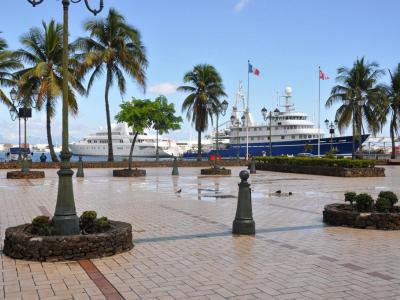
Vaiete Square in Papeete is a vibrant and popular spot along the city’s seafront, offering visitors a chance to unwind by the ocean. During the day, it’s a quiet haven with benches to relax, letting the sea breeze work its magic as locals and tourists gather to chat, play, and enjoy the green space. A “Fare potee” within the square showcases the artistry of local craftsmen and women, adding a cultural touch to the surroundings. There’s also the convenience of clean public restrooms, a free car park, and a security presence, making it an ideal daytime retreat.
As the sun sets, Vaiete Square comes to life with an entirely new ambiance. The food trailers, or “roulottes,” set up shop, serving a range of dishes that cater to every palate-from fresh seafood and sizzling meat to Chinese cuisine, pizzas, and pancakes. These trailers are a beloved fixture of the square’s nighttime vibe, where affordable, delicious food and a lively atmosphere draw crowds until the early morning hours. The square’s open space is often filled with music and the energy of shared meals, dancing, and Polynesian warmth.
For those visiting Papeete, Vaiete Square is an essential experience-one that captures the spirit of French Polynesia’s blend of natural beauty, community, and rich culinary culture. Whether you’re there for a tranquil afternoon or an evening under the stars, Vaiete Square promises a memorable encounter with Tahitian life.
As the sun sets, Vaiete Square comes to life with an entirely new ambiance. The food trailers, or “roulottes,” set up shop, serving a range of dishes that cater to every palate-from fresh seafood and sizzling meat to Chinese cuisine, pizzas, and pancakes. These trailers are a beloved fixture of the square’s nighttime vibe, where affordable, delicious food and a lively atmosphere draw crowds until the early morning hours. The square’s open space is often filled with music and the energy of shared meals, dancing, and Polynesian warmth.
For those visiting Papeete, Vaiete Square is an essential experience-one that captures the spirit of French Polynesia’s blend of natural beauty, community, and rich culinary culture. Whether you’re there for a tranquil afternoon or an evening under the stars, Vaiete Square promises a memorable encounter with Tahitian life.
2) Municipal Market (must see)
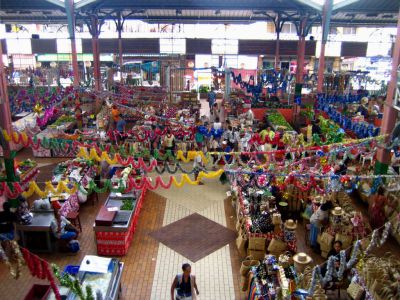
In the heart of Papeete is located the city's Municipal Market. The commercial center has occupied the same location since 1869 and is a must-see for every visitor. The name of the Market, "Mapuru a Paraita" is emblazoned at the entrance of the large, renovated hall. The hall covers more than 7,000 square meters of floor space on two levels. It stands just a coconut throw from the seafront.
This large and crowded market hall offers local farm products, fish and meat, handicrafts, and souvenirs. On the ground floor, colorful stalls offer breadfruit, yams, taro, guavas, mangoes, soursops, and sweetsops. Follow the mishmash of aromas to the realm of fresh fish. The sea product department offers up tuna, bonito, mahi-mahi, parrot fish, mullet, and many other kinds of seafood.
Beyond the kingdom of the sea portion of the Market is Meatworld, a land of suckling pigs ruled over by Tahiti's irreplaceable meat producers. Beyond the land of meat are grandmothers creating garlands and leis from the flowers of Tahiti: tiara, tipanier, jasmine, and taina. There is a section for arts and crafts at the Market.
The artistry and craftsmanship of Polynesia surround the visitors. There are woven hats, necklaces, and carved sculptures from the Austral Islands and the Marquesas. There are also baskets of patchwork quilts inspired by Matisse and Gauguin art. Travelers will also find retailers selling Tahitian pearls. Pearl culture is monitored in French Polynesia, so buyers can purchase with confidence.
On the upper floor, the visitors will find the Manava Cafe with a wide selection of meals, coffees, smoothies, juices, and soft drinks. Both English and French languages are spoken at the Market. It may be useful to know basic numbers in French. For example, "cents" is "hundreds" and "milles" is "thousands."
This large and crowded market hall offers local farm products, fish and meat, handicrafts, and souvenirs. On the ground floor, colorful stalls offer breadfruit, yams, taro, guavas, mangoes, soursops, and sweetsops. Follow the mishmash of aromas to the realm of fresh fish. The sea product department offers up tuna, bonito, mahi-mahi, parrot fish, mullet, and many other kinds of seafood.
Beyond the kingdom of the sea portion of the Market is Meatworld, a land of suckling pigs ruled over by Tahiti's irreplaceable meat producers. Beyond the land of meat are grandmothers creating garlands and leis from the flowers of Tahiti: tiara, tipanier, jasmine, and taina. There is a section for arts and crafts at the Market.
The artistry and craftsmanship of Polynesia surround the visitors. There are woven hats, necklaces, and carved sculptures from the Austral Islands and the Marquesas. There are also baskets of patchwork quilts inspired by Matisse and Gauguin art. Travelers will also find retailers selling Tahitian pearls. Pearl culture is monitored in French Polynesia, so buyers can purchase with confidence.
On the upper floor, the visitors will find the Manava Cafe with a wide selection of meals, coffees, smoothies, juices, and soft drinks. Both English and French languages are spoken at the Market. It may be useful to know basic numbers in French. For example, "cents" is "hundreds" and "milles" is "thousands."
3) Notre Dame Cathedral (must see)
Early in the 19th century, France enlarged its colonial presence in the Pacific. Tahiti was declared a protectorate of France in 1842. French missionaries began arriving almost immediately. Construction soon began on the Cathedral of Our Lady of the Immaculate Conception of Papeete on Général de Gaulle Street.
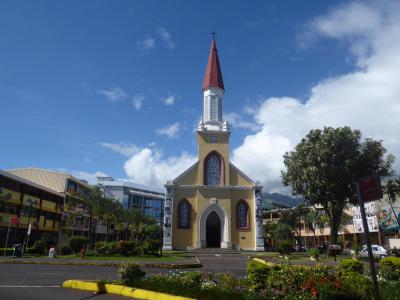
The Cathedral opened in 1875. It is the oldest Catholic church in Tahiti and one of the last standing structures of early colonialism. It was named after its illustrious antecedent, the Notre Dame of Paris. It sits on the waterfront, facing distant Mount Aorai.
The facade of the Cathedral is painted yellow and has two pilasters, one at each end of the front. There are three pointed arch-stained glass windows. The center window is the largest, directly above the recessed arched entrance portal. Above the center window is a clock. The hexagonal bell tower is topped with a pointed red spire.
The interior of the Cathedral holds both European and Polynesian design elements. An example is the full-size carved Madonna and Child. The Child brandishes breadfruit. The Cathedral is also known for its artistic representations of the Stations of the Cross. The stations incorporate both Tahitian and Roman cultures in the style of dress. The artistic style of the paintings was influenced by Paul Gauguin.
The Cathedral opened in 1875. It is the oldest Catholic church in Tahiti and one of the last standing structures of early colonialism. It was named after its illustrious antecedent, the Notre Dame of Paris. It sits on the waterfront, facing distant Mount Aorai.
The facade of the Cathedral is painted yellow and has two pilasters, one at each end of the front. There are three pointed arch-stained glass windows. The center window is the largest, directly above the recessed arched entrance portal. Above the center window is a clock. The hexagonal bell tower is topped with a pointed red spire.
The interior of the Cathedral holds both European and Polynesian design elements. An example is the full-size carved Madonna and Child. The Child brandishes breadfruit. The Cathedral is also known for its artistic representations of the Stations of the Cross. The stations incorporate both Tahitian and Roman cultures in the style of dress. The artistic style of the paintings was influenced by Paul Gauguin.
4) Place Tarahoi (Tarahoi Square)
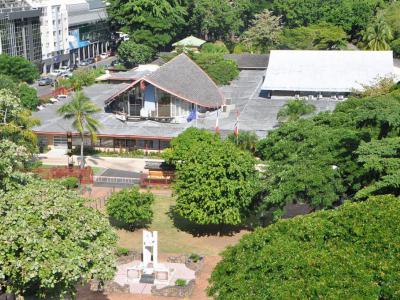
Tarahoi Square in Papeete is an emblematic hub of Tahitian history, politics, and royal legacy, tracing its roots back to Queen Pomare IV’s royal residence. Originally a marshy land with ancestral significance, Tarahoi became the seat of power for the Pomare dynasty and later the administrative center for the French government in French Polynesia after they took control in 1842. Although Queen Pomare’s grand home no longer stands, the Papeete Town Hall replicates its architectural spirit, serving as a modern homage to the royal past.
The square is bordered by buildings of contemporary political importance. On the left stands the Territorial Assembly, where visitors can walk the halls during business hours. To the right are buildings housing French governmental offices, including the home of the President of French Polynesia. Front and center, a monument to Pouvanaa a Oopa honors the Tahitian leader who fought valiantly in both World War I and for Tahitian autonomy from France, symbolizing the enduring spirit of independence and self-determination.
Central to the square is a historic banyan tree, over 300 years old, entwined with Tarahoi’s past. Once a gathering spot under its shaded canopy, where soldiers relaxed with absinthe, the tree was preserved in 2003 when the square was redesigned to include a parking area. This banyan, likely the only native tree to survive in modern Papeete, stands as a testament to resilience amid change.
The surrounding gardens of Tarahoi were once known as the royal gardens of Queen Pomare IV. Redesigned and reopened in 2013, these lush spaces offer visitors a secluded escape behind the Assembly building, complete with a botanical trail, a freshwater pool, and a serene atmosphere that recalls the royal legacy of the queen.
The square is bordered by buildings of contemporary political importance. On the left stands the Territorial Assembly, where visitors can walk the halls during business hours. To the right are buildings housing French governmental offices, including the home of the President of French Polynesia. Front and center, a monument to Pouvanaa a Oopa honors the Tahitian leader who fought valiantly in both World War I and for Tahitian autonomy from France, symbolizing the enduring spirit of independence and self-determination.
Central to the square is a historic banyan tree, over 300 years old, entwined with Tarahoi’s past. Once a gathering spot under its shaded canopy, where soldiers relaxed with absinthe, the tree was preserved in 2003 when the square was redesigned to include a parking area. This banyan, likely the only native tree to survive in modern Papeete, stands as a testament to resilience amid change.
The surrounding gardens of Tarahoi were once known as the royal gardens of Queen Pomare IV. Redesigned and reopened in 2013, these lush spaces offer visitors a secluded escape behind the Assembly building, complete with a botanical trail, a freshwater pool, and a serene atmosphere that recalls the royal legacy of the queen.
5) Robert Wan Pearl Museum (must see)
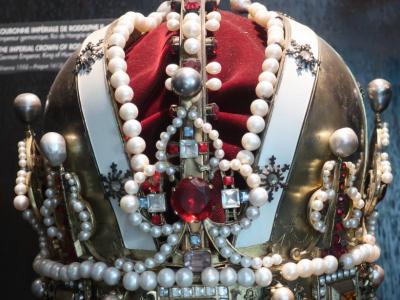
The Robert Wan Pearl Museum is only for pearls. The Museum is located at BP850 Pomare Boulevard, facing Paofai Gardens in Papeete. The exhibits of the Museum show the history of pearls worldwide, the legends, and the technology of pearl culture. Robert Wan's collection holds the largest Tahitian pearl in existence.
The largest pearl goes by the name of Robert Wan. The collection also features a generous number of "black" pearls, a Tahitian specialty. Black Butterfly shells are found in the reefs around French Polynesia, especially in the archipelago of Tahiti. Over 95% of the world's black pearls are grown here.
The best quality pearl is made of thousands of microscopic layers of aragonite crystals. The play of light reflected by the crystals is called the "orient" or "iridescence." The black pearl actually may appear in a variety of colors. They come in the shape of spheres, buttons, pearls, teardrops, and generally asymmetrical forms.
Pearls are graded A, AA, or AAA. The museum pearls are AA-AAA. Pearls in Tahiti are cultured. The marketing of natural pearls is banned. The Museum is closed on Sundays and holidays.
The largest pearl goes by the name of Robert Wan. The collection also features a generous number of "black" pearls, a Tahitian specialty. Black Butterfly shells are found in the reefs around French Polynesia, especially in the archipelago of Tahiti. Over 95% of the world's black pearls are grown here.
The best quality pearl is made of thousands of microscopic layers of aragonite crystals. The play of light reflected by the crystals is called the "orient" or "iridescence." The black pearl actually may appear in a variety of colors. They come in the shape of spheres, buttons, pearls, teardrops, and generally asymmetrical forms.
Pearls are graded A, AA, or AAA. The museum pearls are AA-AAA. Pearls in Tahiti are cultured. The marketing of natural pearls is banned. The Museum is closed on Sundays and holidays.
6) Place To'Ata (To’ata Square)
To’ata Square stands as the vibrant cultural heart of Papeete. Positioned along the waterfront, this scenic public square offers visitors sweeping views of Papeete Harbor and the surrounding mountains. It’s an ideal spot for picnics, walks, and unwinding under the palm trees, which enhance the inviting, tranquil ambiance. During the day, office workers flock here for a breath of fresh air, while families gather in the evenings, taking advantage of the inexpensive snack bars for light bites and drinks.
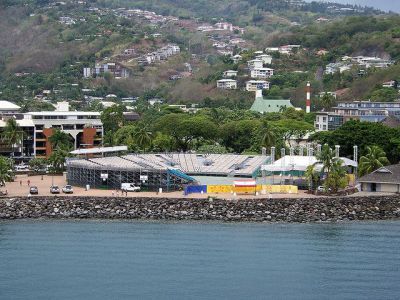
Anchoring the square is a notable 5,000-seat outdoor pavilion that draws thousands of locals and tourists throughout the year. The venue is especially lively during the annual Heiva i Tahiti Festival in July, a month-long celebration of Polynesian heritage featuring traditional dance, music, and elaborate performances. This festival transforms the square into a bustling stage for arts and crafts exhibitions, local food vendors, and joyous gatherings. Year-round, the pavilion also hosts concerts, including popular rock shows, contributing to To'ata’s standing as the city's cultural and entertainment hub.
To’ata Square is also dotted with Tikis, adding a touch of tradition to this evolving, multi-use development on Pape’ete’s western edge. Access to the square is free, and it remains open to the public at all times, though daytime visits are recommended for safety and enjoyment.
Anchoring the square is a notable 5,000-seat outdoor pavilion that draws thousands of locals and tourists throughout the year. The venue is especially lively during the annual Heiva i Tahiti Festival in July, a month-long celebration of Polynesian heritage featuring traditional dance, music, and elaborate performances. This festival transforms the square into a bustling stage for arts and crafts exhibitions, local food vendors, and joyous gatherings. Year-round, the pavilion also hosts concerts, including popular rock shows, contributing to To'ata’s standing as the city's cultural and entertainment hub.
To’ata Square is also dotted with Tikis, adding a touch of tradition to this evolving, multi-use development on Pape’ete’s western edge. Access to the square is free, and it remains open to the public at all times, though daytime visits are recommended for safety and enjoyment.
7) Paofai Garden (Jardin de Paofai) (must see)
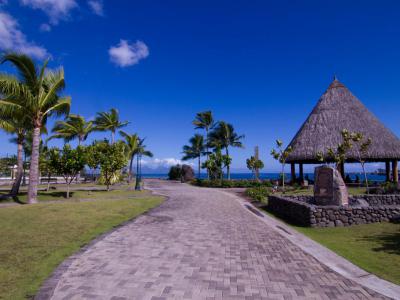
The Paofai Gardens is a park in the picturesque center of Papeete, Tahiti. It covers 11.37 landscaped acres and a recreational area. The Paofai Gardens is a calm place with lush green trees: royal palms, coconut trees, and other flowering species. There are footpaths, trails, greens, and fountains. There are also restroom facilities and locker rooms.
The gardens touch on the Waterfront Esplanade that stretches from To'Ato Square to Vaiete Square. This stretch is an ideal stroll at sunset with the serene parklands on one side and sweeping views of the tropic sea on the other. Snack kiosks and cafes give the park a kind of tropical Parisian vibe.
Paved paths for walking are accessible to wheelchairs and prams. The park is reputed to be one of the best places in Papeete. There is no admission charge. The park is within a short distance of the cruise ship port and other attractions, like the Maison de la Culture (House of Culture) and the Monument aux Morts (Memorial).
The best times for a stroll would be early mornings and evenings. The days are often hot. In the evenings, the atmosphere grows a little festive with the arrival of food-bearing "roulettes" and live music.
The gardens touch on the Waterfront Esplanade that stretches from To'Ato Square to Vaiete Square. This stretch is an ideal stroll at sunset with the serene parklands on one side and sweeping views of the tropic sea on the other. Snack kiosks and cafes give the park a kind of tropical Parisian vibe.
Paved paths for walking are accessible to wheelchairs and prams. The park is reputed to be one of the best places in Papeete. There is no admission charge. The park is within a short distance of the cruise ship port and other attractions, like the Maison de la Culture (House of Culture) and the Monument aux Morts (Memorial).
The best times for a stroll would be early mornings and evenings. The days are often hot. In the evenings, the atmosphere grows a little festive with the arrival of food-bearing "roulettes" and live music.
8) Bougainville Park and Statue
Bougainville Park in Papeete is a delightful green space that invites visitors for a refreshing stroll near the city's post office. Known for its lush tropical landscape, the park provides a serene retreat shaded by tall trees, ideal for escaping the midday heat and offering a welcoming atmosphere for families. There is a dedicated playground for children, complete with swings and rides, making it a popular spot for kids to play while adults enjoy the scenic surroundings.
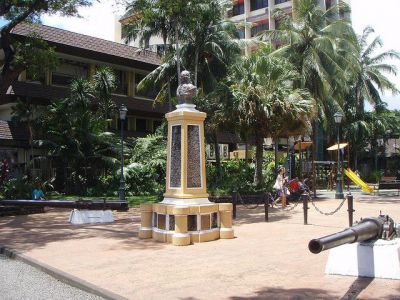
At the park's entrance, visitors are greeted by the bronze bust of Louis Antoine de Bougainville, the French navigator who famously described Tahiti as a paradise untouched by the troubles of civilization. Bougainville's 1768 voyage immortalized Tahiti as an idyllic land, a notion that captivated European imaginations. Overlooking the seafront, the statue honors his historical visit and his work "Travel Around the World."
Originally named the Papeete Public Square (Place Publique de Papeete), the park has deep historical roots, serving as a venue for events and ceremonies, notably in 1880 when King Pomare V formally ceded the Society Islands to France. Throughout the 1840s, several colonial-era government offices and public baths stood on the grounds. However, a cyclone in 1906 devastated the area, leaving only the rebuilt post office as a reminder of its administrative past.
The park's identity evolved in the 20th century. In 1934, it was renamed Place Albert 1er in honor of Belgium’s King Albert I. However, the installation of Bougainville’s statue in 1968 led locals to colloquially refer to it as Bougainville Park. Eventually, after much public sentiment, the park was officially renamed Parc Bougainville in 2005.
Today, Bougainville Park combines natural beauty with history, featuring tranquil streams, an impressive banyan tree, benches, and a traditional “fare pote’e” pavilion, creating an ideal spot for relaxation in the heart of Papeete.
At the park's entrance, visitors are greeted by the bronze bust of Louis Antoine de Bougainville, the French navigator who famously described Tahiti as a paradise untouched by the troubles of civilization. Bougainville's 1768 voyage immortalized Tahiti as an idyllic land, a notion that captivated European imaginations. Overlooking the seafront, the statue honors his historical visit and his work "Travel Around the World."
Originally named the Papeete Public Square (Place Publique de Papeete), the park has deep historical roots, serving as a venue for events and ceremonies, notably in 1880 when King Pomare V formally ceded the Society Islands to France. Throughout the 1840s, several colonial-era government offices and public baths stood on the grounds. However, a cyclone in 1906 devastated the area, leaving only the rebuilt post office as a reminder of its administrative past.
The park's identity evolved in the 20th century. In 1934, it was renamed Place Albert 1er in honor of Belgium’s King Albert I. However, the installation of Bougainville’s statue in 1968 led locals to colloquially refer to it as Bougainville Park. Eventually, after much public sentiment, the park was officially renamed Parc Bougainville in 2005.
Today, Bougainville Park combines natural beauty with history, featuring tranquil streams, an impressive banyan tree, benches, and a traditional “fare pote’e” pavilion, creating an ideal spot for relaxation in the heart of Papeete.
9) Waterfront
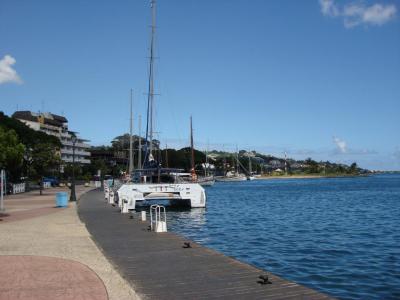
Officially, the Waterfront of Papeete extends from To'Ata Square to Vaiete Square. The To'Ata Square features a pleasant waterfront stroll and sights of outrigger canoes training for races. The square also has "Tikis" religious monuments and statues intended to protect the sacred places of the islands.
On the western edge of the square is a 5,000-seat pavilion. There is the venue for the Heiva Festival, a month-long colorful celebration that commemorates the identity of the Francopolynesians, and rock concerts during the year. Minibars on-site offer light snacks and drinks in the evenings.
During the day, Vaiete Square is a pleasant resting place for cool breezes. A "Fare pote'e" house for exhibitions shows the work of local craftspersons. As the sun sets, everything changes. Food trucks, called "roulottes" open up, offering a variety of international treats. There are live performances and open-air tables by the sea.
On the western edge of the square is a 5,000-seat pavilion. There is the venue for the Heiva Festival, a month-long colorful celebration that commemorates the identity of the Francopolynesians, and rock concerts during the year. Minibars on-site offer light snacks and drinks in the evenings.
During the day, Vaiete Square is a pleasant resting place for cool breezes. A "Fare pote'e" house for exhibitions shows the work of local craftspersons. As the sun sets, everything changes. Food trucks, called "roulottes" open up, offering a variety of international treats. There are live performances and open-air tables by the sea.
