Custom Walk in Gdansk, Poland by jroos_9fbbbb created on 2026-03-16
Guide Location: Poland » Gdansk
Guide Type: Custom Walk
# of Sights: 5
Tour Duration: 1 Hour(s)
Travel Distance: 2.8 Km or 1.7 Miles
Share Key: QUWST
Guide Type: Custom Walk
# of Sights: 5
Tour Duration: 1 Hour(s)
Travel Distance: 2.8 Km or 1.7 Miles
Share Key: QUWST
How It Works
Please retrieve this walk in the GPSmyCity app. Once done, the app will guide you from one tour stop to the next as if you had a personal tour guide. If you created the walk on this website or come to the page via a link, please follow the instructions below to retrieve the walk in the app.
Retrieve This Walk in App
Step 1. Download the app "GPSmyCity: Walks in 1K+ Cities" on Apple App Store or Google Play Store.



Step 2. In the GPSmyCity app, download(or launch) the guide "Gdansk Map and Walking Tours".
Step 3. Tap the menu button located at upper right corner of the "Walks" screen and select "Retrieve custom walk". Enter the share key: QUWST
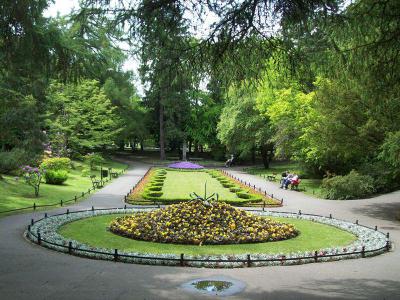
1) Oliwa Park
Oliwa Park, located in Gdańsk, is a 25-acre (10 hectares) verdant oasis known for its breathtaking landscaping and architectural marvels. Designed by the renowned Polish gardener Kazimierz Dębiński, this picturesque public park is a popular destination for tourists, nature lovers, families, and couples seeking a tranquil retreat from the city's hustle and bustle.
At the core of Oliwa Park are its manicured gardens, where visitors can enjoy serene walks, scenic picnics, and relaxed afternoons. The park features tree-lined pathways that meander around lush lawns, perfect for picnicking, exercising, or unwinding. A highlight of the park is the stream and waterfall, with stepping-stone-like boulders that are especially popular among children.
The park's southern section boasts an elegant French Rococo garden, complete with a narrow pond and encircled by towering trees. The Botanical Garden here displays a variety of flora including magnolias, rhododendrons, and spruces, while the Palm House is home to an exotic collection of palms. Another notable feature is the Alpinarium, a rockery designed to emulate a mountain environment.
Wildlife enthusiasts will appreciate the park's diverse fauna, including carp, squirrels, and swans. Art lovers are drawn to the decorative sculptures scattered throughout the park, such as the bust of Poland's national poet, Adam Mickiewicz. A unique attraction is the Whispering Caves, where visitors can communicate through two shells set on opposite sides of a path.
A significant landmark within the park is the 18th-century Abbot’s Palace, formerly the residence of the Cistercian monks' abbot. Today, it houses the modern art department of the National Museum in Gdańsk, featuring an array of Polish art, ceramics, and sculptures dating from the 1800s to early 1900s. In front of the palace lies an immaculately maintained Baroque-style garden.
At the core of Oliwa Park are its manicured gardens, where visitors can enjoy serene walks, scenic picnics, and relaxed afternoons. The park features tree-lined pathways that meander around lush lawns, perfect for picnicking, exercising, or unwinding. A highlight of the park is the stream and waterfall, with stepping-stone-like boulders that are especially popular among children.
The park's southern section boasts an elegant French Rococo garden, complete with a narrow pond and encircled by towering trees. The Botanical Garden here displays a variety of flora including magnolias, rhododendrons, and spruces, while the Palm House is home to an exotic collection of palms. Another notable feature is the Alpinarium, a rockery designed to emulate a mountain environment.
Wildlife enthusiasts will appreciate the park's diverse fauna, including carp, squirrels, and swans. Art lovers are drawn to the decorative sculptures scattered throughout the park, such as the bust of Poland's national poet, Adam Mickiewicz. A unique attraction is the Whispering Caves, where visitors can communicate through two shells set on opposite sides of a path.
A significant landmark within the park is the 18th-century Abbot’s Palace, formerly the residence of the Cistercian monks' abbot. Today, it houses the modern art department of the National Museum in Gdańsk, featuring an array of Polish art, ceramics, and sculptures dating from the 1800s to early 1900s. In front of the palace lies an immaculately maintained Baroque-style garden.
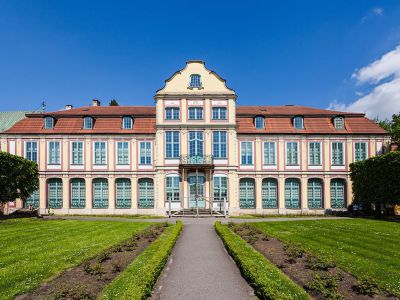
2) The Abbots' Palace in Oliwa
The Abbots' Palace (Pałac Opatów) in Oliwa is an elegant Rococo-style palace located in the Oliwa quarter of Gdańsk (formerly known as Danzig). This historical structure has a rich history that spans several centuries. The palace complex consists of two main sections: the "Old Palace," which dates back to the 15th century, and the "New Palace," which was added during the early 1600s. The New Palace served as the residence for the Cistercian abbot at the time, Jan Grabiński. Further enhancements were made to the palace between 1754 and 1756, with financial support from another Cisterian abbot named Jacek Rybiński.
Since 1989, the Abbots' Palace has been home to the Department of Modern Art within the Polish National Museum in Gdańsk. In February 1990, a dedicated gallery showcasing contemporary Polish art was established within the palace. The permanent exhibitions housed here include a diverse collection of works by notable Polish artists from the 19th and 20th centuries, encompassing painting, sculpture, and ceramics. Among the featured artists are Zbigniew Pronaszko, Jan Cybis, Henryk Stażewski, Andrzej Wróblewski, Tadeusz Kantor, Jerzy Nowosielski, Alfred Lenica, Jan Lebenstein, Teresa Pągowska, Zdzisław Beksiński, Edward Dwurnik, and Władysław Hasior. Additionally, the palace hosts the "Promotional Gallery," which showcases the creations of emerging young artists.
Since 1989, the Abbots' Palace has been home to the Department of Modern Art within the Polish National Museum in Gdańsk. In February 1990, a dedicated gallery showcasing contemporary Polish art was established within the palace. The permanent exhibitions housed here include a diverse collection of works by notable Polish artists from the 19th and 20th centuries, encompassing painting, sculpture, and ceramics. Among the featured artists are Zbigniew Pronaszko, Jan Cybis, Henryk Stażewski, Andrzej Wróblewski, Tadeusz Kantor, Jerzy Nowosielski, Alfred Lenica, Jan Lebenstein, Teresa Pągowska, Zdzisław Beksiński, Edward Dwurnik, and Władysław Hasior. Additionally, the palace hosts the "Promotional Gallery," which showcases the creations of emerging young artists.
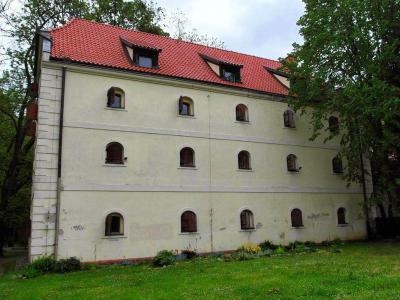
3) Ethnographic Museum at the Abbatial Granary
The Ethnographic Museum, a division of the National Museum in Gdansk, presents a rich tapestry of cultural heritage and history. Initially established as the Ethnographical Department within the Pomeranian Museum, it gained independence and was relocated in 1979 to the Abbots' Palace in Gdansk-Oliwa. Later, it moved to its current location, the Abbatial Granary, a historical eighteenth-century building, and was rebranded as the Ethnographical Museum.
The museum's collection predominantly showcases artifacts from Eastern Pomerania, highlighting the diverse ethnic and cultural groups of the region such as Kociewska, the Kashubs, Borowiacka, Lower Vistula, and Zulawy. While the primary focus is on local heritage, the museum also includes exhibits from neighboring regions like Wielkopolska, Kujawy, Warmia, and Mazury.
A unique aspect of the museum is its non-European collection, which has its origins in the exhibits that survived World War II at the Gdansk City Museum (Staatliches Museum). Among its distinctive collections are Eastern Pomeranian folk furniture dating from the eighteenth to the twentieth century, including chests, cupboards, wardrobes, and stools.
The museum also houses significant exhibits related to the culture of the Frisians, who settled in the Vistula River delta in the fifteenth century, and features ceramics, textiles, and furniture brought by Poles who were resettled to Pomerania from the Wilno area after World War II.
The museum's primary exhibition, "Folk Culture of Gdansk Pomerania at the Abbatial Granary," is a permanent fixture that offers visitors a deep dive into the local folk culture. Additionally, the museum organizes temporary exhibitions in the Gothic wing of its former location, the Abbots' Palace, allowing for a dynamic and evolving presentation of cultural heritage and history.
The museum's collection predominantly showcases artifacts from Eastern Pomerania, highlighting the diverse ethnic and cultural groups of the region such as Kociewska, the Kashubs, Borowiacka, Lower Vistula, and Zulawy. While the primary focus is on local heritage, the museum also includes exhibits from neighboring regions like Wielkopolska, Kujawy, Warmia, and Mazury.
A unique aspect of the museum is its non-European collection, which has its origins in the exhibits that survived World War II at the Gdansk City Museum (Staatliches Museum). Among its distinctive collections are Eastern Pomeranian folk furniture dating from the eighteenth to the twentieth century, including chests, cupboards, wardrobes, and stools.
The museum also houses significant exhibits related to the culture of the Frisians, who settled in the Vistula River delta in the fifteenth century, and features ceramics, textiles, and furniture brought by Poles who were resettled to Pomerania from the Wilno area after World War II.
The museum's primary exhibition, "Folk Culture of Gdansk Pomerania at the Abbatial Granary," is a permanent fixture that offers visitors a deep dive into the local folk culture. Additionally, the museum organizes temporary exhibitions in the Gothic wing of its former location, the Abbots' Palace, allowing for a dynamic and evolving presentation of cultural heritage and history.
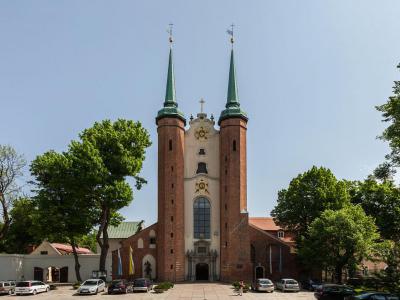
4) Oliwa Cathedral
Oliwa Cathedral, formally known as the Archcathedral Basilica of the Holy Trinity, is a prominent church in Gdańsk. This magnificent edifice stands out as a three-nave basilica featuring a transept and a multisided closed presbytery, complete with an ambulatory. The cathedral's striking façade is adorned with two slender 46-meter-tall towers with sharply-edged helmets, a Baroque portal from 1688, varied-sized windows, and three cartouches. A notable feature of the cathedral is its bell tower, a characteristic element of Cistercian architecture.
Remarkably, the cathedral is 17.7 meters high, 19 meters wide, and 107 meters long, with the interior spanning 97.6 meters, making it the longest Cistercian church in the world. The cathedral's interior is a treasure trove of art from the Renaissance, Baroque, Rococo, and Classical periods, reflecting immense artistic value.
There are 23 altars within the cathedral, each of historical significance and mainly crafted in the Baroque and Rococo styles, with some made of marble. Their iconography reflects the principles of the post-Trent church. The most significant altar is the High Altar from 1688, celebrated as the finest Baroque artwork in Pomerania. Additionally, there is a noteworthy Netherland Renaissance style altar which served as the main altar until 1688. The cathedral's paintings, created by renowned 17th-century artists add to its grandeur.
The interior also houses Rococo chapels dedicated to the Holy Cross and Saint John of Nepomuk, an ambo, tombstones, epitaphs, and the tombs of the Pomeranian Dukes and the Kos family. Additionally, it contains a bishop's crypt, antique chandeliers, canopies, and numerous other antiquities. Of particular note is a feretory depicting Our Lady of Oliwa with the Infant Jesus, a revered object carried during the annual pilgrimage to the Calvary of Wejherowo.
Remarkably, the cathedral is 17.7 meters high, 19 meters wide, and 107 meters long, with the interior spanning 97.6 meters, making it the longest Cistercian church in the world. The cathedral's interior is a treasure trove of art from the Renaissance, Baroque, Rococo, and Classical periods, reflecting immense artistic value.
There are 23 altars within the cathedral, each of historical significance and mainly crafted in the Baroque and Rococo styles, with some made of marble. Their iconography reflects the principles of the post-Trent church. The most significant altar is the High Altar from 1688, celebrated as the finest Baroque artwork in Pomerania. Additionally, there is a noteworthy Netherland Renaissance style altar which served as the main altar until 1688. The cathedral's paintings, created by renowned 17th-century artists add to its grandeur.
The interior also houses Rococo chapels dedicated to the Holy Cross and Saint John of Nepomuk, an ambo, tombstones, epitaphs, and the tombs of the Pomeranian Dukes and the Kos family. Additionally, it contains a bishop's crypt, antique chandeliers, canopies, and numerous other antiquities. Of particular note is a feretory depicting Our Lady of Oliwa with the Infant Jesus, a revered object carried during the annual pilgrimage to the Calvary of Wejherowo.
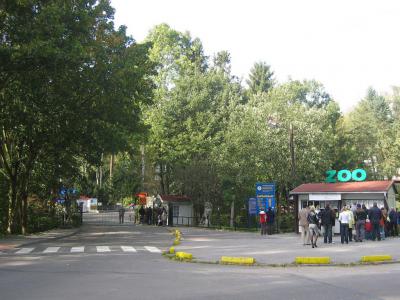
5) Gdansk Zoo
The Gdańsk Zoo is located in the Oliwa district of Gdańsk, Pomeranian Voivodship. Established in 1954, the zoo spans 123.76 hectares, making it the largest zoological garden in Poland by area. The Gdańsk Zoo is a member of both the European Association of Zoos and Aquaria (EAZA) and the World Association of Zoos and Aquariums (WAZA), reflecting its high standards and international standing in the zoological community.
The origins of the Gdańsk Zoo trace back to 1927 with a menagerie in Oliwa, which existed until World War II. This early collection included a diverse array of animals such as brown bears, wild boars, giraffes, monkeys, wolves, and raccoons. The zoo's official inauguration occurred on May 1, 1954, in the Leśny Młyn Valley, repurposing the site of a former sanatorium that had specialized in treating respiratory and rheumatic disorders since 1945.
By the 1980s, the zoo boasted a collection of 800 animals across 176 species, demonstrating its expanding scope and commitment to animal care and conservation.
Over the years, the zoo has continually enhanced its facilities and animal collection. Notable developments include the construction of the giraffes' pavilion in 2008, which currently houses four Rothschild's giraffes, and the introduction of new species like leopards, meerkats, takins, and lions of Southwest African origin.
The zoo is home to a variety of rare and exotic species, including scimitar oryxes, pygmy hippopotamuses, jackass penguins, bongos, Bali mynas, mandrills, yellow anacondas, Visayan spotted deer, takins, southern ground hornbills, and Siberian tigers. This diverse collection not only showcases the zoo's commitment to preserving endangered species but also provides visitors with a unique and educational experience.
The origins of the Gdańsk Zoo trace back to 1927 with a menagerie in Oliwa, which existed until World War II. This early collection included a diverse array of animals such as brown bears, wild boars, giraffes, monkeys, wolves, and raccoons. The zoo's official inauguration occurred on May 1, 1954, in the Leśny Młyn Valley, repurposing the site of a former sanatorium that had specialized in treating respiratory and rheumatic disorders since 1945.
By the 1980s, the zoo boasted a collection of 800 animals across 176 species, demonstrating its expanding scope and commitment to animal care and conservation.
Over the years, the zoo has continually enhanced its facilities and animal collection. Notable developments include the construction of the giraffes' pavilion in 2008, which currently houses four Rothschild's giraffes, and the introduction of new species like leopards, meerkats, takins, and lions of Southwest African origin.
The zoo is home to a variety of rare and exotic species, including scimitar oryxes, pygmy hippopotamuses, jackass penguins, bongos, Bali mynas, mandrills, yellow anacondas, Visayan spotted deer, takins, southern ground hornbills, and Siberian tigers. This diverse collection not only showcases the zoo's commitment to preserving endangered species but also provides visitors with a unique and educational experience.
