Custom Walk in Rio de Janeiro, Brazil by mdesiderio62_9257e4 created on 2026-03-22
Guide Location: Brazil » Rio de Janeiro
Guide Type: Custom Walk
# of Sights: 7
Tour Duration: 2 Hour(s)
Travel Distance: 3.4 Km or 2.1 Miles
Share Key: Q58F8
Guide Type: Custom Walk
# of Sights: 7
Tour Duration: 2 Hour(s)
Travel Distance: 3.4 Km or 2.1 Miles
Share Key: Q58F8
How It Works
Please retrieve this walk in the GPSmyCity app. Once done, the app will guide you from one tour stop to the next as if you had a personal tour guide. If you created the walk on this website or come to the page via a link, please follow the instructions below to retrieve the walk in the app.
Retrieve This Walk in App
Step 1. Download the app "GPSmyCity: Walks in 1K+ Cities" on Apple App Store or Google Play Store.



Step 2. In the GPSmyCity app, download(or launch) the guide "Rio de Janeiro Map and Walking Tours".
Step 3. Tap the menu button located at upper right corner of the "Walks" screen and select "Retrieve custom walk". Enter the share key: Q58F8
1) Saint Benedict Church and Monastery (must see)
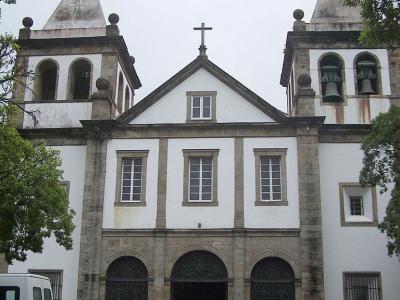
Saint Benedict Church and Monastery is one of Rio de Janeiro’s most important religious and artistic landmarks, rising above the city centre on Saint Benedict Hill. Its history began in 1590, when the land was donated to the Benedictine monks. Construction of the present complex started in 1633 and was completed in 1671, resulting in a refined example of Portuguese colonial architecture with strong Mannerist influences. The façade is marked by three entrance archways beneath a triangular gable, flanked by two towers topped with pyramidal spires. Passing through the entrance, visitors arrive at a tiled porch fitted with 19th-century iron gates.
While the exterior is relatively restrained, the interior is the church’s most famous feature. Almost every square inch of the walls and ceilings is covered in intricate wood carvings coated in 22-carat gold leaf. This massive decorative program took nearly a century to complete, spanning the years from 1668 to 1743. Look up to see a series of paintings depicting the life of Saint Benedict, framed by heavy, gold-covered scrollwork.
While admiring the church’s golden ornamentation, walk down the central aisle toward the far end of the nave. There, the High Altar displays the throne for the exposition of the Blessed Sacrament, positioned at the very top of the altar structure. Flanking the throne are statues of Saint Benedict and Saint Scholastica, his sister. Facing the altar, move into the right-hand side chapel, known as the Chapel of the Blessed Sacrament. It features some of the most delicate Rococo carvings in the church, lighter and more floral in character than the heavier Baroque decoration of the main nave. The silverwork here is particularly exquisite.
Beyond its artistic value, the monastery played a major role in education and urban development and remains active today. Visitors who attend the traditional Sunday 10:00 a.m. Mass can still hear Gregorian chant accompanied by organ music.
While the exterior is relatively restrained, the interior is the church’s most famous feature. Almost every square inch of the walls and ceilings is covered in intricate wood carvings coated in 22-carat gold leaf. This massive decorative program took nearly a century to complete, spanning the years from 1668 to 1743. Look up to see a series of paintings depicting the life of Saint Benedict, framed by heavy, gold-covered scrollwork.
While admiring the church’s golden ornamentation, walk down the central aisle toward the far end of the nave. There, the High Altar displays the throne for the exposition of the Blessed Sacrament, positioned at the very top of the altar structure. Flanking the throne are statues of Saint Benedict and Saint Scholastica, his sister. Facing the altar, move into the right-hand side chapel, known as the Chapel of the Blessed Sacrament. It features some of the most delicate Rococo carvings in the church, lighter and more floral in character than the heavier Baroque decoration of the main nave. The silverwork here is particularly exquisite.
Beyond its artistic value, the monastery played a major role in education and urban development and remains active today. Visitors who attend the traditional Sunday 10:00 a.m. Mass can still hear Gregorian chant accompanied by organ music.
2) Arco do Teles
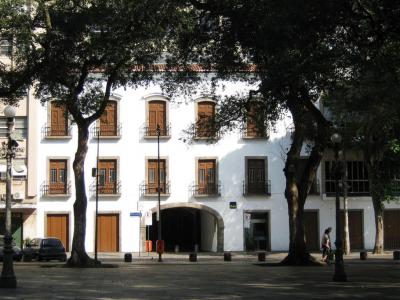
Anyone who passes through Arco do Teles in the center of Rio de Janeiro takes a journey back to Colonial Brazil. This structure, dating back to the mid-18th century, connects Praça Quinze with Rua do Ouvidor and has withstood the urbanization processes of the city center. In 1938, it was officially recognized as a Historical Heritage Site.
The history of the Arch began around 1740 when the construction of the House of Governors, which is now the Imperial Palace, significantly increased the value of the surrounding area. In response to this, Francisco Telles de Menezes, a Portuguese judge, acquired some land on the opposite side of Praça XV and commissioned José Alpoim, the architect responsible for the Palace, to construct a set of luxurious houses. These houses were built on an arch, creating a passage between the Square and Beco do Comércio, and this place came to be known as Arco do Teles, named after its owner.
Initially, the Telles de Menezes family resided in the houses above the Arco. In 1759, it became the Senate of the Chamber's headquarters. Sadly, a 1790 fire destroyed the building and important historical documents. Afterward, despite renovations, the Arco do Teles attracted homeless people.
Setting aside its eerie stories, crossing the Arco do Teles provides a glimpse into the rich history of Rio de Janeiro. Today, the Arch is a popular destination, known for its vibrant parties, bars, and restaurants in the surrounding area.
Why You Should Visit:
It has the houses, the street stones, and all the architecture old-fashioned Rio had. A perfect time machine!
Tip:
Recommended for seeing the way the locals dance and drink and enjoy life to the max. The area should definitely be visited during the evening for its nightlife.
The history of the Arch began around 1740 when the construction of the House of Governors, which is now the Imperial Palace, significantly increased the value of the surrounding area. In response to this, Francisco Telles de Menezes, a Portuguese judge, acquired some land on the opposite side of Praça XV and commissioned José Alpoim, the architect responsible for the Palace, to construct a set of luxurious houses. These houses were built on an arch, creating a passage between the Square and Beco do Comércio, and this place came to be known as Arco do Teles, named after its owner.
Initially, the Telles de Menezes family resided in the houses above the Arco. In 1759, it became the Senate of the Chamber's headquarters. Sadly, a 1790 fire destroyed the building and important historical documents. Afterward, despite renovations, the Arco do Teles attracted homeless people.
Setting aside its eerie stories, crossing the Arco do Teles provides a glimpse into the rich history of Rio de Janeiro. Today, the Arch is a popular destination, known for its vibrant parties, bars, and restaurants in the surrounding area.
Why You Should Visit:
It has the houses, the street stones, and all the architecture old-fashioned Rio had. A perfect time machine!
Tip:
Recommended for seeing the way the locals dance and drink and enjoy life to the max. The area should definitely be visited during the evening for its nightlife.
3) Old Cathedral of Rio de Janeiro
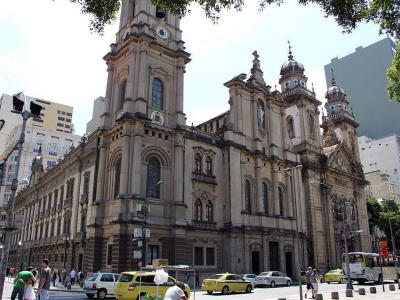
The Old Cathedral of Rio de Janeiro is one of the city’s most historically important religious buildings and a key witness to Brazil’s colonial and imperial eras. Originally founded as a Carmelite church in the 17th century, it was expanded and rebuilt in the mid-18th century as Rio de Janeiro grew in political importance. From around 1808 until 1976, it served as the city’s cathedral.
Its status changed in 1808, when the Portuguese royal court arrived in Rio while fleeing Napoleon’s invasion of Portugal. The church became the Royal Chapel and later the Imperial Chapel of independent Brazil. Kings John VI, Pedro I, and Pedro II all worshipped here, and the building hosted royal baptisms, weddings, and coronations, including the crowning of Dom Pedro I as Emperor in 1822.
While the exterior is relatively restrained, the interior ranks among the most harmonious church decorations in Rio. Executed largely after 1785, the Rococo woodwork is admired for its lightness and unity of style. Much of it was carved by Inácio Ferreira Pinto, one of Rio’s finest Rococo artists, who also created the main altarpiece. Gilded chapels, painted ceilings, oval portraits of the Apostles, and elegant balconies line the single-aisled nave, balanced by areas of plain white wall. The result is an interior of refined elegance that rewards anyone who steps inside, offering a contrast to the church’s modest exterior.
Its status changed in 1808, when the Portuguese royal court arrived in Rio while fleeing Napoleon’s invasion of Portugal. The church became the Royal Chapel and later the Imperial Chapel of independent Brazil. Kings John VI, Pedro I, and Pedro II all worshipped here, and the building hosted royal baptisms, weddings, and coronations, including the crowning of Dom Pedro I as Emperor in 1822.
While the exterior is relatively restrained, the interior ranks among the most harmonious church decorations in Rio. Executed largely after 1785, the Rococo woodwork is admired for its lightness and unity of style. Much of it was carved by Inácio Ferreira Pinto, one of Rio’s finest Rococo artists, who also created the main altarpiece. Gilded chapels, painted ceilings, oval portraits of the Apostles, and elegant balconies line the single-aisled nave, balanced by areas of plain white wall. The result is an interior of refined elegance that rewards anyone who steps inside, offering a contrast to the church’s modest exterior.
4) Santo Antônio Convent
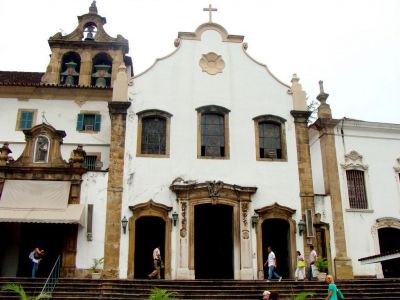
The Convent of Santo Antonio is a Catholic monastery that belongs to the Franciscan Province of the Immaculate Conception of Brazil. It is situated on top of Santo Antônio Hill, overlooking the Largo da Carioca square in the heart of Rio de Janeiro. This convent, along with the nearby Church of the Third Order of São Francisco da Penitência, constitutes one of the oldest and most significant colonial establishments still standing in the city.
Inside the church, you'll find a simple and traditional design. It has a rectangular shape and features a single nave. The main chapel and side altars are adorned with gilded woodwork that dates back to the period between 1716 and 1719. This woodwork exhibits a late Baroque style that is more characteristic of the 17th century than the 18th century.
The history of the Convent of Saint Anthony can be traced back to 1592 when the first Franciscans arrived in Rio de Janeiro. One of its notable features is its catacombs, where the remains of several members of the Imperial Family are laid to rest.
Inside the church, you'll find a simple and traditional design. It has a rectangular shape and features a single nave. The main chapel and side altars are adorned with gilded woodwork that dates back to the period between 1716 and 1719. This woodwork exhibits a late Baroque style that is more characteristic of the 17th century than the 18th century.
The history of the Convent of Saint Anthony can be traced back to 1592 when the first Franciscans arrived in Rio de Janeiro. One of its notable features is its catacombs, where the remains of several members of the Imperial Family are laid to rest.
5) Catedral Metropolitana de São Sebastião
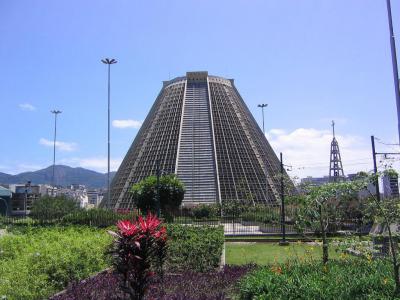
The Metropolitan Cathedral of Saint Sebastian, also known as the Metropolitan Cathedral of Rio de Janeiro, serves as the headquarters for the Roman Catholic Archdiocese of São Sebastião do Rio de Janeiro. It is where the Metropolitan Archbishops of Rio de Janeiro carry out their religious duties, and it is dedicated to Saint Sebastian, the patron saint of the city.
Designed by Edgar de Oliveira da Fonseca, the cathedral boasts a modern architectural style inspired by Mayan pyramids. The current cathedral was constructed between 1964 and 1979, replacing a series of churches that had previously served as cathedrals since 1676. The most recent and notable of these was the Church of Our Lady of Mount Carmel of the Ancient See, now referred to as the Old Cathedral, which was built in the 18th century and declared Rio's cathedral in the early 19th century.
The New Cathedral, as it is sometimes called, is situated in the city center. It has a distinctive conical shape with an internal diameter of 96 meters (315 feet), an external diameter of 106 meters, and an overall height of 75 meters (246 feet). The interior of the cathedral covers 8,000 square meters and provides seating for 5,000 people, with the ability to accommodate up to 20,000 individuals when standing. The cathedral's four rectangular stained glass windows reach an impressive height of 64 meters (210 feet), extending from the floor to the ceiling.
The interior design of the cathedral was created by Father Paulo Lachen Maier, while the sculptures were crafted by Humberto Cozzo. Additionally, the Chapel of the Blessed Sacrament features two candelabras created by Niccola Zanotto.
Why You Should Visit:
Majestic on the inside, free of charge, and with very minimal crowds. The massive coloured glass windows are as tall as the church itself and are beautiful beyond belief.
Tip:
Try to go during the middle of the day since the church relies on natural illumination and going earlier / later can leave it dark inside.
As the location is so close to Cinelândia and all of its attractions, you can do both on the same day.
Designed by Edgar de Oliveira da Fonseca, the cathedral boasts a modern architectural style inspired by Mayan pyramids. The current cathedral was constructed between 1964 and 1979, replacing a series of churches that had previously served as cathedrals since 1676. The most recent and notable of these was the Church of Our Lady of Mount Carmel of the Ancient See, now referred to as the Old Cathedral, which was built in the 18th century and declared Rio's cathedral in the early 19th century.
The New Cathedral, as it is sometimes called, is situated in the city center. It has a distinctive conical shape with an internal diameter of 96 meters (315 feet), an external diameter of 106 meters, and an overall height of 75 meters (246 feet). The interior of the cathedral covers 8,000 square meters and provides seating for 5,000 people, with the ability to accommodate up to 20,000 individuals when standing. The cathedral's four rectangular stained glass windows reach an impressive height of 64 meters (210 feet), extending from the floor to the ceiling.
The interior design of the cathedral was created by Father Paulo Lachen Maier, while the sculptures were crafted by Humberto Cozzo. Additionally, the Chapel of the Blessed Sacrament features two candelabras created by Niccola Zanotto.
Why You Should Visit:
Majestic on the inside, free of charge, and with very minimal crowds. The massive coloured glass windows are as tall as the church itself and are beautiful beyond belief.
Tip:
Try to go during the middle of the day since the church relies on natural illumination and going earlier / later can leave it dark inside.
As the location is so close to Cinelândia and all of its attractions, you can do both on the same day.
6) Theatro Municipal (Municipal Theatre) (must see)
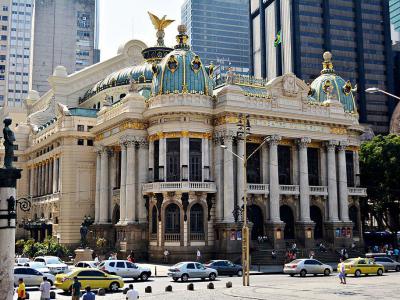
The Municipal Theatre of Rio de Janeiro is one of Brazil’s most important cultural institutions and a landmark of the city’s early 20th-century transformation. Inaugurated in 1909, its architectural design was inspired by the Garnier Palace in Paris, the home of the Paris Opera, reflecting the strong European influence on Brazil’s cultural elite at the time.
The exterior is a fine example of eclectic architecture, combining a Neoclassical structural framework with Art Nouveau ornamentation. Sculptures, columns, and decorative reliefs animate the façade, while inscriptions display the names of major Brazilian and European artists. Above it all rises an embellished dome, topped by a gilded bird that symbolically watches over both the building and the square below.
Inside, the theatre is equally impressive. Passing through the bronze and crystal doors, you enter the main reception hall. The floors are made of Italian marble, supported by columns of Carrara marble. Overhead, the ceiling is decorated with paintings by Brazilian Impressionist Eliseu Visconti. This is the most opulent part of the building, designed to impress guests upon arrival. Directly ahead from the vestibule stands the Grand Staircase, carved from coloured marble and flanked by bronze statues holding lamps. Above the staircase, look for the monumental ceiling painting by Rodolfo Amoedo. As you ascend, notice the transition from the bright, open entrance to the more intimate, velvet-lined upper tiers.
Two other highlights of the theatre—the Main Auditorium and the Noble Foyer—can only be seen by attending a performance or booking a guided tour. The Main Auditorium is a horseshoe-shaped theatre with four tiers of balconies. A massive bronze and crystal chandelier, weighing over a ton, hangs from the centre of the dome. Heavily inspired by the Palace of Versailles, the Noble Foyer features towering mirrors, Baccarat crystal chandeliers, and a grand ceiling painting by Eliseu Visconti. Doors from the foyer open onto a front balcony overlooking Cinelandia Square.
From its opening, the Municipal Theatre became the principal stage for opera, ballet, and symphonic music in Brazil, hosting international performers while also fostering national talent. Today, the theatre remains an active venue, with programming focused largely on classical music and ballet.
The exterior is a fine example of eclectic architecture, combining a Neoclassical structural framework with Art Nouveau ornamentation. Sculptures, columns, and decorative reliefs animate the façade, while inscriptions display the names of major Brazilian and European artists. Above it all rises an embellished dome, topped by a gilded bird that symbolically watches over both the building and the square below.
Inside, the theatre is equally impressive. Passing through the bronze and crystal doors, you enter the main reception hall. The floors are made of Italian marble, supported by columns of Carrara marble. Overhead, the ceiling is decorated with paintings by Brazilian Impressionist Eliseu Visconti. This is the most opulent part of the building, designed to impress guests upon arrival. Directly ahead from the vestibule stands the Grand Staircase, carved from coloured marble and flanked by bronze statues holding lamps. Above the staircase, look for the monumental ceiling painting by Rodolfo Amoedo. As you ascend, notice the transition from the bright, open entrance to the more intimate, velvet-lined upper tiers.
Two other highlights of the theatre—the Main Auditorium and the Noble Foyer—can only be seen by attending a performance or booking a guided tour. The Main Auditorium is a horseshoe-shaped theatre with four tiers of balconies. A massive bronze and crystal chandelier, weighing over a ton, hangs from the centre of the dome. Heavily inspired by the Palace of Versailles, the Noble Foyer features towering mirrors, Baccarat crystal chandeliers, and a grand ceiling painting by Eliseu Visconti. Doors from the foyer open onto a front balcony overlooking Cinelandia Square.
From its opening, the Municipal Theatre became the principal stage for opera, ballet, and symphonic music in Brazil, hosting international performers while also fostering national talent. Today, the theatre remains an active venue, with programming focused largely on classical music and ballet.
7) Modern Art Museum (MAM)
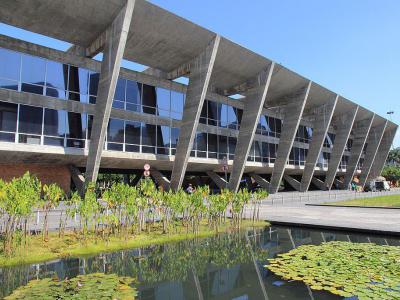
The Museum of Modern Art (MAM) can be found in the northeastern part of Flamengo Park in Rio de Janeiro. The museum's Modernist concrete structure, which was designed by Affonso Eduardo Reidy (1909-1964), was completed in 1955.
The museum's main building has spacious galleries with tall external pillars, supported by beams, and no interior columns. It sits on reclaimed land in the bay, with support pillars extending 20 meters (66 feet) below ground. An enclosed outdoor terrace is nestled between the main building and the theater wing entrances. On the north side, aluminum shutters control natural light during the winter solstice. Inside, a Burle Marx-designed inner courtyard includes a spiral ramp leading to an upper level with a roof terrace, restaurant, bar, and lounge area offering stunning views of Guanabara Bay and Rio's granite mountains.
The museum serves as a hub for the arts and includes various facilities such as exhibition spaces for both its permanent collection and traveling exhibitions, as well as spaces for lectures and studios for art education. Additionally, it houses a theater that hosts concerts, plays, classical ballet performances, film screenings, and conferences. The museum also accommodates public services, workshops, collection storage areas, and administrative offices.
The exhibitions at the Museu de Arte Moderna do Rio de Janeiro feature significant works by 20th-century artists, providing a comprehensive and sophisticated representation of artistic developments, both within Brazil and internationally over the past century. The museum's collection also includes approximately 4,000 photographs by Brazilian photographers.
Why You Should Visit:
To experience experimental art exhibits, together with exciting beautiful jewelry and home accessories by the top artisans and designers working in Brazil today, which are sold in the shop.
The setting is lovely due to the museum being located on the waterfront in Flamengo Park which is lovely to walk through and has views of Sugarloaf Mountain.
Tip:
Don't miss the exhibits outside which you can see for free even if you are just passing by. Worthwhile to get a first impression.
The museum's main building has spacious galleries with tall external pillars, supported by beams, and no interior columns. It sits on reclaimed land in the bay, with support pillars extending 20 meters (66 feet) below ground. An enclosed outdoor terrace is nestled between the main building and the theater wing entrances. On the north side, aluminum shutters control natural light during the winter solstice. Inside, a Burle Marx-designed inner courtyard includes a spiral ramp leading to an upper level with a roof terrace, restaurant, bar, and lounge area offering stunning views of Guanabara Bay and Rio's granite mountains.
The museum serves as a hub for the arts and includes various facilities such as exhibition spaces for both its permanent collection and traveling exhibitions, as well as spaces for lectures and studios for art education. Additionally, it houses a theater that hosts concerts, plays, classical ballet performances, film screenings, and conferences. The museum also accommodates public services, workshops, collection storage areas, and administrative offices.
The exhibitions at the Museu de Arte Moderna do Rio de Janeiro feature significant works by 20th-century artists, providing a comprehensive and sophisticated representation of artistic developments, both within Brazil and internationally over the past century. The museum's collection also includes approximately 4,000 photographs by Brazilian photographers.
Why You Should Visit:
To experience experimental art exhibits, together with exciting beautiful jewelry and home accessories by the top artisans and designers working in Brazil today, which are sold in the shop.
The setting is lovely due to the museum being located on the waterfront in Flamengo Park which is lovely to walk through and has views of Sugarloaf Mountain.
Tip:
Don't miss the exhibits outside which you can see for free even if you are just passing by. Worthwhile to get a first impression.
