Custom Walk in Cannes, France by abrahantes_53979 created on 2026-03-28
Guide Location: France » Cannes
Guide Type: Custom Walk
# of Sights: 6
Tour Duration: 1 Hour(s)
Travel Distance: 1.6 Km or 1 Miles
Share Key: DH63N
Guide Type: Custom Walk
# of Sights: 6
Tour Duration: 1 Hour(s)
Travel Distance: 1.6 Km or 1 Miles
Share Key: DH63N
How It Works
Please retrieve this walk in the GPSmyCity app. Once done, the app will guide you from one tour stop to the next as if you had a personal tour guide. If you created the walk on this website or come to the page via a link, please follow the instructions below to retrieve the walk in the app.
Retrieve This Walk in App
Step 1. Download the app "GPSmyCity: Walks in 1K+ Cities" on Apple App Store or Google Play Store.



Step 2. In the GPSmyCity app, download(or launch) the guide "Cannes Map and Walking Tours".
Step 3. Tap the menu button located at upper right corner of the "Walks" screen and select "Retrieve custom walk". Enter the share key: DH63N
1) Palais des Festivals et des Congrès (Palace of Festivals and Congresses) (must see)
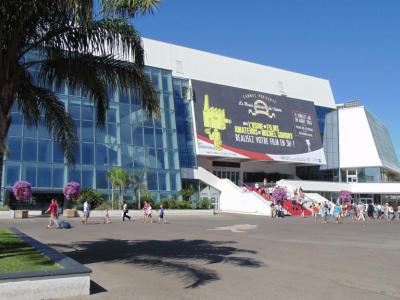
The Palace of Festivals and Congresses stands at the western end of the waterfront and represents the modern face of Cannes. The first version of the building was completed in 1949 to host the growing Cannes Film Festival. As the event expanded and the city attracted increasing numbers of business conventions, a larger and more functional complex became necessary. The current structure opened in 1982 and was further extended in 1999, allowing it to accommodate major international gatherings.
Today the building offers approximately 35,000 square meters of exhibition space and includes 18 auditoriums equipped for conferences, screenings, and performances. One of its most recognizable highlights is the wide ceremonial staircase at the main entrance, which becomes the world-famous red carpet during the annual film festival. Visitors often stop here for photographs, even outside festival season. Inside, the Grand Auditorium Louis Lumière serves as the principal screening hall for competition films, making it a central space in the festival’s program.
Although best known for cinema, the venue functions year-round as a cultural and business center. It hosts international congresses, trade fairs, and large exhibitions, as well as public cultural programs such as “Summer in Cannes” and “Going Out in Cannes.” Festivals including Jazz at Domergue and the Festival of Russian Art take place here, alongside theatre performances, concerts, dance events, opera, and other live productions.
For visitors, the Palace highlights the contemporary identity of Cannes. Its scale, facilities, and constant activity reflect the city’s role as both a global film destination and an international meeting point.
Today the building offers approximately 35,000 square meters of exhibition space and includes 18 auditoriums equipped for conferences, screenings, and performances. One of its most recognizable highlights is the wide ceremonial staircase at the main entrance, which becomes the world-famous red carpet during the annual film festival. Visitors often stop here for photographs, even outside festival season. Inside, the Grand Auditorium Louis Lumière serves as the principal screening hall for competition films, making it a central space in the festival’s program.
Although best known for cinema, the venue functions year-round as a cultural and business center. It hosts international congresses, trade fairs, and large exhibitions, as well as public cultural programs such as “Summer in Cannes” and “Going Out in Cannes.” Festivals including Jazz at Domergue and the Festival of Russian Art take place here, alongside theatre performances, concerts, dance events, opera, and other live productions.
For visitors, the Palace highlights the contemporary identity of Cannes. Its scale, facilities, and constant activity reflect the city’s role as both a global film destination and an international meeting point.
2) Les Murs Peints (Painted Wall) (must see)
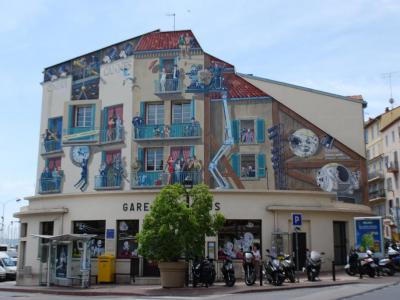
The Painted Walls of Cannes transform ordinary streets into a large-scale tribute to cinema. Since the city began hosting its international film festival in 1949, film culture has shaped its global image. In 2002, artists began creating monumental frescoes across building façades to reflect that connection. Today, around fifteen murals are scattered across different neighborhoods, each one reinforcing the city’s long-standing relationship with the world of film.
Rather than being grouped in a single area, the murals appear throughout residential streets, near schools, and along main roads. This layout encourages visitors to move through the city, discovering each artwork gradually. The paintings often use trompe-l’œil techniques, blending painted balconies, staircases, and curtains with real architectural features. From a distance, it can be difficult to tell where the building ends and the artwork begins, giving the scenes depth and movement.
Many of the murals portray well-known figures from cinema history. You might recognize Charlie Chaplin, whose silent comedies defined early twentieth-century film, or Alfred Hitchcock, known for shaping the suspense genre. Other walls feature actors such as Marilyn Monroe and James Dean, whose images remain instantly recognizable decades after their careers.
The most striking example is the large “Cinema Cannes” mural near City Hall and the central bus station. Covering an entire façade, it gathers together figures from across film history in one composition. Alongside Charlie Chaplin and Alfred Hitchcock, visitors can spot characters such as Mickey Mouse, Jessica Rabbit, Superman, Batman, R2-D2, and the fictional couple Jack Dawson and Rose DeWitt Bukater from Titanic. This combination of classic actors and beloved fictional figures reflects more than a century of cinematic storytelling. Its central location and scale make it a clear visual statement of how deeply cinema is woven into the city’s identity.
Rather than being grouped in a single area, the murals appear throughout residential streets, near schools, and along main roads. This layout encourages visitors to move through the city, discovering each artwork gradually. The paintings often use trompe-l’œil techniques, blending painted balconies, staircases, and curtains with real architectural features. From a distance, it can be difficult to tell where the building ends and the artwork begins, giving the scenes depth and movement.
Many of the murals portray well-known figures from cinema history. You might recognize Charlie Chaplin, whose silent comedies defined early twentieth-century film, or Alfred Hitchcock, known for shaping the suspense genre. Other walls feature actors such as Marilyn Monroe and James Dean, whose images remain instantly recognizable decades after their careers.
The most striking example is the large “Cinema Cannes” mural near City Hall and the central bus station. Covering an entire façade, it gathers together figures from across film history in one composition. Alongside Charlie Chaplin and Alfred Hitchcock, visitors can spot characters such as Mickey Mouse, Jessica Rabbit, Superman, Batman, R2-D2, and the fictional couple Jack Dawson and Rose DeWitt Bukater from Titanic. This combination of classic actors and beloved fictional figures reflects more than a century of cinematic storytelling. Its central location and scale make it a clear visual statement of how deeply cinema is woven into the city’s identity.
3) Notre Dame d'Esperance (Our Lady of Hope Church) (must see)
As you make your way up through the narrow streets of the old quarter, the climb gradually leads you to the Our Lady Of Hope Church, standing quietly at the top of Suquet Hill. Before you even step inside, pause and turn toward the view. From here, the Old Port curves below you, the coastline stretches outward, and the Lérins Islands sit calmly on the horizon. The church’s elevated position was not accidental — it anchors the historic district both physically and visually.
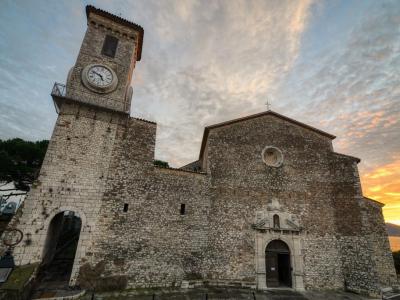
Now take a closer look at the building itself. Construction began in 1521 and continued for more than a century, which explains why the architecture reflects different influences. The main body follows a Provençal Gothic style, visible in its thick stone walls and tall, simple lines. There’s very little excess decoration; instead, the design feels solid and protective, well suited to a hilltop setting. Near the entrance, the Renaissance-style porch introduces more refined detailing, creating a subtle contrast with the heavier structure. Beside it rises the square bell tower, Romanesque in character, with five bells cast in 1921 that still mark time over the old quarter.
After stepping inside, begin to move slowly from chapel to chapel. In the Saint Peter Chapel, located on the right side of the church beneath the second arch from the entrance, the carved wooden altar immediately draws attention. Its layered design and fine craftsmanship reveal increasing detail the more closely you observe it. Above the high altar, a gilded 16th-century wooden statue of Our Lady of Hope draws attention upward, framed by a stained-glass window depicting the Annunciation.
In the baptismal chapel, a rare 14th-century Burgundy sculpture adds another historical layer, while a 15th-century statue of Saint Anne reflects the church’s long continuity. If you happen to visit during a service or summer concert, the Italian organ from 1857 fills the space with sound, giving the architecture a different dimension. Before leaving, step briefly into the small garden near the entrance — it offers a quiet transition back to the lively streets below.
Now take a closer look at the building itself. Construction began in 1521 and continued for more than a century, which explains why the architecture reflects different influences. The main body follows a Provençal Gothic style, visible in its thick stone walls and tall, simple lines. There’s very little excess decoration; instead, the design feels solid and protective, well suited to a hilltop setting. Near the entrance, the Renaissance-style porch introduces more refined detailing, creating a subtle contrast with the heavier structure. Beside it rises the square bell tower, Romanesque in character, with five bells cast in 1921 that still mark time over the old quarter.
After stepping inside, begin to move slowly from chapel to chapel. In the Saint Peter Chapel, located on the right side of the church beneath the second arch from the entrance, the carved wooden altar immediately draws attention. Its layered design and fine craftsmanship reveal increasing detail the more closely you observe it. Above the high altar, a gilded 16th-century wooden statue of Our Lady of Hope draws attention upward, framed by a stained-glass window depicting the Annunciation.
In the baptismal chapel, a rare 14th-century Burgundy sculpture adds another historical layer, while a 15th-century statue of Saint Anne reflects the church’s long continuity. If you happen to visit during a service or summer concert, the Italian organ from 1857 fills the space with sound, giving the architecture a different dimension. Before leaving, step briefly into the small garden near the entrance — it offers a quiet transition back to the lively streets below.
4) Musée des Explorations du Monde (Museum of World Explorations) (must see)
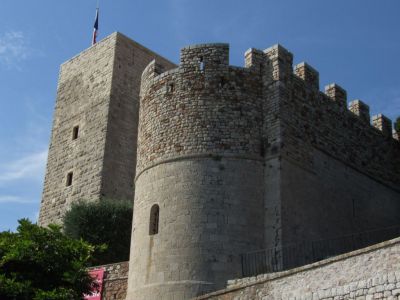
As you climb through the narrow lanes of Le Suquet, the old quarter, you’ll arrive at the Museum of World Explorations, housed within a medieval castle complex once used by the monks of the Lérins Islands. Construction of the castle began in the 11th century at the initiative of the monks, who had been established on Saint-Honorat Island since the 5th century. The thick stone walls and elevated position immediately tell you this was once a defensive and strategic site. In 2021, the former Castre Museum was renamed to reflect its broader focus on global cultures, but its historic setting remains an essential part of the experience.
The museum’s origins trace back to 1877, when Baron of Dutch origin Tinco Lycklama, donated his collection of antiquities and so-called “primitive” art to the city. By 1919, Cannes had acquired these old Suquet buildings to house the growing collection, creating a museum where the architecture itself feels like part of the exhibition.
Inside, the galleries guide you across continents. You’ll encounter artifacts from the Arctic, the Himalayas, Oceania, Africa, and the Americas. Pre-Columbian ceramics reveal how ancient American civilizations shaped clay into storytelling objects, while Mediterranean antiquities connect the local region to wider trade networks. In the 11th-century Saint Anne Chapel, pause to look closely at the collection of musical instruments. Instruments from Asia, Oceania, Africa, and the Americas are displayed in a sacred medieval space, showing how sound and craftsmanship vary across cultures yet share common purposes.
Before you leave, step into the inner courtyard and make sure to climb the 109 steps of the watchtower. From the top, the 360-degree view stretches over the Old Port, the bay, and the Lérins Islands, offering what is widely considered the highlight of the visit.
The museum’s origins trace back to 1877, when Baron of Dutch origin Tinco Lycklama, donated his collection of antiquities and so-called “primitive” art to the city. By 1919, Cannes had acquired these old Suquet buildings to house the growing collection, creating a museum where the architecture itself feels like part of the exhibition.
Inside, the galleries guide you across continents. You’ll encounter artifacts from the Arctic, the Himalayas, Oceania, Africa, and the Americas. Pre-Columbian ceramics reveal how ancient American civilizations shaped clay into storytelling objects, while Mediterranean antiquities connect the local region to wider trade networks. In the 11th-century Saint Anne Chapel, pause to look closely at the collection of musical instruments. Instruments from Asia, Oceania, Africa, and the Americas are displayed in a sacred medieval space, showing how sound and craftsmanship vary across cultures yet share common purposes.
Before you leave, step into the inner courtyard and make sure to climb the 109 steps of the watchtower. From the top, the 360-degree view stretches over the Old Port, the bay, and the Lérins Islands, offering what is widely considered the highlight of the visit.
5) Marche Forville (Forville Market) (must see)
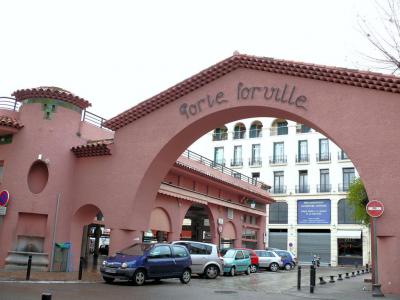
The Forville Market is one of the most authentic places to experience everyday life in Cannes. Located at the edge of the old quarter near the Old Port, this covered market has long been a favorite among residents. It operates only in the morning, opening at 7 a.m., and gradually becomes livelier as the day progresses. Unlike the polished boutiques along the waterfront, Forville reflects the practical rhythm of daily shopping.
The pedestrian-only surroundings make the market easy and comfortable to explore. Inside, seasonal produce dominates the stalls, highlighting the importance of freshness in regional cuisine. Strawberries appear in spring, tomatoes and melons in summer, and leeks and root vegetables in winter. Many vendors specialize in organic vegetables, reinforcing the local focus on quality ingredients. Fresh fish displayed on ice connects the market directly to the nearby sea, while flower stalls add color and fragrance to the covered hall.
Beyond raw ingredients, the market offers prepared foods that reflect both Provençal and broader Mediterranean influences. Cured meats such as tripe sausages, ham, and dried sausage are available alongside regional cheeses and local wines. Visitors looking for ready-to-eat dishes can find takeaway paella, while Italian-inspired options like ravioli Niçois and polenta show how culinary traditions overlap in this part of France. The variety allows shoppers to assemble anything from a simple picnic to a full dinner.
On Mondays, the food stalls give way to an all-day flea market, transforming the atmosphere entirely. Antiques, vintage objects, and second-hand items replace fresh produce, giving the space a different energy.
The pedestrian-only surroundings make the market easy and comfortable to explore. Inside, seasonal produce dominates the stalls, highlighting the importance of freshness in regional cuisine. Strawberries appear in spring, tomatoes and melons in summer, and leeks and root vegetables in winter. Many vendors specialize in organic vegetables, reinforcing the local focus on quality ingredients. Fresh fish displayed on ice connects the market directly to the nearby sea, while flower stalls add color and fragrance to the covered hall.
Beyond raw ingredients, the market offers prepared foods that reflect both Provençal and broader Mediterranean influences. Cured meats such as tripe sausages, ham, and dried sausage are available alongside regional cheeses and local wines. Visitors looking for ready-to-eat dishes can find takeaway paella, while Italian-inspired options like ravioli Niçois and polenta show how culinary traditions overlap in this part of France. The variety allows shoppers to assemble anything from a simple picnic to a full dinner.
On Mondays, the food stalls give way to an all-day flea market, transforming the atmosphere entirely. Antiques, vintage objects, and second-hand items replace fresh produce, giving the space a different energy.
6) Rue Meynadier (Meynadier Street) (must see)
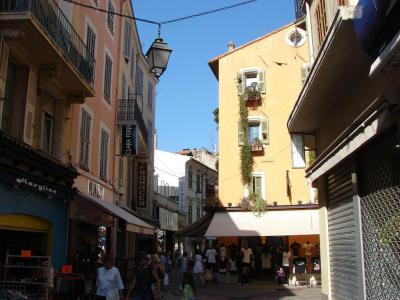
As you leave the Old Port area and move into the historic center, you’ll find yourself on the Meynadier Street, one of the oldest streets in Cannes. First laid out in the 18th century, it still follows its original narrow path. The low houses that once formed a residential lane have gradually been transformed into shops, cafés, and specialty boutiques. Because the street is pedestrian-only, the pace feels relaxed, allowing you to focus on what’s around you rather than traffic.
Walking along, it quickly becomes clear why this street is known for food. The concentration of gourmet boutiques turns a simple stroll into a sensory experience. At the shop of Jean-Luc Pelé, colorful macarons are displayed with the precision of jewelry, reflecting the French emphasis on pastry craftsmanship. A few doors down, cheese shops present carefully aged varieties, while confectioners fill their windows with chocolates and different styles of nougat. Many vendors offer samples, which changes the walk from simple shopping into tasting and comparing.
The variety goes beyond sweets. Butchers display cured meats, specialty stores offer exotic spices and dried fruits, and wine merchants line the street — a reminder that this is still the French Riviera, where regional wines are part of everyday meals. The proximity to the Forville Market reinforces the idea that this area functions as a true food district rather than a tourist façade.
As you continue, you’ll also notice clothing boutiques, souvenir shops, and small cafés. The natural shade created by the narrow layout makes the street comfortable even on warm days, and café terraces provide a place to pause and observe daily life. Meynadier Street offers a practical yet enjoyable way to experience local shopping culture, balancing tradition with contemporary tastes.
Walking along, it quickly becomes clear why this street is known for food. The concentration of gourmet boutiques turns a simple stroll into a sensory experience. At the shop of Jean-Luc Pelé, colorful macarons are displayed with the precision of jewelry, reflecting the French emphasis on pastry craftsmanship. A few doors down, cheese shops present carefully aged varieties, while confectioners fill their windows with chocolates and different styles of nougat. Many vendors offer samples, which changes the walk from simple shopping into tasting and comparing.
The variety goes beyond sweets. Butchers display cured meats, specialty stores offer exotic spices and dried fruits, and wine merchants line the street — a reminder that this is still the French Riviera, where regional wines are part of everyday meals. The proximity to the Forville Market reinforces the idea that this area functions as a true food district rather than a tourist façade.
As you continue, you’ll also notice clothing boutiques, souvenir shops, and small cafés. The natural shade created by the narrow layout makes the street comfortable even on warm days, and café terraces provide a place to pause and observe daily life. Meynadier Street offers a practical yet enjoyable way to experience local shopping culture, balancing tradition with contemporary tastes.
