Custom Walk in Split, Croatia by michael1941robinson_95ba5a created on 2026-03-29
Guide Location: Croatia » Split
Guide Type: Custom Walk
# of Sights: 6
Tour Duration: 1 Hour(s)
Travel Distance: 2.3 Km or 1.4 Miles
Share Key: 9Z3ZJ
Guide Type: Custom Walk
# of Sights: 6
Tour Duration: 1 Hour(s)
Travel Distance: 2.3 Km or 1.4 Miles
Share Key: 9Z3ZJ
How It Works
Please retrieve this walk in the GPSmyCity app. Once done, the app will guide you from one tour stop to the next as if you had a personal tour guide. If you created the walk on this website or come to the page via a link, please follow the instructions below to retrieve the walk in the app.
Retrieve This Walk in App
Step 1. Download the app "GPSmyCity: Walks in 1K+ Cities" on Apple App Store or Google Play Store.



Step 2. In the GPSmyCity app, download(or launch) the guide "Split Map and Walking Tours".
Step 3. Tap the menu button located at upper right corner of the "Walks" screen and select "Retrieve custom walk". Enter the share key: 9Z3ZJ
1) Riva Harbor (must see)
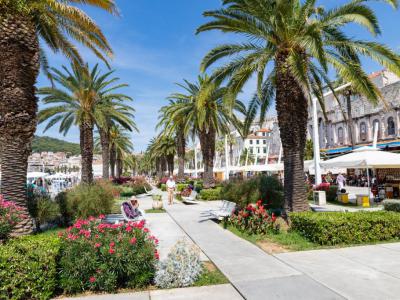
Strolling down Split’s iconic Riva Harbor feels less like sightseeing and more like slipping straight into the city’s daily rhythm. Imagine a wide, palm-lined promenade hugging the Adriatic, where every breeze seems to carry the scent of salt and roasted coffee beans. Locals call it simply “Riva,” but what it really is—Split’s living room: open-air, sunlit, and always buzzing.
Originally shaped by Marshal Marmont’s French-era urban redesign in the early 1800s, the Riva replaced defensive walls with a graceful promenade. Over a century later, it was pedestrianized in the 1990s, transforming it into one of Split’s most popular waterfront promenades.
Once upon a time, Emperor Diocletian himself had ships docked right at his palace walls, bringing exotic goods, fresh fish, and perhaps the occasional amphora of fine wine. Today, cruise ships glide into the Port of Split, which ranks as the largest passenger port in Croatia and the third busiest in the Mediterranean, handling around 5 million passengers annually. Visitors and locals alike sip espresso and watch the world drift by. The Riva is a living testament to Split’s soul as a port city shaped by centuries of trade, sea stories, and salty winds.
The first thing you might want to do here is claim a spot on one of the many benches. Watch as sunlight dances across the Adriatic’s deep blue surface, then wander past cheerful cafés and gelato stands. Feeling peckish? Fresh seafood, local pastries, or a quick espresso are always just steps away. And yes, you’ll be sharing your view with the city’s famously fearless pigeons.
Turn around, and you’ll see the ancient south wall of Diocletian’s Palace rising behind the promenade, a striking blend of Roman stone and lively modern façades. It is this collision of past and present that gives the Riva its vibrant energy.
As evening falls, don’t rush off. The sunset here is a nightly ritual. The sky shifts from rose-gold to deep indigo, street musicians begin to play, and the harbor seems to glow.
In Split, you don’t just pass through the Riva. You slow down, look around, and truly feel the heartbeat of the city.
Originally shaped by Marshal Marmont’s French-era urban redesign in the early 1800s, the Riva replaced defensive walls with a graceful promenade. Over a century later, it was pedestrianized in the 1990s, transforming it into one of Split’s most popular waterfront promenades.
Once upon a time, Emperor Diocletian himself had ships docked right at his palace walls, bringing exotic goods, fresh fish, and perhaps the occasional amphora of fine wine. Today, cruise ships glide into the Port of Split, which ranks as the largest passenger port in Croatia and the third busiest in the Mediterranean, handling around 5 million passengers annually. Visitors and locals alike sip espresso and watch the world drift by. The Riva is a living testament to Split’s soul as a port city shaped by centuries of trade, sea stories, and salty winds.
The first thing you might want to do here is claim a spot on one of the many benches. Watch as sunlight dances across the Adriatic’s deep blue surface, then wander past cheerful cafés and gelato stands. Feeling peckish? Fresh seafood, local pastries, or a quick espresso are always just steps away. And yes, you’ll be sharing your view with the city’s famously fearless pigeons.
Turn around, and you’ll see the ancient south wall of Diocletian’s Palace rising behind the promenade, a striking blend of Roman stone and lively modern façades. It is this collision of past and present that gives the Riva its vibrant energy.
As evening falls, don’t rush off. The sunset here is a nightly ritual. The sky shifts from rose-gold to deep indigo, street musicians begin to play, and the harbor seems to glow.
In Split, you don’t just pass through the Riva. You slow down, look around, and truly feel the heartbeat of the city.
2) Peskarija
In Split, there's a lively and renowned indoor fish market called Peškarija, beloved by locals and a must-visit destination. For the citizens of Split, it has become a cherished ritual to explore this vibrant market. Peškarija is conveniently situated near the Matejuška fishing port, right in the heart of Marmont Street.
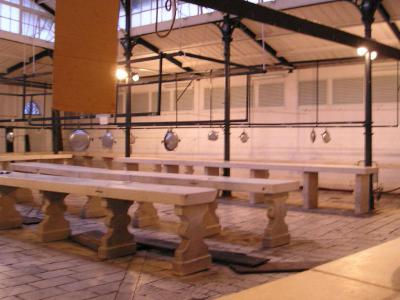
The fish market, designed by Ante Bezić in 1890, boasts an impressive Revival style. Its glazed roof, supported by a cast iron structure, not only adds to its charm but also serves a functional purpose by allowing basilical lighting to brighten the space. The clever positioning of several high apertures ensures proper ventilation, maintaining a refreshing atmosphere for visitors and keeping the fish hygienic. Interestingly, the presence of sulfur wells, which attracted Diocletian to this area in ancient times, plays a role in keeping the air free of flies, enhancing the overall cleanliness of the market.
The fish market, designed by Ante Bezić in 1890, boasts an impressive Revival style. Its glazed roof, supported by a cast iron structure, not only adds to its charm but also serves a functional purpose by allowing basilical lighting to brighten the space. The clever positioning of several high apertures ensures proper ventilation, maintaining a refreshing atmosphere for visitors and keeping the fish hygienic. Interestingly, the presence of sulfur wells, which attracted Diocletian to this area in ancient times, plays a role in keeping the air free of flies, enhancing the overall cleanliness of the market.
3) Croatian National Theater
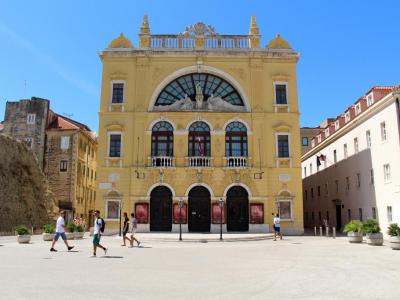
The Croatian National Theater in Split, known as HNK Split, originally established in 1893, stands as one of the most enduring theaters in Dalmatia. It is owned and operated by the City of Split.
In 1920, the theater witnessed its first renovation and marked the debut of the first professional theater troupe. The theater's name was changed to the "Dalmatian National Theater" at that time. Subsequently, in 1928 during the Kingdom of Yugoslavia, it underwent a merger with the Sarajevo National Theater and was then known as the "National Theater for Western Regions."
HNK Split boasts an impressive yearly schedule, hosting approximately 300 performances, which collectively draw around 120,000 enthusiastic audience members. This rich program includes 20 to 40 opera, ballet, and dramatic productions, as well as numerous symphony concerts performed by their in-house orchestra. The theater is proudly acclaimed as the "premier theater house in Dalmatia" and holds the distinction of being "one of the biggest and oldest theater houses in the Mediterranean."
In addition to its regular lineup, HNK Split actively organizes two longstanding annual festivals: the Split Summer Festival and the Days of Marulić. These events further contribute to the theater's cultural significance and community engagement.
Why You Should Visit:
Beautiful building from the outside and a great place to people-watch, while also having a pretty & elegant interior.
Prices, including for best seats, are a fraction of opera prices elsewhere and tickets are bookable on the internet.
The attire is also a bit more casual, so even if you don't pack with a theater visit in mind, you'll be perfectly fine.
Tip:
During the Summer Festival, try the relaxed open venue 'Sustipan' where concerts are held on a cliff under the pine trees. You can order drinks and enjoy an exceptional night under the stars!
Check with the box office on the date of performance to verify the location and time of performance.
In 1920, the theater witnessed its first renovation and marked the debut of the first professional theater troupe. The theater's name was changed to the "Dalmatian National Theater" at that time. Subsequently, in 1928 during the Kingdom of Yugoslavia, it underwent a merger with the Sarajevo National Theater and was then known as the "National Theater for Western Regions."
HNK Split boasts an impressive yearly schedule, hosting approximately 300 performances, which collectively draw around 120,000 enthusiastic audience members. This rich program includes 20 to 40 opera, ballet, and dramatic productions, as well as numerous symphony concerts performed by their in-house orchestra. The theater is proudly acclaimed as the "premier theater house in Dalmatia" and holds the distinction of being "one of the biggest and oldest theater houses in the Mediterranean."
In addition to its regular lineup, HNK Split actively organizes two longstanding annual festivals: the Split Summer Festival and the Days of Marulić. These events further contribute to the theater's cultural significance and community engagement.
Why You Should Visit:
Beautiful building from the outside and a great place to people-watch, while also having a pretty & elegant interior.
Prices, including for best seats, are a fraction of opera prices elsewhere and tickets are bookable on the internet.
The attire is also a bit more casual, so even if you don't pack with a theater visit in mind, you'll be perfectly fine.
Tip:
During the Summer Festival, try the relaxed open venue 'Sustipan' where concerts are held on a cliff under the pine trees. You can order drinks and enjoy an exceptional night under the stars!
Check with the box office on the date of performance to verify the location and time of performance.
4) Museum of Fine Arts
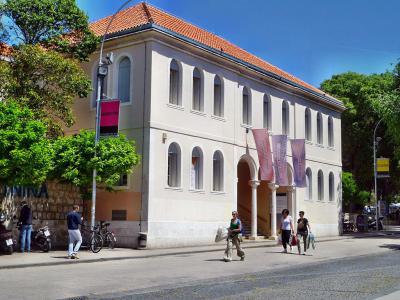
The Museum of Fine Arts in Split, houses a diverse collection of artworks spanning from the 14th century to contemporary pieces, offering a comprehensive overview of the local art scene's evolution. Established in 1931, this cultural institution proudly showcases a permanent exhibition of paintings and sculptures featuring masterpieces by renowned Croatian artists like Vlaho Bukovac, Mato Celestin Medović, Branislav Dešković, Ivan Meštrović, Emanuel Vidović, and Ignjat Job. Additionally, the museum boasts an extensive assortment of icons and regularly hosts special exhibits highlighting the works of contemporary artists.
In 2009, the museum underwent a relocation to the beautifully renovated old hospital building in Split, where it now provides a fully modern exhibition space.
The museum's permanent collection comprises over 3,500 artworks, spanning centuries of creative expression. This diverse assortment captures the essence of various art movements and trends in the local region, presenting works by Croatian artists and those hailing from the former Yugoslavia, Italy, Germany, Austria, France, and the Czech Republic-all with connections to Split.
To preserve the artistic treasures and prepare them for public display, the museum's restoration department dedicates itself to careful conservation efforts. Additionally, the museum houses a substantial documentation archive that includes graphics, publications, press clippings, and a photograph library, all contributing to the preservation and dissemination of art knowledge.
In 2009, the museum underwent a relocation to the beautifully renovated old hospital building in Split, where it now provides a fully modern exhibition space.
The museum's permanent collection comprises over 3,500 artworks, spanning centuries of creative expression. This diverse assortment captures the essence of various art movements and trends in the local region, presenting works by Croatian artists and those hailing from the former Yugoslavia, Italy, Germany, Austria, France, and the Czech Republic-all with connections to Split.
To preserve the artistic treasures and prepare them for public display, the museum's restoration department dedicates itself to careful conservation efforts. Additionally, the museum houses a substantial documentation archive that includes graphics, publications, press clippings, and a photograph library, all contributing to the preservation and dissemination of art knowledge.

5) Croatian Maritime Museum
Situated within the 17th-century Gripe Fortress, the Croatian Maritime Museum finds its home in a charming 19th-century building. Originally established in 1997, the museum succeeded the Military-Maritime Museum, which was initially founded by the Yugoslav Navy back in 1960. It also inherited a significant collection from the Maritime Museum of the Yugoslav Academy of Sciences and Arts, an institution that existed from 1956 to 1985.
A remarkable fusion of historical legacies, the Museum amalgamates collections from various sources, including the Split Maritime Museum, the Military Maritime Museum, and several associated maritime heritage collections, boasting marine archaeological discoveries and artifacts from the Brodosplit Museum situated in Split's shipyard.
With a primary focus on maritime heritage along the Adriatic coast, the museum diligently conducts research, acquires new items, and carefully archives and exhibits a diverse array of artifacts and documents spanning from prehistoric times to the modern era. Remarkably, it stands within the 17th-century Gripe Fortress, the sole fully preserved fortified structure in Split.
Stepping inside, visitors can marvel at the vast array of items thoughtfully arranged into various collections. Depending on their size and nature, these intriguing objects are showcased both indoors and outdoors, offering a captivating journey through maritime life, ranging from ancient Classical times to the era of steam engines.
A remarkable fusion of historical legacies, the Museum amalgamates collections from various sources, including the Split Maritime Museum, the Military Maritime Museum, and several associated maritime heritage collections, boasting marine archaeological discoveries and artifacts from the Brodosplit Museum situated in Split's shipyard.
With a primary focus on maritime heritage along the Adriatic coast, the museum diligently conducts research, acquires new items, and carefully archives and exhibits a diverse array of artifacts and documents spanning from prehistoric times to the modern era. Remarkably, it stands within the 17th-century Gripe Fortress, the sole fully preserved fortified structure in Split.
Stepping inside, visitors can marvel at the vast array of items thoughtfully arranged into various collections. Depending on their size and nature, these intriguing objects are showcased both indoors and outdoors, offering a captivating journey through maritime life, ranging from ancient Classical times to the era of steam engines.
6) Green Market (Pazar)
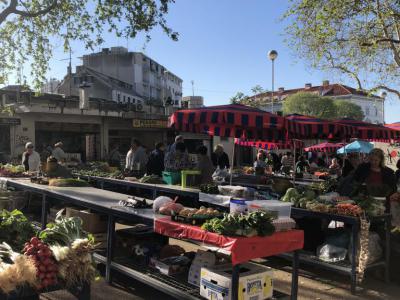
Nestled beside the east wall of the UNESCO-listed World Heritage site of Diocletian's Palace, Split's vibrant green market, affectionately known as Pazar, immerses you in the essence of everyday life in the city. Here, you can seamlessly blend in with the locals and truly embrace the authentic atmosphere of Croatia. Tourists seeking a genuine Croatian experience are increasingly drawn to this lively outdoor market.
Previously situated at Fruit Square, the market's relocation became a necessity due to the city's rapid growth and development. Now, in its new central location, it has become the beating heart and soul of Split. It serves as a gathering place for both residents and visitors, all eager to indulge in the array of colors, flavors, aromas, and sounds that encapsulate the vibrant essence of life in Split.
Previously situated at Fruit Square, the market's relocation became a necessity due to the city's rapid growth and development. Now, in its new central location, it has become the beating heart and soul of Split. It serves as a gathering place for both residents and visitors, all eager to indulge in the array of colors, flavors, aromas, and sounds that encapsulate the vibrant essence of life in Split.
