Custom Walk in Charleston, South Carolina by the_burnhams_bbe77f created on 2026-04-14
Guide Location: USA » Charleston
Guide Type: Custom Walk
# of Sights: 10
Tour Duration: 3 Hour(s)
Travel Distance: 6.5 Km or 4 Miles
Share Key: JYZVZ
Guide Type: Custom Walk
# of Sights: 10
Tour Duration: 3 Hour(s)
Travel Distance: 6.5 Km or 4 Miles
Share Key: JYZVZ
How It Works
Please retrieve this walk in the GPSmyCity app. Once done, the app will guide you from one tour stop to the next as if you had a personal tour guide. If you created the walk on this website or come to the page via a link, please follow the instructions below to retrieve the walk in the app.
Retrieve This Walk in App
Step 1. Download the app "GPSmyCity: Walks in 1K+ Cities" on Apple App Store or Google Play Store.



Step 2. In the GPSmyCity app, download(or launch) the guide "Charleston Map and Walking Tours".
Step 3. Tap the menu button located at upper right corner of the "Walks" screen and select "Retrieve custom walk". Enter the share key: JYZVZ
1) The Rooftop at The Vendue
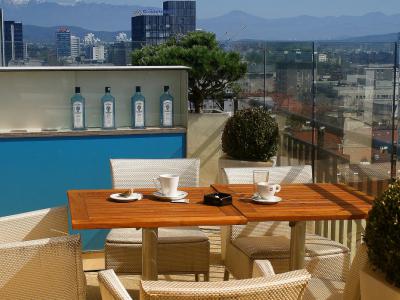
Perched atop The Vendue art hotel, this two-tiered Rooftop Bar has been pouring drinks and pulling crowds long before rooftop bars as such became a trend. And it’s not just one bar, but two—stacked, slightly different in mood, and equally committed to keeping your glass full. Come Sunday, from April through October, live music drifts through the space, adding a laid-back soundtrack to your skyline moment.
Each level has its own personality. One tends to be a little more shaded and relaxed, while the other opens wide to the sky, both dotted with bold pop-art pieces that quietly encourage a quick photo—or several. Wooden decking underfoot, wicker seating that suggests you might stay longer than planned, and soft evening lighting all come together to create that polished but not overly serious atmosphere Charleston does so well.
Of course, the real co-star here is the view. From up top, you’re looking out over Charleston Harbor, with glimpses of Waterfront Park and the unmistakable span of the Arthur Ravenel Jr. Bridge stretching across the horizon. It’s the kind of setting that makes even a simple drink feel like an occasion. The cocktail list keeps things interesting without asking you to decode it, while beers and wines cover both local favorites and international staples. Food follows the same logic—varied, unfussy, and designed to keep everyone at the table happy.
A couple of practical notes before you head up. You’ll need to enter through the hotel and take the elevator—consider it part of the build-up. Near the doors, there’s a playful stop worth your time: a photo setup where you can pose as the famously stern couple from American Gothic. Then, if you’re aiming for the upper level, step out, turn left, and take the stairs up. The reward is immediate—and usually comes with a breeze and a better view...
Each level has its own personality. One tends to be a little more shaded and relaxed, while the other opens wide to the sky, both dotted with bold pop-art pieces that quietly encourage a quick photo—or several. Wooden decking underfoot, wicker seating that suggests you might stay longer than planned, and soft evening lighting all come together to create that polished but not overly serious atmosphere Charleston does so well.
Of course, the real co-star here is the view. From up top, you’re looking out over Charleston Harbor, with glimpses of Waterfront Park and the unmistakable span of the Arthur Ravenel Jr. Bridge stretching across the horizon. It’s the kind of setting that makes even a simple drink feel like an occasion. The cocktail list keeps things interesting without asking you to decode it, while beers and wines cover both local favorites and international staples. Food follows the same logic—varied, unfussy, and designed to keep everyone at the table happy.
A couple of practical notes before you head up. You’ll need to enter through the hotel and take the elevator—consider it part of the build-up. Near the doors, there’s a playful stop worth your time: a photo setup where you can pose as the famously stern couple from American Gothic. Then, if you’re aiming for the upper level, step out, turn left, and take the stairs up. The reward is immediate—and usually comes with a breeze and a better view...
2) Joe Riley Waterfront Park (must see)
Charleston’s waterfront, right along the Cooper River, didn’t always look this relaxed. For centuries, this stretch was all business—wharves, cargo, ships coming and going like clockwork. Then came a glow-up. In 1990, the area was reimagined into what is now Waterfront Park, earning praise from the American Society of Landscape Architects and the National Trust for Historic Preservation, which is basically the architectural world’s version of a standing ovation.
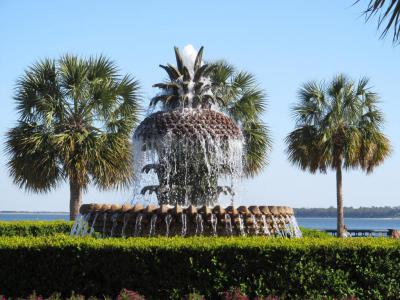
The park unfolds in stages, like a well-paced story. Start at the northern entrance near Vendue Range, where a large fountain immediately sets the tone—less “working port,” more “take a breath, you’ve arrived.” A few steps further, Vendue Wharf stretches out into the river, complete with shaded swings that invite you to sit, sway, and briefly forget your schedule.
Move along, and the space opens up. On the one side, a canopy of oak trees lines Concord and Prioleau Streets, shading a calm, green corridor that runs for about a quarter-mile. On the other, a long esplanade—about 1,200 feet of palmettos and open views—follows the natural curve of the shoreline. It’s a simple idea done well: keep the water in sight, and let people enjoy it.
Then comes the scene-stealer. Set into a wide lawn, the Pineapple Fountain bubbles away in front of the City Gallery, framed by benches and just enough shade to make lingering feel like a plan rather than an accident.
And that’s really the rhythm here. Bring a picnic, or don’t. Sit for five minutes, or stay for an hour. Watch cruise ships glide past, cargo vessels edge into one of the country’s busiest ports, and the light shift slowly toward sunset. Add a steady breeze off the river, and suddenly doing nothing feels like the main event...
The park unfolds in stages, like a well-paced story. Start at the northern entrance near Vendue Range, where a large fountain immediately sets the tone—less “working port,” more “take a breath, you’ve arrived.” A few steps further, Vendue Wharf stretches out into the river, complete with shaded swings that invite you to sit, sway, and briefly forget your schedule.
Move along, and the space opens up. On the one side, a canopy of oak trees lines Concord and Prioleau Streets, shading a calm, green corridor that runs for about a quarter-mile. On the other, a long esplanade—about 1,200 feet of palmettos and open views—follows the natural curve of the shoreline. It’s a simple idea done well: keep the water in sight, and let people enjoy it.
Then comes the scene-stealer. Set into a wide lawn, the Pineapple Fountain bubbles away in front of the City Gallery, framed by benches and just enough shade to make lingering feel like a plan rather than an accident.
And that’s really the rhythm here. Bring a picnic, or don’t. Sit for five minutes, or stay for an hour. Watch cruise ships glide past, cargo vessels edge into one of the country’s busiest ports, and the light shift slowly toward sunset. Add a steady breeze off the river, and suddenly doing nothing feels like the main event...
3) Old Slave Mart (must see)
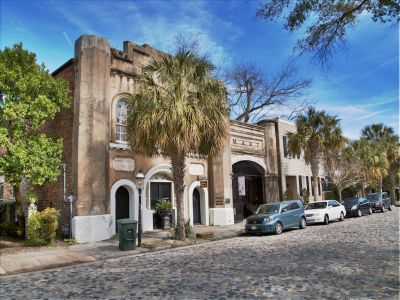
Constructed in 1859, this building doesn’t just appear as another historic façade—it carries weight. Designed in a mix of Gothic Revival and Romanesque styles, with a plain stuccoed façade, it once formed part of Ryan’s Mart, a slave market named after city alderman Thomas Ryan, who profited directly from the trade. Behind these walls stood a self-contained complex enclosed between Chalmers and Queen Streets that included a four-story slave jail, a kitchen, and a grimly so-called “dead house.” People were held here before being sold, making it not just a marketplace but a place of confinement and separation, too.
With most such sites erased or lost over time, this site is believed to be the last surviving example of a slave auction facility in the United States. Slide ahead to 1938, and the building takes on a different role, becoming the Old Slave Mart Museum, dedicated to documenting the slave trade that operated here between 1856 and 1863.
Inside, the approach is direct and unembellished. Exhibits rely on large storyboards, personal narratives, and original artifacts—shackles worn by enslaved people, whips used to punish them, and even a recorded deed of sale—presented without softening the reality. The aim is not to dramatize, but to present the facts clearly and allow visitors to absorb their meaning.
Among the most striking elements is a recorded account by Elijah Green, born in 1843, who shared his life story in 1937. Hearing his voice offers a sobering, realistic, and educational perspective on the nation's and Charleston’s African-American past—from slavery through emancipation—and reminds visitors that this history is not distant, but deeply personal and enduring...
With most such sites erased or lost over time, this site is believed to be the last surviving example of a slave auction facility in the United States. Slide ahead to 1938, and the building takes on a different role, becoming the Old Slave Mart Museum, dedicated to documenting the slave trade that operated here between 1856 and 1863.
Inside, the approach is direct and unembellished. Exhibits rely on large storyboards, personal narratives, and original artifacts—shackles worn by enslaved people, whips used to punish them, and even a recorded deed of sale—presented without softening the reality. The aim is not to dramatize, but to present the facts clearly and allow visitors to absorb their meaning.
Among the most striking elements is a recorded account by Elijah Green, born in 1843, who shared his life story in 1937. Hearing his voice offers a sobering, realistic, and educational perspective on the nation's and Charleston’s African-American past—from slavery through emancipation—and reminds visitors that this history is not distant, but deeply personal and enduring...

4) Old Exchange and Provost Dungeon (must see)
This site at the corner of East Bay and Broad Streets has been pulling its weight since 1680—precisely when Charles Towne decided to relocate from its original settlement. The first structure on this spot was a practical one: downstairs, a guardhouse for locking up pirates and Native Americans, and upstairs, the upper hall for town meetings. Justice below, debate above—efficient, if not exactly comforting…
Then, the British stepped in with a firm intention “to make it look impressive.” The result was the Exchange building, completed in 1771 in full Palladian style—symmetry, columns, and just enough grandeur to remind everyone who was in charge. It quickly became the city’s main stage for everything that mattered: trade, politics, and public life. And in March 1776, standing right here on its steps, South Carolina declared itself an independent colony—so, yes, history didn’t just pass by, it made announcements.
The Revolutionary War brought a darker chapter. The building was turned into a British prison, holding, among others, even the signers of the Declaration of Independence. A decade later, in 1788, it hosted the convention to ratify the U.S. Constitution, and not long after, George Washington stopped by and was treated like the celebrity he was. For much of the 19th century, the building served as Charleston’s post office—first Federal, then Confederate—quietly handling letters while history kept unfolding around it.
Fast-forward to 1965, when excavations uncovered part of the original seawall from as early back as 1698—because, of course, this place still had more stories buried underneath. Today, it stands as a National Historic Landmark, open as a museum, with grand halls upstairs and something far more atmospheric below.
And yes, you can visit the Provost Dungeon, too, with costumed guides leading you through dim, echoing spaces where tales of pirates, prisoners, and colonial intrigue feel just close enough to be real. It is equal parts history lesson and theatrical experience—so, if stepping into an actual dungeon has ever crossed your mind, this is your moment.
One last thing: beyond the exhibits, there are occasional reenactments—complete with declarations and period flair—that bring the 1700s back to life. Not every day do you get to watch history rehearse itself on the very spot where it first happened...
Then, the British stepped in with a firm intention “to make it look impressive.” The result was the Exchange building, completed in 1771 in full Palladian style—symmetry, columns, and just enough grandeur to remind everyone who was in charge. It quickly became the city’s main stage for everything that mattered: trade, politics, and public life. And in March 1776, standing right here on its steps, South Carolina declared itself an independent colony—so, yes, history didn’t just pass by, it made announcements.
The Revolutionary War brought a darker chapter. The building was turned into a British prison, holding, among others, even the signers of the Declaration of Independence. A decade later, in 1788, it hosted the convention to ratify the U.S. Constitution, and not long after, George Washington stopped by and was treated like the celebrity he was. For much of the 19th century, the building served as Charleston’s post office—first Federal, then Confederate—quietly handling letters while history kept unfolding around it.
Fast-forward to 1965, when excavations uncovered part of the original seawall from as early back as 1698—because, of course, this place still had more stories buried underneath. Today, it stands as a National Historic Landmark, open as a museum, with grand halls upstairs and something far more atmospheric below.
And yes, you can visit the Provost Dungeon, too, with costumed guides leading you through dim, echoing spaces where tales of pirates, prisoners, and colonial intrigue feel just close enough to be real. It is equal parts history lesson and theatrical experience—so, if stepping into an actual dungeon has ever crossed your mind, this is your moment.
One last thing: beyond the exhibits, there are occasional reenactments—complete with declarations and period flair—that bring the 1700s back to life. Not every day do you get to watch history rehearse itself on the very spot where it first happened...
5) Rainbow Row (must see)
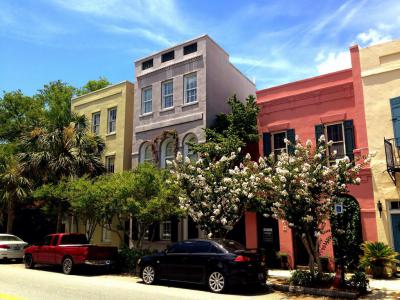
Rainbow Row lines up like a box of carefully arranged pastels—13 historic houses facing the Cooper River, each one competing quietly for your attention. Those soft pinks, blues, greens, and yellows aren’t random choices. They echo Charleston’s Caribbean connections, brought here by early settlers from Barbados, who left behind more than just footprints—they left a color palette.
What makes these houses even more impressive is that they’re still standing at all. Built between about 1730 and 1750, they once sat right on the waterfront, working as busy commercial storefronts along the wharf. The ground you’re standing on now didn’t even exist back then—it was created later through landfill, pushing the shoreline outward and turning trade space into a residential street.
As for the colors, explanations range from practical to playful. One story suggests that slightly intoxicated sailors couldn't find their lodgings other than by remembering the shade of their façade. Another points to function—bright colors helped people who couldn’t read identify different shops. Whether either of these stories is true or not, they’ve stuck around almost as stubbornly as the buildings themselves.
Look a little closer, and you’ll notice that time hasn’t passed without leaving its mark. Metal earthquake rods, stretching across some of the façades, quietly remind us of Charleston’s seismic past, while subtle repairs and reinforcements hint at centuries of use, damage, and care. Fires, hurricanes, even war—these houses have seen it all and stayed put.
Their survival isn’t just luck; it’s also where historic preservation in the United States found its footing. In the early 20th century, when these buildings had started to fall into disrepair, restoration efforts here helped spark the creation of the Preservation Society of Charleston—the first organization of its kind in the U.S. So, ultimately, what you’re looking at is more than just a picturesque street—it’s a turning point in how America decided to protect its past.
What makes these houses even more impressive is that they’re still standing at all. Built between about 1730 and 1750, they once sat right on the waterfront, working as busy commercial storefronts along the wharf. The ground you’re standing on now didn’t even exist back then—it was created later through landfill, pushing the shoreline outward and turning trade space into a residential street.
As for the colors, explanations range from practical to playful. One story suggests that slightly intoxicated sailors couldn't find their lodgings other than by remembering the shade of their façade. Another points to function—bright colors helped people who couldn’t read identify different shops. Whether either of these stories is true or not, they’ve stuck around almost as stubbornly as the buildings themselves.
Look a little closer, and you’ll notice that time hasn’t passed without leaving its mark. Metal earthquake rods, stretching across some of the façades, quietly remind us of Charleston’s seismic past, while subtle repairs and reinforcements hint at centuries of use, damage, and care. Fires, hurricanes, even war—these houses have seen it all and stayed put.
Their survival isn’t just luck; it’s also where historic preservation in the United States found its footing. In the early 20th century, when these buildings had started to fall into disrepair, restoration efforts here helped spark the creation of the Preservation Society of Charleston—the first organization of its kind in the U.S. So, ultimately, what you’re looking at is more than just a picturesque street—it’s a turning point in how America decided to protect its past.
6) The Battery (must see)
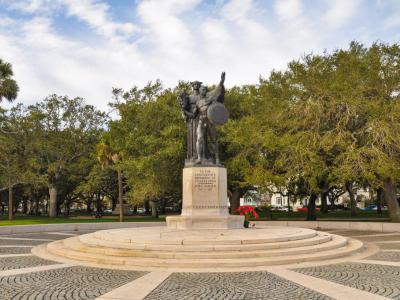
Charleston has no shortage of headline attractions—churches, mansions, and museums that politely remind you they’ve been around longer than certain countries. And then there’s White Point Garden, better known as the Battery, which, although it quietly ignores the label of “official attraction,” still ends up on everyone’s must-see list. Call it a tradition, a habit, or just curiosity with good timing—but sooner or later, nearly every first-time visitor to Charleston finds themselves walking here. It’s one of those places where the city’s long story doesn’t just sit behind glass—it spreads out around you.
At the eastern edge of East Bay Street, the setting feels calm enough to convince anyone it has always been this way: a shaded park dotted with statues, old cannons, and sprawling live oaks that seem to have opinions about everything. But roll things back a few centuries, and the mood is quite different. This place was once Oyster Point, named so for its shell-covered shoreline, serving as a handy marker for ships navigating the harbor.
Then the tone darkened dramatically, when pirate Stede Bonnet and his crew met their end here in the 1720s—a public finale that helped clear the Carolina coast of its more entrepreneurial seafarers. By the time the War of 1812 erupted, the area had taken on a more official defensive role, earning the moniker “the Battery”.
Move along to 1837, when the city reshaped the area into White Point Garden, and the story shifts again—from military edge to public space. But history wasn’t quite finished yet. From this very spot, on April 12, 1861, residents witnessed the opening shots of the Civil War, as Fort Sumter came under fire across the water. During the conflict, the park itself turned back into a defensive position, layered with earthwork batteries. When the war ended, the cannons stayed behind—less as weapons, more as reminders—joined by monuments that quietly mark later conflicts and the people tied to them.
And then, just when you think the place has said it all, you look up and notice the houses. Lining the nearby streets, these grand antebellum homes form a kind of architectural encore—elegant, measured, and very aware of their own good angles. It’s a fitting finish: a spot where Charleston’s history doesn’t follow a straight line, but lingers, overlaps, and occasionally pauses under the shade of a live oak.
At the eastern edge of East Bay Street, the setting feels calm enough to convince anyone it has always been this way: a shaded park dotted with statues, old cannons, and sprawling live oaks that seem to have opinions about everything. But roll things back a few centuries, and the mood is quite different. This place was once Oyster Point, named so for its shell-covered shoreline, serving as a handy marker for ships navigating the harbor.
Then the tone darkened dramatically, when pirate Stede Bonnet and his crew met their end here in the 1720s—a public finale that helped clear the Carolina coast of its more entrepreneurial seafarers. By the time the War of 1812 erupted, the area had taken on a more official defensive role, earning the moniker “the Battery”.
Move along to 1837, when the city reshaped the area into White Point Garden, and the story shifts again—from military edge to public space. But history wasn’t quite finished yet. From this very spot, on April 12, 1861, residents witnessed the opening shots of the Civil War, as Fort Sumter came under fire across the water. During the conflict, the park itself turned back into a defensive position, layered with earthwork batteries. When the war ended, the cannons stayed behind—less as weapons, more as reminders—joined by monuments that quietly mark later conflicts and the people tied to them.
And then, just when you think the place has said it all, you look up and notice the houses. Lining the nearby streets, these grand antebellum homes form a kind of architectural encore—elegant, measured, and very aware of their own good angles. It’s a fitting finish: a spot where Charleston’s history doesn’t follow a straight line, but lingers, overlaps, and occasionally pauses under the shade of a live oak.
7) Historic City Market (must see)
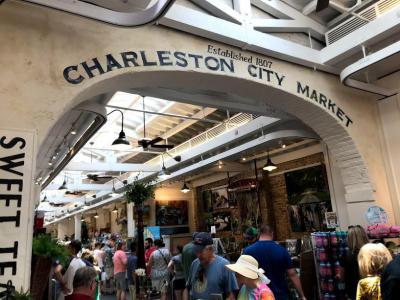
Among Charleston’s many attractions, the Historic City Market is the one that refuses to be skipped —steady, busy, and just a little bit irresistible. Dating back to the 1790s, this four-block stretch unfolds across roughly 33 acres, beginning at the grand, temple-like Market Hall, which today houses the Confederate Museum. It’s less a single stop and more a slow-moving experience—one that invites you to wander rather than rush.
In the early 20th century, this place was a vital hub of opportunity, where thousands of African-American vendors built livelihoods and community. That spirit hasn’t disappeared—it’s simply evolved. Today, the market hums with dozens of stalls offering everything from handmade jewelry and artwork to chocolates, clothing, and the beautifully woven Gullah sweetgrass baskets that carry generations of tradition in every strand.
As you move along, the scent of something warm and buttery might pull you toward spots like Callie’s Hot Little Biscuit, while shelves of Carolina rice and tea hint at the region’s deep culinary roots. Step just beyond the market sheds, and the scene continues with ice cream parlors, small shops, and restaurants—enough to easily turn a quick visit into a few unplanned hours.
And if the rain clouds are rolling in, the covered market lets you browse at your own pace, dry and unhurried, with the added bonus that a bit of cash might earn you a friendly discount here and there. By evening—especially from April through December—the atmosphere shifts again, as the Night Market brings in local artists and food vendors for a weekend rhythm that feels both lively and relaxed.
Since 1973, the entire complex has held National Historic Landmark status, but it never feels frozen in time. Instead, it keeps moving—just like the city around it—layering history, craft, and everyday life into one long, continuous stroll.
In the early 20th century, this place was a vital hub of opportunity, where thousands of African-American vendors built livelihoods and community. That spirit hasn’t disappeared—it’s simply evolved. Today, the market hums with dozens of stalls offering everything from handmade jewelry and artwork to chocolates, clothing, and the beautifully woven Gullah sweetgrass baskets that carry generations of tradition in every strand.
As you move along, the scent of something warm and buttery might pull you toward spots like Callie’s Hot Little Biscuit, while shelves of Carolina rice and tea hint at the region’s deep culinary roots. Step just beyond the market sheds, and the scene continues with ice cream parlors, small shops, and restaurants—enough to easily turn a quick visit into a few unplanned hours.
And if the rain clouds are rolling in, the covered market lets you browse at your own pace, dry and unhurried, with the added bonus that a bit of cash might earn you a friendly discount here and there. By evening—especially from April through December—the atmosphere shifts again, as the Night Market brings in local artists and food vendors for a weekend rhythm that feels both lively and relaxed.
Since 1973, the entire complex has held National Historic Landmark status, but it never feels frozen in time. Instead, it keeps moving—just like the city around it—layering history, craft, and everyday life into one long, continuous stroll.

8) Blue Bicycle Books
Located on upper King Street, this bookshop is your go-to destination for buying, selling, and trading books. While the shop primarily focuses on popular reading material, it also boasts an impressive collection of rare and out-of-print books, including hardcover classics and a wide range of Lowcountry fiction and nonfiction titles. In addition to books, you'll discover an array of collectibles and souvenirs available for purchase. One of the shop's highlights is its popular local author book signings, which draw literary enthusiasts.
Don't be fooled by its unassuming storefront; this bookstore may appear small from the outside, but it houses a seemingly endless series of rooms filled with a diverse selection of reading material to cater to every taste. You'll be pleased to know that it stays open late, ensuring you have ample time to explore its literary treasures.
Don't be fooled by its unassuming storefront; this bookstore may appear small from the outside, but it houses a seemingly endless series of rooms filled with a diverse selection of reading material to cater to every taste. You'll be pleased to know that it stays open late, ensuring you have ample time to explore its literary treasures.
9) Aiken-Rhett House Museum (must see)
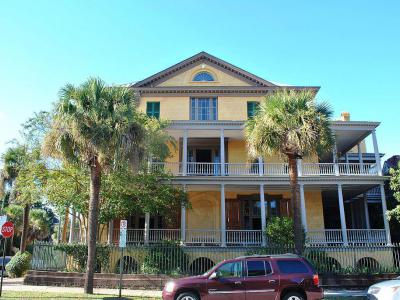
The Aiken-Rhett House doesn’t try to impress you with polish—it lets time do the talking. Built in 1818 as a fairly typical Charleston single house, it grew more ambitious under Governor William Aiken, who lived here from 1833 to 1887. Not once but twice, he reshaped it—first in 1833 with the bold symmetry of the Greek Revival, then again in 1857, layering in the decorative flair of the Rococo Revival. You can almost sense the shifting tastes of the 19th century playing out room by room.
What really sets this place apart is what hasn’t been done to it. It is preserved, not restored. Furniture, portraits, books, chandeliers—many of them brought back from Europe—are still right where they were left. The effect is quietly haunting, like the house is paused mid-sentence. It’s not hard to picture figures such as Jefferson Davis or General P. G. T. Beauregard passing through during the uneasy years of the Civil War.
And once you step outside, the story sharpens. The slave quarters and outbuildings remain largely intact, offering a direct and unfiltered look at the realities behind the elegance. Ornate horse stalls sit in stark contrast to the far more basic living spaces nearby—a reminder that this was a place of both refinement and inequality.
A small practical note before you go: in the warm season, Charleston heat doesn’t take a day off, and neither does this house. So, aim for an earlier visit if you can—and if needed, pick up a handheld fan at the ticket desk.
What really sets this place apart is what hasn’t been done to it. It is preserved, not restored. Furniture, portraits, books, chandeliers—many of them brought back from Europe—are still right where they were left. The effect is quietly haunting, like the house is paused mid-sentence. It’s not hard to picture figures such as Jefferson Davis or General P. G. T. Beauregard passing through during the uneasy years of the Civil War.
And once you step outside, the story sharpens. The slave quarters and outbuildings remain largely intact, offering a direct and unfiltered look at the realities behind the elegance. Ornate horse stalls sit in stark contrast to the far more basic living spaces nearby—a reminder that this was a place of both refinement and inequality.
A small practical note before you go: in the warm season, Charleston heat doesn’t take a day off, and neither does this house. So, aim for an earlier visit if you can—and if needed, pick up a handheld fan at the ticket desk.
10) Mother Emanuel AME Church
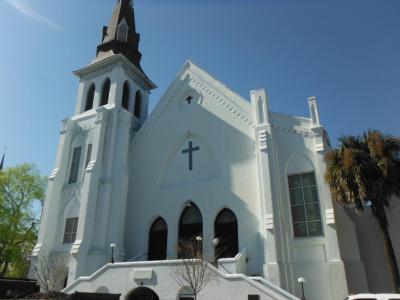
The African Methodist Episcopal Church originated in 1787 in Philadelphia with the establishment of the Free African Society, which was rooted in the doctrines of Methodism and the teachings of John Wesley. A similar organization emerged in Charleston in 1791 under the leadership of Rev. Morris Brown, a free black preacher associated with another Methodist church in the city. This display of autonomy by black members led to a separation from the Methodists, giving rise to the foundation of three black churches in Charleston, collectively known as the Bethel Circuit. The congregation of Emanuel A.M.E. Church is one of the churches born from this movement.
Initially, the church was located in the Hampstead neighborhood on the city's east side and boasted a membership of 1,000 by 1818. Just four years later, in 1822, Denmark Vesey, a skilled carpenter who had purchased his freedom, devised plans for a slave insurrection within the premises. News of the planned rebellion leaked, resulting in the execution of Vesey and some of his supporters, and the burning of the Hampstead church. By 1834, the state legislature in South Carolina ordered the closure of all black churches.
Following the Denmark Vesey incident, some of the congregation returned to white churches, while others continued their African church traditions clandestinely. In 1865, after years of underground worship, the congregation resurfaced, now numbering 3,000 members. The current church building, completed in 1891, still retains the original gas lamps that line the sanctuary. With seating for 2,500 individuals, is the largest African-American congregation in Charleston today.
Initially, the church was located in the Hampstead neighborhood on the city's east side and boasted a membership of 1,000 by 1818. Just four years later, in 1822, Denmark Vesey, a skilled carpenter who had purchased his freedom, devised plans for a slave insurrection within the premises. News of the planned rebellion leaked, resulting in the execution of Vesey and some of his supporters, and the burning of the Hampstead church. By 1834, the state legislature in South Carolina ordered the closure of all black churches.
Following the Denmark Vesey incident, some of the congregation returned to white churches, while others continued their African church traditions clandestinely. In 1865, after years of underground worship, the congregation resurfaced, now numbering 3,000 members. The current church building, completed in 1891, still retains the original gas lamps that line the sanctuary. With seating for 2,500 individuals, is the largest African-American congregation in Charleston today.
