Custom Walk in Portland, Maine by miriamatthebeach_9d78d created on 2026-04-20
Guide Location: USA » Portland
Guide Type: Custom Walk
# of Sights: 6
Tour Duration: 2 Hour(s)
Travel Distance: 4.1 Km or 2.5 Miles
Share Key: 6JRVY
Guide Type: Custom Walk
# of Sights: 6
Tour Duration: 2 Hour(s)
Travel Distance: 4.1 Km or 2.5 Miles
Share Key: 6JRVY
How It Works
Please retrieve this walk in the GPSmyCity app. Once done, the app will guide you from one tour stop to the next as if you had a personal tour guide. If you created the walk on this website or come to the page via a link, please follow the instructions below to retrieve the walk in the app.
Retrieve This Walk in App
Step 1. Download the app "GPSmyCity: Walks in 1K+ Cities" on Apple App Store or Google Play Store.



Step 2. In the GPSmyCity app, download(or launch) the guide "Portland Map and Walking Tours".
Step 3. Tap the menu button located at upper right corner of the "Walks" screen and select "Retrieve custom walk". Enter the share key: 6JRVY
1) Old Port and Wharf Street (must see)
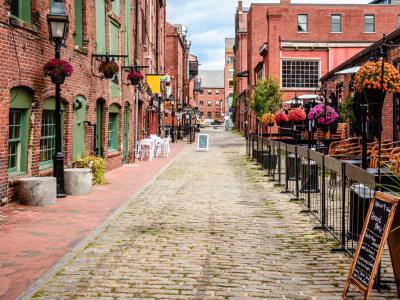
Imagine a neighborhood that feels like a living history exhibit-but one where you’re invited to sip craft beer and nibble lobster rolls along the way. That’s the Old Port Exchange, Portland’s beloved old-timer district defined by snaking cobblestones, 19th-century brick facades, and wooden piers where fishing boats still tie up.
Wander down Wharf Street and you’ll see why this strip has its own magnetic pull. Candlelit tables spill onto the cobbles, giving seafood feasts a glow that gold-plated floors could never match. Boutique shops line the street between rustic pubs, while galleries showcase local artists whose work is inspired by the city’s history, textures, and everyday rhythm. By evening, the Old Port hums with energy, as locals and out-of-towners converge on cozy taverns and rooftop lounges.
But there’s more to this historic quarter than nightlife. Post Office Park and Tommy’s Park offer leafy respites if you need to swap your bar stools for a bench. A quick jaunt down to Bell Buoy Park, found beside the Casco Bay Ferry Terminal, will reward you with sea breezes and ferryhorn fanfares. And don’t miss the tail-end of the Eastern Promenade Trail, which funnels right into the Old Port-you can stroll off your morning pastry seamlessly.
What makes the Old Port truly enchanting is its blend of old and new: centuries-old warehouses reborn as sleek restaurants, centuries-old stones that still feel alive under your steps, and a waterfront vibe so authentic you might taste the salt in the air.
Wander down Wharf Street and you’ll see why this strip has its own magnetic pull. Candlelit tables spill onto the cobbles, giving seafood feasts a glow that gold-plated floors could never match. Boutique shops line the street between rustic pubs, while galleries showcase local artists whose work is inspired by the city’s history, textures, and everyday rhythm. By evening, the Old Port hums with energy, as locals and out-of-towners converge on cozy taverns and rooftop lounges.
But there’s more to this historic quarter than nightlife. Post Office Park and Tommy’s Park offer leafy respites if you need to swap your bar stools for a bench. A quick jaunt down to Bell Buoy Park, found beside the Casco Bay Ferry Terminal, will reward you with sea breezes and ferryhorn fanfares. And don’t miss the tail-end of the Eastern Promenade Trail, which funnels right into the Old Port-you can stroll off your morning pastry seamlessly.
What makes the Old Port truly enchanting is its blend of old and new: centuries-old warehouses reborn as sleek restaurants, centuries-old stones that still feel alive under your steps, and a waterfront vibe so authentic you might taste the salt in the air.
2) Portland Farmers Market
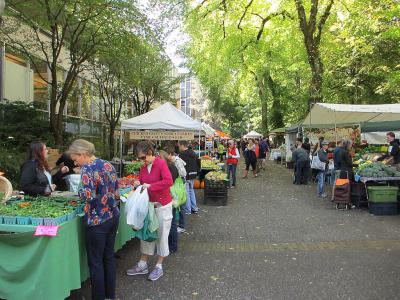
The Portland Farmers Market is one of the oldest continuously operating farmers markets in the United States, with roots dating back to 1768. Since 1990, it has run year-round, hosting outdoor markets from May through November-Wednesdays in Monument Square and Saturdays in Deering Oaks Park-and moving indoors for the winter months.
Known for its focus on organic and locally grown products, the market emphasizes a community atmosphere where farmers sell only what they grow or produce themselves. Shoppers will find a variety of fresh vegetables, fruits, flowers, seedlings, and pantry staples such as maple syrup, honey, raw milk, eggs, and meat.
Beyond food, the market also features local artisans selling handmade crafts, from jewelry and bowls to unique floral arrangements and mushrooms that resemble flowers. Musicians frequently provide live entertainment, adding to the vibrant and welcoming environment.
Known for its focus on organic and locally grown products, the market emphasizes a community atmosphere where farmers sell only what they grow or produce themselves. Shoppers will find a variety of fresh vegetables, fruits, flowers, seedlings, and pantry staples such as maple syrup, honey, raw milk, eggs, and meat.
Beyond food, the market also features local artisans selling handmade crafts, from jewelry and bowls to unique floral arrangements and mushrooms that resemble flowers. Musicians frequently provide live entertainment, adding to the vibrant and welcoming environment.
3) Wadsworth-Longfellow House
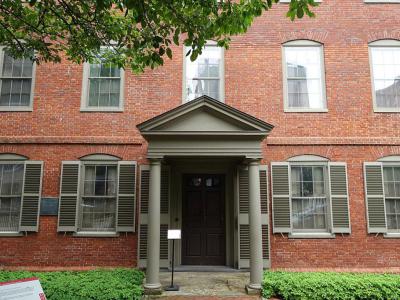
The Wadsworth–Longfellow House blends history, poetry, and over two centuries of Portland life in one address. Built between 1785 and 1786 by General Peleg Wadsworth-a Revolutionary War veteran with ten children to house-it was the city’s first all-brick residence and, remarkably, is still the oldest building standing on the peninsula. If Portland has a staying-power trophy, this place could claim it.
Originally a sturdy two-story home, it gained a third floor in the early 1800s with a Federal-style update. It also gained a future literary giant: Henry Wadsworth Longfellow. The poet moved in as an infant and spent the first 35 years of his life here, surrounded by the hum of early Portland life-a cast of family members, the warmth of fireplaces, and the kind of quiet corners any writer would remember.
After Longfellow’s time, his sister Anne Longfellow Pierce became the home’s last family resident. She guarded its Revolutionary-era spirit with care, right down to the furnishings. When she died in 1901, she left the property to the Maine Historical Society, ensuring its preservation for generations.
Today, walking through its rooms feels like leafing through chapters of American history and literary heritage at the same time. Original family belongings remain in place, the interiors reflect the era’s character, and the walls still seem to carry the energy of a young Henry at work. It’s more than an architectural relic-it’s a chance to step directly into the world that shaped one of America’s best-loved poets.
Originally a sturdy two-story home, it gained a third floor in the early 1800s with a Federal-style update. It also gained a future literary giant: Henry Wadsworth Longfellow. The poet moved in as an infant and spent the first 35 years of his life here, surrounded by the hum of early Portland life-a cast of family members, the warmth of fireplaces, and the kind of quiet corners any writer would remember.
After Longfellow’s time, his sister Anne Longfellow Pierce became the home’s last family resident. She guarded its Revolutionary-era spirit with care, right down to the furnishings. When she died in 1901, she left the property to the Maine Historical Society, ensuring its preservation for generations.
Today, walking through its rooms feels like leafing through chapters of American history and literary heritage at the same time. Original family belongings remain in place, the interiors reflect the era’s character, and the walls still seem to carry the energy of a young Henry at work. It’s more than an architectural relic-it’s a chance to step directly into the world that shaped one of America’s best-loved poets.
4) Cathedral of the Immaculate Conception
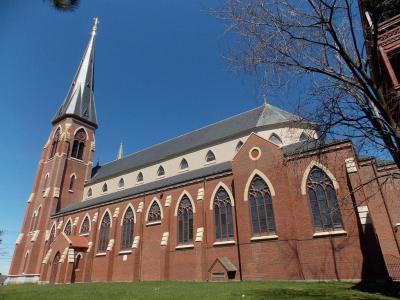
Portland usually does subtle, however the city outdid itslef courtesy to the Cathedral of the Immaculate Conception. Rising up between Congress and Cumberland Streets, this Gothic Revival giant has been the spiritual and architectural heavyweight of the city since it opened its doors in 1869-just three years after Portland’s Great Fire. Built in red brick trimmed with sandstone and capped with slate, it’s less “quaint parish church” and more “statement piece you can see from half the city.”
The complex isn’t just the cathedral itself. An entire block is taken up by the church, a parish hall, the bishop’s residence, and even a school. From the outside, the show starts with a sandstone Gothic arch framing the main doors, topped by a rose window that throws splashes of color into the nave. To the right, a tower stiffens its shoulders with buttresses and narrow Gothic windows before shooting into the sky with an octagonal spire enough to keep the gulls on notice.
Step inside and the scale hits you. Nearly a thousand worshippers can fit under its soaring vaults, which means it’s a place to feel small in the best way possible. Stained glass, pointed arches, and a sense of vertical drama keep your eyes traveling upward, as if the building itself points to the direction of heaven.
And then there are the spires. Three of them crown the cathedral, but the star is the tallest, climbing 204 feet into the Portland skyline. For decades, it was the city’s highest point, and even now it still lords over the rooftops with quiet confidence.
By 1985, the cathedral’s cultural weight was officially recognized with a spot on the National Register of Historic Places. Today, whether you come for worship, history, or just to crane your neck at Portland’s sharpest steeple, the Cathedral of the Immaculate Conception delivers a masterclass in grandeur.
The complex isn’t just the cathedral itself. An entire block is taken up by the church, a parish hall, the bishop’s residence, and even a school. From the outside, the show starts with a sandstone Gothic arch framing the main doors, topped by a rose window that throws splashes of color into the nave. To the right, a tower stiffens its shoulders with buttresses and narrow Gothic windows before shooting into the sky with an octagonal spire enough to keep the gulls on notice.
Step inside and the scale hits you. Nearly a thousand worshippers can fit under its soaring vaults, which means it’s a place to feel small in the best way possible. Stained glass, pointed arches, and a sense of vertical drama keep your eyes traveling upward, as if the building itself points to the direction of heaven.
And then there are the spires. Three of them crown the cathedral, but the star is the tallest, climbing 204 feet into the Portland skyline. For decades, it was the city’s highest point, and even now it still lords over the rooftops with quiet confidence.
By 1985, the cathedral’s cultural weight was officially recognized with a spot on the National Register of Historic Places. Today, whether you come for worship, history, or just to crane your neck at Portland’s sharpest steeple, the Cathedral of the Immaculate Conception delivers a masterclass in grandeur.
5) Portland Observatory
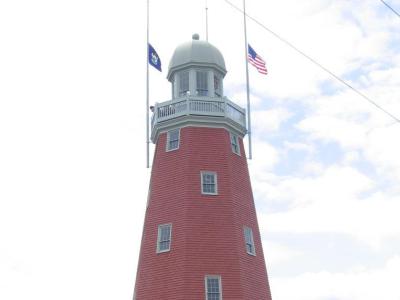
The Portland Observatory in Maine is a unique and historic maritime signal tower that has stood tall since 1807, making it the only surviving tower of its kind in the United States.
Originally built by Captain Lemuel Moody, the octagonal, seven-story structure was designed to communicate with incoming ships using both signal flags and a telescope. The observatory provided advanced warning to shipowners about approaching vessels, allowing them to prepare well before the ships reached port. The tower’s location on Munjoy Hill provided an unobstructed view of Portland Harbor, making it the perfect spot for the vital task of maritime signaling.
Standing 86 feet tall and designed with an innovative octagonal shape to withstand strong winds, the Portland Observatory is both an architectural and engineering marvel. Its heavy fieldstone base and white pine framing, reminiscent of ship masts, have kept it steady through many storms over the years.
The observatory was designated a National Historic Landmark and a National Civil Engineering Landmark in 2006, recognizing its significance in American maritime history.
Today, visitors can climb to the top of the observatory for breathtaking panoramic views of Portland and its harbor, while learning about its fascinating role in early American marine communication. The observatory, managed by Greater Portland Landmarks, serves as a museum and remains one of the most iconic historical structures in Portland.
Originally built by Captain Lemuel Moody, the octagonal, seven-story structure was designed to communicate with incoming ships using both signal flags and a telescope. The observatory provided advanced warning to shipowners about approaching vessels, allowing them to prepare well before the ships reached port. The tower’s location on Munjoy Hill provided an unobstructed view of Portland Harbor, making it the perfect spot for the vital task of maritime signaling.
Standing 86 feet tall and designed with an innovative octagonal shape to withstand strong winds, the Portland Observatory is both an architectural and engineering marvel. Its heavy fieldstone base and white pine framing, reminiscent of ship masts, have kept it steady through many storms over the years.
The observatory was designated a National Historic Landmark and a National Civil Engineering Landmark in 2006, recognizing its significance in American maritime history.
Today, visitors can climb to the top of the observatory for breathtaking panoramic views of Portland and its harbor, while learning about its fascinating role in early American marine communication. The observatory, managed by Greater Portland Landmarks, serves as a museum and remains one of the most iconic historical structures in Portland.
6) Maine Narrow Gauge Railroad Museum
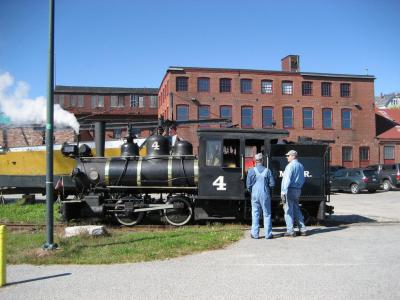
The Maine Narrow Gauge Railroad Co. & Museum offers a unique glimpse into a distinctive part of Maine’s transportation history. Founded in 1993 and operating from the historic Portland Company Marine Complex, the museum preserves equipment and artifacts from Maine’s famous two-foot gauge railroads that ran from the late 19th century through the mid-20th century.
These narrow railways, with tracks only two feet apart-much narrower than standard railroads-were specially designed to navigate Maine’s challenging terrain of forests, hills, and rocky landscapes. This made travel and the transport of goods more accessible to many rural communities.
Visitors to the museum can enjoy a scenic 1.5-mile train ride along the waterfront of Casco Bay, parallel to the Eastern Promenade. Historic steam and diesel locomotives pull restored open-air coaches, offering passengers beautiful views of the bay and insights into Maine’s railroading lore.
Positioned near the Portland Museum of Art, the museum is a must-visit for those interested in industrial heritage, regional history, or simply a charming way to explore the waterfront.
These narrow railways, with tracks only two feet apart-much narrower than standard railroads-were specially designed to navigate Maine’s challenging terrain of forests, hills, and rocky landscapes. This made travel and the transport of goods more accessible to many rural communities.
Visitors to the museum can enjoy a scenic 1.5-mile train ride along the waterfront of Casco Bay, parallel to the Eastern Promenade. Historic steam and diesel locomotives pull restored open-air coaches, offering passengers beautiful views of the bay and insights into Maine’s railroading lore.
Positioned near the Portland Museum of Art, the museum is a must-visit for those interested in industrial heritage, regional history, or simply a charming way to explore the waterfront.
