Custom Walk in Gothenburg, Sweden by t_sirle_d8534 created on 2026-04-25
Guide Location: Sweden » Gothenburg
Guide Type: Custom Walk
# of Sights: 9
Tour Duration: 4 Hour(s)
Travel Distance: 8.7 Km or 5.4 Miles
Share Key: K6TD6
Guide Type: Custom Walk
# of Sights: 9
Tour Duration: 4 Hour(s)
Travel Distance: 8.7 Km or 5.4 Miles
Share Key: K6TD6
How It Works
Please retrieve this walk in the GPSmyCity app. Once done, the app will guide you from one tour stop to the next as if you had a personal tour guide. If you created the walk on this website or come to the page via a link, please follow the instructions below to retrieve the walk in the app.
Retrieve This Walk in App
Step 1. Download the app "GPSmyCity: Walks in 1K+ Cities" on Apple App Store or Google Play Store.



Step 2. In the GPSmyCity app, download(or launch) the guide "Gothenburg Map and Walking Tours".
Step 3. Tap the menu button located at upper right corner of the "Walks" screen and select "Retrieve custom walk". Enter the share key: K6TD6
1) Lilla Bommen
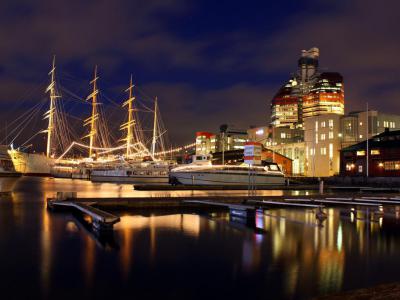
Lilla Bommen is a section of Gothenburg's harbor primarily designated for visiting boats. It also refers to the surrounding land. The iconic Lilla Bommen building, along with The Gothenburg Opera House and the barque Viking, are all situated at Lilla Bommen.
Constructed in 1860, Lilla Bommen features a quay extending 525 meters and with a depth of 3.5 meters. It quickly emerged as Gothenburg's primary port for canal boats and domestic shipping. From here, cargo and passenger ships embarked on journeys up the Gota River, traversing the Göta Canal, and crossing lakes Vänern and Vättern en route to Stockholm and Norrköping.
The demolition of the old gunpowder house at Lilla Bommen commenced on October 7, 1862. Subsequently, in 1899, a station house was erected at Lilla Bommen, marking the terminus of the Västergötland–Göteborgs Järnvägar ("Västra Götaland–Gothenburg Railway").
In 1936, the East Harbor Canal (Östra Hamnkanalen), which ran from Lilla Bommen between the two lanes of East Harbor Street (Östra Hamngatan) and terminated at Brunnsparken, was filled in. Then, between 1937 and 1938, a third of the Lilla Bommen harbor-the inner portion-was also filled in. At that time, there was discussion about filling the dock and relocating shipping operations to the Gullberg quay northeast of the dock.
Constructed in 1860, Lilla Bommen features a quay extending 525 meters and with a depth of 3.5 meters. It quickly emerged as Gothenburg's primary port for canal boats and domestic shipping. From here, cargo and passenger ships embarked on journeys up the Gota River, traversing the Göta Canal, and crossing lakes Vänern and Vättern en route to Stockholm and Norrköping.
The demolition of the old gunpowder house at Lilla Bommen commenced on October 7, 1862. Subsequently, in 1899, a station house was erected at Lilla Bommen, marking the terminus of the Västergötland–Göteborgs Järnvägar ("Västra Götaland–Gothenburg Railway").
In 1936, the East Harbor Canal (Östra Hamnkanalen), which ran from Lilla Bommen between the two lanes of East Harbor Street (Östra Hamngatan) and terminated at Brunnsparken, was filled in. Then, between 1937 and 1938, a third of the Lilla Bommen harbor-the inner portion-was also filled in. At that time, there was discussion about filling the dock and relocating shipping operations to the Gullberg quay northeast of the dock.
2) Gothenburg City Hall
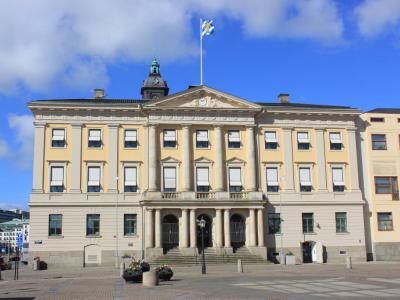
Gothenburg City Hall stands as a complex situated at Gustaf Adolf's Square. It comprises an older segment, finalized in 1672 and crafted by Nicodemus Tessin, alongside a newer addition completed in 1936, designed by architect Gunnar Asplund.
The inception of a permanent stone town hall commenced in the mid-1660s, evidenced by foundation walls, possibly intended for a residence, on the site. Nicodemus Tessin, the Elder, was tasked with the design of the new edifice. After adjustments, the architectural blueprints were finalized by 1670. Construction was initiated in 1668 under the supervision of master mason L. Olofsson from Stockholm. By the summer of 1672, the section facing Stora Hamnkanalen was completed, with the entire structure subsequently plastered and "brushed."
As time progressed, the town hall proved inadequate in size, prompting discussions regarding expansion as early as 1885. However, it wasn't until October 22, 1936, that the scaffolding came down, revealing the sleek, functionalist extension, commonly referred to as the Asplund extension. Internally, it features a luminous town hall space with a glass facade overlooking the city. The extension is adorned with Eric Grate's relief series "The Four Winds" (1937–1941).
Historically, the town hall accommodated the former city council of Gothenburg, later transitioning to house the Gothenburg town hall court and portions of the Gothenburg district court. On February 15, 2010, the district court relocated to Rättscentrum Göteborg on Ullevigatan 15, leaving the building vacant until 2012 when it underwent renovation and transformation into Gothenburg City Hall. The reopening ceremony occurred on April 13, 2014, presided over by the municipal board chair, Anneli Hultén. Presently, it serves as the administrative hub for both municipal and city management.
Designated as a listed building on October 24, 1968, and again on October 25, 1982, Gothenburg City Hall is owned by the municipality of Gothenburg and overseen by Higab.
The inception of a permanent stone town hall commenced in the mid-1660s, evidenced by foundation walls, possibly intended for a residence, on the site. Nicodemus Tessin, the Elder, was tasked with the design of the new edifice. After adjustments, the architectural blueprints were finalized by 1670. Construction was initiated in 1668 under the supervision of master mason L. Olofsson from Stockholm. By the summer of 1672, the section facing Stora Hamnkanalen was completed, with the entire structure subsequently plastered and "brushed."
As time progressed, the town hall proved inadequate in size, prompting discussions regarding expansion as early as 1885. However, it wasn't until October 22, 1936, that the scaffolding came down, revealing the sleek, functionalist extension, commonly referred to as the Asplund extension. Internally, it features a luminous town hall space with a glass facade overlooking the city. The extension is adorned with Eric Grate's relief series "The Four Winds" (1937–1941).
Historically, the town hall accommodated the former city council of Gothenburg, later transitioning to house the Gothenburg town hall court and portions of the Gothenburg district court. On February 15, 2010, the district court relocated to Rättscentrum Göteborg on Ullevigatan 15, leaving the building vacant until 2012 when it underwent renovation and transformation into Gothenburg City Hall. The reopening ceremony occurred on April 13, 2014, presided over by the municipal board chair, Anneli Hultén. Presently, it serves as the administrative hub for both municipal and city management.
Designated as a listed building on October 24, 1968, and again on October 25, 1982, Gothenburg City Hall is owned by the municipality of Gothenburg and overseen by Higab.
3) Garden Society of Gothenburg (must see)
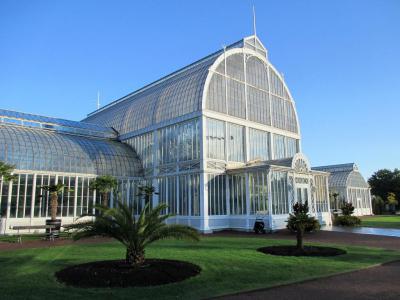
The Garden Society of Gothenburg was initially founded in 1842. This beautiful garden is one of Europe's favorite 19th-century parks. The Palm House was built in 1878 and is home to tropical plants such as palm trees.
The Garden Society has peaceful rolling lawns and perfectly landscaped ornamental gardens. Visitors can see an impressive variety of indigenous and exotic plants.
The rose garden is one of northern Europe's most celebrated. Over 1200 different types of roses bloom in the garden, and the smell is intoxicating.
The Stenpartiet area features rare and exotic plants. The Alfie Atkins' Cultural Centre is popular with kids who like to play and explore. The center has a reading corner, cafe, and activities such as math, theatre, music, and fitness. The outdoor playground has paths, swings, and slides.
During the honey season, visitors can see the demonstration beehive.
The Garden Society of Gothenburg has several refreshment options. Guests can enjoy the Cafe' Grindtugan or Rosencaféet, which is housed in one of the garden’s original buildings. Or, visit the Trädgår'n restaurant, which also hosts shows, concerts, and a nightclub.
The Garden Society has peaceful rolling lawns and perfectly landscaped ornamental gardens. Visitors can see an impressive variety of indigenous and exotic plants.
The rose garden is one of northern Europe's most celebrated. Over 1200 different types of roses bloom in the garden, and the smell is intoxicating.
The Stenpartiet area features rare and exotic plants. The Alfie Atkins' Cultural Centre is popular with kids who like to play and explore. The center has a reading corner, cafe, and activities such as math, theatre, music, and fitness. The outdoor playground has paths, swings, and slides.
During the honey season, visitors can see the demonstration beehive.
The Garden Society of Gothenburg has several refreshment options. Guests can enjoy the Cafe' Grindtugan or Rosencaféet, which is housed in one of the garden’s original buildings. Or, visit the Trädgår'n restaurant, which also hosts shows, concerts, and a nightclub.
4) Universeum Public Science Centre (must see)
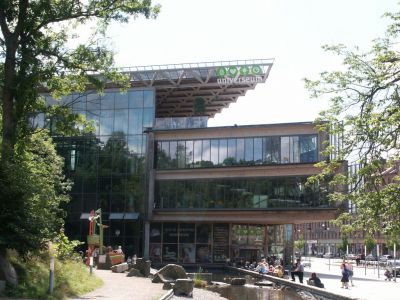
Universeum, known as Sweden's national science center, serves as a significant hub for education in science, technology, and sustainable development. Situated in Gothenburg, it offers much more than a typical museum experience, aiming to immerse visitors of all ages in a journey of exploration across the globe and beyond. Whether diving into the mysteries of the oceans, exploring the Amazon rainforest, or delving into the realms of chemistry and technology, Universeum provides a comprehensive showcase of discovery. Notably, it houses Wisdome Gothenburg, the largest visualization dome in Sweden, offering an extraordinary visual tour of the cosmos.
The interior of Universeum is cleverly divided into six thematic sections, each dedicated to various aspects of the natural and scientific domains. For instance, the Health section allows visitors to interact with exhibits exploring human biology, while the Ocean Zone features an extensive aquarium showcasing over 30,000 species. The Space exhibit transports visitors to the outer reaches of the universe through immersive experiences, while the Rainforest section simulates a bustling ecosystem inhabited by diverse wildlife. The Reptilarium offers a closer examination of various reptiles, and Water's Way highlights the biodiversity of Sweden's aquatic environments.
Situated on Sodra Vagen, Universeum stands as a prominent fixture in Gothenburg's cultural scene, often visited alongside attractions like Liseberg amusement park and the Museum of World Culture. Its strategic location enhances its allure, making it a must-see destination for those interested in exploring the wonders of science and nature while in the city. Beyond being a mere museum, Universeum serves as a dynamic platform for igniting curiosity, nurturing learning, and inspiring a generation committed to improving the world.
The interior of Universeum is cleverly divided into six thematic sections, each dedicated to various aspects of the natural and scientific domains. For instance, the Health section allows visitors to interact with exhibits exploring human biology, while the Ocean Zone features an extensive aquarium showcasing over 30,000 species. The Space exhibit transports visitors to the outer reaches of the universe through immersive experiences, while the Rainforest section simulates a bustling ecosystem inhabited by diverse wildlife. The Reptilarium offers a closer examination of various reptiles, and Water's Way highlights the biodiversity of Sweden's aquatic environments.
Situated on Sodra Vagen, Universeum stands as a prominent fixture in Gothenburg's cultural scene, often visited alongside attractions like Liseberg amusement park and the Museum of World Culture. Its strategic location enhances its allure, making it a must-see destination for those interested in exploring the wonders of science and nature while in the city. Beyond being a mere museum, Universeum serves as a dynamic platform for igniting curiosity, nurturing learning, and inspiring a generation committed to improving the world.
5) Kungsportsavenyen (Kingsgate Avenue)
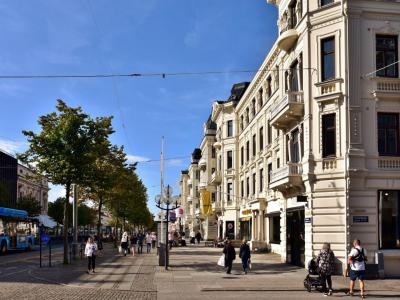
Kingsgate Avenue is Gothenburg’s main boulevard. The design of the avenue was inspired by Vienna's Ring Road and the Champs-Elysees in Paris. The stately one kilometer avenue stretches from The Moat to Gota Square. Residents often refer to Kingsgate Avenue as simply "The Avenue."
Kingsgate Avenue was named after Kings Gate, which was replaced by a park in the 19th century. The avenue was originally a wealthy residential street. Today, Kingsgate Avenue features the Stora Teatern musical theater and many pubs, restaurants, and clubs.
Kingsgate Avenue reminds visitors of a busy London or Paris hot spot. Here, you'll find fantastic shopping and cozy dining spots. Visitors will find antique shops, boutique clothing shops, and international brands. You can visit an independent dressmaker or explore department stores such as H&M.
Side streets feature intriguing finds that are worth exploring. For example, you'll find inexpensive restaurants and second-hand stores selling pre-loved designer brands such as Gucci.
The Avenue comes to life at night with pulsating nightclubs and vibrant bars.
Kingsgate Avenue was named after Kings Gate, which was replaced by a park in the 19th century. The avenue was originally a wealthy residential street. Today, Kingsgate Avenue features the Stora Teatern musical theater and many pubs, restaurants, and clubs.
Kingsgate Avenue reminds visitors of a busy London or Paris hot spot. Here, you'll find fantastic shopping and cozy dining spots. Visitors will find antique shops, boutique clothing shops, and international brands. You can visit an independent dressmaker or explore department stores such as H&M.
Side streets feature intriguing finds that are worth exploring. For example, you'll find inexpensive restaurants and second-hand stores selling pre-loved designer brands such as Gucci.
The Avenue comes to life at night with pulsating nightclubs and vibrant bars.
6) Haga Nygata Street and Haga District (must see)
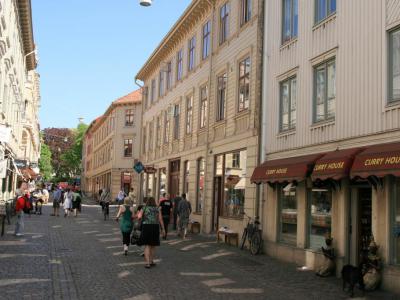
Haga was established in 1648 by Queen Kristina and is one of Gothenburg's oldest neighborhoods. Haga District has charming cobblestone streets and is pedestrian-only. This beautiful area brings visitors back to a simpler time before automobiles. The historic buildings were restored in the 1980s, and Haga Nygata is a popular pedestrian shopping street.
Haga Nygata features many historic homes in addition to popular shops, art galleries, cafes, and restaurants. Visitors will find a variety of independent shops along Haga Nygata. You’ll be able to find unique gifts, treasures for your home, or a sweet treat.
Haga Nygata also has many lovely and tempting cafes. Café Husaren is known for serving incredible plate-sized cinnamon buns. Visitors can enjoy their treats on outdoor terraces. In the spring and summer, the street hosts a weekend farmer's market. In the winter, don't miss the Christmas festivities.
The surrounding Haga District has many well-preserved traditional homes. These historic homes are called Governor's House, with one brick floor and two wood floors. City rules at the time prohibited wood houses that were more than two stories tall, so the brick floor addition was a way to get a larger residence while keeping the rules.
If you need to relax after all that walking and shopping, visit the Hagabadet. This beautiful and relaxing spa first opened in 1876. The spa has a main swimming pool with an exquisite mural and ceiling frescoes.
Haga Nygata features many historic homes in addition to popular shops, art galleries, cafes, and restaurants. Visitors will find a variety of independent shops along Haga Nygata. You’ll be able to find unique gifts, treasures for your home, or a sweet treat.
Haga Nygata also has many lovely and tempting cafes. Café Husaren is known for serving incredible plate-sized cinnamon buns. Visitors can enjoy their treats on outdoor terraces. In the spring and summer, the street hosts a weekend farmer's market. In the winter, don't miss the Christmas festivities.
The surrounding Haga District has many well-preserved traditional homes. These historic homes are called Governor's House, with one brick floor and two wood floors. City rules at the time prohibited wood houses that were more than two stories tall, so the brick floor addition was a way to get a larger residence while keeping the rules.
If you need to relax after all that walking and shopping, visit the Hagabadet. This beautiful and relaxing spa first opened in 1876. The spa has a main swimming pool with an exquisite mural and ceiling frescoes.
7) Skansen Kronan (Crown Sconce)
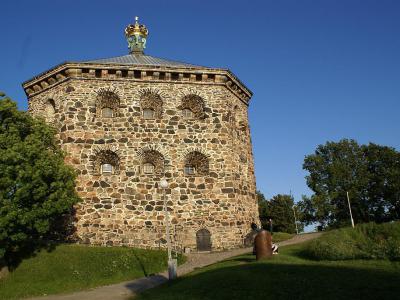
The Crown Sconce (Skansen Kronan) stands in the Haga district of Gothenburg. It, along with its counterpart Skansen Lejonet, was constructed to defend Gothenburg from potential Danish attacks, similar to the purpose of the nearby sea fort, New Älvsborg.
Gothenburg was established in 1621 and fortified with an impressive system of defenses. However, military strategists were concerned about two hills, Gullberg and Risåsberg, overlooking the city. To counter this vulnerability, forts were built atop both hills. Designed by Erik Dahlbergh, the Crown Sconce sits atop Risåsberg while Skansen Lejonet occupies Gullberg.
Construction on Crown Sconce began in 1687, officially completed in 1698 with 23 guns installed, though the roof wasn't finished until 1700. Its formidable walls, made of granite, gneiss, and diabase, measure 4-5 meters thick. Despite its readiness, the fortress never faced attack, and its cannons remained silent.
In the early 1900s, the decision was made to repurpose the fortress as a military museum, which opened in November 1904. The museum closed in September 2004, transferring its collections to the Museum of Gothenburg. The Crown Sconce received protected status as a listed building in 1935.
Originally outside the city walls, the Crown Sconce is now nestled within the urban fabric of Haga in Gothenburg's west-central area. Today, it's privately owned and serves as a venue for conferences and private events. Beyond its historical significance, the old fortress provides panoramic views of the city.
Gothenburg was established in 1621 and fortified with an impressive system of defenses. However, military strategists were concerned about two hills, Gullberg and Risåsberg, overlooking the city. To counter this vulnerability, forts were built atop both hills. Designed by Erik Dahlbergh, the Crown Sconce sits atop Risåsberg while Skansen Lejonet occupies Gullberg.
Construction on Crown Sconce began in 1687, officially completed in 1698 with 23 guns installed, though the roof wasn't finished until 1700. Its formidable walls, made of granite, gneiss, and diabase, measure 4-5 meters thick. Despite its readiness, the fortress never faced attack, and its cannons remained silent.
In the early 1900s, the decision was made to repurpose the fortress as a military museum, which opened in November 1904. The museum closed in September 2004, transferring its collections to the Museum of Gothenburg. The Crown Sconce received protected status as a listed building in 1935.
Originally outside the city walls, the Crown Sconce is now nestled within the urban fabric of Haga in Gothenburg's west-central area. Today, it's privately owned and serves as a venue for conferences and private events. Beyond its historical significance, the old fortress provides panoramic views of the city.
8) Gothenburg Maritime Museum
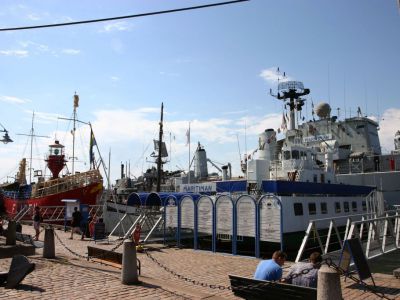
The Gothenburg Maritime Museum, located in the heart of Gothenburg along the scenic Göta River, is a captivating destination for those interested in maritime history. The museum boasts an impressive collection of 13 vessels, each with its own story and significance, ranging from historical naval ships to an intriguing submarine. These ships are docked in the Port of Gothenburg, providing visitors with a rare chance to get up close and personal with maritime history.
Appealing to history enthusiasts, families, and adventurers, the museum offers an immersive and educational experience. Children can enjoy activities such as Virvelina's Workshop and Tim's Ocean Lab, especially during school breaks when special programs are available. The museum's focus on education and entertainment makes it popular among school groups and families seeking an interactive learning experience.
Visitors can embark on a journey through maritime history by exploring the diverse collection of ships moored in the port. From tugboats to fire boats and barges, each vessel contributes to the rich tapestry of maritime heritage. The museum frequently hosts treasure hunts and other engaging activities to entertain younger visitors, ensuring that every trip is both enjoyable and informative.
In addition to its exhibits and activities, the museum features a gift shop where visitors can purchase souvenirs and memorabilia to commemorate their maritime adventure. Whether you're interested in history, interactive experiences for kids, or the chance to explore historic ships firsthand, the Gothenburg Maritime Museum promises a unique and enriching experience for visitors of all ages.
Appealing to history enthusiasts, families, and adventurers, the museum offers an immersive and educational experience. Children can enjoy activities such as Virvelina's Workshop and Tim's Ocean Lab, especially during school breaks when special programs are available. The museum's focus on education and entertainment makes it popular among school groups and families seeking an interactive learning experience.
Visitors can embark on a journey through maritime history by exploring the diverse collection of ships moored in the port. From tugboats to fire boats and barges, each vessel contributes to the rich tapestry of maritime heritage. The museum frequently hosts treasure hunts and other engaging activities to entertain younger visitors, ensuring that every trip is both enjoyable and informative.
In addition to its exhibits and activities, the museum features a gift shop where visitors can purchase souvenirs and memorabilia to commemorate their maritime adventure. Whether you're interested in history, interactive experiences for kids, or the chance to explore historic ships firsthand, the Gothenburg Maritime Museum promises a unique and enriching experience for visitors of all ages.
9) Skanskaskrapan (Skanska Scraper)
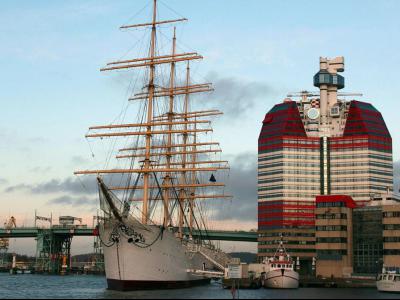
The Skanska Scraper (Skanskaskrapan), also known by its more colloquial name, the Lipstick (Läppstiftet), is a notable landmark in Gothenburg. Situated in the Lilla Bommen district of central Gothenburg, this post-modern skyscraper towers 83 meters and comprises 23 floors. Despite its official and lesser-known name, Lilla Bommen, derived from its location, the building is more affectionately known by the locals due to its unique red-and-white color scheme that inspires its nicknames.
Designed by Ralph Erskine, in collaboration with White Architects, the Skanska Scraper was constructed in the late 1980s under the leadership of Gösta Backmark. The construction was completed in 1989, resulting in a structure that features a total of 27,596 square meters of office space, 2,501 square meters dedicated to shopping, and an additional 1,528 square meters for various functions.
Owned by Vasakronan AB, Skanska Scraper is not just a commercial and retail hub but also a tourist attraction. Visitors can take an elevator to the highest floor, where they find the Gothenburg Lookout, a café offering splendid views of the city. This combination of utility, architectural uniqueness, and public accessibility makes Skanska Scrapern a prominent feature in Gothenburg's skyline and a significant point of interest for locals and tourists.
Designed by Ralph Erskine, in collaboration with White Architects, the Skanska Scraper was constructed in the late 1980s under the leadership of Gösta Backmark. The construction was completed in 1989, resulting in a structure that features a total of 27,596 square meters of office space, 2,501 square meters dedicated to shopping, and an additional 1,528 square meters for various functions.
Owned by Vasakronan AB, Skanska Scraper is not just a commercial and retail hub but also a tourist attraction. Visitors can take an elevator to the highest floor, where they find the Gothenburg Lookout, a café offering splendid views of the city. This combination of utility, architectural uniqueness, and public accessibility makes Skanska Scrapern a prominent feature in Gothenburg's skyline and a significant point of interest for locals and tourists.
