Custom Walk in Houston, Texas by ianefrat1_be3a73 created on 2026-04-25
Guide Location: USA » Houston
Guide Type: Custom Walk
# of Sights: 8
Tour Duration: 2 Hour(s)
Travel Distance: 2.3 Km or 1.4 Miles
Share Key: HKXV6
Guide Type: Custom Walk
# of Sights: 8
Tour Duration: 2 Hour(s)
Travel Distance: 2.3 Km or 1.4 Miles
Share Key: HKXV6
How It Works
Please retrieve this walk in the GPSmyCity app. Once done, the app will guide you from one tour stop to the next as if you had a personal tour guide. If you created the walk on this website or come to the page via a link, please follow the instructions below to retrieve the walk in the app.
Retrieve This Walk in App
Step 1. Download the app "GPSmyCity: Walks in 1K+ Cities" on Apple App Store or Google Play Store.



Step 2. In the GPSmyCity app, download(or launch) the guide "Houston Map and Walking Tours".
Step 3. Tap the menu button located at upper right corner of the "Walks" screen and select "Retrieve custom walk". Enter the share key: HKXV6

1) Holocaust Museum Houston
A somber subject is commendably handled at the Holocaust Museum Houston (HMH), whose mission is to educate people about the dangers of prejudice and hatred in society. Opened in 1996, it has certainly made an impact on everyone who walked through its doors, by way of numerous artifacts, photos, films, informative panels, and a research library.
Visitors learn about the historical and personal stories associated with the Holocaust in the museum's permanent exhibit called "Bearing Witness: A Community Remembers", which focuses on the moving stories of survivors living in the Houston area. Displays chronicle the Nazi rise to power, then detail the systematic extermination of Jews in all of the nations conquered by the Third Reich. Two other exhibits (located outside) include the powerful pairing of an actual WWII rail-car "used to carry millions of Jews to their death" with the Danish Rescue Boat, which "tells the heroic tale of a three-week period in 1943 when Danes risked their own lives to save more than 7,200 Jews from almost certain execution".
The end of the tour introduces visitors to a different section that addresses hate, segregation, genocide, and other atrocities that have happened and continue to happen around the world (e.g., Zambia, Serbia, Rwanda, South Africa, Ukraine...), including America's own history of mistreating certain groups of people. This area is by no means exhaustive but it is enlightening as visitors see that the Holocaust was not an isolated event. Consequently, there is hope that such an educational experience will help prevent future atrocities from occurring.
Tip:
The permanent exhibit can be very graphic and is not recommended for children under 10.
Visitors learn about the historical and personal stories associated with the Holocaust in the museum's permanent exhibit called "Bearing Witness: A Community Remembers", which focuses on the moving stories of survivors living in the Houston area. Displays chronicle the Nazi rise to power, then detail the systematic extermination of Jews in all of the nations conquered by the Third Reich. Two other exhibits (located outside) include the powerful pairing of an actual WWII rail-car "used to carry millions of Jews to their death" with the Danish Rescue Boat, which "tells the heroic tale of a three-week period in 1943 when Danes risked their own lives to save more than 7,200 Jews from almost certain execution".
The end of the tour introduces visitors to a different section that addresses hate, segregation, genocide, and other atrocities that have happened and continue to happen around the world (e.g., Zambia, Serbia, Rwanda, South Africa, Ukraine...), including America's own history of mistreating certain groups of people. This area is by no means exhaustive but it is enlightening as visitors see that the Holocaust was not an isolated event. Consequently, there is hope that such an educational experience will help prevent future atrocities from occurring.
Tip:
The permanent exhibit can be very graphic and is not recommended for children under 10.
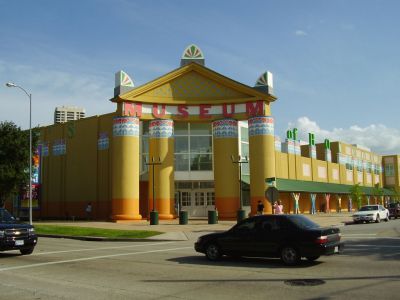
2) Children's Museum of Houston (must see)
With over 90,000 square feet of interactive, hands-on exhibits, the Children's Museum of Houston (CHM) is "dedicated to transforming communities through innovative, child-centered learning with a vision to spark a passion for lifelong learning in all children". Founded in 1980 and housed in a whimsical building designed by internationally-acclaimed architect Robert Venturi, it offers a multitude of innovative exhibits and bilingual learning programs for kids up to 12 years of age.
From cultural experiences to silly games, to physical obstacle courses, to obstacle courses for the mind with science experiments, there's an incredible variety of great things to check out. Kidtropolis – basically, a "mini-town" for kids – is complete with skyscrapers, city government, a supermarket, and professions, while upstairs, infants and toddlers have a special exploration area ('Tot Spot') where they can run, jump and crawl around to explore many things on their own level.
In a 2005 ranking of children's museums MSN.com ranked it in first place in general. In 2001 Child Magazine ranked the museum in second place, after the Children's Museum of Indianapolis, in consideration of availability of staff, diversity of exhibits, and the overall experience. More recent awards include TripSavvy's 2018 Editor's Choice Award "Best Family Attraction and Experience", along with AAA 2018 Editor's "Best of Things to Do".
Tip:
Go on a weekday if you can, as weekends can get too crowded to get around through all of the activities.
Although you can buy food, it would be good to bring some since you might end up spending a long time here.
Also, during a hot day, bring extra clothes for your kids as the museum has an outdoor water playground.
From cultural experiences to silly games, to physical obstacle courses, to obstacle courses for the mind with science experiments, there's an incredible variety of great things to check out. Kidtropolis – basically, a "mini-town" for kids – is complete with skyscrapers, city government, a supermarket, and professions, while upstairs, infants and toddlers have a special exploration area ('Tot Spot') where they can run, jump and crawl around to explore many things on their own level.
In a 2005 ranking of children's museums MSN.com ranked it in first place in general. In 2001 Child Magazine ranked the museum in second place, after the Children's Museum of Indianapolis, in consideration of availability of staff, diversity of exhibits, and the overall experience. More recent awards include TripSavvy's 2018 Editor's Choice Award "Best Family Attraction and Experience", along with AAA 2018 Editor's "Best of Things to Do".
Tip:
Go on a weekday if you can, as weekends can get too crowded to get around through all of the activities.
Although you can buy food, it would be good to bring some since you might end up spending a long time here.
Also, during a hot day, bring extra clothes for your kids as the museum has an outdoor water playground.
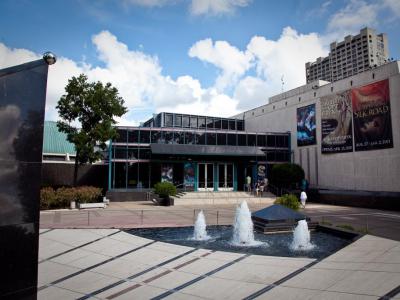
3) Houston Museum of Natural Science (must see)
One of the best places in Houston for a family adventure, this museum features an almost overwhelming array of exhibits and artifacts covering everything from dinosaurs to gems and minerals to ancient Egypt. Its permanent collection is especially impressive, most notably the Hall of the Americas, with its compelling exhibits depicting the stories of how people of various cultures arrived on the continent and their ways of life once they became permanent residents.
As if the museum didn't already have enough amazing exhibits, in 2012 it added an entire wing devoted to paleontology. Featuring dramatically lit dinosaur fossils and exhibits dedicated to evolution and early humans, the hall is a sight to behold, especially with its action-packed scenes of predators and prey.
Another new section, the so-called Cabinet of Curiosities, features drawers, shelves, even things hanging from the ceiling, chock-full of oddities and antiquities from private collections. This exhibit is well-decorated and really makes you feel like you are in some big game hunter' or collector's den or study.
Interactive hands-on and touch-screen displays about oil density, drilling, and delivery allow children to learn through play, which is always a winning combo. Also, kids will be (perhaps unexpectedly) interested in the museum's large gemstone exhibit, featuring colorful and sharply cut gems in fascinating back-lit displays.
Why You Should Visit:
To explore the far reaches of outer space, roam with the dinosaurs, wander through Africa's Serengeti, and marvel at the world's rarest and most beautiful gems and minerals.
The layout is superb and the curators have an incredible eye for the unique. Very educational and plenty of interactive things to play with (on the bottom floor).
Tip:
Prices are reasonable – if you want a real treat, however, try visiting on Thursday afternoons. From 2–5pm during the school year and 3–6pm during the summer, the location is free of charge.
As if the museum didn't already have enough amazing exhibits, in 2012 it added an entire wing devoted to paleontology. Featuring dramatically lit dinosaur fossils and exhibits dedicated to evolution and early humans, the hall is a sight to behold, especially with its action-packed scenes of predators and prey.
Another new section, the so-called Cabinet of Curiosities, features drawers, shelves, even things hanging from the ceiling, chock-full of oddities and antiquities from private collections. This exhibit is well-decorated and really makes you feel like you are in some big game hunter' or collector's den or study.
Interactive hands-on and touch-screen displays about oil density, drilling, and delivery allow children to learn through play, which is always a winning combo. Also, kids will be (perhaps unexpectedly) interested in the museum's large gemstone exhibit, featuring colorful and sharply cut gems in fascinating back-lit displays.
Why You Should Visit:
To explore the far reaches of outer space, roam with the dinosaurs, wander through Africa's Serengeti, and marvel at the world's rarest and most beautiful gems and minerals.
The layout is superb and the curators have an incredible eye for the unique. Very educational and plenty of interactive things to play with (on the bottom floor).
Tip:
Prices are reasonable – if you want a real treat, however, try visiting on Thursday afternoons. From 2–5pm during the school year and 3–6pm during the summer, the location is free of charge.
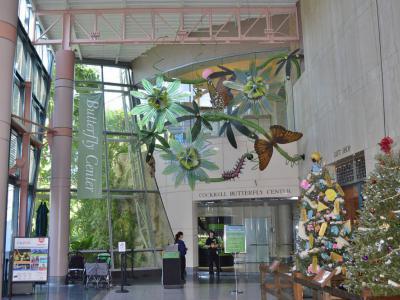
4) Cockrell Butterfly Center (must see)
Part of the Museum of Natural Science, with a separate fee, this butterfly exhibit is a worthwhile investment, especially to see the thousands of colorful, lithe winged creatures peacefully meander throughout the towering domed Mayan rainforest habitat. A lengthy waterfall flows gently in the background, and the butterflies occasionally drop by for a personal visit.
Getting into the space is an experience in itself. Immediately after opening the door, you can feel (almost see!) the humidity, but do not fret as walking down into the garden area will offer some welcome relief. There are a few benches around to sit and watch, as well as many interesting plants (all labeled), plus small exhibits featuring a variety of insects (beetles, centipedes, roaches, tarantulas, etc.), and a small play area for children.
The enclosure has small walkway trails that could get crowded on a busier day, but other than that there is enough room to comfortably observe the habitat. Should you somehow get bored, ask the docents a question; they're dying to share information and can point out really interesting, not-to-be-missed specimens.
Tip:
Wear bright colors like blue or teal and the butterflies might land on you, making the experience that much more fun.
Getting into the space is an experience in itself. Immediately after opening the door, you can feel (almost see!) the humidity, but do not fret as walking down into the garden area will offer some welcome relief. There are a few benches around to sit and watch, as well as many interesting plants (all labeled), plus small exhibits featuring a variety of insects (beetles, centipedes, roaches, tarantulas, etc.), and a small play area for children.
The enclosure has small walkway trails that could get crowded on a busier day, but other than that there is enough room to comfortably observe the habitat. Should you somehow get bored, ask the docents a question; they're dying to share information and can point out really interesting, not-to-be-missed specimens.
Tip:
Wear bright colors like blue or teal and the butterflies might land on you, making the experience that much more fun.

5) Hermann Park (must see)
If you only get time to visit one place in Houston, you may want to make that Hermann Park. Located in the heart of the Museum District just southwest of downtown, this huge green swath is magnet for joggers, dog walkers, bikers, and families in search of some green space in a city known for its rampant development.
For many years now, the city has been working on making this the best park of its kind in the nation. Trails and trees are abundant, as are the amenities and services, including an enormous golf course, a large pond with paddle boats, an outdoor theater, a butterfly house, a zoo, and a garden center filled with exotic plants.
There is no shortage of statues, either; look for monuments to Sam Houston, Mahatma Gandhi, and namesake George Hermann, who donated the first 284 acres to the city.
Why You Should Visit:
One of Houston's great assets and there is usually a free concert or play to enjoy during spring/summer.
Tip:
If you're an avid train lover and/or a kid at heart, come here to ride the train! It's a super cute experience which also allows you to see more of the park. Alternatively, make sure to contact Houston Ghost Tours for a nighttime park tour.
For many years now, the city has been working on making this the best park of its kind in the nation. Trails and trees are abundant, as are the amenities and services, including an enormous golf course, a large pond with paddle boats, an outdoor theater, a butterfly house, a zoo, and a garden center filled with exotic plants.
There is no shortage of statues, either; look for monuments to Sam Houston, Mahatma Gandhi, and namesake George Hermann, who donated the first 284 acres to the city.
Why You Should Visit:
One of Houston's great assets and there is usually a free concert or play to enjoy during spring/summer.
Tip:
If you're an avid train lover and/or a kid at heart, come here to ride the train! It's a super cute experience which also allows you to see more of the park. Alternatively, make sure to contact Houston Ghost Tours for a nighttime park tour.
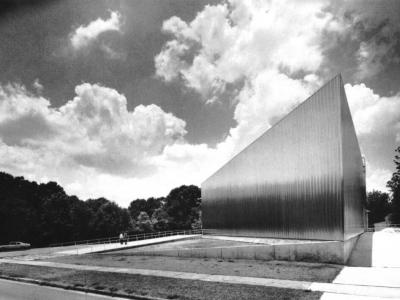
6) Contemporary Arts Museum
The Contemporary Arts Museum Houston (CAMH) is a non-collecting institution dedicated to presenting the best and most exciting international, national, and regional art of our time. Founded in 1948, the Museum is committed to showcasing new art and documenting its role in modern life through exhibitions, lectures, original publications, and a variety of educational programs and events.
Located in the heart of the Houston Museum District, CAMH occupies an iconic stainless steel building that was designed for the Museum by the award-winning architect Gunnar Birkerts and opened in 1972. The building’s unique design and architecture make it highly recognizable and a landmark in the area.
Contemporary Arts Museum's two floors of gallery space offer six to eight exhibitions each year, featuring work by leading internationally-recognized artists working at the forefront of contemporary art. The Brown Foundation Gallery, in particular, hosts exhibitions that explore questions central to the nature of art and life today. On the other hand, the Nina and Michael Zilkha Gallery focuses on work by established artists as well as those who are emerging and early in their careers.
Aside from exhibitions, the Museum also has a shop that offers an array of curated merchandise that supports CAMH programs and operations. Each exhibition at CAMH is also accompanied by a publication that provides lasting documentation of the exhibition and contributes to original knowledge and scholarship about contemporary art and the international discourse around it.
Located in the heart of the Houston Museum District, CAMH occupies an iconic stainless steel building that was designed for the Museum by the award-winning architect Gunnar Birkerts and opened in 1972. The building’s unique design and architecture make it highly recognizable and a landmark in the area.
Contemporary Arts Museum's two floors of gallery space offer six to eight exhibitions each year, featuring work by leading internationally-recognized artists working at the forefront of contemporary art. The Brown Foundation Gallery, in particular, hosts exhibitions that explore questions central to the nature of art and life today. On the other hand, the Nina and Michael Zilkha Gallery focuses on work by established artists as well as those who are emerging and early in their careers.
Aside from exhibitions, the Museum also has a shop that offers an array of curated merchandise that supports CAMH programs and operations. Each exhibition at CAMH is also accompanied by a publication that provides lasting documentation of the exhibition and contributes to original knowledge and scholarship about contemporary art and the international discourse around it.
7) Cullen Sculpture Garden
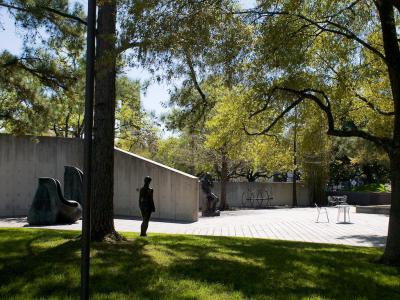
This wonderful – albeit relatively small – sculpture garden is owned and maintained by the Museum of Fine Arts whose buildings are nearby. Free to enter and enjoy, it has a nice mix of art – some modern and some of a more classical style, all clearly identified with small plaques. Most of the work benefits from multiple viewings, with many sculptures looking differently from different angles, seemingly changing as visitors walk around them. Although on a much smaller scale than Chicago's "Bean", the shiny "Cloud Column" here, created by the same Anish Kapoor, is particularly fun to see.
Interestingly enough, the location is not well-known by even the people of Houston, as the maze of streets surrounding Hermann Park can be daunting to navigate. Combine that with the fact that the park is walled in for privacy (and sound insulation) and you have the makings of a hard-to-find place. It is very much worth finding, however, as you can have a great visit with few people competing for space. There are chairs and tables should you like to bring a lunch or to just sit and enjoy the view; plus, with the museum's security guards constantly wandering around, safety is not an issue.
Interestingly enough, the location is not well-known by even the people of Houston, as the maze of streets surrounding Hermann Park can be daunting to navigate. Combine that with the fact that the park is walled in for privacy (and sound insulation) and you have the makings of a hard-to-find place. It is very much worth finding, however, as you can have a great visit with few people competing for space. There are chairs and tables should you like to bring a lunch or to just sit and enjoy the view; plus, with the museum's security guards constantly wandering around, safety is not an issue.
8) Museum of Fine Arts (must see)
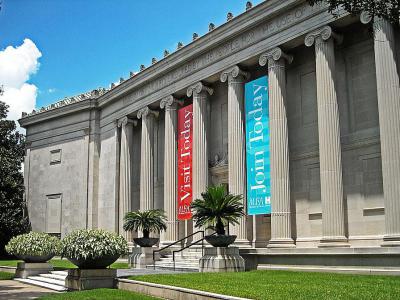
One of the Museum District's hallmark institutions, this museum is outstanding, balancing a collection of excellent Western art from antiquity to modern times (to include a few Picassos) with a a whole other section dedicated to (largely pre-modern and early modern) art from Africa, Asia, Oceania, and pre-Columbian America. And that's before one gets to the special exhibitions that change regularly through the year, showing some of the world's finest collections.
The touching, relevant, and sometimes exclusive exhibits – both permanent and temporary – always leave visitors with either a new appreciation for a favorite artist, or reward with the discovery of a new favorite artist. Everything is curated with care and every artist is explored in a way that makes viewers/listeners think about the world. These days, they almost always offer an audio guide that allows simply pointing at the little boxes by the artwork in order to hear the commentary.
It also helps that visitors can also go see films and live musical orchestras, stroll through the nice outdoor sculpture garden, or have a nice coffee and lunch at the café. The gift shop is not to be missed, either, with all kinds of wonderful, unique artifacts, jewelry, books, children's toys and so much more (museum stuff always makes great gifts!).
Why You Should Visit:
The diversity and educational value of the thousands and thousands of works here is admirable and among the highest in the U.S. A definite must-visit for art lovers!
Tip:
Be sure to pass through the underground light tunnel to access the museum’s second facility across the street, in which you'll find intricate Italian glass carvings, Spanish and colonial-era art artifacts, and more.
The touching, relevant, and sometimes exclusive exhibits – both permanent and temporary – always leave visitors with either a new appreciation for a favorite artist, or reward with the discovery of a new favorite artist. Everything is curated with care and every artist is explored in a way that makes viewers/listeners think about the world. These days, they almost always offer an audio guide that allows simply pointing at the little boxes by the artwork in order to hear the commentary.
It also helps that visitors can also go see films and live musical orchestras, stroll through the nice outdoor sculpture garden, or have a nice coffee and lunch at the café. The gift shop is not to be missed, either, with all kinds of wonderful, unique artifacts, jewelry, books, children's toys and so much more (museum stuff always makes great gifts!).
Why You Should Visit:
The diversity and educational value of the thousands and thousands of works here is admirable and among the highest in the U.S. A definite must-visit for art lovers!
Tip:
Be sure to pass through the underground light tunnel to access the museum’s second facility across the street, in which you'll find intricate Italian glass carvings, Spanish and colonial-era art artifacts, and more.
