Custom Walk in Auckland, New Zealand by johomocha2834 created on 2026-05-03
Guide Location: New Zealand » Auckland
Guide Type: Custom Walk
# of Sights: 7
Tour Duration: 1 Hour(s)
Travel Distance: 2.3 Km or 1.4 Miles
Share Key: GMHE8
Guide Type: Custom Walk
# of Sights: 7
Tour Duration: 1 Hour(s)
Travel Distance: 2.3 Km or 1.4 Miles
Share Key: GMHE8
How It Works
Please retrieve this walk in the GPSmyCity app. Once done, the app will guide you from one tour stop to the next as if you had a personal tour guide. If you created the walk on this website or come to the page via a link, please follow the instructions below to retrieve the walk in the app.
Retrieve This Walk in App
Step 1. Download the app "GPSmyCity: Walks in 1K+ Cities" on Apple App Store or Google Play Store.



Step 2. In the GPSmyCity app, download(or launch) the guide "Auckland Map and Walking Tours".
Step 3. Tap the menu button located at upper right corner of the "Walks" screen and select "Retrieve custom walk". Enter the share key: GMHE8
1) Alberon Reserve
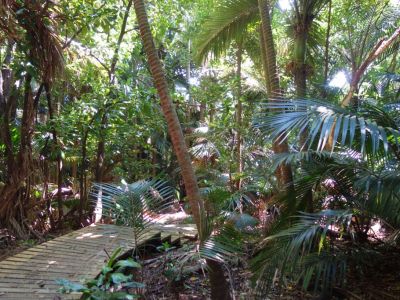
Alberon Reserve is a small but inviting green space that offers a quiet retreat from the city’s energy. Though modest in size, the reserve is rich in atmosphere, with its combination of mature trees, grassy lawns, and winding paths that invite exploration. It serves as one of Parnell’s hidden corners, where locals and visitors alike can enjoy a moment of calm, framed by the suburb’s heritage character and proximity to Auckland’s central attractions.
The reserve carries with it a sense of old Auckland charm, reflecting the long-standing tradition of creating community green spaces in the city’s older neighbourhoods. Towering trees provide shade during the warmer months, while the open lawns make it a suitable spot for informal gatherings, picnics, or simply pausing with a book.
Its location makes the reserve particularly appealing to walkers. A visit here can easily be paired with a wider exploration of Parnell’s landmarks, such as the nearby historic homes, galleries, and boutique shops that give the area its distinctive character. The park’s trails offer gentle inclines and leafy surroundings that feel far removed from the bustle of central Auckland, despite being only minutes away.
The reserve carries with it a sense of old Auckland charm, reflecting the long-standing tradition of creating community green spaces in the city’s older neighbourhoods. Towering trees provide shade during the warmer months, while the open lawns make it a suitable spot for informal gatherings, picnics, or simply pausing with a book.
Its location makes the reserve particularly appealing to walkers. A visit here can easily be paired with a wider exploration of Parnell’s landmarks, such as the nearby historic homes, galleries, and boutique shops that give the area its distinctive character. The park’s trails offer gentle inclines and leafy surroundings that feel far removed from the bustle of central Auckland, despite being only minutes away.
2) Scarborough Reserve
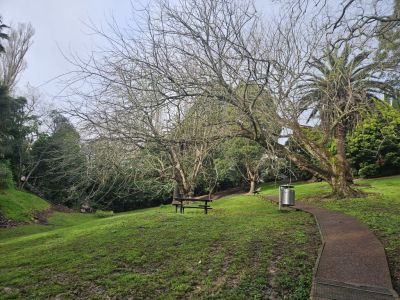
Scarborough Reserve is a peaceful 2-acre park that offers visitors a refreshing escape from the bustle of Auckland. With its lush greenery, open lawns, and shady trees, the reserve provides a picturesque setting that appeals to both locals and tourists. Its well-kept paths invite walkers and runners to explore at their own pace, whether enjoying a quiet morning stroll or a more vigorous workout surrounded by nature.
The reserve is especially popular with those looking to combine exercise with relaxation. Its winding trails accommodate different fitness levels, making it suitable for casual walkers as well as dedicated runners. Auckland’s mild climate ensures the park can be enjoyed year-round, with each season bringing its own charm to the landscape. The calm atmosphere and scenic views create a rejuvenating environment, encouraging visitors to slow down and connect with the natural setting.
More than just a place for exercise, Scarborough Reserve offers a glimpse of everyday life in one of Auckland’s oldest suburbs. Families, joggers, and dog walkers alike share the space, giving it a welcoming community feel. For tourists exploring Parnell’s historic character and leafy streets, the reserve provides a perfect spot to pause, unwind, and appreciate the quieter side of Auckland.
The reserve is especially popular with those looking to combine exercise with relaxation. Its winding trails accommodate different fitness levels, making it suitable for casual walkers as well as dedicated runners. Auckland’s mild climate ensures the park can be enjoyed year-round, with each season bringing its own charm to the landscape. The calm atmosphere and scenic views create a rejuvenating environment, encouraging visitors to slow down and connect with the natural setting.
More than just a place for exercise, Scarborough Reserve offers a glimpse of everyday life in one of Auckland’s oldest suburbs. Families, joggers, and dog walkers alike share the space, giving it a welcoming community feel. For tourists exploring Parnell’s historic character and leafy streets, the reserve provides a perfect spot to pause, unwind, and appreciate the quieter side of Auckland.
3) St. John the Baptist's Church
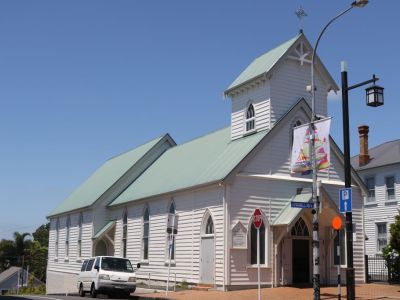
Saint John the Baptist’s Church reflects more than 150 years of Catholic worship and community life in Auckland. Opened on 12 May 1861 by Bishop Jean Baptiste Pompallier, the founder of the Catholic Church in New Zealand, it is considered the oldest surviving Catholic church in northern New Zealand. Designed by Edward Mahoney, the building displays a restrained Gothic Revival style with a rectangular nave, tower, and spire. Its light interior and cross-braced roof trusses highlight Mahoney’s early ecclesiastical work, giving the church significance as both a place of devotion and an architectural landmark.
From the beginning, the church was closely tied to education and charity through the work of the Sisters of Mercy. A small convent built beside the church in 1861 became the Sisters’ first branch house in the Auckland Diocese. From here, they ran schools for both fee-paying students and children from poorer families, establishing a lasting role in the city’s social fabric. The church itself was expanded in 1898, with a private chapel for the nuns designed by Thomas Mahoney, Edward’s son, and an accomplished architect.
By 1903, the original convent was replaced with a larger two-storey timber building containing reception rooms, a refectory, and living quarters. Over the years, the church interior saw further embellishment, including sanctuary improvements in 1931 and changes following liturgical reforms in the 1960s. Although the convent and school closed in 1964, the convent building survives in a new use, while the church remains active. Visitors today can still experience its enduring role as a place of worship and a site of layered heritage.
From the beginning, the church was closely tied to education and charity through the work of the Sisters of Mercy. A small convent built beside the church in 1861 became the Sisters’ first branch house in the Auckland Diocese. From here, they ran schools for both fee-paying students and children from poorer families, establishing a lasting role in the city’s social fabric. The church itself was expanded in 1898, with a private chapel for the nuns designed by Thomas Mahoney, Edward’s son, and an accomplished architect.
By 1903, the original convent was replaced with a larger two-storey timber building containing reception rooms, a refectory, and living quarters. Over the years, the church interior saw further embellishment, including sanctuary improvements in 1931 and changes following liturgical reforms in the 1960s. Although the convent and school closed in 1964, the convent building survives in a new use, while the church remains active. Visitors today can still experience its enduring role as a place of worship and a site of layered heritage.
4) Selwyn Court
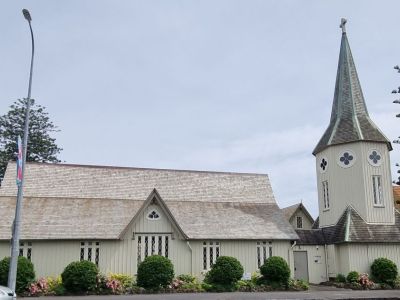
Selwyn Court embodies a unique chapter of New Zealand’s colonial and ecclesiastical history. Established in 1861 as the first official bishop’s residence, it became home to Bishop George Selwyn, from whom the complex takes its name. The site was designed in the Gothic Revival style, adapted locally into what became known as Selwyn Gothic, a distinctive timber version of the European style. The original complex included a chapel, a library, a steepled octagonal tower, and the bishop’s residence, all arranged around a U-shaped courtyard.
The architect, Frederick Thatcher, played a pivotal role in shaping Selwyn Court’s character. His use of shingled roofs, vertical board-and-batten walls, and Early English-style windows created a striking yet practical design for Auckland’s conditions. The house, built on a slope, was designed to appear single-storied from the courtyard, while cleverly incorporating private rooms on a stone-walled lower level and reception rooms above. The buildings, connected to the library by offices and corridors, showcase Selwyn’s structural system of roof supports carried to floor level, creating an effect of internal buttressing most clearly seen in the library’s exterior.
Over time, Selwyn Court has changed, but its historical character endures. A double-storey verandah was added to the northern side of the house around 1883, while the removal of the chapel altered the original courtyard ensemble. Today, the site remains an important architectural landmark in Parnell, offering visitors a glimpse into New Zealand’s 19th-century ecclesiastical life and its adaptation of European styles to local materials. The Selwyn Court was listed under the Historic Places Act of 1980.
The architect, Frederick Thatcher, played a pivotal role in shaping Selwyn Court’s character. His use of shingled roofs, vertical board-and-batten walls, and Early English-style windows created a striking yet practical design for Auckland’s conditions. The house, built on a slope, was designed to appear single-storied from the courtyard, while cleverly incorporating private rooms on a stone-walled lower level and reception rooms above. The buildings, connected to the library by offices and corridors, showcase Selwyn’s structural system of roof supports carried to floor level, creating an effect of internal buttressing most clearly seen in the library’s exterior.
Over time, Selwyn Court has changed, but its historical character endures. A double-storey verandah was added to the northern side of the house around 1883, while the removal of the chapel altered the original courtyard ensemble. Today, the site remains an important architectural landmark in Parnell, offering visitors a glimpse into New Zealand’s 19th-century ecclesiastical life and its adaptation of European styles to local materials. The Selwyn Court was listed under the Historic Places Act of 1980.
5) Neligan House
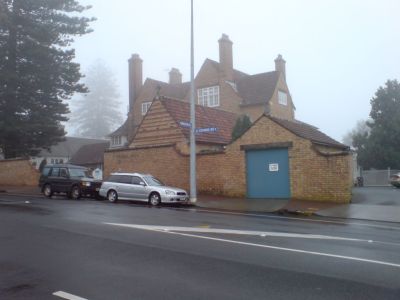
Neligan House is a landmark of New Zealand’s ecclesiastical heritage and a fine example of early twentieth-century architecture. Built in 1910, it was designed by the architectural firm Bamford and Pierce for Bishop Moore Richard Neligan, the third Anglican Bishop of Auckland. Although Bishop Neligan’s ill health led to his resignation the same year, and his time in the house was brief, the residence went on to serve as the official home for several Anglican bishops over the next three decades, maintaining its strong ties to the city’s religious history.
The house stands out for its English Domestic Revival style, part of the broader Arts and Crafts movement. Its distinctive roofline runs east to west, with carefully proportioned gables facing the garden and courtyard. Tall chimneys, a bellcast tiled roof, and finely executed brickwork highlight the craftsmanship that went into its construction. A small chapel sits at right angles to the main structure, its red and buff brick banding adding a touch of decorative contrast, while the main entrance porch, designed in the manner of a traditional lychgate, underscores the building’s ecclesiastical character.
Today, Neligan House remains a Category 1 historic place and a prominent feature of Parnell’s heritage landscape. Together with nearby ecclesiastical buildings, it offers visitors a window into the architectural and cultural traditions that shaped Auckland in the early 1900s, making it a rewarding stop for those interested in history, design, and New Zealand’s Anglican legacy.
The house stands out for its English Domestic Revival style, part of the broader Arts and Crafts movement. Its distinctive roofline runs east to west, with carefully proportioned gables facing the garden and courtyard. Tall chimneys, a bellcast tiled roof, and finely executed brickwork highlight the craftsmanship that went into its construction. A small chapel sits at right angles to the main structure, its red and buff brick banding adding a touch of decorative contrast, while the main entrance porch, designed in the manner of a traditional lychgate, underscores the building’s ecclesiastical character.
Today, Neligan House remains a Category 1 historic place and a prominent feature of Parnell’s heritage landscape. Together with nearby ecclesiastical buildings, it offers visitors a window into the architectural and cultural traditions that shaped Auckland in the early 1900s, making it a rewarding stop for those interested in history, design, and New Zealand’s Anglican legacy.
6) The Old Deanery
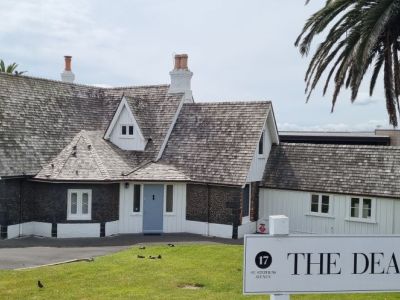
The Old Deanery stands as one of the suburb’s most significant colonial dwellings and a lasting reminder of New Zealand’s early ecclesiastical history. Built in 1857, it was designed by Frederick Thatcher, an architect celebrated for shaping some of Auckland’s most enduring Anglican buildings. Originally serving as one of Bishop George Selwyn’s residences, the house played an important role in church life before Bishopscourt was completed in 1865. Its history and architectural merit have been formally recognised, with the building registered under the Historic Places Act 1980.
The design of the Deanery reflects Thatcher’s thoughtful use of materials and his skill in domestic architecture. The ground floor was constructed from stone, while the roof gables display a striking vertical board-and-batten finish. This blending of stone and timber gives the building a distinctive character, harmonising strength with elegance. The quality of the stonework is owed to Benjamin Strange, a skilled stonemason who contributed to several notable Auckland homes of the period.
Though minor additions have been made over time, the Old Deanery retains much of its original integrity. It remains a fine example of colonial architecture, showcasing Thatcher’s ability to balance practicality with aesthetic refinement. For visitors exploring Parnell, the Deanery offers not only a glimpse into 19th-century domestic design but also a deeper connection to the figures who shaped Auckland’s early church and community life. It continues to stand as a cornerstone of the area’s architectural and cultural heritage.
The design of the Deanery reflects Thatcher’s thoughtful use of materials and his skill in domestic architecture. The ground floor was constructed from stone, while the roof gables display a striking vertical board-and-batten finish. This blending of stone and timber gives the building a distinctive character, harmonising strength with elegance. The quality of the stonework is owed to Benjamin Strange, a skilled stonemason who contributed to several notable Auckland homes of the period.
Though minor additions have been made over time, the Old Deanery retains much of its original integrity. It remains a fine example of colonial architecture, showcasing Thatcher’s ability to balance practicality with aesthetic refinement. For visitors exploring Parnell, the Deanery offers not only a glimpse into 19th-century domestic design but also a deeper connection to the figures who shaped Auckland’s early church and community life. It continues to stand as a cornerstone of the area’s architectural and cultural heritage.
7) St. Stephen's Chapel
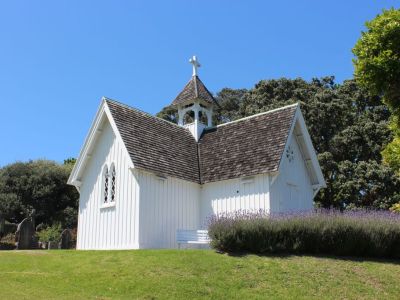
Saint Stephen’s Chapel is one of Auckland’s oldest surviving churches and an important landmark in New Zealand’s early Anglican history. Built in 1857, the chapel was commissioned under the guidance of Bishop George Selwyn, the first Anglican Bishop of New Zealand, and designed by the noted architect Frederick Thatcher. Thatcher, who is also remembered for designing several other key ecclesiastical buildings in the country, employed the Selwyn Gothic style, a simplified form of Gothic Revival adapted for local timber construction. The result was a modest yet elegant wooden chapel that still retains its charm today.
The chapel’s historical importance extends beyond its architecture. It was here, in 1857, that the first General Synod of the Anglican Church in New Zealand was convened, marking a turning point in the establishment of the church’s governance in the colony. The event linked the chapel directly with the shaping of New Zealand’s ecclesiastical identity. Saint Stephen’s also became a place of worship for Māori and European communities, symbolizing Selwyn’s efforts to create unity through faith during a period of significant cultural and social change.
Visitors today will find that the chapel’s setting on Judges Bay Road enhances its quiet dignity. Surrounded by greenery, the simple structure-with its steeply pitched roof, pointed arch windows, and wooden interior-offers an atmosphere of reflection and continuity with the past. Though small in scale, it remains a Category I historic place, recognized for both its religious significance and its architectural value.
For those exploring Parnell, Saint Stephen’s Chapel provides not only a glimpse into early colonial life but also a serene stop that connects Auckland’s present with its formative years. It is a reminder of the role faith, design, and community played in shaping the city’s heritage.
The chapel’s historical importance extends beyond its architecture. It was here, in 1857, that the first General Synod of the Anglican Church in New Zealand was convened, marking a turning point in the establishment of the church’s governance in the colony. The event linked the chapel directly with the shaping of New Zealand’s ecclesiastical identity. Saint Stephen’s also became a place of worship for Māori and European communities, symbolizing Selwyn’s efforts to create unity through faith during a period of significant cultural and social change.
Visitors today will find that the chapel’s setting on Judges Bay Road enhances its quiet dignity. Surrounded by greenery, the simple structure-with its steeply pitched roof, pointed arch windows, and wooden interior-offers an atmosphere of reflection and continuity with the past. Though small in scale, it remains a Category I historic place, recognized for both its religious significance and its architectural value.
For those exploring Parnell, Saint Stephen’s Chapel provides not only a glimpse into early colonial life but also a serene stop that connects Auckland’s present with its formative years. It is a reminder of the role faith, design, and community played in shaping the city’s heritage.
