Custom Walk in Copenhagen, Denmark by laejim2325 created on 2026-05-08
Guide Location: Denmark » Copenhagen
Guide Type: Custom Walk
# of Sights: 5
Tour Duration: 3 Hour(s)
Travel Distance: 6.7 Km or 4.2 Miles
Share Key: C22RD
Guide Type: Custom Walk
# of Sights: 5
Tour Duration: 3 Hour(s)
Travel Distance: 6.7 Km or 4.2 Miles
Share Key: C22RD
How It Works
Please retrieve this walk in the GPSmyCity app. Once done, the app will guide you from one tour stop to the next as if you had a personal tour guide. If you created the walk on this website or come to the page via a link, please follow the instructions below to retrieve the walk in the app.
Retrieve This Walk in App
Step 1. Download the app "GPSmyCity: Walks in 1K+ Cities" on Apple App Store or Google Play Store.



Step 2. In the GPSmyCity app, download(or launch) the guide "Copenhagen Map and Walking Tours".
Step 3. Tap the menu button located at upper right corner of the "Walks" screen and select "Retrieve custom walk". Enter the share key: C22RD
1) Tivoli Gardens (must see)
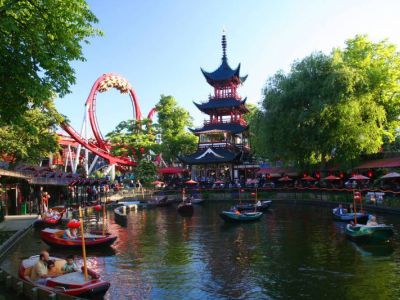
Conveniently located in central Copenhagen, very close to the train station (for those traveling into town), Tivoli Gardens is the original inspiration for Walt Disney World – and it shows. The lovingly tended grounds – a wonderland of rides, games, restaurants, marching bands, funny mirrors, and roulette wheels – are picturesque and equally friendly for both kids and adults.
Tivoli is actually the second oldest, still operational amusement park in the world; the oldest one is also in Denmark. The wooden "Mountain" Roller Coaster (Bjergbanen or Rutschebanen) was built in 1914; its operator actually controls the ride by braking, so that it does not gain too much speed while descending the hills! Another roller coaster, The Demon (Dæmonen), features an “Immelmann” vertical loop and a zero-gravity roll – all in one ride that lasts one minute and 46 seconds. Also of note is The Star Flyer swing ride, opened in 2006, offering panoramic views of the city from an 80-meter (260-foot) elevation.
Apart from these exciting rides and a few thrilling towers, Tivoli is a venue for performing arts, counting among the major cultural hubs in Copenhagen. So even if you are not interested in the rides, there is plenty of space just to walk around, admire the prodigious flowers and large fountains, catch a free concert, or try a wide range of different foods: Mexican, Asian, Japanese, Italian, French, Danish, or regular street food like sandwiches/burgers, etc.
Tickets are both "pay as you go" and "pay once for all", which is affordable for every budget and worth it just to see the Danes – both young and old – at play. In the summer months they have fireworks displays every Saturday at 11:45 pm and if you don't want to stay all day, just have your hand stamped so you can re-enter at a later time.
Why You Should Visit:
Supposedly, this was the template that inspired Walt Disney to create his theme parks!
Fun to walk around in even if you don't go on any rides – a lovely way to spend time with friends.
Tip:
Great to come a bit before sunset, so you can see the place both in daylight and illuminated in the evening.
You can also take your own food and drink in a bag (they don't check them), as it's rather expensive inside.
Tivoli is actually the second oldest, still operational amusement park in the world; the oldest one is also in Denmark. The wooden "Mountain" Roller Coaster (Bjergbanen or Rutschebanen) was built in 1914; its operator actually controls the ride by braking, so that it does not gain too much speed while descending the hills! Another roller coaster, The Demon (Dæmonen), features an “Immelmann” vertical loop and a zero-gravity roll – all in one ride that lasts one minute and 46 seconds. Also of note is The Star Flyer swing ride, opened in 2006, offering panoramic views of the city from an 80-meter (260-foot) elevation.
Apart from these exciting rides and a few thrilling towers, Tivoli is a venue for performing arts, counting among the major cultural hubs in Copenhagen. So even if you are not interested in the rides, there is plenty of space just to walk around, admire the prodigious flowers and large fountains, catch a free concert, or try a wide range of different foods: Mexican, Asian, Japanese, Italian, French, Danish, or regular street food like sandwiches/burgers, etc.
Tickets are both "pay as you go" and "pay once for all", which is affordable for every budget and worth it just to see the Danes – both young and old – at play. In the summer months they have fireworks displays every Saturday at 11:45 pm and if you don't want to stay all day, just have your hand stamped so you can re-enter at a later time.
Why You Should Visit:
Supposedly, this was the template that inspired Walt Disney to create his theme parks!
Fun to walk around in even if you don't go on any rides – a lovely way to spend time with friends.
Tip:
Great to come a bit before sunset, so you can see the place both in daylight and illuminated in the evening.
You can also take your own food and drink in a bag (they don't check them), as it's rather expensive inside.
2) Rosenborg Castle (must see)
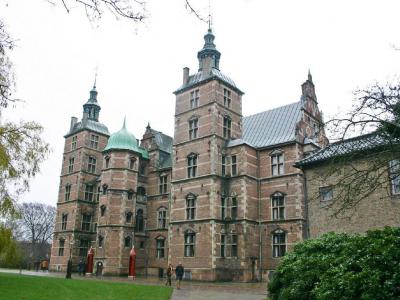
One of the most popular tourist attractions in Copenhagen, Rosenborg Castle reflects the very essence of the Dutch Renaissance style. This caste was constructed in 1606 and served as a summer house. It was a part of many interesting architectural projects initiated by Christian IV.
The castle has since been expanded many times and its present version was built in 1624. Rosenborg Castle was structurally planned by architects Hans van Steenwincke and Bertel Lange.
Until 1710, the castle was a royal residence. On the third floor, you will find the Long Hall. It was built in 1624 to serve as the royal ballroom. In the 1700s, it was used as the banquet hall and the Royal Reception Room. It came to be known as the “Knight’s Hall” from the latter half of the 19th century.
Here you will find a dozen impressive tapestries that depict the victories of the king in the Scanian War. Do not miss out the stucco ceiling that was created in the early 18th century. The main attractions at this castle include the throne of queens and absolutist king’s coronation chair. At the Large Hall, you will find an exquisite collection of 17th-century silver furniture.
Join one of the public tours organized at this castle. The tour will take you through the museum where you can view artifacts from the Royal Collections.
Why You Should Visit:
There's lots of history here and it is well presented. It is not too cluttered so you are not overburdened.
The castle interior is splendid with wonderfully preserved artwork and furnishings – especially the tapestries in the throne room.
Tip:
Make sure you visit all the levels, taking time to walk around and not be too rushed. Plan on at least 2-3 hours here if you can. You need a coin for the locker to leave bags, however.
Tickets are timed entry to ensure the smallish rooms don't get overcrowded. Pre-book online if you can; otherwise, you can walk around the relaxing gardens while you wait for your time slot.
Keep your ticket to go to the basement and see the crown jewels! There's a separate entrance to the basement from outside the castle (you can't get to the basement from inside the castle itself).
The castle has since been expanded many times and its present version was built in 1624. Rosenborg Castle was structurally planned by architects Hans van Steenwincke and Bertel Lange.
Until 1710, the castle was a royal residence. On the third floor, you will find the Long Hall. It was built in 1624 to serve as the royal ballroom. In the 1700s, it was used as the banquet hall and the Royal Reception Room. It came to be known as the “Knight’s Hall” from the latter half of the 19th century.
Here you will find a dozen impressive tapestries that depict the victories of the king in the Scanian War. Do not miss out the stucco ceiling that was created in the early 18th century. The main attractions at this castle include the throne of queens and absolutist king’s coronation chair. At the Large Hall, you will find an exquisite collection of 17th-century silver furniture.
Join one of the public tours organized at this castle. The tour will take you through the museum where you can view artifacts from the Royal Collections.
Why You Should Visit:
There's lots of history here and it is well presented. It is not too cluttered so you are not overburdened.
The castle interior is splendid with wonderfully preserved artwork and furnishings – especially the tapestries in the throne room.
Tip:
Make sure you visit all the levels, taking time to walk around and not be too rushed. Plan on at least 2-3 hours here if you can. You need a coin for the locker to leave bags, however.
Tickets are timed entry to ensure the smallish rooms don't get overcrowded. Pre-book online if you can; otherwise, you can walk around the relaxing gardens while you wait for your time slot.
Keep your ticket to go to the basement and see the crown jewels! There's a separate entrance to the basement from outside the castle (you can't get to the basement from inside the castle itself).
3) Stroget Pedestrian Street (must see)
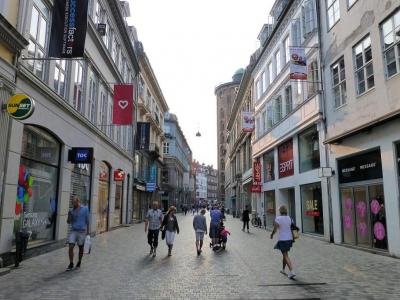
Stroget, a pedestrian thoroughfare in the heart of Copenhagen, is renowned as one of Europe's longest shopping streets, extending over 1.1 kilometers. Initially known as Ruten until the late 19th century, the street has been a fashionable hub in the Danish capital since its layout was established in 1728 following a major fire. The architecture along Stroget mainly dates from the late 19th and early 20th centuries, with the oldest building erected in 1616.
Stroget is renowned for its extensive shopping opportunities. It hosts a wide range of shops, from international brands to local boutiques, offering fashion, design, jewelry, and more. It's a shopper's paradise and attracts both locals and tourists alike.
Throughout the day, especially during weekends and holidays, Stroget comes alive with street performers, musicians, and entertainers. This adds to the lively atmosphere and creates a festive mood.
Numerous cafés, restaurants, and bars line Stroget, offering a variety of cuisines and refreshments. It's a great place to stop for a meal or a coffee break while soaking in the bustling ambiance.
Stroget is renowned for its extensive shopping opportunities. It hosts a wide range of shops, from international brands to local boutiques, offering fashion, design, jewelry, and more. It's a shopper's paradise and attracts both locals and tourists alike.
Throughout the day, especially during weekends and holidays, Stroget comes alive with street performers, musicians, and entertainers. This adds to the lively atmosphere and creates a festive mood.
Numerous cafés, restaurants, and bars line Stroget, offering a variety of cuisines and refreshments. It's a great place to stop for a meal or a coffee break while soaking in the bustling ambiance.

4) Christiania (must see)
Christiania is a popular "anarchist commune" and "partially autonomous intentional community" in Copenhagen. It is spread over 7.7 hectares (19 acres) in the borough of Christianshavn and houses about 850 to 1,000 residents.
Christiania has been a source of controversy since its creation in a squatted military area in 1971. Its cannabis trade was tolerated by authorities until 2004. Since then, relations between Christiania and Danish authorities have been strained. Since the beginning of the 2010s, the situation has been normalized and the common Danish law now applies there.
Christiania is considered to be the fourth largest tourist attraction in Copenhagen (and it has half a million visitors annually), and abroad it is a well-known "brand" for the supposedly progressive and liberated Danish lifestyle. Many Danish businesses and organizations also use Christiania as a showplace for their foreign friends and guests. The purpose is to show something Danish that cannot be found anywhere else in the world.
The people in Christiania have developed their own set of rules, independent of the Danish government. The rules forbid stealing, violence, guns, knives, bulletproof vests, hard drugs and bikers' colors. Additionally, within Christiania itself, no private cars are allowed. However, some 100+ cars are owned by residents and need to be parked on the streets surrounding the Freetown. After negotiating with city authorities, Christiania has agreed to establish parking areas for residents' own cars on its territory. As of 2005, parking space for only 14 cars had been established within the area.
Tip:
Come here to see another part of Copenhagen, but best to not come on your own!
Christiania has been a source of controversy since its creation in a squatted military area in 1971. Its cannabis trade was tolerated by authorities until 2004. Since then, relations between Christiania and Danish authorities have been strained. Since the beginning of the 2010s, the situation has been normalized and the common Danish law now applies there.
Christiania is considered to be the fourth largest tourist attraction in Copenhagen (and it has half a million visitors annually), and abroad it is a well-known "brand" for the supposedly progressive and liberated Danish lifestyle. Many Danish businesses and organizations also use Christiania as a showplace for their foreign friends and guests. The purpose is to show something Danish that cannot be found anywhere else in the world.
The people in Christiania have developed their own set of rules, independent of the Danish government. The rules forbid stealing, violence, guns, knives, bulletproof vests, hard drugs and bikers' colors. Additionally, within Christiania itself, no private cars are allowed. However, some 100+ cars are owned by residents and need to be parked on the streets surrounding the Freetown. After negotiating with city authorities, Christiania has agreed to establish parking areas for residents' own cars on its territory. As of 2005, parking space for only 14 cars had been established within the area.
Tip:
Come here to see another part of Copenhagen, but best to not come on your own!
5) Christiansborg Palace (must see)
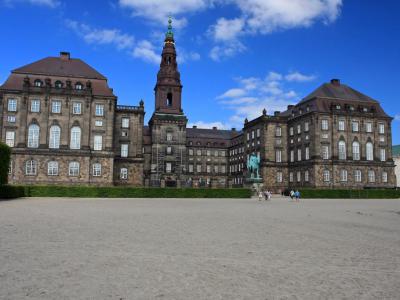
Christiansborg Palace is where Danish democracy, royal pomp, and a bit of architectural resilience come together. This place isn’t just a palace but the unicorn of government buildings. It’s the only structure in the world that houses all three branches of government: the Parliament, the Prime Minister’s Office, and the Supreme Court. Talk about multitasking...
The current palace is the third on this site. The original castle built by the city's founder, Bishop Absalon, stood here since 1167. Its remains, along with those of its successor – Copenhagen Castle – have been excavated and are now visible in the subterranean section at Christiansborg. After suffering two major fires, in 1794 and 1884, the palace was rebuilt in a historicist Neo-baroque style by 1928.
Often called "the Castle of the Realm" or simply "the Castle", Christiansborg is also used by the Danish monarchy, hosting dignitaries in its lavish Royal Reception Rooms, holding ceremonies in the Palace Chapel, and presumably waving regally at horses in the Royal Stables.
Speaking of horses-here’s a bit of drama. King Christian IX's equestrian statue at the Riding Ground Complex, unveiled in 1927, caused controversy. The horse model for it was sourced from Hanover, Germany, thus causing discontent among Danish breeders.
Owned by the Danish Government, parts of Christiansborg are open to the public. If you have a Copenhagen Card for tourists, admission to the royal reception rooms (as well as the stables, kitchen, and underground ruins) is free. Highlights of the experience include the Queen's china collection, her ornate ceremonial library, and the Great Hall, adorned with tapestries chronicling Denmark's history.
But even if you don't have the card, no problem. You can still wander the courtyard and head up the Tower-Copenhagen’s tallest. The views are impeccable. The elevator-tiny but mighty. And the security check is mildly official.
Tip:
Always look out for the free English one-hour tours included in your ticket (they run at 3 pm each day but also at different times during weekends: 12 pm or 2pm). That is of course unless you'd rather wander the rooms on your own, reading the descriptions.
The current palace is the third on this site. The original castle built by the city's founder, Bishop Absalon, stood here since 1167. Its remains, along with those of its successor – Copenhagen Castle – have been excavated and are now visible in the subterranean section at Christiansborg. After suffering two major fires, in 1794 and 1884, the palace was rebuilt in a historicist Neo-baroque style by 1928.
Often called "the Castle of the Realm" or simply "the Castle", Christiansborg is also used by the Danish monarchy, hosting dignitaries in its lavish Royal Reception Rooms, holding ceremonies in the Palace Chapel, and presumably waving regally at horses in the Royal Stables.
Speaking of horses-here’s a bit of drama. King Christian IX's equestrian statue at the Riding Ground Complex, unveiled in 1927, caused controversy. The horse model for it was sourced from Hanover, Germany, thus causing discontent among Danish breeders.
Owned by the Danish Government, parts of Christiansborg are open to the public. If you have a Copenhagen Card for tourists, admission to the royal reception rooms (as well as the stables, kitchen, and underground ruins) is free. Highlights of the experience include the Queen's china collection, her ornate ceremonial library, and the Great Hall, adorned with tapestries chronicling Denmark's history.
But even if you don't have the card, no problem. You can still wander the courtyard and head up the Tower-Copenhagen’s tallest. The views are impeccable. The elevator-tiny but mighty. And the security check is mildly official.
Tip:
Always look out for the free English one-hour tours included in your ticket (they run at 3 pm each day but also at different times during weekends: 12 pm or 2pm). That is of course unless you'd rather wander the rooms on your own, reading the descriptions.
