Custom Walk in Budapest, Hungary by iceburg1hb_af3554 created on 2026-05-12
Guide Location: Hungary » Budapest
Guide Type: Custom Walk
# of Sights: 8
Tour Duration: 1 Hour(s)
Travel Distance: 1.4 Km or 0.9 Miles
Share Key: ZSR2P
Guide Type: Custom Walk
# of Sights: 8
Tour Duration: 1 Hour(s)
Travel Distance: 1.4 Km or 0.9 Miles
Share Key: ZSR2P
How It Works
Please retrieve this walk in the GPSmyCity app. Once done, the app will guide you from one tour stop to the next as if you had a personal tour guide. If you created the walk on this website or come to the page via a link, please follow the instructions below to retrieve the walk in the app.
Retrieve This Walk in App
Step 1. Download the app "GPSmyCity: Walks in 1K+ Cities" on Apple App Store or Google Play Store.



Step 2. In the GPSmyCity app, download(or launch) the guide "Budapest Map and Walking Tours".
Step 3. Tap the menu button located at upper right corner of the "Walks" screen and select "Retrieve custom walk". Enter the share key: ZSR2P
1) Central Market Hall (Nagyvasarcsarnok) (must see)
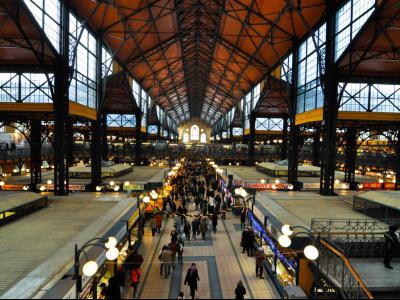
Budapest’s Central Market is a must-visit for anyone new to the Hungarian capital. As the largest and oldest marketplace in the city, it traces its origins back to the late 19th century, when Budapest’s first mayor, Karl Kamermayer, helped fund its construction out of his own pocket. Under Kamermayer’s leadership, the city rose to become not only Hungary’s political and economic heart but also one of Europe’s thriving cultural centers.
Complete with a grand neo-Gothic entrance gate, the market’s steel-framed structure stretches across three floors and covers around ten thousand square meters. One of its most distinctive features is the roof, restored in the 1990s and decorated with colorful tiles. After suffering heavy damage during both world wars, the structure lay dormant for years, but careful restorations in the 1990s have returned it to its former glory.
Now, if you’re a foodie with a taste for regional specialties, this place will likely feel like paradise. Stalls brim with Hungarian favorites: lángos topped with sour cream and cheese, rich paprika, bottles of golden Tokaji wine, túró rudi snacks, caviar, handcrafted sausages, and pickled specialties like cucumbers, cabbage, beets, and garlic. The ground floor mostly hosts butchers, bakers, spice vendors, and spirit sellers, while the upper level is where you’ll find eateries and souvenir shops. Be sure to stop at the lángos stand upstairs, widely considered the best, and pair the treat with a refreshing regional beer. Down in the basement, a supermarket, a fish market, and rows of pickle vendors complete the offering.
Beyond food, the market also offers a wide range of handicrafts, folk art, porcelain, crystal, and souvenirs of various sort. Prices are generally reasonable, though you might want to browse a bit to find the best deals since many stalls carry similar goods. Most transactions are cash-based, though souvenir vendors often accept both Hungarian Forints and Euros, making shopping somewhat easier.
Complete with a grand neo-Gothic entrance gate, the market’s steel-framed structure stretches across three floors and covers around ten thousand square meters. One of its most distinctive features is the roof, restored in the 1990s and decorated with colorful tiles. After suffering heavy damage during both world wars, the structure lay dormant for years, but careful restorations in the 1990s have returned it to its former glory.
Now, if you’re a foodie with a taste for regional specialties, this place will likely feel like paradise. Stalls brim with Hungarian favorites: lángos topped with sour cream and cheese, rich paprika, bottles of golden Tokaji wine, túró rudi snacks, caviar, handcrafted sausages, and pickled specialties like cucumbers, cabbage, beets, and garlic. The ground floor mostly hosts butchers, bakers, spice vendors, and spirit sellers, while the upper level is where you’ll find eateries and souvenir shops. Be sure to stop at the lángos stand upstairs, widely considered the best, and pair the treat with a refreshing regional beer. Down in the basement, a supermarket, a fish market, and rows of pickle vendors complete the offering.
Beyond food, the market also offers a wide range of handicrafts, folk art, porcelain, crystal, and souvenirs of various sort. Prices are generally reasonable, though you might want to browse a bit to find the best deals since many stalls carry similar goods. Most transactions are cash-based, though souvenir vendors often accept both Hungarian Forints and Euros, making shopping somewhat easier.
2) Millenium Antik
Established in 2000, Millennium Antik is an impressive antique shop located at Váci Street, in the very heart of Budapest. The store is a treasure trove full of 19th and 20th century antiques, such as Herendi and foreign porcelains, beautiful old glass and ceramic objects, silver plates, bronze sculptures, lamps, chandeliers, furniture pieces, as well as glazed porcelains, vases, ceramic pots, bowls and nostalgic figurines.
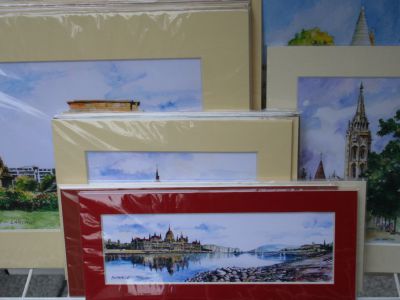
What to buy here: Paintings of the Danube.
Walk along the Danube on a golden Autumn morning, and you’ll be sure to spot Hungarian artists sitting by the water with their sketchpads and paints by their side. The Danube river, which flows from Germany down to the black sea, divides Budapest into its two halves: Buda and Pest. Paintings of this river, and the beautiful bridges that cross it, are a staple of Hungarian market stands. Browsing through the many different depictions of the river, you’ll find paintings, pastel drawings and black and white sketches. For an image that captures the color, the excitement and the energy of the city, try a beautiful water color painting. Or for a taste of an older, more elegant Budapest, search for a charcoal drawing. Pricing varies greatly with the scale of the pictures- smaller pictures will be around $10, while larger images will fall in the $30-$50 price range. Although you can find individual artists selling their work by the river, Millenium Antik carries a wide selection of paintings, prints and drawing. The store is open on weekdays from 10 am to 6 pm and on Saturday from 10 am to 3 pm.
What to buy here: Paintings of the Danube.
Walk along the Danube on a golden Autumn morning, and you’ll be sure to spot Hungarian artists sitting by the water with their sketchpads and paints by their side. The Danube river, which flows from Germany down to the black sea, divides Budapest into its two halves: Buda and Pest. Paintings of this river, and the beautiful bridges that cross it, are a staple of Hungarian market stands. Browsing through the many different depictions of the river, you’ll find paintings, pastel drawings and black and white sketches. For an image that captures the color, the excitement and the energy of the city, try a beautiful water color painting. Or for a taste of an older, more elegant Budapest, search for a charcoal drawing. Pricing varies greatly with the scale of the pictures- smaller pictures will be around $10, while larger images will fall in the $30-$50 price range. Although you can find individual artists selling their work by the river, Millenium Antik carries a wide selection of paintings, prints and drawing. The store is open on weekdays from 10 am to 6 pm and on Saturday from 10 am to 3 pm.
Image Courtesy of Sarah Laeuchli.
3) Folkart Centrum
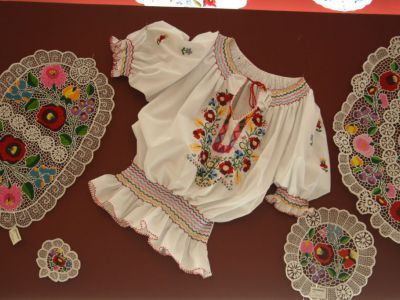
Put a little color into your wardrobe, or the wardrobe of a friend, by bringing a traditional Hungarian shirt back from Budapest. Although no longer worn every day, Hungarians still enjoy donning their more traditional garb for folk dancing events or national celebrations. Folk costumes from Hungary are very colorful and have beautiful designs embroidered on them. Women’s clothing tends to consist of flared skirts with petticoats, and blouses with puffed sleeves. Men’s costumes tend to be long sleeved and complimented with a vest or a sash. Boots and embroidered shoes are also a staple of their traditional dress. Folk shirts are usually white and hand embroidered with colorful designs. Sometimes ribbons are used to decorate the collar or cuffs.
Vaci Street (Vaci utca) is home to a host of shops that sell these wonderful souvenirs. Particularly recommended is Folkart Centrum at 58. Vaci utca. Located near the old town hall, their selection is vast and the look and feel of the shop are charming. Folkart Centrum is open every day of the week from 10:00 am-7:00 pm.
Vaci Street (Vaci utca) is home to a host of shops that sell these wonderful souvenirs. Particularly recommended is Folkart Centrum at 58. Vaci utca. Located near the old town hall, their selection is vast and the look and feel of the shop are charming. Folkart Centrum is open every day of the week from 10:00 am-7:00 pm.
Image Courtesy of Sarah Laeuchli.
4) Molnar's Kurtoskalacs
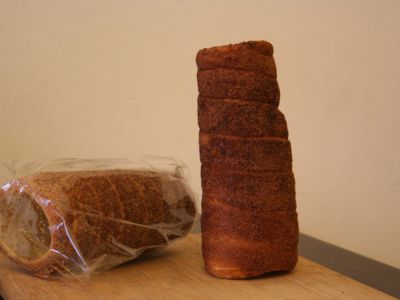
Originally baked by Hungarian settlers in Transylvania, Kurtos Kalacs (“Chimney Cakes”, so named because of their cylindrical shape and the steam that rises out of the hot, freshly baked pastry) are one of the oldest, and arguably most delicious, pastries produced in Hungary. Although their traditional use was to celebrate weddings, christenings and the arrival of important guests, Kurtos Kalacs are now sold fresh on street corners all over Budapest.
When you buy these delicious treats from a street vendor, you’ll probably be able to see the vendor’s special oven turning the freshly baked cakes over the heat. Bakers take ribbons of thin dough, wind them around wooden cylinders and then bake them over an open fire. Afterwards, the baked cakes are sprinkled with caramelized sugar and other flavorings like vanilla, chocolate, coconut and cinnamon. And, as if that weren’t enough, the desert is often then topped off with almonds or walnuts. Kurtos Kalacs are especially popular around Christmas time when you can purchase them hot in the Christmas markets. At any time of year, however, they are a delicious and inexpensive gift to bring back with you from Budapest. The cakes will cost around $2-4 a piece, depending on where you purchase them.
On Vaci Street you will find a shop, Molnar's Kurtoskalacs, that is open from Monday to Friday 7:00 am - 9:00 pm and on the weekend 9:00 am - 6:00 pm. When you smell the baking Kalacs, you won’t be able to resist entering this store.
When you buy these delicious treats from a street vendor, you’ll probably be able to see the vendor’s special oven turning the freshly baked cakes over the heat. Bakers take ribbons of thin dough, wind them around wooden cylinders and then bake them over an open fire. Afterwards, the baked cakes are sprinkled with caramelized sugar and other flavorings like vanilla, chocolate, coconut and cinnamon. And, as if that weren’t enough, the desert is often then topped off with almonds or walnuts. Kurtos Kalacs are especially popular around Christmas time when you can purchase them hot in the Christmas markets. At any time of year, however, they are a delicious and inexpensive gift to bring back with you from Budapest. The cakes will cost around $2-4 a piece, depending on where you purchase them.
On Vaci Street you will find a shop, Molnar's Kurtoskalacs, that is open from Monday to Friday 7:00 am - 9:00 pm and on the weekend 9:00 am - 6:00 pm. When you smell the baking Kalacs, you won’t be able to resist entering this store.
5) The Handicraft store
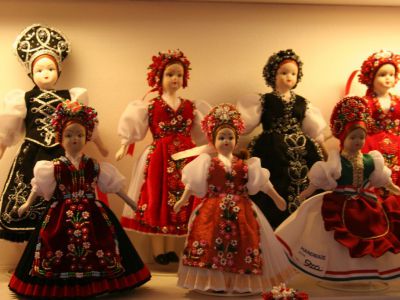
Hungarian dolls have been exhibited at museums around the world. Their beautiful costumes, delicate features and embroidered hats, make them admired wherever they are shown. Hungarian dolls make a wonderful souvenir to bring back either as a gift or a collectible item. These beautiful handmade dolls come dressed in either traditional Hungarian peasant costumes, or in elegant, old fashioned, ball gowns. Their beautiful porcelain faces are hand painted and the stitching, beading and embroidery on their dresses are all done by hand.
You can buy small, six inch dolls to set on a dressing table or full sized dolls to display. The smallest dolls cost around $6.50, medium sized ones around $35 and the beautiful, large dolls can cost upwards of $150.
The Handicraft store on Vaci Street is a treasure trove of dolls, embroidery, and traditional Hungarian crafts. The staff speak English and the prices are quite reasonable. They are open every day of the week from 9:00am-8:00pm.
You can buy small, six inch dolls to set on a dressing table or full sized dolls to display. The smallest dolls cost around $6.50, medium sized ones around $35 and the beautiful, large dolls can cost upwards of $150.
The Handicraft store on Vaci Street is a treasure trove of dolls, embroidery, and traditional Hungarian crafts. The staff speak English and the prices are quite reasonable. They are open every day of the week from 9:00am-8:00pm.
6) Laszlo Vass Shoes
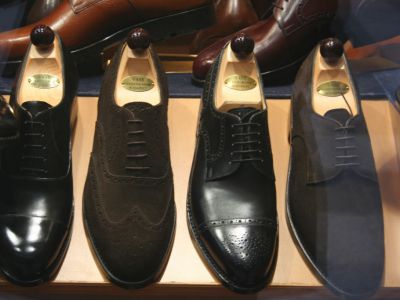
Nestled in the heart of Budapest’s biggest shopping district, Laszlo Vass’ shoe store is a must visit for travelers to Hungary. Vass is one of the last remaining craftsmen to create handmade leather shoes using traditional methods, and his shoes are famous for their beauty and their durability. In the store’s workshop, Vass and his employees use the same tools that craftsmen used centuries ago in order to create shoes unlike any produced in factories. Only high quality leather is used and then cut, shaped and patterned by hand. Using wooden pegs, nails and hammers the upper part of the shoe is stretched apart and sewed on last.
Vass’ techniques are so fascinating that he and his partners have written a book about their craft, “Handmade Shoes For Men,” which has been translated into over eight languages. Vass’ most famous shoe, The Budapest Shoe, is famous for its comfort, durability and easy elegance. Pricing for these shoes range from several hundred dollars for the cheaper models to a thousand dollars for the more expensive, custom made shoes.
Laszlo Vass’ shop is located on Haris Koz, right off Vaci Street. You may order an already crafted shoe or request a custom made one.
Vass’ techniques are so fascinating that he and his partners have written a book about their craft, “Handmade Shoes For Men,” which has been translated into over eight languages. Vass’ most famous shoe, The Budapest Shoe, is famous for its comfort, durability and easy elegance. Pricing for these shoes range from several hundred dollars for the cheaper models to a thousand dollars for the more expensive, custom made shoes.
Laszlo Vass’ shop is located on Haris Koz, right off Vaci Street. You may order an already crafted shoe or request a custom made one.
7) Herend Porcelain
The Hungarian traditional of hand crafted porcelain dates back hundreds of years. Truly the porcelain of royalty, Herend porcelain has been used in royal courts from Austria to Mexico. Queen Victoria was so impressed by Hungarian porcelain that she ordered some for her palace.
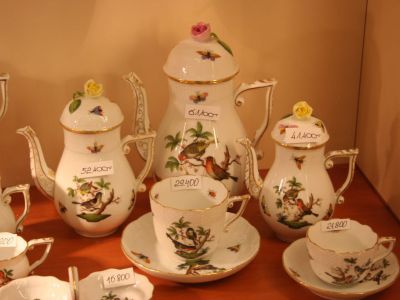
Today, Herend still make their famous products at a small factory in the Hungarian countryside. Using a mixture of quartz, kaolin and feldspar the porcelain is fired at tremendous heat and then hand painted by craftsman. Beautiful coffee cups, soup tureens, plates and bowls are decorated with patterns of leaves, birds and flowers. Herend also makes beautiful porcelain figurines-- delicate, hand painted figures of carnival workers, horses and traditional soldiers. Herend porcelain is not cheap, running anywhere from between $75-$300, but it is well worth the price. There are a lot of imitation Herend products sold in Budapest, so you’ll want to be careful about where you buy it.
The best place to purchase Herend porcelain is from one of the company’s show rooms around the city, such as the Herend Porcelain store at Vaci Street 19-21. They are open every day from 10:00am-7:00pm and their employees speak quite good English.
Today, Herend still make their famous products at a small factory in the Hungarian countryside. Using a mixture of quartz, kaolin and feldspar the porcelain is fired at tremendous heat and then hand painted by craftsman. Beautiful coffee cups, soup tureens, plates and bowls are decorated with patterns of leaves, birds and flowers. Herend also makes beautiful porcelain figurines-- delicate, hand painted figures of carnival workers, horses and traditional soldiers. Herend porcelain is not cheap, running anywhere from between $75-$300, but it is well worth the price. There are a lot of imitation Herend products sold in Budapest, so you’ll want to be careful about where you buy it.
The best place to purchase Herend porcelain is from one of the company’s show rooms around the city, such as the Herend Porcelain store at Vaci Street 19-21. They are open every day from 10:00am-7:00pm and their employees speak quite good English.
Image Courtesy of Sarah Laeuchli.
8) Ajka Crystal
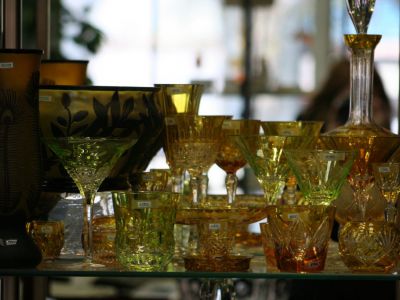
Founded in 1897, the Ajka Crystal Factory is world famous for the beautiful handmade crystal products they produce. Their beautiful tableware and decor products are available in up to 20 different colors and come in beautiful, luxurious gift boxes. At the factory, Ajka’s master glass blowers blow the glass into a wooden mold and then subject it to a continuous cooling process for four hours. The crystal then has a design etched into it by hand.
The factory’s unique process insures that no two pieces of Ajka crystal are ever exactly alike. No wonder the company boasts that as you hold a piece of Ajka crystal “not only are you touching a masterpiece, but also the heart of the master.” If you can’t make it out into the country side to visit the factory, the company has a number of beautiful show rooms around Budapest. Their store at 11. Kossuth Lajos is especially lovely and has a wonderful selection of Ajka products available. It is open Monday through Friday from 10am-6pm.
The factory’s unique process insures that no two pieces of Ajka crystal are ever exactly alike. No wonder the company boasts that as you hold a piece of Ajka crystal “not only are you touching a masterpiece, but also the heart of the master.” If you can’t make it out into the country side to visit the factory, the company has a number of beautiful show rooms around Budapest. Their store at 11. Kossuth Lajos is especially lovely and has a wonderful selection of Ajka products available. It is open Monday through Friday from 10am-6pm.
Image Courtesy of Sarah Laeuchli.
