Custom Walk in Inverness, Scotland by millerannrachel_4ce7a6 created on 2026-05-28
Guide Location: Scotland » Inverness
Guide Type: Custom Walk
# of Sights: 11
Tour Duration: 2 Hour(s)
Travel Distance: 2.4 Km or 1.5 Miles
Share Key: 3LF43
Guide Type: Custom Walk
# of Sights: 11
Tour Duration: 2 Hour(s)
Travel Distance: 2.4 Km or 1.5 Miles
Share Key: 3LF43
How It Works
Please retrieve this walk in the GPSmyCity app. Once done, the app will guide you from one tour stop to the next as if you had a personal tour guide. If you created the walk on this website or come to the page via a link, please follow the instructions below to retrieve the walk in the app.
Retrieve This Walk in App
Step 1. Download the app "GPSmyCity: Walks in 1K+ Cities" on Apple App Store or Google Play Store.



Step 2. In the GPSmyCity app, download(or launch) the guide "Inverness Map and Walking Tours".
Step 3. Tap the menu button located at upper right corner of the "Walks" screen and select "Retrieve custom walk". Enter the share key: 3LF43
1) Inverness Cathedral (must see)
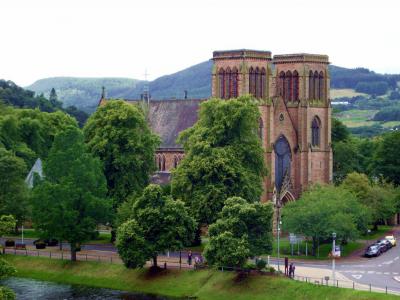
Inverness Cathedral is a Scottish Episcopal Church on the banks of the River Ness. The cathedral, also known as the Cathedral Church of Saint Andrew, is the seat of of the Bishop of Moray, Ross and Caithness. It was the first new Protestant cathedral built in Britain after the Reformation.
Inverness Cathedral was built in 1869 from a design by architect Alexander Ross. The cathedral is made from red tarradale stone and peterhead granite. The cathedral is noted for having the most northerly change-ringing church bells in the world.
The cathedral welcomes visitors throughout the year. The church doors are open from 10 AM to 4 PM daily. Likewise, the cathedral's gift shop and cafe are open every day except Christmas. A cathedral supervisor is on-hand to help with any questions.
Along with church services, Inverness Cathedral regularly hosts live music events, morning coffee and special events. Tourists are welcome to attend church services and any of the special events as they please.
Inverness Cathedral was built in 1869 from a design by architect Alexander Ross. The cathedral is made from red tarradale stone and peterhead granite. The cathedral is noted for having the most northerly change-ringing church bells in the world.
The cathedral welcomes visitors throughout the year. The church doors are open from 10 AM to 4 PM daily. Likewise, the cathedral's gift shop and cafe are open every day except Christmas. A cathedral supervisor is on-hand to help with any questions.
Along with church services, Inverness Cathedral regularly hosts live music events, morning coffee and special events. Tourists are welcome to attend church services and any of the special events as they please.
2) Highland House of Fraser
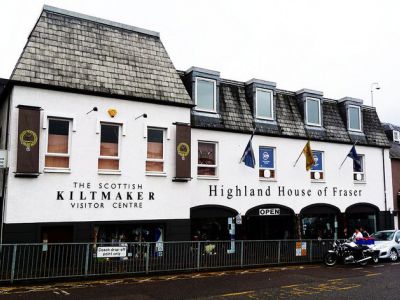
The Highland House of Fraser is a kilt shop located on Huntly Street near the banks of the River Ness. The Highland House of Fraser is a fun stop for those who are interested in the traditional garb of Scotland. It is not simply a shop but also the location of the Scottish Kiltmaker Visitor Centre.
Visitors will learn about the history and tradition of the kilt from its invention to today. They will see the kiltmaking workshop that has tartans and various costumes on display. There is also a short film that visitors can watch that has a humorous take on the history of the kilt.
Visitors to the Highland House of Fraser can speak with kiltmakers and learn about this specialized art. They can watch the making of the kilt as they learn about cutting, pleating and stitching the fabric. They will also learn the correct way to wear a kilt, which is a common question among visitors to Scotland.
Along with kilts, the Highland House of Fraser offers numerous souvenirs. Items like face masks, jewelry and ornaments are offered in the store.
Visitors will learn about the history and tradition of the kilt from its invention to today. They will see the kiltmaking workshop that has tartans and various costumes on display. There is also a short film that visitors can watch that has a humorous take on the history of the kilt.
Visitors to the Highland House of Fraser can speak with kiltmakers and learn about this specialized art. They can watch the making of the kilt as they learn about cutting, pleating and stitching the fabric. They will also learn the correct way to wear a kilt, which is a common question among visitors to Scotland.
Along with kilts, the Highland House of Fraser offers numerous souvenirs. Items like face masks, jewelry and ornaments are offered in the store.
3) Greig Street Bridge (must see)
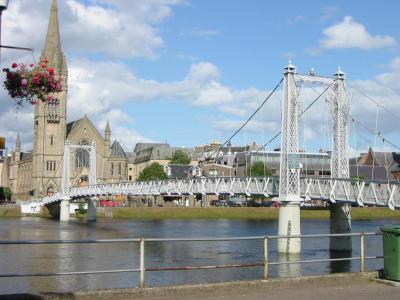
The Greig Street Bridge is a pedestrian footbridge that crosses the River Ness. The Greig Street Bridge can be reached from Bank Street on the east side of the river or Huntly Street to the West.
The suspension bridge was completed in 1881 by civil engineer C. Manners. It is made of two side spans that are 67 feet and a central span of 201 feet. The total distance of the bridge is 335 feet long.
The bridge has warren trusses with handrails that pedestrians can use as they pass over the river. Some of the most notable features of the bridge are the ornamental towers on each side. The towers use latticework to create a unique visage that makes the bridge as attractive to view from far away as up close.
Visitors should also take note of the arches beneath the towers. Though they are functional, they also form the perfect frame for a photo on the bridge with the Free North Church in the distance.
The suspension bridge was completed in 1881 by civil engineer C. Manners. It is made of two side spans that are 67 feet and a central span of 201 feet. The total distance of the bridge is 335 feet long.
The bridge has warren trusses with handrails that pedestrians can use as they pass over the river. Some of the most notable features of the bridge are the ornamental towers on each side. The towers use latticework to create a unique visage that makes the bridge as attractive to view from far away as up close.
Visitors should also take note of the arches beneath the towers. Though they are functional, they also form the perfect frame for a photo on the bridge with the Free North Church in the distance.
4) Dunbar's Hospital
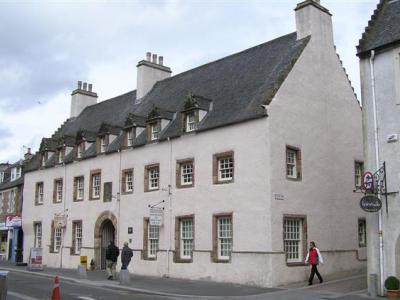
Dunbar's Hospital was built in 1668 as a hospital and a home for the impoverished. The hospital has a rough-cast, harled finish and dormer windows surrounded by decorative brickwork. The arched doorway offers the same brickwork and a protective iron gate.
Above the door is a plaque that shows the coat of arms of Provost Alexander Dunbar, founder of the hospital. This plaque, with a date of 1676, is a reproduction of the original. Those who wish to see the original plate can find it at the Inverness Museum.
Dunbar's Hospital was used as a school until the Royal Academy opened in 1792. It was also, at times, divided into apartments, used for shops and as a senior citizen's center. It briefly returned to use as a hospital during the 1849 Cholera Epidemic. Today, the hospital is divided into a senior citizen's day center and a restaurant that is open on weekends from 9 AM to 4 PM.
The hospital is rumored to have been built from stone that was discarded from Oliver Cromwell's destroyed citadel.
Above the door is a plaque that shows the coat of arms of Provost Alexander Dunbar, founder of the hospital. This plaque, with a date of 1676, is a reproduction of the original. Those who wish to see the original plate can find it at the Inverness Museum.
Dunbar's Hospital was used as a school until the Royal Academy opened in 1792. It was also, at times, divided into apartments, used for shops and as a senior citizen's center. It briefly returned to use as a hospital during the 1849 Cholera Epidemic. Today, the hospital is divided into a senior citizen's day center and a restaurant that is open on weekends from 9 AM to 4 PM.
The hospital is rumored to have been built from stone that was discarded from Oliver Cromwell's destroyed citadel.
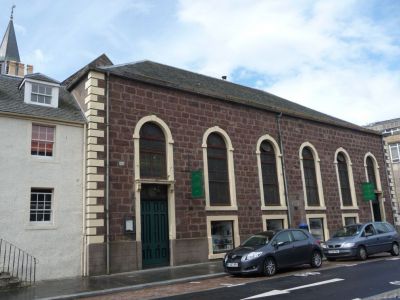
5) Leakey's Second Hand Bookshop
Nestled in the heart of Inverness’s Old Town, Leakey’s Second Hand Bookshop is a haven for book lovers and history enthusiasts alike. Occupying the former Saint Mary’s Gaelic Church (built in 1793), this family-run treasure trove boasts over 100,000 second-hand and antiquarian books, along with an impressive array of maps and prints. Since opening its doors to the public in 1979, Leakey’s has become the largest second-hand bookshop in Scotland and a must-see destination for bibliophiles from across the globe.
The charm of Leakey’s lies not only in its vast collection but also in its unique atmosphere. The towering bookshelves are complemented by a wood-burning fireplace that fills the space with warmth, adding a cozy touch that enchants visitors. For those who need a break from browsing, a mezzanine café offers coffee, light snacks, and temporary exhibitions of local art, making the experience even more memorable.
While most of Leakey’s collection is available only to in-person visitors, rare and antiquarian books have been listed online through AbeBooks since 2010, with over 8,000 titles currently available. This mix of modern convenience and old-world charm ensures something for everyone.
Whether you’re hunting for a literary gem, marveling at the history of the converted church, or simply enjoying the atmosphere by the fire, Leakey’s is a quintessential stop on any trip to Inverness.
The charm of Leakey’s lies not only in its vast collection but also in its unique atmosphere. The towering bookshelves are complemented by a wood-burning fireplace that fills the space with warmth, adding a cozy touch that enchants visitors. For those who need a break from browsing, a mezzanine café offers coffee, light snacks, and temporary exhibitions of local art, making the experience even more memorable.
While most of Leakey’s collection is available only to in-person visitors, rare and antiquarian books have been listed online through AbeBooks since 2010, with over 8,000 titles currently available. This mix of modern convenience and old-world charm ensures something for everyone.
Whether you’re hunting for a literary gem, marveling at the history of the converted church, or simply enjoying the atmosphere by the fire, Leakey’s is a quintessential stop on any trip to Inverness.
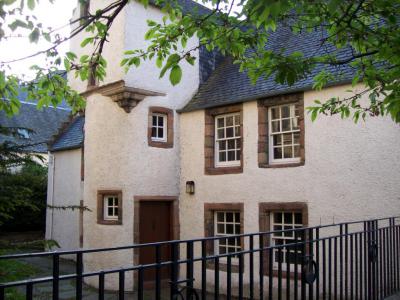
6) Abertarff House
Abertarff House, built in 1593, holds the distinction of being the oldest residential house in Inverness. Nestled on Church Street (formerly the Kirkgate), this 2½-storey townhouse showcases traditional 16th- and early 17th-century Scottish architecture, complete with crow-stepped gables and a prominent projecting turnpike staircase.
Briefly owned by the Fraser of Lovat family-renowned for their Jacobite connection during the Battle of Culloden-the house transitioned to various owners over the centuries. In the 19th century, it was acquired by the Commercial Bank of Scotland but later fell into disrepair after being divided for housing. Abertarff House found new life when it was gifted to the National Trust for Scotland in 1963 and subsequently restored in 1966.
Over its storied history, the house has served multiple purposes, including as the headquarters of the Gaelic Association (An Comunn Gàidhealach), a shop, and the regional office for the Trust. Today, Abertarff House welcomes visitors with two open downstairs rooms, offering insights into 17th-century life in Inverness. Plans are underway to open additional exhibition spaces upstairs in 2024.
Knowledgeable staff are on hand to share the building's rich history, recount life in the 1600s, and guide visitors to other notable sites in the Highlands, including Culloden Battlefield, Hugh Miller’s Cottage, and Brodie Castle.
Lovingly cared for by the National Trust for Scotland, Abertarff House is a remarkable reminder of Inverness's architectural and cultural heritage.
Briefly owned by the Fraser of Lovat family-renowned for their Jacobite connection during the Battle of Culloden-the house transitioned to various owners over the centuries. In the 19th century, it was acquired by the Commercial Bank of Scotland but later fell into disrepair after being divided for housing. Abertarff House found new life when it was gifted to the National Trust for Scotland in 1963 and subsequently restored in 1966.
Over its storied history, the house has served multiple purposes, including as the headquarters of the Gaelic Association (An Comunn Gàidhealach), a shop, and the regional office for the Trust. Today, Abertarff House welcomes visitors with two open downstairs rooms, offering insights into 17th-century life in Inverness. Plans are underway to open additional exhibition spaces upstairs in 2024.
Knowledgeable staff are on hand to share the building's rich history, recount life in the 1600s, and guide visitors to other notable sites in the Highlands, including Culloden Battlefield, Hugh Miller’s Cottage, and Brodie Castle.
Lovingly cared for by the National Trust for Scotland, Abertarff House is a remarkable reminder of Inverness's architectural and cultural heritage.
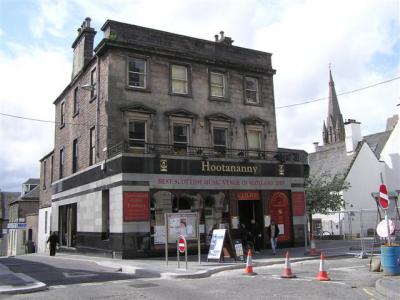
7) Hootananny - Ceilidh Bar
Nestled on Church Street in the heart of Inverness, Hootananny – Ceilidh Bar is a cornerstone of Scotland’s traditional music scene and one of the busiest pubs in the Highland capital. Renowned throughout the country, the venue is celebrated for its live traditional Scottish folk music, which graces its ground-floor Ceilidh Bar nearly every night. Visitors and locals alike are encouraged to check the bar’s program for upcoming performances, as there’s always something special in store.
For over 20 years, Hootananny has been a cherished platform for both emerging and established talent. This family-run business has hosted iconic artists like Mumford and Sons, Sam Fender, Jake Bugg, Russell Crowe, Dougie MacLean, and Skerryvore, earning its place as a vital hub in Scotland's grassroots music scene. The pub’s excellence was recognized with Scotland’s Best Live Music Venue award in 2019, a proud reflection of its dedication to fostering community spirit and exceptional live music experiences.
Hootananny isn’t just about music-it’s a multi-award-winning venue, crowned Inverness’s Best Pub of the Year by the Inverness City Advertiser for eight consecutive years. Its three live music rooms, two vibrant bars, and a menu featuring superb Thai food create a lively yet welcoming atmosphere, making it a must-visit destination.
Whether you’re there to enjoy a pint, savor the food, or immerse yourself in the soul-stirring sounds of Scotland’s musical heritage, Hootananny Ceilidh Bar offers an unforgettable experience where live music thrives and community flourishes.
For over 20 years, Hootananny has been a cherished platform for both emerging and established talent. This family-run business has hosted iconic artists like Mumford and Sons, Sam Fender, Jake Bugg, Russell Crowe, Dougie MacLean, and Skerryvore, earning its place as a vital hub in Scotland's grassroots music scene. The pub’s excellence was recognized with Scotland’s Best Live Music Venue award in 2019, a proud reflection of its dedication to fostering community spirit and exceptional live music experiences.
Hootananny isn’t just about music-it’s a multi-award-winning venue, crowned Inverness’s Best Pub of the Year by the Inverness City Advertiser for eight consecutive years. Its three live music rooms, two vibrant bars, and a menu featuring superb Thai food create a lively yet welcoming atmosphere, making it a must-visit destination.
Whether you’re there to enjoy a pint, savor the food, or immerse yourself in the soul-stirring sounds of Scotland’s musical heritage, Hootananny Ceilidh Bar offers an unforgettable experience where live music thrives and community flourishes.
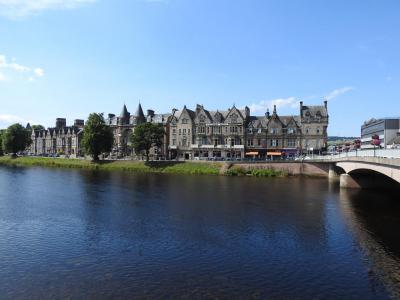
8) River Ness
The River Ness is a picturesque short river located in the Great Glen of Scotland, originating at Loch Dochfour, which lies at the northern end of the famous Loch Ness, and flowing northeast for six miles (10 kilometers) before emptying into the Moray Firth at Inverness. The river’s course runs parallel to the Caledonian Canal for its initial stretch, offering serene views and rich historical significance.
One of the river’s highlights is the Ness Islands, a cluster of wooded islets located within the river at Inverness. These islands are connected to the shore by charming footbridges, providing visitors with a peaceful retreat amid nature.
Bridges have been central to the River Ness’s history. A 15th-century timber bridge was replaced by a stone structure in 1685, which stood until a flood destroyed it in 1849. Immortalized by J.M.W. Turner, it was succeeded by a suspension bridge and later the current concrete Ness Bridge in 1961. Notable bridges also include the Victorian-era Greig Street and Infirmary Bridges.
The River Ness is also steeped in folklore and legend. The first recorded sighting of the Loch Ness Monster is said to have occurred here in AD 565 when Saint Columba reportedly banished a "water monster" back into the river after it attacked one of his disciples. This incident is one of the earliest accounts linking the area to the enduring Loch Ness Monster legend.
Another fascinating tale involves Saint Columba’s visit to King Bridei I of Pictland, whose residence was on the River Ness. According to tradition, Columba used a miraculous white pebble from the river to heal the king’s wizard, Broichan, who had suffered a seizure. The stone, which floated on water and was believed to have healing properties, was kept in the royal treasury and became a symbol of miraculous healing.
The River Ness is a remarkable blend of natural beauty, historical significance, and legendary lore, making it a must-visit site for those exploring the Highlands and seeking to uncover Scotland’s rich heritage.
One of the river’s highlights is the Ness Islands, a cluster of wooded islets located within the river at Inverness. These islands are connected to the shore by charming footbridges, providing visitors with a peaceful retreat amid nature.
Bridges have been central to the River Ness’s history. A 15th-century timber bridge was replaced by a stone structure in 1685, which stood until a flood destroyed it in 1849. Immortalized by J.M.W. Turner, it was succeeded by a suspension bridge and later the current concrete Ness Bridge in 1961. Notable bridges also include the Victorian-era Greig Street and Infirmary Bridges.
The River Ness is also steeped in folklore and legend. The first recorded sighting of the Loch Ness Monster is said to have occurred here in AD 565 when Saint Columba reportedly banished a "water monster" back into the river after it attacked one of his disciples. This incident is one of the earliest accounts linking the area to the enduring Loch Ness Monster legend.
Another fascinating tale involves Saint Columba’s visit to King Bridei I of Pictland, whose residence was on the River Ness. According to tradition, Columba used a miraculous white pebble from the river to heal the king’s wizard, Broichan, who had suffered a seizure. The stone, which floated on water and was believed to have healing properties, was kept in the royal treasury and became a symbol of miraculous healing.
The River Ness is a remarkable blend of natural beauty, historical significance, and legendary lore, making it a must-visit site for those exploring the Highlands and seeking to uncover Scotland’s rich heritage.
9) Flora McDonald Statue
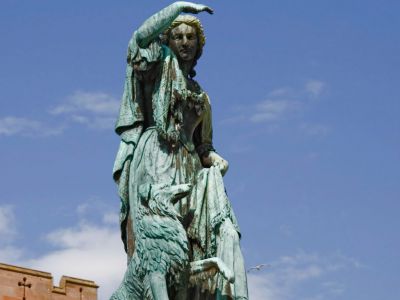
The Flora McDonald Statue is a historical landmark located near Inverness Castle. The Flora McDonald Statue is a monument to Flora McDonald who helped Prince Charles Edward Stuart evade capture by government troops after the Battle of Culloden in April 1746. She disguised the prince as her handmaiden while escaping on a boat to Skye, an island west of Inverness.
She was arrested for helping Prince Charles Edward Stuart escape and held in the Tower of London but released under a general amnesty in June 1747. She later married Allan MacDonald and the couple emigrated to North Carolina in 1773. Their support for the British government during the American War of Independence meant the loss of their American estates and they returned to Scotland, where Flora died in 1790.
The bronze statue was designed by Andrew Davidson. It was completed in 1899 and placed in front of Sheriff Court. She shields her eyes as she looks over the valley of the River Ness. A bronze, Scottish dog lies at the feet of the statue.
Along with the statue is a bronze plaque shaped like a shield. Written in both Gaelic and English, the plaque reads: "The preserver of Prince Charles Edward Stuart will be mentioned in history and if courage and fidelity be virtues, mentioned with honor."
She was arrested for helping Prince Charles Edward Stuart escape and held in the Tower of London but released under a general amnesty in June 1747. She later married Allan MacDonald and the couple emigrated to North Carolina in 1773. Their support for the British government during the American War of Independence meant the loss of their American estates and they returned to Scotland, where Flora died in 1790.
The bronze statue was designed by Andrew Davidson. It was completed in 1899 and placed in front of Sheriff Court. She shields her eyes as she looks over the valley of the River Ness. A bronze, Scottish dog lies at the feet of the statue.
Along with the statue is a bronze plaque shaped like a shield. Written in both Gaelic and English, the plaque reads: "The preserver of Prince Charles Edward Stuart will be mentioned in history and if courage and fidelity be virtues, mentioned with honor."
10) Victorian Market
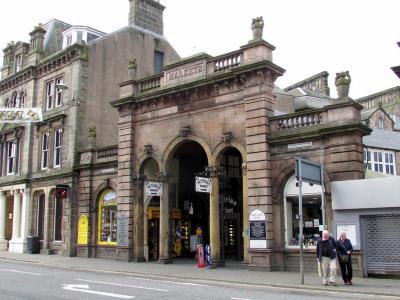
The Victorian Market, nestled in the heart of Inverness, is a charming covered market that blends history, architecture, and local enterprise. This historic market, originally constructed in 1870 and rebuilt after a fire in 1890, boasts a striking Victorian-style building with ornate features like glass, timber, and cast-iron roof, as well as round-headed shopfronts. The surviving Academy Street entrance, scarred with knife marks from fish merchants of old, adds a unique historical touch.
Within the market, three distinct areas-Market Hall, Market Arcade, and Queensgate Arcade-host over 30 independent businesses. These shops, cafés, and services, many of which have been trading for generations, offer a wide range of high-quality goods. From clothing and accessories to gifts and souvenirs, visitors can discover unique products while experiencing a warm Highland welcome. The refurbished Market Hall provides a vibrant social hub, featuring a central seating area surrounded by stalls showcasing the best of Highland food producers. It’s an ideal spot for families and groups to enjoy local delicacies.
A must-visit destination, the Victorian Market captures the essence of Inverness with its blend of history, community spirit, and modern-day shopping. Whether you're hunting for treasures, indulging in refreshments, or simply soaking up the atmosphere, this iconic market is sure to leave a lasting impression.
Within the market, three distinct areas-Market Hall, Market Arcade, and Queensgate Arcade-host over 30 independent businesses. These shops, cafés, and services, many of which have been trading for generations, offer a wide range of high-quality goods. From clothing and accessories to gifts and souvenirs, visitors can discover unique products while experiencing a warm Highland welcome. The refurbished Market Hall provides a vibrant social hub, featuring a central seating area surrounded by stalls showcasing the best of Highland food producers. It’s an ideal spot for families and groups to enjoy local delicacies.
A must-visit destination, the Victorian Market captures the essence of Inverness with its blend of history, community spirit, and modern-day shopping. Whether you're hunting for treasures, indulging in refreshments, or simply soaking up the atmosphere, this iconic market is sure to leave a lasting impression.
11) Falcon Square
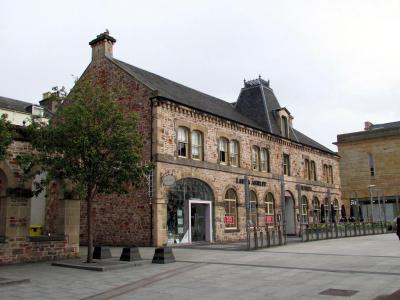
Falcon Square is a city square in the center of Inverness. It was named for John Falconer who was the founder of the Falcon Foundry in 1858. The foundry was originally located next to the Inverness Railway Station but it was taken apart and rebuilt in Falcon Square in the late 1990s. Falcon Foundry is now enjoyed by tourists and locals who wish to shop and dine in the historic building.
In the midst of Falcon Square is a 37-foot sandstone pillar. It is topped by a bronze unicorn and a soaring falcon. The monument was designed by sculptor Gerald Laing and it was unveiled in 2003.
There are a wide variety of shops and dining establishments available at Falcon Square. Those who want a taste of home can find numerous chain restaurants. Visitors who want to spend the day shopping in a comfortable environment will enjoy their time at the shopping center. It is also a good place to rest, relax and people watch.
In the midst of Falcon Square is a 37-foot sandstone pillar. It is topped by a bronze unicorn and a soaring falcon. The monument was designed by sculptor Gerald Laing and it was unveiled in 2003.
There are a wide variety of shops and dining establishments available at Falcon Square. Those who want a taste of home can find numerous chain restaurants. Visitors who want to spend the day shopping in a comfortable environment will enjoy their time at the shopping center. It is also a good place to rest, relax and people watch.
