Custom Walk in Trondheim, Norway by patspahr09_b2e858 created on 2026-06-01
Guide Location: Norway » Trondheim
Guide Type: Custom Walk
# of Sights: 11
Tour Duration: 2 Hour(s)
Travel Distance: 3.2 Km or 2 Miles
Share Key: VWRSE
Guide Type: Custom Walk
# of Sights: 11
Tour Duration: 2 Hour(s)
Travel Distance: 3.2 Km or 2 Miles
Share Key: VWRSE
How It Works
Please retrieve this walk in the GPSmyCity app. Once done, the app will guide you from one tour stop to the next as if you had a personal tour guide. If you created the walk on this website or come to the page via a link, please follow the instructions below to retrieve the walk in the app.
Retrieve This Walk in App
Step 1. Download the app "GPSmyCity: Walks in 1K+ Cities" on Apple App Store or Google Play Store.



Step 2. In the GPSmyCity app, download(or launch) the guide "Trondheim Map and Walking Tours".
Step 3. Tap the menu button located at upper right corner of the "Walks" screen and select "Retrieve custom walk". Enter the share key: VWRSE
1) Torvet (Town Square)
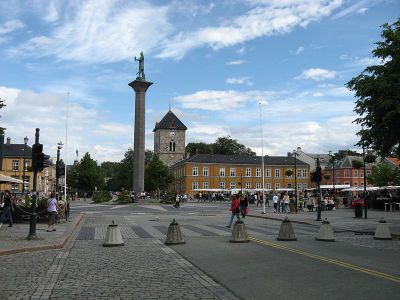
The Town Square became one of Trondheim’s main civic spaces, used for commerce, gatherings, and public events. After the devastating fire of 1681, Major General Johan Caspar de Cicignon, a military engineer, drew up a new Baroque-inspired city plan with broad streets and open spaces designed to reduce fire risk and improve military control. The square’s present form largely dates from this reconstruction.
In 1921, the Norwegian sculptor Wilhelm Rasmussen unveiled the monument to King Olav Tryggvason in the center of the Town Square. The monument rises about 18 meters, or 58 feet, with Olav standing high above the square. A cobblestone mosaic added around the base in 1930 turns the monument into a giant sundial.
Olav Tryggvason, son of Tryggvi Olafsson, is remembered as Olav I of Norway. His life is wrapped in saga tradition, but he is generally known as a forceful Viking ruler and Christian king. After years abroad, including time in the British Isles, he returned to Norway and rose to power, becoming king in 995.
Today, Olav I presides over a lively scene of shops, cafés, street performers, and locals. Several notable landmarks frame the square. At the southeastern corner of the square stands "Good Day", a charming bronze sculpture of an elderly woman carrying her shopping bags, created by sculptor Tone Thiis Schjetne. From the northern side of the square begins Munkegata, one of the city's principal avenues.
Just a short distance along this street is the elegant 18th-century Royal Residence and one of the largest wooden palaces in Northern Europe, still used by the Norwegian royal family during official visits. Looking south across Munkegata, you will see the Trøndelag District Court on the right side, a modern civic building that continues the square's long tradition as the administrative heart of Trondheim.
In 1921, the Norwegian sculptor Wilhelm Rasmussen unveiled the monument to King Olav Tryggvason in the center of the Town Square. The monument rises about 18 meters, or 58 feet, with Olav standing high above the square. A cobblestone mosaic added around the base in 1930 turns the monument into a giant sundial.
Olav Tryggvason, son of Tryggvi Olafsson, is remembered as Olav I of Norway. His life is wrapped in saga tradition, but he is generally known as a forceful Viking ruler and Christian king. After years abroad, including time in the British Isles, he returned to Norway and rose to power, becoming king in 995.
Today, Olav I presides over a lively scene of shops, cafés, street performers, and locals. Several notable landmarks frame the square. At the southeastern corner of the square stands "Good Day", a charming bronze sculpture of an elderly woman carrying her shopping bags, created by sculptor Tone Thiis Schjetne. From the northern side of the square begins Munkegata, one of the city's principal avenues.
Just a short distance along this street is the elegant 18th-century Royal Residence and one of the largest wooden palaces in Northern Europe, still used by the Norwegian royal family during official visits. Looking south across Munkegata, you will see the Trøndelag District Court on the right side, a modern civic building that continues the square's long tradition as the administrative heart of Trondheim.
2) Archbishop's Palace & Museum (must see)
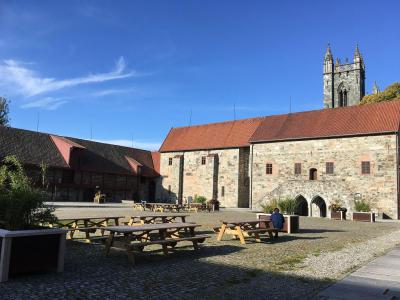
For centuries, the Archbishop's Palace was the seat of the Archbishop of Nidaros, the highest-ranking church official in medieval Norway. Built alongside Nidaros Cathedral, the complex served as both a residence and an administrative center for the archbishop. Following the Protestant Reformation in 1537, the archbishopric was abolished, and the palace became property of the Norwegian Crown.
Over the following centuries, the complex was enlarged and adapted for new purposes. It served as the residence of royal governors and later as a military facility. Today, it is one of Norway's best-preserved secular medieval buildings and houses several museums. Archaeological excavations carried out during the 1990s became among the largest medieval excavations ever undertaken in Norway.
More than 120 archaeologists from 12 countries participated in the project, recovering approximately 160,000 artifacts along with the remains of about 100 medieval buildings. Among the most remarkable discoveries were the remains of three successive minting workshops, built one above another. The oldest was the best preserved and is believed to have produced coins during the time of Archbishop Gaute Ivarsson in the late 15th century.
The museum presents many of these archaeological discoveries alongside models illustrating how the Archbishop's Palace evolved over the centuries. It also displays a remarkable collection of medieval sculptures, including original statues removed from Nidaros Cathedral during restoration work.
Another section of the complex houses the Norwegian Armed Forces Museum in Trondheim. Its exhibits trace Norway's military history from the Viking Age through the Middle Ages, the unions with Denmark and Sweden, and the German occupation during the Second World War. Weapons, armor, uniforms, medals, and historical artifacts help bring each period to life.
The west wing of the Archbishop's Palace is also home to the Norwegian Crown Regalia. The royal crowns, scepters, swords, and other ceremonial objects have been kept in Trondheim since 1826 and have been displayed here permanently since 2006, offering visitors a rare opportunity to see some of Norway's most important national treasures.
Over the following centuries, the complex was enlarged and adapted for new purposes. It served as the residence of royal governors and later as a military facility. Today, it is one of Norway's best-preserved secular medieval buildings and houses several museums. Archaeological excavations carried out during the 1990s became among the largest medieval excavations ever undertaken in Norway.
More than 120 archaeologists from 12 countries participated in the project, recovering approximately 160,000 artifacts along with the remains of about 100 medieval buildings. Among the most remarkable discoveries were the remains of three successive minting workshops, built one above another. The oldest was the best preserved and is believed to have produced coins during the time of Archbishop Gaute Ivarsson in the late 15th century.
The museum presents many of these archaeological discoveries alongside models illustrating how the Archbishop's Palace evolved over the centuries. It also displays a remarkable collection of medieval sculptures, including original statues removed from Nidaros Cathedral during restoration work.
Another section of the complex houses the Norwegian Armed Forces Museum in Trondheim. Its exhibits trace Norway's military history from the Viking Age through the Middle Ages, the unions with Denmark and Sweden, and the German occupation during the Second World War. Weapons, armor, uniforms, medals, and historical artifacts help bring each period to life.
The west wing of the Archbishop's Palace is also home to the Norwegian Crown Regalia. The royal crowns, scepters, swords, and other ceremonial objects have been kept in Trondheim since 1826 and have been displayed here permanently since 2006, offering visitors a rare opportunity to see some of Norway's most important national treasures.
3) Nidaros Cathedral (must see)
Nidaros Cathedral was built over King Olav II's burial site and developed into Scandinavia's most important medieval pilgrimage destination. Construction began around 1070 and continued in stages for more than two centuries, with the cathedral largely completed by about 1300. It also served as the traditional coronation church of Norway's monarchs until 1906 and remains the site of royal consecrations.
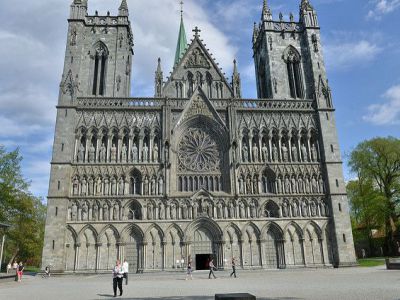
The cathedral takes its name from Nidaros, the medieval name of Trondheim. It belonged to the Roman Catholic Church until the Protestant Reformation of 1537, when it became the cathedral of the Evangelical Lutheran Church of Norway. It is the northernmost medieval cathedral in the world. The great stone church seats approximately 1,850 people and combines Romanesque and Gothic architecture.
The cathedral suffered repeated disasters throughout its history. A comprehensive restoration began in 1869 under architect Heinrich Ernst Schirmer and was continued by several successors for more than a century. The restoration was officially declared complete in 2001.
Look for the richly decorated west façade, one of the cathedral's greatest treasures, covered with statues, angels, saints, gargoyles, masks, and symbolic figures. Only five original medieval sculptures remain in place; many damaged originals are preserved in the Archbishop's Palace Museum, while carefully carved replicas occupy the façade today. High above the façade, look toward the north tower, on your left as you face the cathedral. At the highest point stands Saint Michael, shown defeating the dragon.
Once inside, walk eastward along the nave toward the choir. The Octagon Chapel is at the far eastern end of the cathedral, behind the choir and high altar area. It features elegant Gothic architecture and the shrine area of Saint Olav. Near the site of the medieval high altar stands a modern silver reliquary containing relics associated with Saint Olav, including a forearm relic. Another notable altar stands beneath the crossing, where the nave and transept meet. There, look for the modern crucifix donated by Norwegian Americans.
The cathedral takes its name from Nidaros, the medieval name of Trondheim. It belonged to the Roman Catholic Church until the Protestant Reformation of 1537, when it became the cathedral of the Evangelical Lutheran Church of Norway. It is the northernmost medieval cathedral in the world. The great stone church seats approximately 1,850 people and combines Romanesque and Gothic architecture.
The cathedral suffered repeated disasters throughout its history. A comprehensive restoration began in 1869 under architect Heinrich Ernst Schirmer and was continued by several successors for more than a century. The restoration was officially declared complete in 2001.
Look for the richly decorated west façade, one of the cathedral's greatest treasures, covered with statues, angels, saints, gargoyles, masks, and symbolic figures. Only five original medieval sculptures remain in place; many damaged originals are preserved in the Archbishop's Palace Museum, while carefully carved replicas occupy the façade today. High above the façade, look toward the north tower, on your left as you face the cathedral. At the highest point stands Saint Michael, shown defeating the dragon.
Once inside, walk eastward along the nave toward the choir. The Octagon Chapel is at the far eastern end of the cathedral, behind the choir and high altar area. It features elegant Gothic architecture and the shrine area of Saint Olav. Near the site of the medieval high altar stands a modern silver reliquary containing relics associated with Saint Olav, including a forearm relic. Another notable altar stands beneath the crossing, where the nave and transept meet. There, look for the modern crucifix donated by Norwegian Americans.
4) Nidaros Cathedral Graveyards
Nidaros Cathedral, located in Trondheim, is a significant symbol of both history and spirituality. It serves as Norway's national shrine and has been a revered pilgrimage site for almost a thousand years. This grand cathedral was built on the tomb of Saint Olav, a Viking king who played a key role in bringing Christianity to Norway. Throughout its history, the cathedral has been central to religious and royal events in the country, including the coronation of Norwegian monarchs.
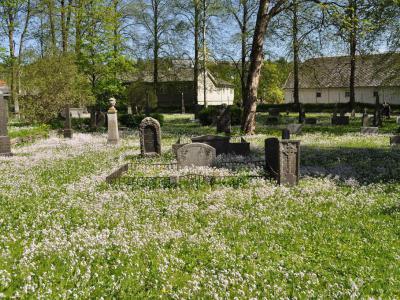
Surrounding the cathedral is the Cathedral Cemetery (Domkirkegården), which has been an essential part of its history. It serves as the burial ground for both the Nidaros Cathedral parish and Vår Frue parish and has been in use since the cathedral's construction in the 11th century. Today, it still accepts urn burials in existing family plots, maintaining its role as a sacred resting place.
The cemetery's layout reflects historical and social distinctions. In the 17th century, the northeast section became a pauper's cemetery, distinguishing between the burials of the wealthy and the poor. The southern areas of the cemetery were once part of the Archdiocese's farm, showcasing the diverse uses of the land surrounding the cathedral.
Today, the bishop's yard occupies the northeast corner, having been relocated from its original northwest position. While not a widely known attraction, the cemetery offers a meaningful experience for visitors. Its tranquil green spaces are adorned with beautifully crafted gravestones and monuments, honoring Trondheim's notable figures. A walk through the Cathedral Graveyard provides not only a glimpse into history but also an opportunity for spiritual reflection amidst the serenity and beauty of its final resting places.
Surrounding the cathedral is the Cathedral Cemetery (Domkirkegården), which has been an essential part of its history. It serves as the burial ground for both the Nidaros Cathedral parish and Vår Frue parish and has been in use since the cathedral's construction in the 11th century. Today, it still accepts urn burials in existing family plots, maintaining its role as a sacred resting place.
The cemetery's layout reflects historical and social distinctions. In the 17th century, the northeast section became a pauper's cemetery, distinguishing between the burials of the wealthy and the poor. The southern areas of the cemetery were once part of the Archdiocese's farm, showcasing the diverse uses of the land surrounding the cathedral.
Today, the bishop's yard occupies the northeast corner, having been relocated from its original northwest position. While not a widely known attraction, the cemetery offers a meaningful experience for visitors. Its tranquil green spaces are adorned with beautifully crafted gravestones and monuments, honoring Trondheim's notable figures. A walk through the Cathedral Graveyard provides not only a glimpse into history but also an opportunity for spiritual reflection amidst the serenity and beauty of its final resting places.
5) Bakklandet (must see)
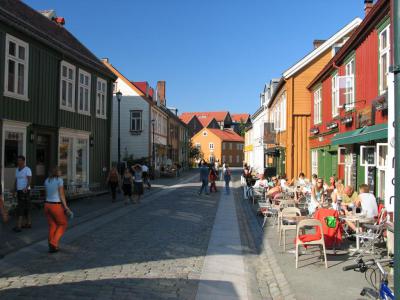
Bakklandet is sometimes described as "Old Trondheim," although the nickname is more romantic than historical. One of the city's oldest neighborhoods, it occupies the eastern bank of the River Nidelva. Today, Bakklandet is one of the city's most charming districts, but it began as a busy commercial settlement rather than a picturesque residential neighborhood.
Originally lying outside the medieval town, Bakklandet began to develop in the early 17th century as Trondheim expanded across the river. Its location made it ideal for merchants, craftsmen, and dockworkers, and it soon became the city's first suburb. During the Swedish occupation of Trondheim in 1658, much of the neighborhood was destroyed by fire.
The construction of the Old Town Bridge in 1681 permanently linked Bakklandet with the city center and Kristiansten Fortress. The new crossing encouraged trade and development, while warehouses and wharves lined the riverbanks. Although fire remained a constant danger, commerce flourished as merchants established riverside storehouses and loading piers.
War returned in 1718 when Swedish forces under General Carl Gustaf Armfeldt advanced on Trondheim. To deny the enemy shelter, Norwegian defenders deliberately burned much of Bakklandet before the attack. Once the danger had passed, the neighborhood was rebuilt yet again, and by the late 18th century its streets had been improved and commercial life had fully resumed.
Today, Bakklandet is known for its narrow cobbled streets, colorful wooden houses, cafés, and small independent shops. Along the river, historic warehouses still stand on timber piles driven into the riverbed, recalling the district's trading past.
Originally lying outside the medieval town, Bakklandet began to develop in the early 17th century as Trondheim expanded across the river. Its location made it ideal for merchants, craftsmen, and dockworkers, and it soon became the city's first suburb. During the Swedish occupation of Trondheim in 1658, much of the neighborhood was destroyed by fire.
The construction of the Old Town Bridge in 1681 permanently linked Bakklandet with the city center and Kristiansten Fortress. The new crossing encouraged trade and development, while warehouses and wharves lined the riverbanks. Although fire remained a constant danger, commerce flourished as merchants established riverside storehouses and loading piers.
War returned in 1718 when Swedish forces under General Carl Gustaf Armfeldt advanced on Trondheim. To deny the enemy shelter, Norwegian defenders deliberately burned much of Bakklandet before the attack. Once the danger had passed, the neighborhood was rebuilt yet again, and by the late 18th century its streets had been improved and commercial life had fully resumed.
Today, Bakklandet is known for its narrow cobbled streets, colorful wooden houses, cafés, and small independent shops. Along the river, historic warehouses still stand on timber piles driven into the riverbed, recalling the district's trading past.
6) Kristiansten Fortress (must see)
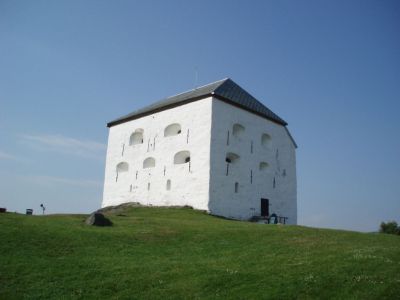
Kristiansten Fortress stands on a hill east of Trondheim. Named after King Christian V of Denmark, it was built in response to the devastating fire of 1681 and the vulnerability revealed by earlier Swedish attacks. Construction began that same year and was completed in 1685, giving Trondheim a formidable new line of defense.
The fortress proved its worth during the Swedish campaign of 1718. King Charles XII had ordered General Carl Gustaf Armfeldt to capture Trondheim while he besieged Fredriksten Fortress farther south. Defended by Norwegian forces under General Vincent Budde, together with the newly completed Kristiansten Fortress and its supporting defenses, the city successfully resisted the attack, forcing Armfeldt to withdraw.
Soon afterward, Charles XII was killed at Fredriksten Fortress. Armfeldt's army was ordered to retreat across the mountains into Sweden during one of the harshest winters on record. Thousands of soldiers perished from cold, hunger, and exhaustion in what became known as the Carolean Death March, one of the greatest military disasters in Scandinavian history.
The fortress was designed by the military engineer Johan Caspar de Cicignon as part of Trondheim's post-fire reconstruction, while construction was directed by Anthony Coucheron. Additional outworks and defensive positions were built around the city, and the fortress itself was strengthened throughout the 18th century with improved bastions, casemates, and earthworks. At its center stands the massive square keep, which housed soldiers' quarters, storage rooms, and defensive positions.
Kristiansten Fortress also bears witness to a darker chapter of Norwegian history. During the German occupation in the Second World War, 23 members of the Norwegian resistance were executed here. Today, an ecumenical memorial chapel marks the execution site in their honor.
Visitors come not only to explore the historic fortress and its museum but also to enjoy one of Trondheim's finest viewpoints. The surrounding parkland is a favorite place for walks and picnics, while the panoramic views over the city, Nidaros Cathedral, and the fjord make the climb well worthwhile.
The fortress proved its worth during the Swedish campaign of 1718. King Charles XII had ordered General Carl Gustaf Armfeldt to capture Trondheim while he besieged Fredriksten Fortress farther south. Defended by Norwegian forces under General Vincent Budde, together with the newly completed Kristiansten Fortress and its supporting defenses, the city successfully resisted the attack, forcing Armfeldt to withdraw.
Soon afterward, Charles XII was killed at Fredriksten Fortress. Armfeldt's army was ordered to retreat across the mountains into Sweden during one of the harshest winters on record. Thousands of soldiers perished from cold, hunger, and exhaustion in what became known as the Carolean Death March, one of the greatest military disasters in Scandinavian history.
The fortress was designed by the military engineer Johan Caspar de Cicignon as part of Trondheim's post-fire reconstruction, while construction was directed by Anthony Coucheron. Additional outworks and defensive positions were built around the city, and the fortress itself was strengthened throughout the 18th century with improved bastions, casemates, and earthworks. At its center stands the massive square keep, which housed soldiers' quarters, storage rooms, and defensive positions.
Kristiansten Fortress also bears witness to a darker chapter of Norwegian history. During the German occupation in the Second World War, 23 members of the Norwegian resistance were executed here. Today, an ecumenical memorial chapel marks the execution site in their honor.
Visitors come not only to explore the historic fortress and its museum but also to enjoy one of Trondheim's finest viewpoints. The surrounding parkland is a favorite place for walks and picnics, while the panoramic views over the city, Nidaros Cathedral, and the fjord make the climb well worthwhile.
7) Gamle Bybro (Old Town Bridge) (must see)
As part of Johan Caspar de Cicignon's reconstruction, a bridge was built across the River Nidelva, linking the city center with the Bakklandet district and providing convenient access to Kristiansten Fortress. The bridge also served as one of Trondheim's guarded city gates until the early 19th century.
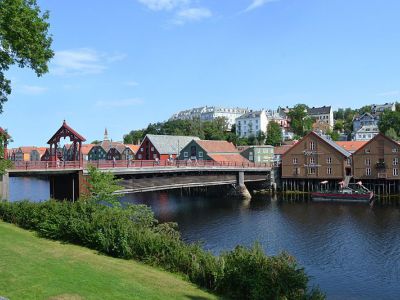
The original bridge was built of wood and was completed in 1681 with financial support from King Christian V of Denmark-Norway. The present bridge is a reconstruction completed in 1861 by the city's chief engineer, Carl Adolf Dahl. While the structure itself dates from the 19th century, it preserves the character of its predecessor, including the distinctive red-painted gateway that has become one of Trondheim's best-known landmarks. Originally, guardhouses stood at both ends of the bridge to control access to the city.
The Old Town Bridge replaced an earlier crossing at nearby Elgeseter. Once the new bridge became the principal route into the city, the old bridge gradually fell into disuse and eventually disappeared. One of the original guardhouses was later demolished, while the former customs house on the western bank still survives and has found new uses over the years.
The bridge is affectionately known as "The Portal of Happiness." The nickname comes from the beloved song "Nidelven, Quiet and Beautiful You Are", with lyrics by Kristian Oskar Hoddø. During the Second World War, Hoddø became a member of the Norwegian resistance and was executed by the German occupation authorities in Trondheim in 1943. Today, the bridge remains one of the city's most photographed and cherished landmarks.
The original bridge was built of wood and was completed in 1681 with financial support from King Christian V of Denmark-Norway. The present bridge is a reconstruction completed in 1861 by the city's chief engineer, Carl Adolf Dahl. While the structure itself dates from the 19th century, it preserves the character of its predecessor, including the distinctive red-painted gateway that has become one of Trondheim's best-known landmarks. Originally, guardhouses stood at both ends of the bridge to control access to the city.
The Old Town Bridge replaced an earlier crossing at nearby Elgeseter. Once the new bridge became the principal route into the city, the old bridge gradually fell into disuse and eventually disappeared. One of the original guardhouses was later demolished, while the former customs house on the western bank still survives and has found new uses over the years.
The bridge is affectionately known as "The Portal of Happiness." The nickname comes from the beloved song "Nidelven, Quiet and Beautiful You Are", with lyrics by Kristian Oskar Hoddø. During the Second World War, Hoddø became a member of the Norwegian resistance and was executed by the German occupation authorities in Trondheim in 1943. Today, the bridge remains one of the city's most photographed and cherished landmarks.
8) Historic Wharves
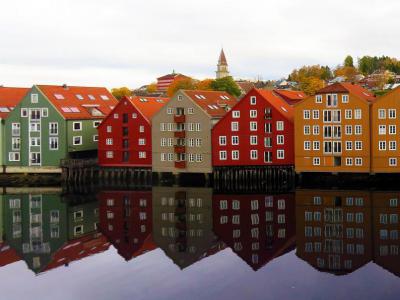
The historic wharfs of Trondheim are known as some of the most distinctive buildings in the city. The buildings stand along both sides of the Nidelven River's channel where they were originally used as storage for such goods as grain, sugar, salt and fish.
The buildings were completed in the 17th century but most were lost in a fire in 1681. The rebuilt wharf buildings were made to look as similar to their ancestors as possible. They were created using the traditional technique of interlocking logs, bare wood interior and simple construction.
The original wharfs were not used as homes but that has changed. Today, most of these colorful buildings are residential houses. Others are art galleries, coffee shops, restaurants and unique boutiques.
The cobbled walking paths make exploring the historic wharfs an easy and beautiful stroll. There are also a number of benches along the paths for those who want to relax. The Old Town Bridge over the Nidelven River is a great spot to get a picturesque view of the historic wharfs from a distance.
The buildings were completed in the 17th century but most were lost in a fire in 1681. The rebuilt wharf buildings were made to look as similar to their ancestors as possible. They were created using the traditional technique of interlocking logs, bare wood interior and simple construction.
The original wharfs were not used as homes but that has changed. Today, most of these colorful buildings are residential houses. Others are art galleries, coffee shops, restaurants and unique boutiques.
The cobbled walking paths make exploring the historic wharfs an easy and beautiful stroll. There are also a number of benches along the paths for those who want to relax. The Old Town Bridge over the Nidelven River is a great spot to get a picturesque view of the historic wharfs from a distance.
9) Gamle Radhus (Old Town Hall)
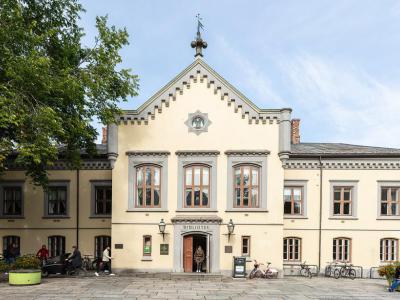
Trondheim’s Old Town Hall is a two-story building easy to recognize by its historic façade, with an eight-pointed star-shaped window and the city seal. Above the central section rises a square tower with a pyramid roof, topped by a smaller octagonal lantern, pointed roof, and spire. The building dates from the 18th century and was altered in 1870. It later ceased to function as the city’s town hall, and has been used as part of Trondheim Public Library since the 1930s.
In earlier times, the Old Town Hall was not only the center of city government; until 1863, it also housed the city jail. The prison lay beneath the building. As late as the early 19th century, some cell floors were still made of earth, sanitation was poor, and overcrowding was common. The smell from below could become so strong that incense had to be burned in the courtrooms above.
Today, the building has a much quieter role. Instead of court proceedings and prison cells, visitors find books, reading rooms, and library activity. Its past may have been grim, but the Old Town Hall now forms part of one of Trondheim’s most welcoming public spaces.
In earlier times, the Old Town Hall was not only the center of city government; until 1863, it also housed the city jail. The prison lay beneath the building. As late as the early 19th century, some cell floors were still made of earth, sanitation was poor, and overcrowding was common. The smell from below could become so strong that incense had to be burned in the courtrooms above.
Today, the building has a much quieter role. Instead of court proceedings and prison cells, visitors find books, reading rooms, and library activity. Its past may have been grim, but the Old Town Hall now forms part of one of Trondheim’s most welcoming public spaces.
10) Medieval Church Ruins
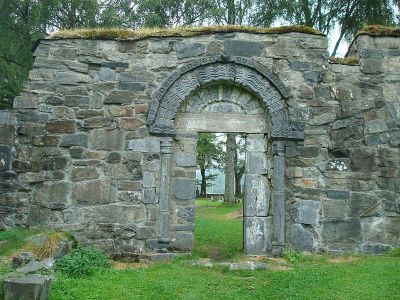
Nestled amidst Trondheim's blend of old-world charm and modern progress, the remains of Olav's Church (Olavskirken) stand as a silent reminder of the city's medieval past. Unearthed during the construction of Trondheim's new public library, this discovery sheds light on a forgotten chapter of history hidden beneath the city's surface.
Olav's Church, dating back to the 12th century, was uncovered by archaeologists during the development of Kongens Gate, where the new library was being built. Once a central point of spiritual life, this medieval church had long been lost to time until recent excavation efforts revealed its existence. The discovery not only offers insight into medieval religious architecture in Norway but also highlights the skilled craftsmanship of the period.
Today, the library's courtyard hosts a unique historical exhibit showcasing the remnants of Olav's Church. These ruins serve as a window into the ecclesiastical and social norms of the medieval era, alongside well-preserved skeletal remains believed to be locals who once frequented the church. This human connection adds depth to the ruins, bridging the gap between modern visitors and those who inhabited Trondheim centuries ago.
Olav's Church, dating back to the 12th century, was uncovered by archaeologists during the development of Kongens Gate, where the new library was being built. Once a central point of spiritual life, this medieval church had long been lost to time until recent excavation efforts revealed its existence. The discovery not only offers insight into medieval religious architecture in Norway but also highlights the skilled craftsmanship of the period.
Today, the library's courtyard hosts a unique historical exhibit showcasing the remnants of Olav's Church. These ruins serve as a window into the ecclesiastical and social norms of the medieval era, alongside well-preserved skeletal remains believed to be locals who once frequented the church. This human connection adds depth to the ruins, bridging the gap between modern visitors and those who inhabited Trondheim centuries ago.
11) Nordre Gate Street
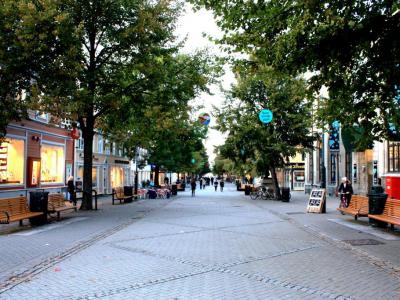
Trondheim is filled with shops, but some areas have a particularly high concentration of stores. Nordre gate is Trondheim’s main pedestrian shopping street, lined with a mix of international chains, local shops, cafés, and places to browse for clothing, food, jewelry, electronics, gifts, and other everyday items.
Nordre gate is also part of Trondheim’s social life. During the day, it is a lively shopping street; in the evening, the surrounding area offers bars, cafés, and nightlife venues. Cafés are especially popular in Norway, and Trondheim is no exception. Along and around Nordre gate, you will find several coffee-and-cake spots, some of which take on a livelier pub or bar atmosphere at night.
Thomas Angells gate crosses Nordre gate near the middle and is another useful street for shoppers to explore. It is smaller, but it forms part of the same central shopping district, together with nearby streets such as Olav Tryggvasons gate. Here, visitors can find additional shops, specialty stores, and places to stop for a drink or snack. Together, Nordre gate and the surrounding streets make up one of the easiest and most convenient shopping areas in Trondheim.
Nordre gate is also part of Trondheim’s social life. During the day, it is a lively shopping street; in the evening, the surrounding area offers bars, cafés, and nightlife venues. Cafés are especially popular in Norway, and Trondheim is no exception. Along and around Nordre gate, you will find several coffee-and-cake spots, some of which take on a livelier pub or bar atmosphere at night.
Thomas Angells gate crosses Nordre gate near the middle and is another useful street for shoppers to explore. It is smaller, but it forms part of the same central shopping district, together with nearby streets such as Olav Tryggvasons gate. Here, visitors can find additional shops, specialty stores, and places to stop for a drink or snack. Together, Nordre gate and the surrounding streets make up one of the easiest and most convenient shopping areas in Trondheim.
