Custom Walk in Santo Domingo, Dominican Republic by iryna_dubrowski_5cf4ab created on 2026-06-05
Guide Location: Dominican Republic » Santo Domingo
Guide Type: Custom Walk
# of Sights: 6
Tour Duration: 1 Hour(s)
Travel Distance: 1.6 Km or 1 Miles
Share Key: W5QX6
Guide Type: Custom Walk
# of Sights: 6
Tour Duration: 1 Hour(s)
Travel Distance: 1.6 Km or 1 Miles
Share Key: W5QX6
How It Works
Please retrieve this walk in the GPSmyCity app. Once done, the app will guide you from one tour stop to the next as if you had a personal tour guide. If you created the walk on this website or come to the page via a link, please follow the instructions below to retrieve the walk in the app.
Retrieve This Walk in App
Step 1. Download the app "GPSmyCity: Walks in 1K+ Cities" on Apple App Store or Google Play Store.



Step 2. In the GPSmyCity app, download(or launch) the guide "Santo Domingo Map and Walking Tours".
Step 3. Tap the menu button located at upper right corner of the "Walks" screen and select "Retrieve custom walk". Enter the share key: W5QX6
1) Alcázar de Colón (Columbus Alcazar) (must see)
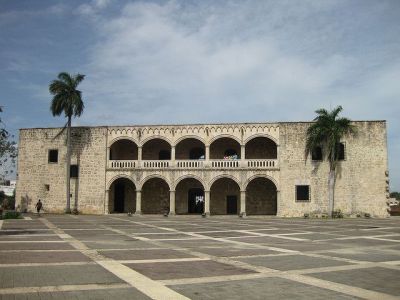
The Columbus Alcazar is a historically significant and awe-inspiring edifice located in Santo Domingo. As the oldest Viceregal residence in the Americas, it holds a prestigious place within the Colonial Zone of Santo Domingo, a UNESCO World Heritage Site.
The Columbus Alcazar houses the Alcazar Museum of Diego Colón, which boasts an exceptional collection of European late medieval and Renaissance works of art. Acquired in the 1950s, these art pieces represent the most important ensemble of their kind in the Caribbean region. Among the notable exhibits is a Tapestry collection that spans the 15th to 17th centuries, making it particularly unique and significant in the Caribbean. This collection includes remarkable pieces produced by the renowned Flemish Van Den Hecke family, using cartouches created by Charles Le Brun. As a result, the museum attracts a considerable number of visitors and stands as the most visited museum in Santo Domingo.
The palace itself is a stunning architectural marvel, constructed with coralline blocks. In its heyday, it boasted around fifty rooms, gardens, and courtyards, creating a grand and opulent atmosphere befitting a Viceregal residence. However, today, only about half of its original size remains due to the passage of time and historical events. The Alcázar de Colón was built during the early 16th century, between 1510 and 1512, under the orders of Diego Colón, the son of Christopher Columbus. At the time, Diego Colón served as the Viceroy of La Española and the Indies, and he envisioned the mansion as both a family home and a governor's mansion.
Throughout the Spanish colonial period, the Columbus Alcazar held immense importance in history. It served as a crucial center for planning expeditions of conquest and exploration, shaping the course of early exploration and colonization in the region.
Editor's note: The Alcazar Museum is temporarily closed.
The Columbus Alcazar houses the Alcazar Museum of Diego Colón, which boasts an exceptional collection of European late medieval and Renaissance works of art. Acquired in the 1950s, these art pieces represent the most important ensemble of their kind in the Caribbean region. Among the notable exhibits is a Tapestry collection that spans the 15th to 17th centuries, making it particularly unique and significant in the Caribbean. This collection includes remarkable pieces produced by the renowned Flemish Van Den Hecke family, using cartouches created by Charles Le Brun. As a result, the museum attracts a considerable number of visitors and stands as the most visited museum in Santo Domingo.
The palace itself is a stunning architectural marvel, constructed with coralline blocks. In its heyday, it boasted around fifty rooms, gardens, and courtyards, creating a grand and opulent atmosphere befitting a Viceregal residence. However, today, only about half of its original size remains due to the passage of time and historical events. The Alcázar de Colón was built during the early 16th century, between 1510 and 1512, under the orders of Diego Colón, the son of Christopher Columbus. At the time, Diego Colón served as the Viceroy of La Española and the Indies, and he envisioned the mansion as both a family home and a governor's mansion.
Throughout the Spanish colonial period, the Columbus Alcazar held immense importance in history. It served as a crucial center for planning expeditions of conquest and exploration, shaping the course of early exploration and colonization in the region.
Editor's note: The Alcazar Museum is temporarily closed.
2) Panteón Nacional (National Pantheon) (must see)
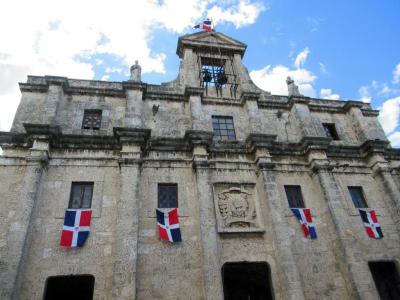
The National Pantheon is a significant historical and cultural landmark with a storied past that spans centuries. Originally built from 1714 to 1746 by the Spaniard Geronimo Quezada y Garçon, the structure started as a Jesuit church, showcasing the neoclassic-renaissance architectural style.
Today, the National Pantheon stands as a proud national symbol of the Dominican Republic and holds a profound role as the final resting place for the country's most esteemed citizens. Initially serving as a place of worship, the Jesuits conducted masses within its walls from 1746 to 1767. However, its purpose evolved over time, and after 1767, it went through various uses, including functioning as a tobacco warehouse and a theater.
The theater within the National Pantheon became a crucial hub for the pro-independence organization La Trinitaria. Under the guise of aliases like La Filantrópica and La Dramática, national heroes such as Juan Pablo Duarte, Ramon Matias Mella, and Francisco del Rosario Sanchez, among others, expressed their ideas and aspirations for a free and sovereign republic. From this stage, the seeds of independence and nationalism were sown, paving the way for the country's eventual liberation.
In 1956, the National Pantheon underwent renovations by Spanish architect Javier Borroso to transform it into a national mausoleum, under the order of then dictator Rafael Trujillo. Ironically, Trujillo initially envisioned being buried at the National Pantheon, but today it serves as the resting place for the Dominican Republic's most celebrated individuals, including some of Trujillo's assassins. Notable figures interred at the National Pantheon include Francisco Gregorio Billini, Gregorio Luperón, and Eugenio Hostos, among others.
Today, the National Pantheon stands as a proud national symbol of the Dominican Republic and holds a profound role as the final resting place for the country's most esteemed citizens. Initially serving as a place of worship, the Jesuits conducted masses within its walls from 1746 to 1767. However, its purpose evolved over time, and after 1767, it went through various uses, including functioning as a tobacco warehouse and a theater.
The theater within the National Pantheon became a crucial hub for the pro-independence organization La Trinitaria. Under the guise of aliases like La Filantrópica and La Dramática, national heroes such as Juan Pablo Duarte, Ramon Matias Mella, and Francisco del Rosario Sanchez, among others, expressed their ideas and aspirations for a free and sovereign republic. From this stage, the seeds of independence and nationalism were sown, paving the way for the country's eventual liberation.
In 1956, the National Pantheon underwent renovations by Spanish architect Javier Borroso to transform it into a national mausoleum, under the order of then dictator Rafael Trujillo. Ironically, Trujillo initially envisioned being buried at the National Pantheon, but today it serves as the resting place for the Dominican Republic's most celebrated individuals, including some of Trujillo's assassins. Notable figures interred at the National Pantheon include Francisco Gregorio Billini, Gregorio Luperón, and Eugenio Hostos, among others.
3) Calle Las Damas (Ladies Street) (must see)
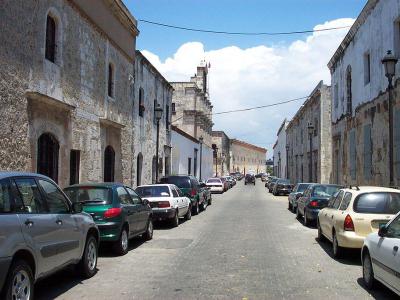
Ladies Street holds a significant place in the history of Santo Domingo. As the first street in the city and in the Americas, it carries with it a rich heritage that reflects the colonial past of the region.
Situated within the enchanting Colonial City, Ladies Street derives its name from the fact that it was frequented by the ladies of the colony during its early days. Today, the street is adorned with colonial tiles, creating a charming and picturesque atmosphere.
Ladies Street boasts several colonial houses, some of which still display their original colonial shields. These houses were built by distinguished families of the colonial period, including the Oviedo, Dávila, Heredia, Campuzano Polanco, Infante, and Coca families.
At the end of Ladies Street lies the Spanish Square, a vibrant and bustling square that marks the culmination of this historic street. The plaza offers a picturesque setting for locals and tourists to gather, relax, and soak in the ambiance of the Colonial Zone.
The origins of Ladies Street can be traced back to the government of Nicolás de Ovando, during which it became the first street created in the Colonial Zone. Originally known as Fortress Street due to the presence of the Ozama Fortress, the street later acquired the name Ladies Street. Despite a brief period when it was renamed Colón Street in honor of Christopher Columbus, the street ultimately reclaimed its original name.
Situated within the enchanting Colonial City, Ladies Street derives its name from the fact that it was frequented by the ladies of the colony during its early days. Today, the street is adorned with colonial tiles, creating a charming and picturesque atmosphere.
Ladies Street boasts several colonial houses, some of which still display their original colonial shields. These houses were built by distinguished families of the colonial period, including the Oviedo, Dávila, Heredia, Campuzano Polanco, Infante, and Coca families.
At the end of Ladies Street lies the Spanish Square, a vibrant and bustling square that marks the culmination of this historic street. The plaza offers a picturesque setting for locals and tourists to gather, relax, and soak in the ambiance of the Colonial Zone.
The origins of Ladies Street can be traced back to the government of Nicolás de Ovando, during which it became the first street created in the Colonial Zone. Originally known as Fortress Street due to the presence of the Ozama Fortress, the street later acquired the name Ladies Street. Despite a brief period when it was renamed Colón Street in honor of Christopher Columbus, the street ultimately reclaimed its original name.
4) Cathedral of Santa Maria la Menor (must see)
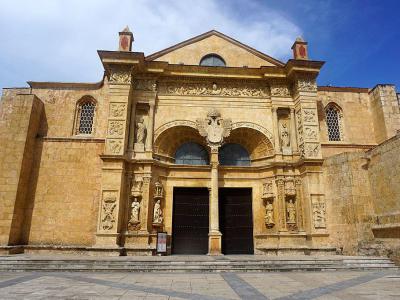
The Cathedral of Santa María la Menor holds a prominent place in history as the oldest cathedral in the Americas. Dedicated to Saint Mary of the Incarnation, the cathedral's historical significance, exquisite architecture, and impressive art collection make it a must-visit destination for travelers seeking to immerse themselves in the rich cultural heritage of the region.
The cathedral's facade, fronted with golden-tinted coral limestone, is a sight to behold. Its architectural style is a harmonious blend of Gothic and Baroque elements, complemented by lavish plateresque designs. The high altar, crafted out of silver, stands as a prime example of the cathedral's opulence and devotion to artistic expression.
Within the Cathedral of Santa María la Menor lies a treasure trove of art, displayed in its treasury. The collection includes ancient woodcarvings, ornate furnishings, funerary monuments, silverware, and exquisite jewelry. These artistic masterpieces provide a glimpse into the craftsmanship and devotion of the artists and patrons throughout the centuries.
The cathedral's rich history can be traced back to its consecration by Pope Julius II in 1504. Construction began in 1512 under the leadership of Bishop Fray García Padilla, with the skilled hands of Luis Moya guiding the process. The result is an architectural marvel with twelve side chapels, three aisles, and a nave. The pitched roof of the nave and cross-vaulted ceilings of the aisles add to the grandeur and magnificence of the interior.
Stepping inside the Cathedral of Santa María la Menor, visitors are transported to a bygone era. The sight of retablos, paintings, old woodwork, furniture, sculptures, and tombstones in the treasury leaves a lasting impression, representing centuries of religious devotion and artistic expression.
The cathedral's facade, fronted with golden-tinted coral limestone, is a sight to behold. Its architectural style is a harmonious blend of Gothic and Baroque elements, complemented by lavish plateresque designs. The high altar, crafted out of silver, stands as a prime example of the cathedral's opulence and devotion to artistic expression.
Within the Cathedral of Santa María la Menor lies a treasure trove of art, displayed in its treasury. The collection includes ancient woodcarvings, ornate furnishings, funerary monuments, silverware, and exquisite jewelry. These artistic masterpieces provide a glimpse into the craftsmanship and devotion of the artists and patrons throughout the centuries.
The cathedral's rich history can be traced back to its consecration by Pope Julius II in 1504. Construction began in 1512 under the leadership of Bishop Fray García Padilla, with the skilled hands of Luis Moya guiding the process. The result is an architectural marvel with twelve side chapels, three aisles, and a nave. The pitched roof of the nave and cross-vaulted ceilings of the aisles add to the grandeur and magnificence of the interior.
Stepping inside the Cathedral of Santa María la Menor, visitors are transported to a bygone era. The sight of retablos, paintings, old woodwork, furniture, sculptures, and tombstones in the treasury leaves a lasting impression, representing centuries of religious devotion and artistic expression.
5) Parque Colon (Colon Park) (must see)
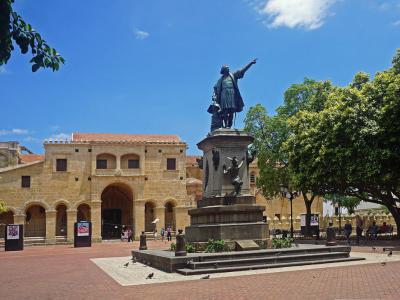
Colon Park is a central and iconic square that holds deep historical and cultural significance. This vibrant square serves as a focal point for locals and tourists alike, attracting visitors with its captivating monuments and rich heritage.
At the heart of Colon Park stands a late-19th-century statue of Christopher Columbus, the renowned explorer credited with discovering the Americas. In 1887, the square was renamed in his honor, previously known as Plaza Mayor. The statue of Columbus serves as a tribute to his explorations and contributions to world history.
Surrounding Colon Park, visitors will find remarkable monuments that add to the square's allure. The Catedral de Santa Maria la Menor, the oldest cathedral in the Americas, is a majestic presence, offering a glimpse into the city's rich religious heritage. Santo Domingo's Municipal Palace and the Palacio Borgella, which once housed the Dominican Republic's Parliament, add to the architectural grandeur and historical importance of the square.
Colon Park is also the starting point for Count's Street, a historic street that was once the thriving commercial heart of Santo Domingo. This charming street, bustling with activity and lined with colonial-style buildings, leads to the iconic Count's Gate, an ancient gateway that played a significant role in the country's history.
At the heart of Colon Park stands a late-19th-century statue of Christopher Columbus, the renowned explorer credited with discovering the Americas. In 1887, the square was renamed in his honor, previously known as Plaza Mayor. The statue of Columbus serves as a tribute to his explorations and contributions to world history.
Surrounding Colon Park, visitors will find remarkable monuments that add to the square's allure. The Catedral de Santa Maria la Menor, the oldest cathedral in the Americas, is a majestic presence, offering a glimpse into the city's rich religious heritage. Santo Domingo's Municipal Palace and the Palacio Borgella, which once housed the Dominican Republic's Parliament, add to the architectural grandeur and historical importance of the square.
Colon Park is also the starting point for Count's Street, a historic street that was once the thriving commercial heart of Santo Domingo. This charming street, bustling with activity and lined with colonial-style buildings, leads to the iconic Count's Gate, an ancient gateway that played a significant role in the country's history.
6) Monasterio de San Francisco (Saint Francis Monastery) (must see)
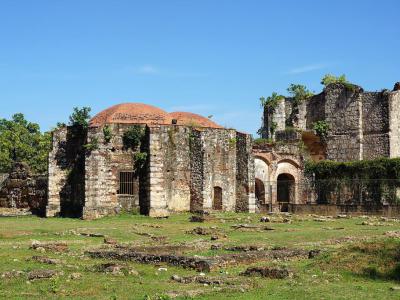
The Monastery of San Francisco is a historically significant and cherished site in the heart of the Zona Colonial. Its construction dates back to around 1508, coinciding with the arrival of the Franciscan fathers, making it the first monastery in the New World. Despite its current state of ruin, it remains one of the most important and treasured landmarks in the city, earning its designation as a "heritage Dominican."
The monastery was commissioned by Nicolas de Ovando, and its construction began with the arrival of the Franciscan fathers in the early 16th century. However, it faced challenges throughout its history. The main part of the church was constructed in 1544 and completed on July 23, 1556. Tragically, it suffered severe damage from a hurricane and was subsequently looted by the infamous pirate Francis Drake in 1586. Repairs were carried out in 1664, but further damage occurred due to earthquakes in 1673 and 1751.
The monastery's historical significance is further enhanced by the notable figures associated with it. Historians believe that the remains of Alonso de Ojeda, a renowned explorer, were once buried at the main entrance to the monastery. Additionally, the remains of Bartholomew Columbus, Christopher Columbus's brother, were also found within its grounds. These connections with prominent historical figures contribute to the site's allure for history enthusiasts.
Over the centuries, the Monastery of San Francisco witnessed various uses and underwent different phases of restoration. During the Battle of Palo Hincado in 1808 against the French, the building served as a strategic military position with a piece of artillery deployed on its roof. However, the vault was damaged in the process, and a timber platform was constructed to accommodate the military operations.
In the late 19th and early 20th centuries, the monastery served as a mental asylum. Unfortunately, a hurricane during that period caused substantial damage that was never fully repaired, leading to the current state of ruin. Today, the majestic ruins are used for social and cultural events, showcasing the enduring importance of this historical site in the cultural life of Santo Domingo.
The monastery was commissioned by Nicolas de Ovando, and its construction began with the arrival of the Franciscan fathers in the early 16th century. However, it faced challenges throughout its history. The main part of the church was constructed in 1544 and completed on July 23, 1556. Tragically, it suffered severe damage from a hurricane and was subsequently looted by the infamous pirate Francis Drake in 1586. Repairs were carried out in 1664, but further damage occurred due to earthquakes in 1673 and 1751.
The monastery's historical significance is further enhanced by the notable figures associated with it. Historians believe that the remains of Alonso de Ojeda, a renowned explorer, were once buried at the main entrance to the monastery. Additionally, the remains of Bartholomew Columbus, Christopher Columbus's brother, were also found within its grounds. These connections with prominent historical figures contribute to the site's allure for history enthusiasts.
Over the centuries, the Monastery of San Francisco witnessed various uses and underwent different phases of restoration. During the Battle of Palo Hincado in 1808 against the French, the building served as a strategic military position with a piece of artillery deployed on its roof. However, the vault was damaged in the process, and a timber platform was constructed to accommodate the military operations.
In the late 19th and early 20th centuries, the monastery served as a mental asylum. Unfortunately, a hurricane during that period caused substantial damage that was never fully repaired, leading to the current state of ruin. Today, the majestic ruins are used for social and cultural events, showcasing the enduring importance of this historical site in the cultural life of Santo Domingo.
