Custom Walk in Leiden, Netherlands by anangel_04_5b7d78 created on 2026-06-15
Guide Location: Netherlands » Leiden
Guide Type: Custom Walk
# of Sights: 12
Tour Duration: 3 Hour(s)
Travel Distance: 4.5 Km or 2.8 Miles
Share Key: JM6QW
Guide Type: Custom Walk
# of Sights: 12
Tour Duration: 3 Hour(s)
Travel Distance: 4.5 Km or 2.8 Miles
Share Key: JM6QW
How It Works
Please retrieve this walk in the GPSmyCity app. Once done, the app will guide you from one tour stop to the next as if you had a personal tour guide. If you created the walk on this website or come to the page via a link, please follow the instructions below to retrieve the walk in the app.
Retrieve This Walk in App
Step 1. Download the app "GPSmyCity: Walks in 1K+ Cities" on Apple App Store or Google Play Store.



Step 2. In the GPSmyCity app, download(or launch) the guide "Leiden Map and Walking Tours".
Step 3. Tap the menu button located at upper right corner of the "Walks" screen and select "Retrieve custom walk". Enter the share key: JM6QW
1) Station Leiden Centraal (Leiden Central Station)
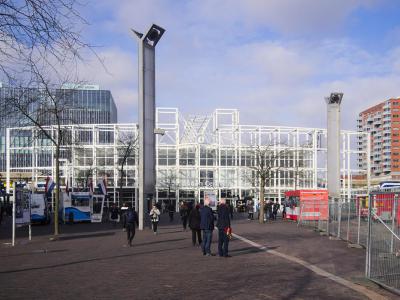
Leiden Central Station is the principal railway station in Leiden and an essential hub in the Dutch railway network. It opened on 17 August 1842 as the southern terminal of the first expansion of the Old Line (Oude Lijn), connecting Haarlem and Leiden. Over its history, the station has seen numerous transformations, reflecting changes in architectural trends, passenger needs, and cultural significance.
The original 1842 station, part of the Old Line, was modest but essential for connecting Leiden to the rail network. It was replaced in 1879 by a larger station designed by D.A.N. Margadant, which elevated Leiden’s status and hosted a historic 1910 meeting between Sigmund Freud and Gustav Mahler. Post-war, H.G.J. Schelling’s functional yet unpopular design replaced Margadant’s station. Overcrowding and its "ugly" reputation led to its eventual demolition.
The current station, designed by Harry Reijnders and completed in 1996, features a modern white lattice structure and a curved, shell-like entrance, creating a bright, open space. Its ticketing hall, lined with shops and restaurants, highlights its role as a multifunctional hub. Originally, it had a bold blue-and-white floor, later replaced with safer standard tiles.
Today, Leiden Central Station is more than a transportation hub-it is a symbol of the city’s connectivity and adaptability. Its historical significance, marked by architectural evolution and cultural milestones, makes it an integral part of Leiden’s identity. With its modern facilities and central location, the station continues to serve as a vital link for commuters and travelers exploring the Netherlands.
The original 1842 station, part of the Old Line, was modest but essential for connecting Leiden to the rail network. It was replaced in 1879 by a larger station designed by D.A.N. Margadant, which elevated Leiden’s status and hosted a historic 1910 meeting between Sigmund Freud and Gustav Mahler. Post-war, H.G.J. Schelling’s functional yet unpopular design replaced Margadant’s station. Overcrowding and its "ugly" reputation led to its eventual demolition.
The current station, designed by Harry Reijnders and completed in 1996, features a modern white lattice structure and a curved, shell-like entrance, creating a bright, open space. Its ticketing hall, lined with shops and restaurants, highlights its role as a multifunctional hub. Originally, it had a bold blue-and-white floor, later replaced with safer standard tiles.
Today, Leiden Central Station is more than a transportation hub-it is a symbol of the city’s connectivity and adaptability. Its historical significance, marked by architectural evolution and cultural milestones, makes it an integral part of Leiden’s identity. With its modern facilities and central location, the station continues to serve as a vital link for commuters and travelers exploring the Netherlands.

2) Molen de Valk (Windmill de Valk) (must see)
Nineteen mills have been built on the walls of Leiden. Only the Windmill de Valk stands today. The original mill, De Valck (the Falcon) was built in 1611 on the Valkenburger bulwark. It was replaced by a wooden tower mill in 1667. In 1743 a higher tower mill was installed. The mill had to be high above neighboring houses to catch the wind.
The ground floor of the mill and the two attached buildings held kitchens and living quarters for two families. Bedrooms were located on the first and second floors. The third floor was used for storage. The actual milling took place from the fourth floor (46 feet high) to the top of the mill (92 feet high).
The uppermost floor is called the cap loft. The cap, or roof of the mill, can be turned to catch favorable winds. A large round bearing with rollers is used. The sail axle turns in the cap. It has a nine-foot brake wheel and brake pads. The cap loft is closed to the public. The rolling wheels and gears make things a tad risky for tourists.
The hoisting loft holds the hoisting machinery that lifts sacks of grain to the top of the mill. Inside the mill is a system of hatches in a line, one above the other. The grain is hoisted through the hatches into silos. Grain is poured from the silos to the grinding stones in the stone loft. Only one pair of stones is used today.
The grinding loft is the miller's workplace. From the loft gallery, he judges the wind and turns the cap accordingly. By adjusting the sails, he can control the speed of the mill. Here is where the sacks are filled, weighed, and tested.
In the Windmill de Valk, the first, second, and third floors are exhibition rooms. The first floor holds the exhibit "The Mill, the symbol of Holland." The second floor tells the story of the Leiden Millers' guilds and the history of de Valk. The third floor features the entire history of milling and the different types of mills.
The living room is a formal family room, a parlor. The Windmill de Valk was turned into a municipal museum in 1966.
The ground floor of the mill and the two attached buildings held kitchens and living quarters for two families. Bedrooms were located on the first and second floors. The third floor was used for storage. The actual milling took place from the fourth floor (46 feet high) to the top of the mill (92 feet high).
The uppermost floor is called the cap loft. The cap, or roof of the mill, can be turned to catch favorable winds. A large round bearing with rollers is used. The sail axle turns in the cap. It has a nine-foot brake wheel and brake pads. The cap loft is closed to the public. The rolling wheels and gears make things a tad risky for tourists.
The hoisting loft holds the hoisting machinery that lifts sacks of grain to the top of the mill. Inside the mill is a system of hatches in a line, one above the other. The grain is hoisted through the hatches into silos. Grain is poured from the silos to the grinding stones in the stone loft. Only one pair of stones is used today.
The grinding loft is the miller's workplace. From the loft gallery, he judges the wind and turns the cap accordingly. By adjusting the sails, he can control the speed of the mill. Here is where the sacks are filled, weighed, and tested.
In the Windmill de Valk, the first, second, and third floors are exhibition rooms. The first floor holds the exhibit "The Mill, the symbol of Holland." The second floor tells the story of the Leiden Millers' guilds and the history of de Valk. The third floor features the entire history of milling and the different types of mills.
The living room is a formal family room, a parlor. The Windmill de Valk was turned into a municipal museum in 1966.

3) Burcht van Leiden (Fort of Leiden) (must see)
"Take the high ground" has long been a sound military doctrine. The viscount of Leiden, Halewijn I, understood this. He built the Fort of Leiden in 1060. But this was the Netherlands. There were no "high grounds." The fort was built as a keep, a round fortified tower. The structure's high ground was a motte, an artificial hill.
In the 11th century, the keep was rebuilt, first with volcanic tuff stone and finally with bricks. It was raised to a height of 30 feet by the 12th century. Ada of Holland, the daughter of Dirk VII, Count of Holland, took up residence in the keep. She and her husband, Louis II, Count of Loon, fought to keep her father's legacy.
The Fort of Leiden was captured by Ada's uncle William. Ada was evicted. In the 13th century, the castle became less and less important as a defense asset of Leiden. The city grew up around the base of the fort. The keep's interior, built against the inner walls, was partially dismantled. By the 17th century, it was merely a romantic symbol.
In 1651, it was decided to change the fort into a water tower for the city. The piping system leading to the city squares is still intact today. In 1662, a new portal, designed by architect Rombout Verhulst, was installed. Two other gates to the keep exist. At the south gateway, a plaque in Latin teaches basic grammar to Leiden students.
In the 11th century, the keep was rebuilt, first with volcanic tuff stone and finally with bricks. It was raised to a height of 30 feet by the 12th century. Ada of Holland, the daughter of Dirk VII, Count of Holland, took up residence in the keep. She and her husband, Louis II, Count of Loon, fought to keep her father's legacy.
The Fort of Leiden was captured by Ada's uncle William. Ada was evicted. In the 13th century, the castle became less and less important as a defense asset of Leiden. The city grew up around the base of the fort. The keep's interior, built against the inner walls, was partially dismantled. By the 17th century, it was merely a romantic symbol.
In 1651, it was decided to change the fort into a water tower for the city. The piping system leading to the city squares is still intact today. In 1662, a new portal, designed by architect Rombout Verhulst, was installed. Two other gates to the keep exist. At the south gateway, a plaque in Latin teaches basic grammar to Leiden students.
4) Hooglandse Kerk (Highland Church)
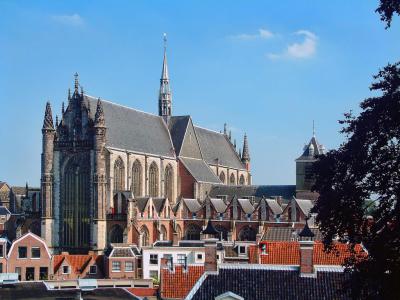
The Highland Church of Leiden has two histories; the Catholic and the post-Calvinist period. In 1314, the bishop of Utrecht, Gwijde of Avesnes, authorized the building of a wooden chapel on the "High Land" at the confluence of the Old Rhine and the New Rhine. The chapel was dedicated to Saint Pancras, martyred at the age of fourteen, around 300 AD.
In 1377 a stone church was built to replace the wooden one. Parts of the 14th-century church can still be found in the modern structure. In 1470 Pope Paul II exempted Saint Pancras from the jurisdiction of the diocese of Utrecht.
Construction of a new church began. The ambulatory, transept, and choir were completed by 1500. The nave, vaults, bows, and balustrades were unfinished. The nave is perceptibly lower than the transept and choir.
The church had 24 altars, stained glass windows, frescoes, and statues. On or about 1525 AD, things changed forever with the Calvinist Reformation. In waves of violent iconoclasm, Churches were vandalized and looted. Saint Pancras came under the control of the Dutch Reformed Church. It was now known as the Highland Church.
Stripped and whitewashed, with plain glass windows and no altars, the new Highland Church was positively Minimalist. The exterior keeps the past features. There is a high Gothic choir and transept and a low nave. The partially wooden bell tower is short.
The Highland Church holds services. It is also a venue for conferences, concerts, and events.
In 1377 a stone church was built to replace the wooden one. Parts of the 14th-century church can still be found in the modern structure. In 1470 Pope Paul II exempted Saint Pancras from the jurisdiction of the diocese of Utrecht.
Construction of a new church began. The ambulatory, transept, and choir were completed by 1500. The nave, vaults, bows, and balustrades were unfinished. The nave is perceptibly lower than the transept and choir.
The church had 24 altars, stained glass windows, frescoes, and statues. On or about 1525 AD, things changed forever with the Calvinist Reformation. In waves of violent iconoclasm, Churches were vandalized and looted. Saint Pancras came under the control of the Dutch Reformed Church. It was now known as the Highland Church.
Stripped and whitewashed, with plain glass windows and no altars, the new Highland Church was positively Minimalist. The exterior keeps the past features. There is a high Gothic choir and transept and a low nave. The partially wooden bell tower is short.
The Highland Church holds services. It is also a venue for conferences, concerts, and events.

5) Botermarkt (Butter Market)
Leiden claims to be the home of the best markets in Holland. Stroll along the canals of the city. Allow time to see it all, if not taste it all: the Butter Market, The New Rhine Market, and the Fish Market. Eat herring, fresh bread, syrup waffles (stroopwafels), and do not overlook the cheeses.
The people are almost as big a draw at the market as the produce. Families, seniors, tourists, students, hangover sufferers, friends, neighbors, and the international set, speaking Dutch, French, English, Spanish, jostling and joking. It is the Dutch street market experience, especially on weekends.
The Butter Market always seems to be busy. If one can pull oneself away from food for a moment, there is a mixture of boutiques and shops, offering nearly everything else. There are restaurants, pubs, cafeterias, terraces, open stalls, and flowers. Butter Market is not the largest market in Leiden, but it can be irresistible.
The people are almost as big a draw at the market as the produce. Families, seniors, tourists, students, hangover sufferers, friends, neighbors, and the international set, speaking Dutch, French, English, Spanish, jostling and joking. It is the Dutch street market experience, especially on weekends.
The Butter Market always seems to be busy. If one can pull oneself away from food for a moment, there is a mixture of boutiques and shops, offering nearly everything else. There are restaurants, pubs, cafeterias, terraces, open stalls, and flowers. Butter Market is not the largest market in Leiden, but it can be irresistible.
6) Pieterskerk (Saint Peter Church) (must see)
The Dutch word for "images storm" refers not to the weather, but to the inundations of violent iconoclasts that accompanied the Calvinist Reformation in the Netherlands in the 16th century. All Catholic art and images were stripped and looted from the churches. Stained glass windows were boarded up.
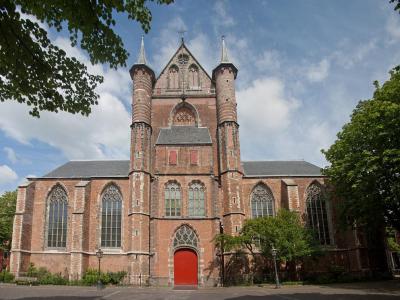
The pre-Reformation Saint Peter Church dated from about 1100 when the counts of Holland built a chapel on the site. The chapel was rebuilt in 1121. The current Church was completed in 1570, after 180 years of building. It opened for its first Protestant service in 1572.
Famed Dutch painter Rembrandt grew up and lived in the neighborhood of Saint Peter Church. His parents were married in the church in 1589. They are buried in front of the pulpit. Rembrandt frequented the church throughout his life. He was buried in Westerkerk in Amsterdam, in 1669.
In 1807 a devastating gunpowder explosion obliterated what was left of the stained glass windows. A major restoration was undertaken in 1880. The Saint Peter's Church was deconsecrated in 1971. With Government assistance, a long-term restoration was completed in 2010. Many artifacts, including a mummy, were unearthed.
John Robinson, the pastor of the "Pilgrim Fathers" of America, was buried in Saint Peter's Church. On October 3rd, each year, the people of Leiden offer thanks to God for saving the city in the Spanish siege of 1573. The proceedings are followed by eating herring and white bread with lots of beer.
The pre-Reformation Saint Peter Church dated from about 1100 when the counts of Holland built a chapel on the site. The chapel was rebuilt in 1121. The current Church was completed in 1570, after 180 years of building. It opened for its first Protestant service in 1572.
Famed Dutch painter Rembrandt grew up and lived in the neighborhood of Saint Peter Church. His parents were married in the church in 1589. They are buried in front of the pulpit. Rembrandt frequented the church throughout his life. He was buried in Westerkerk in Amsterdam, in 1669.
In 1807 a devastating gunpowder explosion obliterated what was left of the stained glass windows. A major restoration was undertaken in 1880. The Saint Peter's Church was deconsecrated in 1971. With Government assistance, a long-term restoration was completed in 2010. Many artifacts, including a mummy, were unearthed.
John Robinson, the pastor of the "Pilgrim Fathers" of America, was buried in Saint Peter's Church. On October 3rd, each year, the people of Leiden offer thanks to God for saving the city in the Spanish siege of 1573. The proceedings are followed by eating herring and white bread with lots of beer.
7) Leiden University
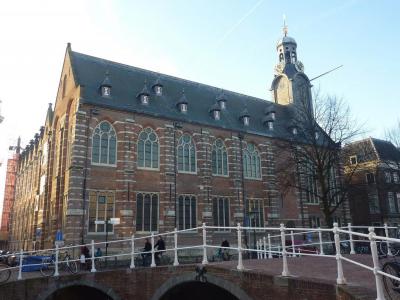
In May 1620, aged 14, Rembrandt Hermannzoon van Rijn enrolled at the University of Leiden. The University was relatively young back then, having been founded by William, Prince of Orange, in 1575. It started as a Protestant university and was presented as a reward to the city for its resistance to the Spanish during the Eighty Years' War.
Rembrandt did not seem to have attended classes here, as they were not mandatory in the past. Curiously, the enrolled students were also granted rations of tax-free beer, which was quite an incentive.
Another curious fact is the name of Philip II of Spain, as the count of Holland, on the university foundation certificate. Leiden University became renowned during the Dutch Golden Age. Its original location was the convent of Saint Barbara. It then moved, in 1577, to the Faliede Bagjin Church, and in 1581, to the convent of the White Nuns.
Today, the convent of the White Nuns houses the university museum. The university library has more than five million books, fifty thousand journals, and an extensive collection of Western and Asian manuscripts, books, prints, drawings, photos, maps, and charts.
The University does not have a central campus, but its buildings are spread over the city. As a student, Rembrandt often drew and painted university subjects. He drew inspiration from the famous university Botanical Gardens and the Anatomical Theatre, as shown in his later paintings, "Saskia as Flora" and "The Anatomy Lesson."
Rembrandt did not seem to have attended classes here, as they were not mandatory in the past. Curiously, the enrolled students were also granted rations of tax-free beer, which was quite an incentive.
Another curious fact is the name of Philip II of Spain, as the count of Holland, on the university foundation certificate. Leiden University became renowned during the Dutch Golden Age. Its original location was the convent of Saint Barbara. It then moved, in 1577, to the Faliede Bagjin Church, and in 1581, to the convent of the White Nuns.
Today, the convent of the White Nuns houses the university museum. The university library has more than five million books, fifty thousand journals, and an extensive collection of Western and Asian manuscripts, books, prints, drawings, photos, maps, and charts.
The University does not have a central campus, but its buildings are spread over the city. As a student, Rembrandt often drew and painted university subjects. He drew inspiration from the famous university Botanical Gardens and the Anatomical Theatre, as shown in his later paintings, "Saskia as Flora" and "The Anatomy Lesson."

8) Hortus Botanicus (Botanical Garden) (must see)
The Botanical Garden is one of the oldest gardens in the Netherlands and one of the oldest in the world. It is located in the southwestern part of the historical center of Leiden, by the old Observatory. The Garden was authorized for the University of Leiden in 1587. It was intended for the benefit of medical students. Famous Botanist Carolus Clusius was appointed Prefect.
The original Garden, set up by Clusius, held more than one thousand species of plants. There were many new plants brought by the Dutch East India Company. Today there are more than 10,000 species from around the world thriving in different beds. There is a flesh-eating collection and collections of ancient cycads.
The University works with the Netherlands Centre for Biodiversity in the research and cultivation of endangered species of plants. Botanical Garden dates from 1744. Tropical greenhouses are from 1938 and a Winter Garden from 2000.
The Japanese Garden, which opened in 1990, reflects the exchange of plants and knowledge among cultures. The jewel in the crown of the Botanical Garden, the Amazon Water Lily, may be worshiped in the Victoria Greenhouse. A reconstruction of Clusius' original garden, based on a plant list dating from the end of the 16th century, was opened in 2009.
Once only open to students and serious researchers, the Botanical Garden is now open to the public. Admire the gardens and greenhouses and visit the cafe terrace for lunch. The Botanical Garden is also available for wedding ceremonies.
The original Garden, set up by Clusius, held more than one thousand species of plants. There were many new plants brought by the Dutch East India Company. Today there are more than 10,000 species from around the world thriving in different beds. There is a flesh-eating collection and collections of ancient cycads.
The University works with the Netherlands Centre for Biodiversity in the research and cultivation of endangered species of plants. Botanical Garden dates from 1744. Tropical greenhouses are from 1938 and a Winter Garden from 2000.
The Japanese Garden, which opened in 1990, reflects the exchange of plants and knowledge among cultures. The jewel in the crown of the Botanical Garden, the Amazon Water Lily, may be worshiped in the Victoria Greenhouse. A reconstruction of Clusius' original garden, based on a plant list dating from the end of the 16th century, was opened in 2009.
Once only open to students and serious researchers, the Botanical Garden is now open to the public. Admire the gardens and greenhouses and visit the cafe terrace for lunch. The Botanical Garden is also available for wedding ceremonies.
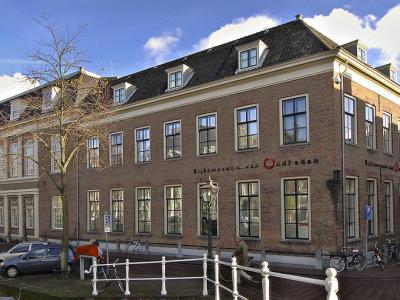
9) Rijksmuseum van Oudheden (National Museum of Antiquities) (must see)
Situated by the Rapenburg, the most beautiful canal in Leiden is a historical mansion townhouse and an old almshouse. Together, they are the National Museum of Antiquities and the National Center for Archeology. The museum is one of the five oldest museums in the Netherlands, founded by King William I in 1818.
The museum has a collection of more than 150,000 artifacts in five presentations of Rome, Egypt, Greece, Asia Minor, and the early Low Countries. The reception area is the 2000-year-old Temple of Taffeh, commissioned by the Roman Emperor Augustus. It was transported stone by stone to the museum lobby.
The museum has two rooms for rent for meetings and events; the Trojans Room and the Leemans Room. The rooms have a capacity of up to 400 visitors. The Leemans Room is next to the Temple Room. It can hold up to 70 people and it has a grand piano.
The museum features a world-class collection of Egyptian mummies and sarcophagi. The five different presentations have replicas, reconstructions, films, and media. The museum has the most extensive collection of Dutch archeological objects. They cover the history of the Netherlands from pre-historic times to the late Middle Ages.
The museum has a collection of more than 150,000 artifacts in five presentations of Rome, Egypt, Greece, Asia Minor, and the early Low Countries. The reception area is the 2000-year-old Temple of Taffeh, commissioned by the Roman Emperor Augustus. It was transported stone by stone to the museum lobby.
The museum has two rooms for rent for meetings and events; the Trojans Room and the Leemans Room. The rooms have a capacity of up to 400 visitors. The Leemans Room is next to the Temple Room. It can hold up to 70 people and it has a grand piano.
The museum features a world-class collection of Egyptian mummies and sarcophagi. The five different presentations have replicas, reconstructions, films, and media. The museum has the most extensive collection of Dutch archeological objects. They cover the history of the Netherlands from pre-historic times to the late Middle Ages.

10) Rapenburg Canal
The finest walk in Leiden may just be a stroll along the Rapenburg Canal. Johan Polyander van Kerckhoven, a 17th-century professor of Theology at Leiden University, claimed, "of all Leiden's streets and canals, Rapenburg is the most beautiful." He has never been proved wrong. Many others feel the same way.
The Rapenburg Canal was excavated in the 14th century to be part of the defenses of south Leiden. It begins at the Old Rhine. The canal then makes a crescent through the town back to the New Rhine. In a two-mile walk covering both sides of the canal, one may see 120 well-preserved 17th and 18th-century buildings.
The Siebold House (Siebolddhuis) was the home of Philip Franz von Siebold, a German physician, botanist, and traveler. It is now a museum of Japanese culture. The 17th-century Bibliotheca Thysiana houses the 2,500 books of scholar and respected teacher Johannes Thysius. The National Museum of Antiquities sits by the canal, founded by William I in 1818. The Academy Building of Leiden University dates from 1516.
Walking along the Rapenburg, one sees a strange gap in the row of buildings. The gap is Van der Werf Park. It was formed in 1807 by an explosion on a ship bound from Haarlem to Delft. The ship had a cargo of 37,000 pounds of gunpowder. Today, after all the mayhem, one may relax in the park and enjoy the most beautiful canal in Leiden.
The Rapenburg Canal was excavated in the 14th century to be part of the defenses of south Leiden. It begins at the Old Rhine. The canal then makes a crescent through the town back to the New Rhine. In a two-mile walk covering both sides of the canal, one may see 120 well-preserved 17th and 18th-century buildings.
The Siebold House (Siebolddhuis) was the home of Philip Franz von Siebold, a German physician, botanist, and traveler. It is now a museum of Japanese culture. The 17th-century Bibliotheca Thysiana houses the 2,500 books of scholar and respected teacher Johannes Thysius. The National Museum of Antiquities sits by the canal, founded by William I in 1818. The Academy Building of Leiden University dates from 1516.
Walking along the Rapenburg, one sees a strange gap in the row of buildings. The gap is Van der Werf Park. It was formed in 1807 by an explosion on a ship bound from Haarlem to Delft. The ship had a cargo of 37,000 pounds of gunpowder. Today, after all the mayhem, one may relax in the park and enjoy the most beautiful canal in Leiden.
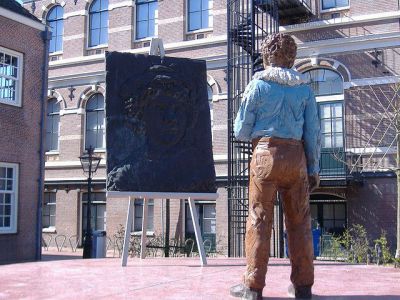
11) Rembrandt Statue
The Rembrandt Statue in Leiden is a fitting homage to one of the city's most illustrious sons, Rembrandt van Rijn. Born in 1606, Rembrandt is celebrated as a master of the Dutch Golden Age and a pivotal figure in art history. The statue, crafted by Toon Dupuis, stands proudly in Rembrandtplaats, commemorating 400 years since the painter's birth. Unveiled in 2006 during city-wide festivities, the sculpture depicts Rembrandt engrossed in his craft, a portrayal that breathes life into his enduring artistic legacy.
What makes this statue particularly remarkable is its maintenance tradition: it is repainted annually, ensuring it remains vibrant and lifelike. This touch of care reflects Leiden’s pride in its historical and cultural heritage.
The statue's location in the heart of Leiden is surrounded by a blend of historic architecture, quaint canals, and lively streets. Visitors can enjoy a leisurely walk in the area, with nearby cafes and shops offering a taste of local flavors. Leiden's prominence as a center of art and science, home to the Netherlands' oldest university and landmarks like the National Museum of Antiquities, enhances the appeal of this destination.
A visit to the Rembrandt Statue is more than just an encounter with a monument-it’s an invitation to explore the rich tapestry of Leiden’s past, where the legacy of one of the greatest artists in history continues to inspire.
What makes this statue particularly remarkable is its maintenance tradition: it is repainted annually, ensuring it remains vibrant and lifelike. This touch of care reflects Leiden’s pride in its historical and cultural heritage.
The statue's location in the heart of Leiden is surrounded by a blend of historic architecture, quaint canals, and lively streets. Visitors can enjoy a leisurely walk in the area, with nearby cafes and shops offering a taste of local flavors. Leiden's prominence as a center of art and science, home to the Netherlands' oldest university and landmarks like the National Museum of Antiquities, enhances the appeal of this destination.
A visit to the Rembrandt Statue is more than just an encounter with a monument-it’s an invitation to explore the rich tapestry of Leiden’s past, where the legacy of one of the greatest artists in history continues to inspire.
12) Rembrandt Birth House
Rembrandt Harmenszoon van Rijn was born in Leiden in 1606. His father was Harmen Gerritszoon van Rijn, a miller. Neeltgen Willemsdochter, daughter of a baker, was his mother. Rembrandt was their eighth and last born child. There were actually ten children, but two died in infancy, a common occurrence in those days.
Stand on the Rembrandt Bridge. The Rhine River flows beneath your feet. The view from here includes a windmill like the one Rembrandt's father operated. To the east are the streets of Galgenwater (Gallow Waters). There was a gallows here and hangings were not infrequent.
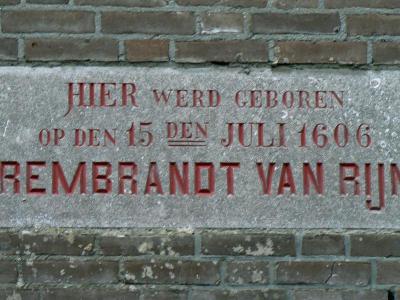
Leave the bridge. Walk south. Enter the Weddesteeg. Proceed to number 27. Here was Rembrandt born. The house is gone. Well, there is a house here, but it's not the one our man was born in. That was demolished years ago. But wait. There's a plaque over the front door. It reads, "Here was born on the 15th of July 1606 REMBRANDT VAN RIJN."
That's all there is to see here. Walk west. You come to Rembrandt Park. This is the likely location of Windmill de Rijn, Rembrandt's father's establishment. It too, is gone. In time Rembrandt moved to Amsterdam. He was enormously successful but not wise with money. He died in penury. His birth house is gone, his grave unmarked.
Stand on the Rembrandt Bridge. The Rhine River flows beneath your feet. The view from here includes a windmill like the one Rembrandt's father operated. To the east are the streets of Galgenwater (Gallow Waters). There was a gallows here and hangings were not infrequent.
Leave the bridge. Walk south. Enter the Weddesteeg. Proceed to number 27. Here was Rembrandt born. The house is gone. Well, there is a house here, but it's not the one our man was born in. That was demolished years ago. But wait. There's a plaque over the front door. It reads, "Here was born on the 15th of July 1606 REMBRANDT VAN RIJN."
That's all there is to see here. Walk west. You come to Rembrandt Park. This is the likely location of Windmill de Rijn, Rembrandt's father's establishment. It too, is gone. In time Rembrandt moved to Amsterdam. He was enormously successful but not wise with money. He died in penury. His birth house is gone, his grave unmarked.
