Custom Walk in Mumbai, India by sandwhy_dc27f6 created on 2026-06-17
Guide Location: India » Mumbai
Guide Type: Custom Walk
# of Sights: 10
Tour Duration: 10 Hour(s)
Travel Distance: 27.1 Km or 16.8 Miles
Share Key: 7XTWT
Guide Type: Custom Walk
# of Sights: 10
Tour Duration: 10 Hour(s)
Travel Distance: 27.1 Km or 16.8 Miles
Share Key: 7XTWT
How It Works
Please retrieve this walk in the GPSmyCity app. Once done, the app will guide you from one tour stop to the next as if you had a personal tour guide. If you created the walk on this website or come to the page via a link, please follow the instructions below to retrieve the walk in the app.
Retrieve This Walk in App
Step 1. Download the app "GPSmyCity: Walks in 1K+ Cities" on Apple App Store or Google Play Store.



Step 2. In the GPSmyCity app, download(or launch) the guide "Mumbai Map and Walking Tours".
Step 3. Tap the menu button located at upper right corner of the "Walks" screen and select "Retrieve custom walk". Enter the share key: 7XTWT
1) Bandra–Worli Sea Link (must see)
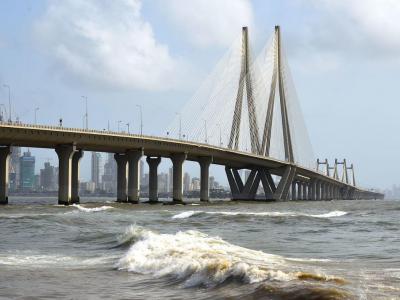
Bandra–Worli Sea Link is a cable-stayed bridge that connects the suburb of Bandra with the Worli peninsula. The bridge was commissioned by Maharashtra State Road Development Corporation in 1999 and completed in 2010.
The bridge is the first cable-stayed bridge over open seas in India. It is also the first bridge in Mumbai that uses seismic arresters to withstand earthquakes of up to 7.0.
Construction of the bridge helped to significantly ease traffic in the region. More than 35,000 vehicles use the Bandra-Worli Sea Link daily due to the fact that it shortens a 30 minute drive to only 10 minutes.
Visitors to Mumbai cannot walk on the bridge, as it is not open to pedestrians. However, the true beauty of the Bandra-Worli Sea Link can only be seen from afar. To get a good view of the bridge, visitors can head to the area known as Sealink View on Mahim Beach near the Mayor's Bungalow.
Arguably the best view of the bridge is available from the Bandra-Worli Sea Link promenade. Pedestrians can walk along the shore of Mahim Bay while appreciation the engineering of the bridge while avoiding the heavy traffic.
The bridge is the first cable-stayed bridge over open seas in India. It is also the first bridge in Mumbai that uses seismic arresters to withstand earthquakes of up to 7.0.
Construction of the bridge helped to significantly ease traffic in the region. More than 35,000 vehicles use the Bandra-Worli Sea Link daily due to the fact that it shortens a 30 minute drive to only 10 minutes.
Visitors to Mumbai cannot walk on the bridge, as it is not open to pedestrians. However, the true beauty of the Bandra-Worli Sea Link can only be seen from afar. To get a good view of the bridge, visitors can head to the area known as Sealink View on Mahim Beach near the Mayor's Bungalow.
Arguably the best view of the bridge is available from the Bandra-Worli Sea Link promenade. Pedestrians can walk along the shore of Mahim Bay while appreciation the engineering of the bridge while avoiding the heavy traffic.
2) Chor Bazaar (must see)
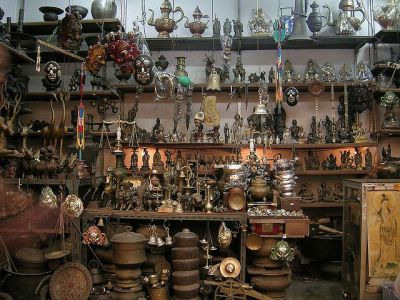
One of the most fascinating places in Mumbai is the Chor Bazaar. Chor, which literally translates to “thief”, and hence culminates to the thief market, is one of the best places to witness the true essence and flavour of street shopping in Mumbai. Essentially a flea market, it has virtually everything, from a genuine spare part of a Mercedes car to an authentic Ming vase here.
A popular destination for tourists, the Chor Bazaar is where you can literally shop till you drop. Don’t feel shy to haggle shamelessly, for this is one place where you just don’t pay what the salesmen's price. Popular picks at the market are old Bollywood posters, antique junk, spare parts, beautiful clocks, old lamp shades and other trinkets. Dense with shoppers and filled with back to back shops and hawkers, the Chor Bazaar is definitely a place to visit.
Located near the Bhendi Bazzar, in South Mumbai, it is very close to the Crawford Market. Although weekends are a good time to visit the Bazaar, the best time would be Friday, as the sellers replenish their stock. A word of advice - you can also expect many more hopefuls on Fridays, so be prepared for a crowd.
What to buy here: Lampshades.
As you already know, it's all about the atmosphere. Re-create an Indian afternoon and its magic by adding a special touch to your home décor. Or better yet, bring a beautiful Indian lampshade as a gift for your friends and enjoy their soft, romantic light whenever you visit.
This traditional handicraft has been successfully combined with modern creativity, the lampshades are made out of cotton paper, jute and bamboo. Inexpensive but diverse materials, a fairly easy technique and a little imagination are some of the ingredients of their rapid ascent. These lampshades are delicate, sporting versatile structures, whose beauty is often times enhanced by craftsmen with the assistance of cut work, ribbons or hand-made paintings. Jaipur, Delhi and recently Mumbai boast rich traditions of making decorative lampshades, for daily use and special occasions such as festivals and weddings equally.
A popular destination for tourists, the Chor Bazaar is where you can literally shop till you drop. Don’t feel shy to haggle shamelessly, for this is one place where you just don’t pay what the salesmen's price. Popular picks at the market are old Bollywood posters, antique junk, spare parts, beautiful clocks, old lamp shades and other trinkets. Dense with shoppers and filled with back to back shops and hawkers, the Chor Bazaar is definitely a place to visit.
Located near the Bhendi Bazzar, in South Mumbai, it is very close to the Crawford Market. Although weekends are a good time to visit the Bazaar, the best time would be Friday, as the sellers replenish their stock. A word of advice - you can also expect many more hopefuls on Fridays, so be prepared for a crowd.
What to buy here: Lampshades.
As you already know, it's all about the atmosphere. Re-create an Indian afternoon and its magic by adding a special touch to your home décor. Or better yet, bring a beautiful Indian lampshade as a gift for your friends and enjoy their soft, romantic light whenever you visit.
This traditional handicraft has been successfully combined with modern creativity, the lampshades are made out of cotton paper, jute and bamboo. Inexpensive but diverse materials, a fairly easy technique and a little imagination are some of the ingredients of their rapid ascent. These lampshades are delicate, sporting versatile structures, whose beauty is often times enhanced by craftsmen with the assistance of cut work, ribbons or hand-made paintings. Jaipur, Delhi and recently Mumbai boast rich traditions of making decorative lampshades, for daily use and special occasions such as festivals and weddings equally.
3) Chhatrapati Shivaji Maharaj Terminus (Victoria Terminus) (must see)
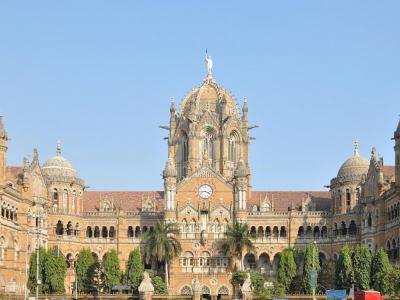
Victoria Terminus is a masterpiece of 19th-century railway architecture. The station was built between 1878 and 1887 and inaugurated during the Golden Jubilee of Queen Victoria. Originally intended to serve as the headquarters of the Great Indian Peninsula Railway, the building reflected Bombay’s growing importance as a major port and transportation hub linking the city with the rest of the Indian subcontinent. In 1996, the station was renamed in honor of the Maratha ruler Chhatrapati Shivaji.
Designed by British architect Frederick William Stevens, the station is widely regarded as one of the finest examples of Victorian Gothic Revival architecture in India. The structure blends European Gothic forms with Indian decorative elements, creating a richly detailed façade. Pointed arches, stained-glass windows, carved stonework, and ornate turrets define the exterior, while the central ribbed dome crowns the building.
Several symbolic sculptures add to the building’s character. At the entrance, stone figures of a lion at the left and a tiger at the right represent Britain and India, reflecting the colonial era in which the station was constructed. Atop the central dome stands a four-meter-high statue of a female figure holding a torch and a spoked wheel, symbolizing progress. Closer to the windows and arches, you’ll notice highly detailed stone relief panels filled with plants, animals, and ornamental patterns.
Looking closely at the façade above the ground-floor arches. It features a series of ten circular portrait medallions, representing key figures in the history of the Indian railways and the British administration. Among these prominent figures is the medallion of Jagannath Shankarsheth, a celebrated Indian philanthropist and one of the railway’s first Indian directors. Facing the building, you can find it on the far right wing of the structure, being the third medallion from the left.
Today, Victoria Terminus remains one of the busiest railway stations in India, serving more than three million passengers each day through its suburban and long-distance rail networks.
Designed by British architect Frederick William Stevens, the station is widely regarded as one of the finest examples of Victorian Gothic Revival architecture in India. The structure blends European Gothic forms with Indian decorative elements, creating a richly detailed façade. Pointed arches, stained-glass windows, carved stonework, and ornate turrets define the exterior, while the central ribbed dome crowns the building.
Several symbolic sculptures add to the building’s character. At the entrance, stone figures of a lion at the left and a tiger at the right represent Britain and India, reflecting the colonial era in which the station was constructed. Atop the central dome stands a four-meter-high statue of a female figure holding a torch and a spoked wheel, symbolizing progress. Closer to the windows and arches, you’ll notice highly detailed stone relief panels filled with plants, animals, and ornamental patterns.
Looking closely at the façade above the ground-floor arches. It features a series of ten circular portrait medallions, representing key figures in the history of the Indian railways and the British administration. Among these prominent figures is the medallion of Jagannath Shankarsheth, a celebrated Indian philanthropist and one of the railway’s first Indian directors. Facing the building, you can find it on the far right wing of the structure, being the third medallion from the left.
Today, Victoria Terminus remains one of the busiest railway stations in India, serving more than three million passengers each day through its suburban and long-distance rail networks.
4) Jehangir Art Gallery
The Jehangir Art Gallery is situated in Mumbai and was established by Sir Cowasji Jehangir upon the encouragement of K. K. Hebbar and Homi Bhabha. The architectural design for the gallery was created by G.M. Bhuta on behalf of G.M. Bhuta & Associates.
This gallery was officially opened on January 21, 1952, with the inauguration ceremony attended by the then Chief Minister of Bombay State, B. G. Kher. It was dedicated to the memory of Sir Cowasji's late son, Jehangir. It holds a significant place in the world of Indian art, closely tied to the revival of Indian artistic expression.
Within the complex, you'll also find the well-known Samovar cafe, which retains a nostalgic connection to the socialist culture of the 1970s. Additionally, it houses Natesans, the country's oldest licensed antique dealers.
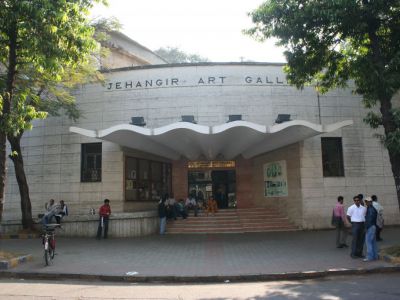
The building is an early example of concrete construction in the city. The gallery has an inward-facing design, serving both as an auditorium and an art gallery. While today, the idea of an introverted art gallery might be questioned, the Jehangir represents an early modernist approach of art spaces that look inward. Furthermore, due to the dual function of an auditorium, it couldn't be open to the street. The design incorporates a distinctive large wavy cantilevered entrance that reaches out to embrace the street, adding interest to an otherwise plain facade, which is adorned with relief stone cladding.
This gallery was officially opened on January 21, 1952, with the inauguration ceremony attended by the then Chief Minister of Bombay State, B. G. Kher. It was dedicated to the memory of Sir Cowasji's late son, Jehangir. It holds a significant place in the world of Indian art, closely tied to the revival of Indian artistic expression.
Within the complex, you'll also find the well-known Samovar cafe, which retains a nostalgic connection to the socialist culture of the 1970s. Additionally, it houses Natesans, the country's oldest licensed antique dealers.
The building is an early example of concrete construction in the city. The gallery has an inward-facing design, serving both as an auditorium and an art gallery. While today, the idea of an introverted art gallery might be questioned, the Jehangir represents an early modernist approach of art spaces that look inward. Furthermore, due to the dual function of an auditorium, it couldn't be open to the street. The design incorporates a distinctive large wavy cantilevered entrance that reaches out to embrace the street, adding interest to an otherwise plain facade, which is adorned with relief stone cladding.
5) Bombay Natural History Society
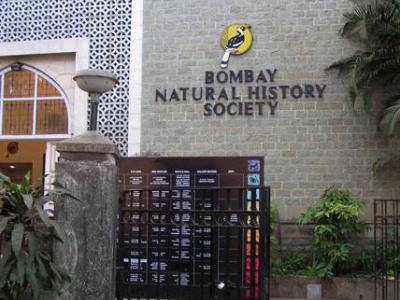
If you admire science and have an inclination to zoological, environmental and conservation studies, the Bombay Natural History Society is a must visit. Established in 1883, the Society was founded with the key aim and purpose of carrying out scientific observations, preserving natural history and exhibiting interesting specimens and natural finds.
The Bombay Natural History Society is the largest non-governmental organization in the country. Not only that, the Society has played a pivotal role in conserving the area’s natural beauty, helped in spreading awareness and educating masses about the need for natural conservation and also aided research in this field. The Society has a vast following spread to almost 30 countries over the world.
Many renowned names have been associated with the Society. Salim Ali and S. Dillon Ripley are some of the prominent ornithologists and naturalists who have served the Society.
The Museum housed within the building has a unique collection of embalmed and artificial specimens of reptiles, insects, mammals and other vertebrates. The best part is that these are all native to the Indian soil and none have been sourced outside the country. However, the society is not open to the public and one must obtain a permission prior to visiting.
The Bombay Natural History Society is the largest non-governmental organization in the country. Not only that, the Society has played a pivotal role in conserving the area’s natural beauty, helped in spreading awareness and educating masses about the need for natural conservation and also aided research in this field. The Society has a vast following spread to almost 30 countries over the world.
Many renowned names have been associated with the Society. Salim Ali and S. Dillon Ripley are some of the prominent ornithologists and naturalists who have served the Society.
The Museum housed within the building has a unique collection of embalmed and artificial specimens of reptiles, insects, mammals and other vertebrates. The best part is that these are all native to the Indian soil and none have been sourced outside the country. However, the society is not open to the public and one must obtain a permission prior to visiting.
6) Gateway of India (must see)
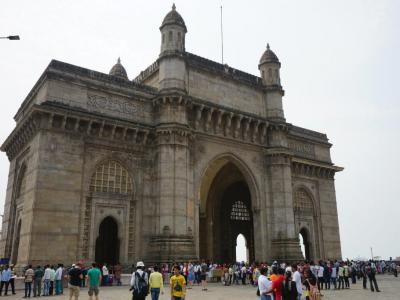
The Gateway of India rises at the edge of Mumbai’s harbor, standing as a defining symbol of the city's modern history. Conceived to commemorate the 1911 visit of King George V and Queen Mary, the first by a reigning British monarch, the monumental arch marked Mumbai’s position as the western gateway of the British Empire. Built on reclaimed land at Apollo Bunder, the site had long served as a strategic landing point for ships entering the city. Its foundations were laid in 1913, though construction began only after land reclamation was completed, and the structure was formally inaugurated in 1924.
Designed by Scottish architect George Wittet, the Gateway represents Indo-Saracenic architecture, blending Islamic and European forms with Indian decorative elements. The monument is organized around a grand pointed central arch, crowned by a domed pavilion. Built from locally sourced yellow basalt, its central arch and dome are balanced by smaller turrets, latticework, and inscriptions inspired by Hindu design traditions. The carved stone screens and ornamental details draw from Islamic jali work and Indian temple architecture.
History gave the Gateway a powerful and unexpected final role. In 1948, it became the symbolic exit point for the last British troops leaving independent India. A structure built to welcome empire thus quietly marked its end, transforming the Gateway from a ceremonial entrance into a lasting marker of political change and collective memory. Today, the Gateway of India remains a lively focal point along the waterfront, set directly opposite the historic Taj Mahal Hotel. Boats depart from nearby jetties toward Elephanta Island or for harbor cruises.
Designed by Scottish architect George Wittet, the Gateway represents Indo-Saracenic architecture, blending Islamic and European forms with Indian decorative elements. The monument is organized around a grand pointed central arch, crowned by a domed pavilion. Built from locally sourced yellow basalt, its central arch and dome are balanced by smaller turrets, latticework, and inscriptions inspired by Hindu design traditions. The carved stone screens and ornamental details draw from Islamic jali work and Indian temple architecture.
History gave the Gateway a powerful and unexpected final role. In 1948, it became the symbolic exit point for the last British troops leaving independent India. A structure built to welcome empire thus quietly marked its end, transforming the Gateway from a ceremonial entrance into a lasting marker of political change and collective memory. Today, the Gateway of India remains a lively focal point along the waterfront, set directly opposite the historic Taj Mahal Hotel. Boats depart from nearby jetties toward Elephanta Island or for harbor cruises.
7) Taj Mahal Palace Hotel
The Taj Mahal Palace Hotel, opened in 1903, was commissioned by Indian industrialist Jamsetji Tata at a time when luxury hotels in colonial Mumbai largely excluded Indian guests. Its name was inspired by the Taj Mahal in Agra. Today, it continues to function as a working luxury hotel. Visitors can admire its exterior from the promenade or step inside its public spaces.
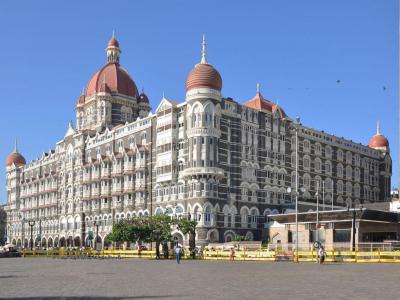
The historic 1903 structure, often called the Taj Mahal Palace, forms the original part of the hotel complex and is easily recognized by its large red dome facing the Gateway of India. A modern high-rise addition, the Taj Tower, was built beside it in 1973. Architecturally, the red dome combines a rich blend of Indo-Saracenic, Islamic, and European design influences. The palace building features arched balconies, intricate stonework, and decorative elements inspired by Moorish traditions.
Throughout the 20th century, the Taj Mahal Palace Hotel became closely linked to Mumbai’s social, political, and cultural life. It hosted royalty, world leaders, writers, and film stars, with notable guests including Lord Mountbatten, the first Governor-General of independent India, and Bill Clinton, the 42nd President of the United States. The hotel has also appeared in international cinema, most recently as a filming location for Christopher Nolan’s “Tenet”.
Visitors can step inside the Taj Mahal Palace to experience some of its historic interiors. One of the most striking architectural highlights is the Cantilever Grand Staircase, an elegant marble staircase designed to appear as if it is floating without visible support. Afterwards stop by the famous Sea Lounge, a café overlooking the Gateway of India and Mumbai Harbor. The lounge is well known for its traditional afternoon tea service, where guests can enjoy tea, pastries, and light snacks while taking in views of the waterfront.
The historic 1903 structure, often called the Taj Mahal Palace, forms the original part of the hotel complex and is easily recognized by its large red dome facing the Gateway of India. A modern high-rise addition, the Taj Tower, was built beside it in 1973. Architecturally, the red dome combines a rich blend of Indo-Saracenic, Islamic, and European design influences. The palace building features arched balconies, intricate stonework, and decorative elements inspired by Moorish traditions.
Throughout the 20th century, the Taj Mahal Palace Hotel became closely linked to Mumbai’s social, political, and cultural life. It hosted royalty, world leaders, writers, and film stars, with notable guests including Lord Mountbatten, the first Governor-General of independent India, and Bill Clinton, the 42nd President of the United States. The hotel has also appeared in international cinema, most recently as a filming location for Christopher Nolan’s “Tenet”.
Visitors can step inside the Taj Mahal Palace to experience some of its historic interiors. One of the most striking architectural highlights is the Cantilever Grand Staircase, an elegant marble staircase designed to appear as if it is floating without visible support. Afterwards stop by the famous Sea Lounge, a café overlooking the Gateway of India and Mumbai Harbor. The lounge is well known for its traditional afternoon tea service, where guests can enjoy tea, pastries, and light snacks while taking in views of the waterfront.

8) Colaba Causeway
What to buy here: Cotton Lampshades | Henna body art kit | Incense and Perfume Oils | Indian Jewelry | Rangoli cum diyas plate |
Henna Tattoos (also known as Mehendi) is an ancient cultural tradition, used to create exotic designs on various parts of the body. Traditionally, henna has been applied to the hands and feet of women preparing for different ceremonies and rituals. In India, the bride is the finest showpiece in the wedding ceremony and thus, she has to adorn herself accordingly. Applying henna paste is an important part of the bridal pre-party, when the bride's friends gather to celebrate together the future happy event. Intricate natural motifs such as flowers, leave and vines are painted, along with bolder geometric patters of Arabic origin. Mehendi is a completely natural, non-permanent, painless body art technique which is also fun and inexpensive. The females in your life will definitely appreciate an authentic henna body art kit and will let their imagination running while they discover for themselves the unique beauty of this ancient Indian tradition. Each kit usually contains special application cones, 1 bottle of the finest henna oil, instructions and a book full of henna designs.
Henna Tattoos (also known as Mehendi) is an ancient cultural tradition, used to create exotic designs on various parts of the body. Traditionally, henna has been applied to the hands and feet of women preparing for different ceremonies and rituals. In India, the bride is the finest showpiece in the wedding ceremony and thus, she has to adorn herself accordingly. Applying henna paste is an important part of the bridal pre-party, when the bride's friends gather to celebrate together the future happy event. Intricate natural motifs such as flowers, leave and vines are painted, along with bolder geometric patters of Arabic origin. Mehendi is a completely natural, non-permanent, painless body art technique which is also fun and inexpensive. The females in your life will definitely appreciate an authentic henna body art kit and will let their imagination running while they discover for themselves the unique beauty of this ancient Indian tradition. Each kit usually contains special application cones, 1 bottle of the finest henna oil, instructions and a book full of henna designs.
9) Marine Drive (must see)
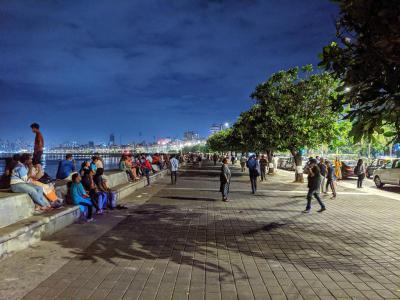
Marine Drive is a promenade that curves around Back Bay. The 2.2 miles (3.6 kilometers) pedestrian path follows Netaji Subhash Chandra Bose Road from Nariman Point to Chowpatty Beach.
People who wish to walk the entire span of Marine Drive will see numerous fascinating sights along the way. The tree-lined promenade offers easy access to shopping areas, coffee shops, ice cream parlors and sit-down restaurants. Indeed, visitors may wish to plan several hours on this tour so they can stop to take photos, go shopping or grab a bite to eat.
Starting at the Tip of Nariman Point, you have an excellent photo opportunity where, on clear days, you can see the skyscrapers of Mumbai and the Arabian Sea. Other nearby areas of interest include the Nehru Statue, the Lokmanya Bal Gangadhar Tilak Samadhi memorial and the Wankhede Stadium.
Marine Drive is lit at night, which allows for easy night-time strolling. These lights also give the promenade its nickname, Queen's Necklace, as the lights along the C-shaped walkway resemble that of a strand of pearls.
People who wish to walk the entire span of Marine Drive will see numerous fascinating sights along the way. The tree-lined promenade offers easy access to shopping areas, coffee shops, ice cream parlors and sit-down restaurants. Indeed, visitors may wish to plan several hours on this tour so they can stop to take photos, go shopping or grab a bite to eat.
Starting at the Tip of Nariman Point, you have an excellent photo opportunity where, on clear days, you can see the skyscrapers of Mumbai and the Arabian Sea. Other nearby areas of interest include the Nehru Statue, the Lokmanya Bal Gangadhar Tilak Samadhi memorial and the Wankhede Stadium.
Marine Drive is lit at night, which allows for easy night-time strolling. These lights also give the promenade its nickname, Queen's Necklace, as the lights along the C-shaped walkway resemble that of a strand of pearls.
10) Hanging Gardens
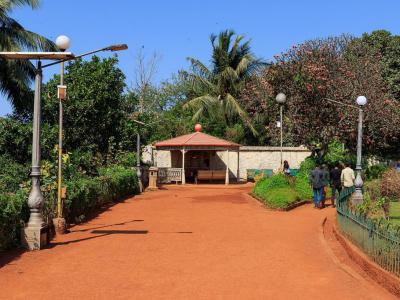
The Hanging Gardens are one of the most pleasant green spaces on Malabar Hill, where visitors can enjoy one of the most scenic viewpoints in Mumbai. The park was laid out in 1881 on terraced slopes above the city and later renovated in 1921.
The gardens were created not only as a public park but also as a protective cover for large water reservoirs located beneath the hill. Built above three reservoirs capable of storing millions of gallons of water, the landscaped grounds were designed to shield the city’s drinking water supply from contamination. This unusual arrangement is what gave the site its popular name.
One of the most recognizable features of the gardens is the collection of carefully trimmed hedges shaped into animals and other playful forms. Along the northern side of the park, visitors will find a small pavilion that offers a shaded place to pause and enjoy the surrounding greenery. Near the central paths, a decorative fountain adds a focal point to the garden layout. On the western side of the gardens, a modest clock tower stands among the trees. From this edge of the park, visitors can also glimpse views toward Back Bay and the Arabian Sea.
The gardens were created not only as a public park but also as a protective cover for large water reservoirs located beneath the hill. Built above three reservoirs capable of storing millions of gallons of water, the landscaped grounds were designed to shield the city’s drinking water supply from contamination. This unusual arrangement is what gave the site its popular name.
One of the most recognizable features of the gardens is the collection of carefully trimmed hedges shaped into animals and other playful forms. Along the northern side of the park, visitors will find a small pavilion that offers a shaded place to pause and enjoy the surrounding greenery. Near the central paths, a decorative fountain adds a focal point to the garden layout. On the western side of the gardens, a modest clock tower stands among the trees. From this edge of the park, visitors can also glimpse views toward Back Bay and the Arabian Sea.
