Custom Walk in Paris, France by scraneconsulting2352 created on 2026-06-27
Guide Location: France » Paris
Guide Type: Custom Walk
# of Sights: 5
Tour Duration: 3 Hour(s)
Travel Distance: 7.5 Km or 4.7 Miles
Share Key: 873GW
Guide Type: Custom Walk
# of Sights: 5
Tour Duration: 3 Hour(s)
Travel Distance: 7.5 Km or 4.7 Miles
Share Key: 873GW
How It Works
Please retrieve this walk in the GPSmyCity app. Once done, the app will guide you from one tour stop to the next as if you had a personal tour guide. If you created the walk on this website or come to the page via a link, please follow the instructions below to retrieve the walk in the app.
Retrieve This Walk in App
Step 1. Download the app "GPSmyCity: Walks in 1K+ Cities" on Apple App Store or Google Play Store.



Step 2. In the GPSmyCity app, download(or launch) the guide "Paris Map and Walking Tours".
Step 3. Tap the menu button located at upper right corner of the "Walks" screen and select "Retrieve custom walk". Enter the share key: 873GW
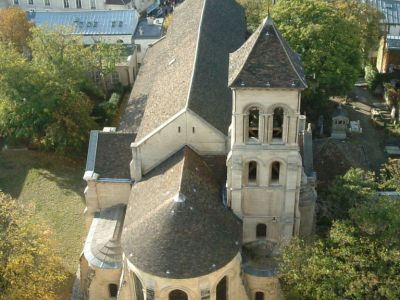
1) Eglise Saint-Pierre de Montmartre (Church of St. Peter at Montmartre)
Saint-Pierre de Montmartre is the second oldest surviving church in Paris, tracing its origins back to the 3rd century AD with foundations attributed to Saint Denis. The site, historically believed to have been a Temple of Mars, became a pilgrimage destination by the 9th century.
Officially established in 1133, the church formed the nucleus of the prestigious Montmartre Abbey, a site deeply intertwined with Parisian and religious history. After being reconsecrated in 1147, the church thrived under the patronage of French nobility up until the end of the 17th century. However, the French Revolution marked a period of decline, with the abbey's destruction and the church's desecration, temporarily transforming into a "Temple of Reason."
Post-Revolution, the church saw various uses, including a stint as a visual telegraph station and as barracks for Russian soldiers in 1814. Avoiding demolition, Saint-Pierre de Montmartre was eventually restored between 1899 and 1905 and formally returned to the religious service in 1908.
The church's hidden entry opens to a tree-filled courtyard, leading to a façade renovated in 1775 and adorned with modern bronze doorways added in 1980. These doors depict scenes from the lives of the Virgin Mary, Saint Peter, and Saint Denis of Paris. The interior showcases a Romanesque design with Gothic influences, featuring a nave with vaulted ceilings supported by intricately decorated pillars, a choir and apse with ancient elements, and unique Merovingian carvings.
Key artifacts within include the venerated statue of Our Lady of Montmartre, a Renaissance-style oval baptismal font from 1537, and a replica of the Vatican’s Saint Peter statue. The church also houses a historic organ, originally from Notre-Dame-de-Lorette, rebuilt in the 19th century.
Officially established in 1133, the church formed the nucleus of the prestigious Montmartre Abbey, a site deeply intertwined with Parisian and religious history. After being reconsecrated in 1147, the church thrived under the patronage of French nobility up until the end of the 17th century. However, the French Revolution marked a period of decline, with the abbey's destruction and the church's desecration, temporarily transforming into a "Temple of Reason."
Post-Revolution, the church saw various uses, including a stint as a visual telegraph station and as barracks for Russian soldiers in 1814. Avoiding demolition, Saint-Pierre de Montmartre was eventually restored between 1899 and 1905 and formally returned to the religious service in 1908.
The church's hidden entry opens to a tree-filled courtyard, leading to a façade renovated in 1775 and adorned with modern bronze doorways added in 1980. These doors depict scenes from the lives of the Virgin Mary, Saint Peter, and Saint Denis of Paris. The interior showcases a Romanesque design with Gothic influences, featuring a nave with vaulted ceilings supported by intricately decorated pillars, a choir and apse with ancient elements, and unique Merovingian carvings.
Key artifacts within include the venerated statue of Our Lady of Montmartre, a Renaissance-style oval baptismal font from 1537, and a replica of the Vatican’s Saint Peter statue. The church also houses a historic organ, originally from Notre-Dame-de-Lorette, rebuilt in the 19th century.
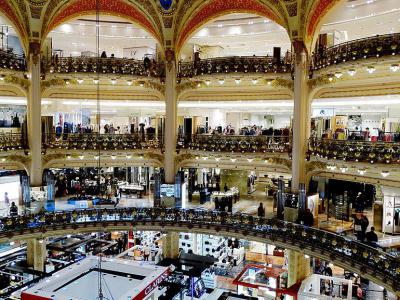
2) Galleries Lafayette (Lafayette Galleries)
Galeries Lafayette boasts a breathtaking neo-Byzantine stained-glass domed ceiling dating back to 1912, with opulent gilded balconies that steal the show. To behold this grand centerpiece, simply make your way to the center of the main store, surrounded by perfumes and cosmetics, and look up. Alternatively, ascend the escalators to the 7th-floor rooftop for a panoramic view over the back of Opéra Garnier.
If shopping isn't your cup of tea, visit the first-floor Galerie des Galeries, a free art gallery dedicated to fashion, applied arts, and design. And when you need a break, indulge in one of the restaurants, which include a rooftop bar and restaurant in the main store offering some of the city's most magnificent panoramic views.
On your way down, the top floor of the main store is an excellent spot to pick up interesting Parisian souvenirs. Across the street at Galeries Maison, the gourmet food hall boasts one of the city's finest selections of delicacies and several restaurants, such as the elegant Maison de la Truffe lunch bar. YC Café Yann Couvreur's popular teatime features classic madeleines filled with pistachio or lemon. Bar Kaspia, a luxurious eatery located beneath the main building's famous dome, specializes in caviar and seafood. And don't forget to check out Duclot La Cave on the first floor of Galeries Maison/Gourmet, displaying 2,500 bottles of wine from France and around the world.
If shopping isn't your cup of tea, visit the first-floor Galerie des Galeries, a free art gallery dedicated to fashion, applied arts, and design. And when you need a break, indulge in one of the restaurants, which include a rooftop bar and restaurant in the main store offering some of the city's most magnificent panoramic views.
On your way down, the top floor of the main store is an excellent spot to pick up interesting Parisian souvenirs. Across the street at Galeries Maison, the gourmet food hall boasts one of the city's finest selections of delicacies and several restaurants, such as the elegant Maison de la Truffe lunch bar. YC Café Yann Couvreur's popular teatime features classic madeleines filled with pistachio or lemon. Bar Kaspia, a luxurious eatery located beneath the main building's famous dome, specializes in caviar and seafood. And don't forget to check out Duclot La Cave on the first floor of Galeries Maison/Gourmet, displaying 2,500 bottles of wine from France and around the world.
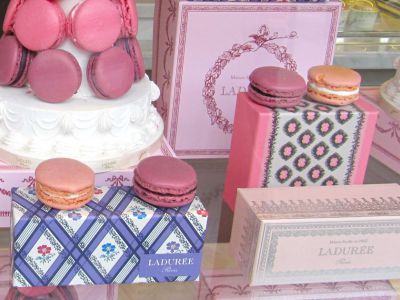
3) Laduree Champs-Elysees
Ladurée, a venerable establishment among Parisian patisseries, has been delighting confectionery enthusiasts since 1862. It was during the 1930s that they first conceived the macaron, a delicate pastry filled with airy ganache that has since become a culinary icon.
For those seeking the most refined of dining experiences, Ladurée's tearoom on the illustrious Champs-Elysées boulevard is a must-visit. Here, guests may indulge in an array of exquisite pastries or partake in a more formal meal.
Alternatively, for those on the go, one may opt to procure some of Ladurée's divine pastries to take with them. Their signature macarons, in particular, are a heavenly treat and it is no wonder that there exists an extensive variety available. To add to the experience, Ladurée's charming packaging makes for a most unforgettable and delectable gift.
For those seeking the most refined of dining experiences, Ladurée's tearoom on the illustrious Champs-Elysées boulevard is a must-visit. Here, guests may indulge in an array of exquisite pastries or partake in a more formal meal.
Alternatively, for those on the go, one may opt to procure some of Ladurée's divine pastries to take with them. Their signature macarons, in particular, are a heavenly treat and it is no wonder that there exists an extensive variety available. To add to the experience, Ladurée's charming packaging makes for a most unforgettable and delectable gift.
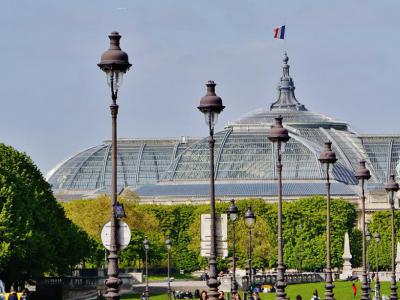
4) Grand Palais (Grand Palace)
The Great Palace of the Champs-Élysées, or more commonly the Grand Palace, is a historic Parisian site, recognized as a monument by the French Ministry of Culture. Built between 1897 and 1900 for the Universal Exposition, it replaced the Palace of Industry demolished shortly before that. Its creation coincided with the construction of the Small Palace, another key attraction of the 1900 World Fair.
Designed to celebrate French art, the Grand Palace showcases a unique blend of Classical and Art Nouveau architecture. Creating its iconic 8-ton glass roof - the largest in Europe - reportedly took more steel than the entire Eiffel Tower! The Beaux-Arts façade, intricate stonework, and cutting-edge use of iron, light steel, and reinforced concrete together reflect the architectural ambitions of the era.
Four architects collaborated on the palace's design, creating a glass-and-iron pavilion ideal for art exhibitions, featuring paintings and sculptures. Over time, the structure also hosted innovative shows on aviation and automotive technology.
The palace has a storied past. Having served as a military hospital in World War I, it then housed Nazi forces and later the French resistance during World War II, which ultimately resulted in fire damage. While postwar plans envisioned replacing it with a modern museum, the Grand Palace was saved and declared a historic monument in 1975.
The building comprises three main areas: the Main Hall, the National Galleries, and the science-focused Palace of Discovery. Seasonal attractions include a cinema, restaurant, and even a skating rink. Curiously enough, the facility also suits for and, in fact, regularly hosts... horse shows!
At night, when brightly illuminated, the Grand Palace becomes a stunning sight, showcasing its architectural beauty in a play of lights and shadows.
Tip:
Should you decide to visit, don't miss the Small Palace too, just across the street, while you're there!
Designed to celebrate French art, the Grand Palace showcases a unique blend of Classical and Art Nouveau architecture. Creating its iconic 8-ton glass roof - the largest in Europe - reportedly took more steel than the entire Eiffel Tower! The Beaux-Arts façade, intricate stonework, and cutting-edge use of iron, light steel, and reinforced concrete together reflect the architectural ambitions of the era.
Four architects collaborated on the palace's design, creating a glass-and-iron pavilion ideal for art exhibitions, featuring paintings and sculptures. Over time, the structure also hosted innovative shows on aviation and automotive technology.
The palace has a storied past. Having served as a military hospital in World War I, it then housed Nazi forces and later the French resistance during World War II, which ultimately resulted in fire damage. While postwar plans envisioned replacing it with a modern museum, the Grand Palace was saved and declared a historic monument in 1975.
The building comprises three main areas: the Main Hall, the National Galleries, and the science-focused Palace of Discovery. Seasonal attractions include a cinema, restaurant, and even a skating rink. Curiously enough, the facility also suits for and, in fact, regularly hosts... horse shows!
At night, when brightly illuminated, the Grand Palace becomes a stunning sight, showcasing its architectural beauty in a play of lights and shadows.
Tip:
Should you decide to visit, don't miss the Small Palace too, just across the street, while you're there!
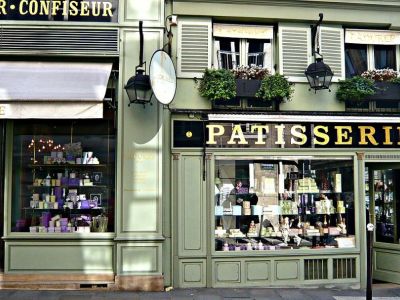
5) Laduree Bonaparte
Ladurée Bonaparte is a Parisian pastry boutique and tea room, part of the historic Ladurée maison, known for its refined macarons and salon-style dining. Located in the Saint-Germain-des-Prés area on the Left Bank, it combines a ground-floor takeaway shop with an upstairs tea room, offering both a quick stop and a more relaxed experience.
This address reflects the broader identity of Ladurée, founded in 1862 and widely credited with popularizing the modern filled macaron. The Bonaparte location belongs to the brand’s later expansion across Paris, bringing its recognizable aesthetic—soft colors, ornate details, and carefully curated displays—into one of the city’s most culturally active neighborhoods.
Inside, the focus remains on presentation as much as taste. Rows of macarons in varied flavors sit alongside pastries, chocolates, and seasonal creations, all packaged with the maison’s signature elegance. Upstairs, the tea room continues the tradition of the French salon, where visitors can pause over tea and desserts in a quieter, more composed setting.
This address reflects the broader identity of Ladurée, founded in 1862 and widely credited with popularizing the modern filled macaron. The Bonaparte location belongs to the brand’s later expansion across Paris, bringing its recognizable aesthetic—soft colors, ornate details, and carefully curated displays—into one of the city’s most culturally active neighborhoods.
Inside, the focus remains on presentation as much as taste. Rows of macarons in varied flavors sit alongside pastries, chocolates, and seasonal creations, all packaged with the maison’s signature elegance. Upstairs, the tea room continues the tradition of the French salon, where visitors can pause over tea and desserts in a quieter, more composed setting.
