Custom Walk in Trondheim, Norway by alnsueinnm_ffcf73 created on 2026-07-02
Guide Location: Norway » Trondheim
Guide Type: Custom Walk
# of Sights: 8
Tour Duration: 2 Hour(s)
Travel Distance: 3.5 Km or 2.2 Miles
Share Key: BDMUY
Guide Type: Custom Walk
# of Sights: 8
Tour Duration: 2 Hour(s)
Travel Distance: 3.5 Km or 2.2 Miles
Share Key: BDMUY
How It Works
Please retrieve this walk in the GPSmyCity app. Once done, the app will guide you from one tour stop to the next as if you had a personal tour guide. If you created the walk on this website or come to the page via a link, please follow the instructions below to retrieve the walk in the app.
Retrieve This Walk in App
Step 1. Download the app "GPSmyCity: Walks in 1K+ Cities" on Apple App Store or Google Play Store.



Step 2. In the GPSmyCity app, download(or launch) the guide "Trondheim Map and Walking Tours".
Step 3. Tap the menu button located at upper right corner of the "Walks" screen and select "Retrieve custom walk". Enter the share key: BDMUY
1) Archbishop's Palace & Museum (must see)
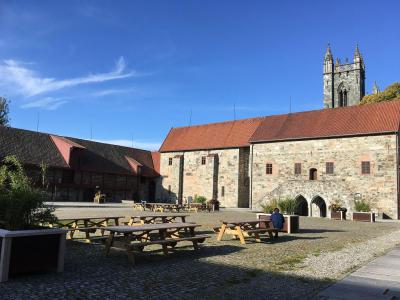
For hundreds of years the Archbishop's palace and castle in Trondheim was the medieval seat of authority for the Catholic Archbishop of Nidaros, now known as Trondheim. After Catholiscism was banned, the castle/palace became royal property. With the Sovereignty Act of 1660, it was the residence for the local bailiff.
The castle was upgraded and expanded. It was used as a residential palace and as a military facility. Today the palace houses a museum, holding archeological finds from the Bishop's Palace. Two large wooden buildings in the palace were destroyed by fire in 1983. Excavations of the buildings in the 1990s are the largest such digs in Norway.
One hundred twenty archeologists from twelve different countries recovered about 160,000 artifacts and the remains of foundations of 100 buildings. Three mints were discovered, stacked one above the other. The lowest mint was in the best condition. It apparently was used to mint coins for Archbishop Gaute Ivarsson.
In addition to exhibits from the digs, the museum holds models of the Archbishop's Palace as seen through the ages and 120 sculptures, including some from Nidaros Cathedral.
The "Armory" located in the Palace is the Army Museum in Trondheim. It is a museum of the Norwegian Army and a museum of resistance. There are weapons and armor and uniforms displayed, from Viking times, the Middle Ages and the union with Denmark and Sweden. Lastly, there are items from the Nazi occupation of Norway in World War II.
The Regalia of Norway (the Crown and crown jewels, etc.) had been stored in the west part of the Castle since 1826. They are on permanent display in the castle.
The castle was upgraded and expanded. It was used as a residential palace and as a military facility. Today the palace houses a museum, holding archeological finds from the Bishop's Palace. Two large wooden buildings in the palace were destroyed by fire in 1983. Excavations of the buildings in the 1990s are the largest such digs in Norway.
One hundred twenty archeologists from twelve different countries recovered about 160,000 artifacts and the remains of foundations of 100 buildings. Three mints were discovered, stacked one above the other. The lowest mint was in the best condition. It apparently was used to mint coins for Archbishop Gaute Ivarsson.
In addition to exhibits from the digs, the museum holds models of the Archbishop's Palace as seen through the ages and 120 sculptures, including some from Nidaros Cathedral.
The "Armory" located in the Palace is the Army Museum in Trondheim. It is a museum of the Norwegian Army and a museum of resistance. There are weapons and armor and uniforms displayed, from Viking times, the Middle Ages and the union with Denmark and Sweden. Lastly, there are items from the Nazi occupation of Norway in World War II.
The Regalia of Norway (the Crown and crown jewels, etc.) had been stored in the west part of the Castle since 1826. They are on permanent display in the castle.
2) Nidaros Cathedral (must see)
King Olav II reigned in Norway from 1015 to 1028. He is also Saint Olav, the patron saint of Norway. Nidaros Cathedral was built to be the burial site of Saint Olav. It took over 230 years before it was complete in 1300. The cathedral has also served as the coronation site of the kings of Norway.
The cathedral was named Nidaros, after the original name for Trondheim. It was Catholic until 1537, when it was swept up in the Protestant Reformation and taken over by the New Church of Norway. It is the world's northernmost medieval cathedral.
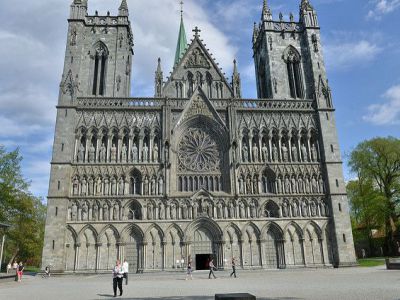
The great stone church can seat 1,850 souls. It shows Gothic and Romanesque architectural influences. In 1814 the cathedral served as a polling station in Norway's first national election.
There were fires in 1327 and again in 1531. In 1708 the cathedral was totally burned down, leaving only the stone walls. In 1719 it was struck by lightning and once more burned.
Restoration began in 1869. It was declared completed in 2001 but maintenance of the structure continues. The west facade of the cathedral is alive with carved figures and animals. Only five of the actual medieval statues have survived intact. Those not unscathed can be found in the Archbishop's Palace museum.
Saint Michael perches at the highest point of the north tower, wings spread while he sticks it to the devil in the form of a dragon. The facade is covered with masks, angels, gargoyles and as many creatures as can be imagined.
The octagon shaped choir and its ambulatory are the oldest parts of the Cathedral. The ambulatory is joined to the choir by a stone screen with three arches. The center arch frames the figure of Christ the Teacher. At the site of the medieval high altar is a silver reliquary holding an arm of Saint Olav.
A second altar is in the intersection of the transept and the nave. The altar holds a modern crucifix commissioned by Norwegian-American immigrants of the 20th century.
Each year Nidaros cathedral is the venue for Olav's Wake, the anniversary of Saint Olav's death.
The cathedral was named Nidaros, after the original name for Trondheim. It was Catholic until 1537, when it was swept up in the Protestant Reformation and taken over by the New Church of Norway. It is the world's northernmost medieval cathedral.
The great stone church can seat 1,850 souls. It shows Gothic and Romanesque architectural influences. In 1814 the cathedral served as a polling station in Norway's first national election.
There were fires in 1327 and again in 1531. In 1708 the cathedral was totally burned down, leaving only the stone walls. In 1719 it was struck by lightning and once more burned.
Restoration began in 1869. It was declared completed in 2001 but maintenance of the structure continues. The west facade of the cathedral is alive with carved figures and animals. Only five of the actual medieval statues have survived intact. Those not unscathed can be found in the Archbishop's Palace museum.
Saint Michael perches at the highest point of the north tower, wings spread while he sticks it to the devil in the form of a dragon. The facade is covered with masks, angels, gargoyles and as many creatures as can be imagined.
The octagon shaped choir and its ambulatory are the oldest parts of the Cathedral. The ambulatory is joined to the choir by a stone screen with three arches. The center arch frames the figure of Christ the Teacher. At the site of the medieval high altar is a silver reliquary holding an arm of Saint Olav.
A second altar is in the intersection of the transept and the nave. The altar holds a modern crucifix commissioned by Norwegian-American immigrants of the 20th century.
Each year Nidaros cathedral is the venue for Olav's Wake, the anniversary of Saint Olav's death.
3) Gamle Bybro (Old Town Bridge) (must see)
After the great fire of 1681, Johan Caspar von Cicignon, a renowned general and military engineer, built a bridge across the Nidelva river. It led from central Trondheim to the Bakklandet district and Kristiansten Fortress. A military access was necessary to the fortress at this point. The bridge functioned as a guarded city gate until 1816.
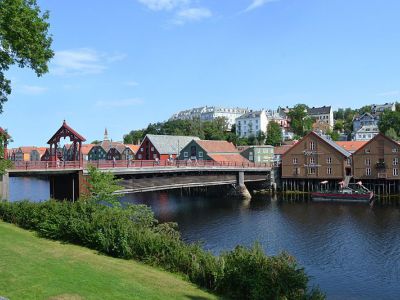
The Old Town Bridge was made with wood. The actual bridge today is a reconstruction by municipal engineer Carl Adolf Dahl in 1861. Dahl was the executive engineer of the city for public works in the latter half of the 19th century. Initially there was a sentry guardhouse at each end of the bridge.
King Christian V of Denmark financed the bridge construction himself. It was completed in 1685. Old Town Bridge took the place of the original Elgeseter Bridge nearby. After the Old Town Bridge opened, the Elgeseter Bridge was neglected and allowed to deteriorate and collapse.
One guard house was later demolished but the excise house on the west bank is still extant and in use as a day care center. The carved gates of the Old Town Bridge are the distinctive earmarks of Trondheim. Walk under the gates and take in the view of the fortress and the colorful houses of Bakklandet.
Old Town Bridge has been called the "Gate of Happiness". This is from the waltz lyrics of Norwegian composer Kristian Oskar Hoddo, "Nidelven quiet and beautiful you are." Hoddo wrote the lyrics while contemplating the river from the bridge in 1940. He later became a member of the anti-Nazi resistance. He was executed in Trondheim in 1943.
The Old Town Bridge was made with wood. The actual bridge today is a reconstruction by municipal engineer Carl Adolf Dahl in 1861. Dahl was the executive engineer of the city for public works in the latter half of the 19th century. Initially there was a sentry guardhouse at each end of the bridge.
King Christian V of Denmark financed the bridge construction himself. It was completed in 1685. Old Town Bridge took the place of the original Elgeseter Bridge nearby. After the Old Town Bridge opened, the Elgeseter Bridge was neglected and allowed to deteriorate and collapse.
One guard house was later demolished but the excise house on the west bank is still extant and in use as a day care center. The carved gates of the Old Town Bridge are the distinctive earmarks of Trondheim. Walk under the gates and take in the view of the fortress and the colorful houses of Bakklandet.
Old Town Bridge has been called the "Gate of Happiness". This is from the waltz lyrics of Norwegian composer Kristian Oskar Hoddo, "Nidelven quiet and beautiful you are." Hoddo wrote the lyrics while contemplating the river from the bridge in 1940. He later became a member of the anti-Nazi resistance. He was executed in Trondheim in 1943.
4) Bakklandet (must see)
Bakklandet is sometimes referred to as "Old Trondheim." This is inaccurate. The first settlements of Trondheim were in Kalvskinnet. Bakklandet is an area along the river Nidelva, that flows through the city to the fjords and the sea. The Bakklandet area today may be an idyllic tourist mecca, but originally it was a center for trade.
Bakklandet was an open area outside the city. It was first developed in the early 17th century. The city had grown and needed to build across the river Nidelva. Bakklandet became the first suburb of Trondheim. As fate would have it, the Swedes attacked Trondheim in 1658 and they burned Bakklandet to the ground.
In 1681 the city bridge was thrown across the Nidelva, connecting Trondheim to Bakklandet and Kristiansten Fortress. Traffic increased and trade and opportunities with it. Fires remained a problem. Ships were forbidden to store flammable goods on board. Trading houses built piers in Bakklandet. Business grew apace.
The Swedes came back in 1718. This time they did not burn down Bakklandet. Norwegian troops did that, to create a defensive open area around Trondheim. In the wake of the Swedes came reconstruction once more. By 1770 the streets were paved and Bakklandet was back in business.
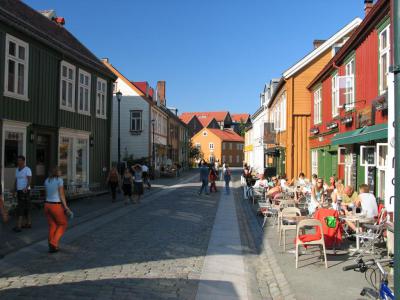
The neighborhood of Bakklandet today is composed of smallish wooden houses and narrow streets. The old warehouse buildings along the river stand in the water on their pilings. Tourists wander over the plank walkways of the Old Town Bridge. They stop to take a look at the view of the town and the river.
Bakklandet was an open area outside the city. It was first developed in the early 17th century. The city had grown and needed to build across the river Nidelva. Bakklandet became the first suburb of Trondheim. As fate would have it, the Swedes attacked Trondheim in 1658 and they burned Bakklandet to the ground.
In 1681 the city bridge was thrown across the Nidelva, connecting Trondheim to Bakklandet and Kristiansten Fortress. Traffic increased and trade and opportunities with it. Fires remained a problem. Ships were forbidden to store flammable goods on board. Trading houses built piers in Bakklandet. Business grew apace.
The Swedes came back in 1718. This time they did not burn down Bakklandet. Norwegian troops did that, to create a defensive open area around Trondheim. In the wake of the Swedes came reconstruction once more. By 1770 the streets were paved and Bakklandet was back in business.
The neighborhood of Bakklandet today is composed of smallish wooden houses and narrow streets. The old warehouse buildings along the river stand in the water on their pilings. Tourists wander over the plank walkways of the Old Town Bridge. They stop to take a look at the view of the town and the river.
5) Kristiansten Fortress (must see)
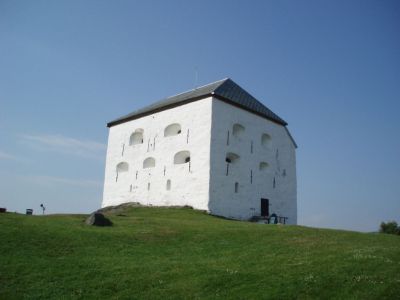
Kristiansten Fortress sits on a hill east of Trondheim. It is named for Christian V, King of Denmark-Norway. It was built after the Swedish attack on Trondheim and the subsequent devastating fire of 1681. It was completed in 1685, just in the nick of time. The Swedes returned in 1718 with fire in their eyes. But, nothing stays the same.
Charles XII of Sweden led the invasion of 1718. He sent an army under General Carl Gustaf Armfeldt to seize Trondheim, but the Norwegians were ready. The defending army under general Vincent Budde resisted bitterly. The newly constructed Kristiansten Fortress and its associated defenses were effective. Armfeldt fell back.
Charles XII was felled by a bullet while attacking Fredricksten Fortress in the south. Armfeldt's army retreated to Sweden. They were starving and sick. Almost the entire army was lost in a freezing blizzard. Napoleon would have profited from a study of this campaign, but he needed to get to Moscow.
General John Caspar von Cicignon was a military engineer and chief inspector of fortifications. He drew up the plans for Kristiansten Fortress after the siege and fire debacle of 1681. The fortress was built between 1682 and 1684. He also built an advanced redoubt in the east and another by the river Nidelva.
The entire complex was encircled by a palisade, effectively fortifying the city. In 1750 the fortress was further improved with new bastions and casemates. The main building is a cube shaped defensive tower or donjon. Quarters and supply stores were in the center of the donjon.
Twenty-three patriots were executed in the fortress by Nazi occupiers in World War II. An ecumenical chapel is on the execution site. The tower and museum are the main draw in the fortress. A recreational area surrounds the fort. The national flag is raised when the Fortress is open.
Charles XII of Sweden led the invasion of 1718. He sent an army under General Carl Gustaf Armfeldt to seize Trondheim, but the Norwegians were ready. The defending army under general Vincent Budde resisted bitterly. The newly constructed Kristiansten Fortress and its associated defenses were effective. Armfeldt fell back.
Charles XII was felled by a bullet while attacking Fredricksten Fortress in the south. Armfeldt's army retreated to Sweden. They were starving and sick. Almost the entire army was lost in a freezing blizzard. Napoleon would have profited from a study of this campaign, but he needed to get to Moscow.
General John Caspar von Cicignon was a military engineer and chief inspector of fortifications. He drew up the plans for Kristiansten Fortress after the siege and fire debacle of 1681. The fortress was built between 1682 and 1684. He also built an advanced redoubt in the east and another by the river Nidelva.
The entire complex was encircled by a palisade, effectively fortifying the city. In 1750 the fortress was further improved with new bastions and casemates. The main building is a cube shaped defensive tower or donjon. Quarters and supply stores were in the center of the donjon.
Twenty-three patriots were executed in the fortress by Nazi occupiers in World War II. An ecumenical chapel is on the execution site. The tower and museum are the main draw in the fortress. A recreational area surrounds the fort. The national flag is raised when the Fortress is open.
6) Historic Wharves
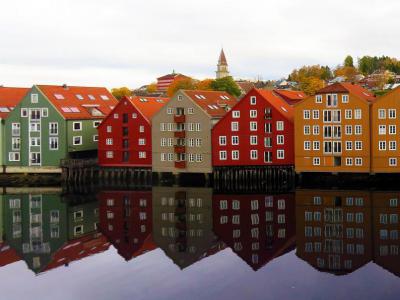
The historic wharfs of Trondheim are known as some of the most distinctive buildings in the city. The buildings stand along both sides of the Nidelven River's channel where they were originally used as storage for such goods as grain, sugar, salt and fish.
The buildings were completed in the 17th century but most were lost in a fire in 1681. The rebuilt wharf buildings were made to look as similar to their ancestors as possible. They were created using the traditional technique of interlocking logs, bare wood interior and simple construction.
The original wharfs were not used as homes but that has changed. Today, most of these colorful buildings are residential houses. Others are art galleries, coffee shops, restaurants and unique boutiques.
The cobbled walking paths make exploring the historic wharfs an easy and beautiful stroll. There are also a number of benches along the paths for those who want to relax. The Old Town Bridge over the Nidelven River is a great spot to get a picturesque view of the historic wharfs from a distance.
The buildings were completed in the 17th century but most were lost in a fire in 1681. The rebuilt wharf buildings were made to look as similar to their ancestors as possible. They were created using the traditional technique of interlocking logs, bare wood interior and simple construction.
The original wharfs were not used as homes but that has changed. Today, most of these colorful buildings are residential houses. Others are art galleries, coffee shops, restaurants and unique boutiques.
The cobbled walking paths make exploring the historic wharfs an easy and beautiful stroll. There are also a number of benches along the paths for those who want to relax. The Old Town Bridge over the Nidelven River is a great spot to get a picturesque view of the historic wharfs from a distance.
7) City Walls
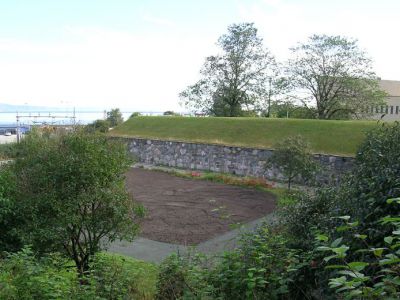
The City Walls in Trondheim offer a glimpse into the region's storied past, particularly highlighting the 17th-century fortifications that once stood guard between the Nid River and the fjord. Located in the historic Skansen area, these remnants serve as a physical testament to Trondheim's military and architectural heritage. Today, this area has been transformed into a beautiful park, attracting visitors not only for its historical significance but also for the breathtaking views it offers of the fjord.
Trondheim's city walls were constructed using a combination of stone and timber. They were designed with defensive features such as towers, gates, and ramparts. The walls followed the contours of the city, encompassing key areas and providing a formidable barrier against potential invaders.
Several gates punctuated the city walls, serving as entry and exit points for travelers and traders. Some of the notable gates include the Kristiansten Gate, Skansen Gate, and Vår Frue Gate. These gates were essential for controlling access to the city and regulating trade and commerce.
Over the centuries, parts of Trondheim's city walls have been demolished or repurposed as the city expanded and modernized. However, significant sections of the walls remain intact, particularly in the older parts of the city center. Efforts have been made to preserve and restore these historic structures, ensuring they remain accessible to residents and visitors alike.
Trondheim's city walls stand as enduring symbols of the city's past and its resilience in the face of historical challenges. While much of these fortifications have been altered or lost to time, the remaining sections offer valuable insights into Trondheim's rich architectural heritage and continue to captivate visitors with their historical significance.
Trondheim's city walls were constructed using a combination of stone and timber. They were designed with defensive features such as towers, gates, and ramparts. The walls followed the contours of the city, encompassing key areas and providing a formidable barrier against potential invaders.
Several gates punctuated the city walls, serving as entry and exit points for travelers and traders. Some of the notable gates include the Kristiansten Gate, Skansen Gate, and Vår Frue Gate. These gates were essential for controlling access to the city and regulating trade and commerce.
Over the centuries, parts of Trondheim's city walls have been demolished or repurposed as the city expanded and modernized. However, significant sections of the walls remain intact, particularly in the older parts of the city center. Efforts have been made to preserve and restore these historic structures, ensuring they remain accessible to residents and visitors alike.
Trondheim's city walls stand as enduring symbols of the city's past and its resilience in the face of historical challenges. While much of these fortifications have been altered or lost to time, the remaining sections offer valuable insights into Trondheim's rich architectural heritage and continue to captivate visitors with their historical significance.
8) Ilen Church
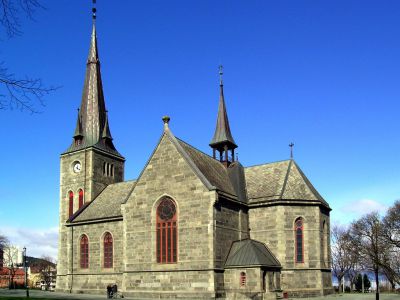
Ilen Church, known as Ilen Kirke in Norwegian, is a parish church of the Church of Norway. It was built in 1889 to a design by architect Eugene Sissenere in the Neo-Gothic architectural style. It was the first post-Reformation church built in the city.
The church is made of grey stone with carved facades. Due to financial hardships, the planned vaulted brick ceilings were instead made with wood. Ilen Church has a Renaissance-style altarpiece that dates to 1932 and a 19th century organ built by Claus Jensen.
It is said that Saint Olav, the patron saint of unity, died on the grounds where the church lies. The stone on which he is thought to have passed is still intact. A statue of a girl with an ox, known as An-Magritt and the Hovi Ox, is also on the church grounds. The statue was crafted by Kristofer Leirdal in 1967.
The church is located on the isthmus between the Nid River and the Trondheimsfjord. Those who wish to enter the church may not find it open but they are welcome to explore the church grounds and admire the architecture.
The church is made of grey stone with carved facades. Due to financial hardships, the planned vaulted brick ceilings were instead made with wood. Ilen Church has a Renaissance-style altarpiece that dates to 1932 and a 19th century organ built by Claus Jensen.
It is said that Saint Olav, the patron saint of unity, died on the grounds where the church lies. The stone on which he is thought to have passed is still intact. A statue of a girl with an ox, known as An-Magritt and the Hovi Ox, is also on the church grounds. The statue was crafted by Kristofer Leirdal in 1967.
The church is located on the isthmus between the Nid River and the Trondheimsfjord. Those who wish to enter the church may not find it open but they are welcome to explore the church grounds and admire the architecture.
