Custom Walk in Belgrade, Serbia by mike_ba6fef created on 2026-07-10
Guide Location: Serbia » Belgrade
Guide Type: Custom Walk
# of Sights: 5
Tour Duration: 3 Hour(s)
Travel Distance: 7.3 Km or 4.5 Miles
Share Key: 2WACM
Guide Type: Custom Walk
# of Sights: 5
Tour Duration: 3 Hour(s)
Travel Distance: 7.3 Km or 4.5 Miles
Share Key: 2WACM
How It Works
Please retrieve this walk in the GPSmyCity app. Once done, the app will guide you from one tour stop to the next as if you had a personal tour guide. If you created the walk on this website or come to the page via a link, please follow the instructions below to retrieve the walk in the app.
Retrieve This Walk in App
Step 1. Download the app "GPSmyCity: Walks in 1K+ Cities" on Apple App Store or Google Play Store.



Step 2. In the GPSmyCity app, download(or launch) the guide "Belgrade Map and Walking Tours".
Step 3. Tap the menu button located at upper right corner of the "Walks" screen and select "Retrieve custom walk". Enter the share key: 2WACM
1) Prince Michael Street (must see)
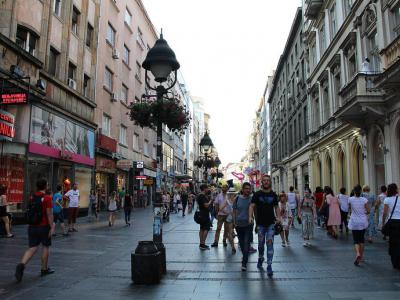
Prince Michael Street is one of the main pedestrian zones in the city, as well as being one of the main attractions in town and a popular shopping district.
The street follows the path of the original Roman city layout. The Roman town here was called Singidunum. Roman graves in the area have been dated from the first and second centuries. Many modern buildings along the street, such as the Rajićeva shopping mall, unearthed remains of antique and late antique structures and foundations.
Along the route, you will see private homes dating from the late 1800s. Many are evocative of various architectural styles, as the street has always attracted the wealthy tycoons of the country. You'll see some in the renaissance style, like the Marko Stojanović home. It's now the home to the Gallery of the Academy of Fine Arts.
The Serbian Academy of Sciences and Arts is located in Number 35. The building was completed in 1924 in the academic style and houses its gallery, lecture hall, antique shop, and bookstore.
Many of the beautiful buildings along Prince Michael Street are now home to popular restaurants and cafes. For example, the Ruski Car at Number 38 is a popular cafe in a 1926 Art Deco building.
Walking Prince Michael Street is a must-do activity in Belgrade. It has been named one of the most beautiful pedestrian zones in Eastern Europe. In 2006, Business Week named the street one of the best places in Europe for Christmas shopping.
The street follows the path of the original Roman city layout. The Roman town here was called Singidunum. Roman graves in the area have been dated from the first and second centuries. Many modern buildings along the street, such as the Rajićeva shopping mall, unearthed remains of antique and late antique structures and foundations.
Along the route, you will see private homes dating from the late 1800s. Many are evocative of various architectural styles, as the street has always attracted the wealthy tycoons of the country. You'll see some in the renaissance style, like the Marko Stojanović home. It's now the home to the Gallery of the Academy of Fine Arts.
The Serbian Academy of Sciences and Arts is located in Number 35. The building was completed in 1924 in the academic style and houses its gallery, lecture hall, antique shop, and bookstore.
Many of the beautiful buildings along Prince Michael Street are now home to popular restaurants and cafes. For example, the Ruski Car at Number 38 is a popular cafe in a 1926 Art Deco building.
Walking Prince Michael Street is a must-do activity in Belgrade. It has been named one of the most beautiful pedestrian zones in Eastern Europe. In 2006, Business Week named the street one of the best places in Europe for Christmas shopping.
2) Cathedral of Saint Sava (must see)
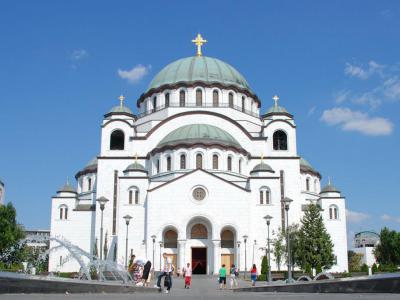
Modeled after the Hagia Sophia in Istanbul, the Temple of Saint Sava is Belgrade's most imposing landmark. It is dedicated to Saint Sava, the founder of the Serbian Orthodox Church and a national hero.
The church was planned to be the bishop's seat and the main cathedral for the Serbian Orthodox religion. You can trace the initial plans for building a church back to 1894. But the first stones of the church weren't laid until 1935, and construction was paused during the war years and communist rule.
The tide turned for the church in 1985 when a liturgy was held, attended by over 100,000 people. This proved that the church still had significant power with the population, and the communist leaders had to back down and allow the church construction to go on.
During construction, the greatest achievement was undoubtedly the lifting of the church's enormous concrete dome in 1989. The dome is 39.5 meters (130 feet) in diameter, weighs 4,000 tons, and is clad in copper. It was lifted into place using hydraulic machines, a process that took 20 days. The construction technology that made it possible was created specifically for the task.
The church sits on the Vračar plateau, the site where Ottomans burnt Saint Sava's remains in 1594. Sava lived in the 13th century and was known as the Enlightener. Besides being the first Archbishop of the Serbian Orthodox Church, he is remembered as the founder of Serbian law, a diplomat, and one of the most important people in the country's history.
Saint Sava's is one of the largest Eastern Orthodox churches and one of the largest churches in the world. When the Hagia Sophia was again converted to a mosque in 2020, church leaders hoped that Saint Sava's would replace it as a "New Hagia Sophia."
One of the most notable interior features of the church is the use of light, thanks to the enormous dome and four apses. In addition, the interior is clad with 130,000 square feet of golden mosaics. The impressive installation was funded thanks to gifts from the Russian Federation and the Republic of Serbia.
The church was planned to be the bishop's seat and the main cathedral for the Serbian Orthodox religion. You can trace the initial plans for building a church back to 1894. But the first stones of the church weren't laid until 1935, and construction was paused during the war years and communist rule.
The tide turned for the church in 1985 when a liturgy was held, attended by over 100,000 people. This proved that the church still had significant power with the population, and the communist leaders had to back down and allow the church construction to go on.
During construction, the greatest achievement was undoubtedly the lifting of the church's enormous concrete dome in 1989. The dome is 39.5 meters (130 feet) in diameter, weighs 4,000 tons, and is clad in copper. It was lifted into place using hydraulic machines, a process that took 20 days. The construction technology that made it possible was created specifically for the task.
The church sits on the Vračar plateau, the site where Ottomans burnt Saint Sava's remains in 1594. Sava lived in the 13th century and was known as the Enlightener. Besides being the first Archbishop of the Serbian Orthodox Church, he is remembered as the founder of Serbian law, a diplomat, and one of the most important people in the country's history.
Saint Sava's is one of the largest Eastern Orthodox churches and one of the largest churches in the world. When the Hagia Sophia was again converted to a mosque in 2020, church leaders hoped that Saint Sava's would replace it as a "New Hagia Sophia."
One of the most notable interior features of the church is the use of light, thanks to the enormous dome and four apses. In addition, the interior is clad with 130,000 square feet of golden mosaics. The impressive installation was funded thanks to gifts from the Russian Federation and the Republic of Serbia.
3) Nikola Tesla Museum (must see)
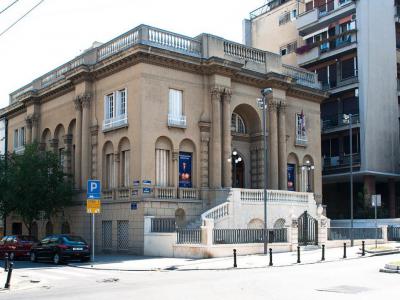
The Nikola Tesla Museum is a science museum and the final resting place of Nikola Tesla. The facility is dedicated to Tesla's life and work. It contains more than 160,000 original documents, 1,200 technical exhibits, 2,500 photos or drawings, and over 2,000 books or journals.
The building is a 1927 villa. The museum was founded in 1952, and exhibitions began in 1955.
Nikola Tesla was an inventor and engineer who lived from 1856 to 1943. He was Serbian, born in the village of Smiljan. He studied in Austria and audited classes at Charles-Ferdinand University in Prague. His first jobs were for a telegraph company in Budapest and the Continental Edison Company in Paris later on.
He emigrated to the United States in 1884 to work for Edison Machine Works in New York. He became a naturalized US citizen in 1891. He broke with Edison and founded his own series of ventures, eventually filing over 300 patents. He is remembered most for his work on alternating-current motors and power transmitting equipment licensed to Westinghouse.
Tesla died in 1943 in New York City. His remains are interred at the museum in his favorite geometric shape--a gilded spherical urn.
English and other language tours are given hourly, and interactive demonstrations of his inventions follow each tour. One important note--the museum only accepts cash for ticket sales.
The building is a 1927 villa. The museum was founded in 1952, and exhibitions began in 1955.
Nikola Tesla was an inventor and engineer who lived from 1856 to 1943. He was Serbian, born in the village of Smiljan. He studied in Austria and audited classes at Charles-Ferdinand University in Prague. His first jobs were for a telegraph company in Budapest and the Continental Edison Company in Paris later on.
He emigrated to the United States in 1884 to work for Edison Machine Works in New York. He became a naturalized US citizen in 1891. He broke with Edison and founded his own series of ventures, eventually filing over 300 patents. He is remembered most for his work on alternating-current motors and power transmitting equipment licensed to Westinghouse.
Tesla died in 1943 in New York City. His remains are interred at the museum in his favorite geometric shape--a gilded spherical urn.
English and other language tours are given hourly, and interactive demonstrations of his inventions follow each tour. One important note--the museum only accepts cash for ticket sales.
4) Skadarlija Street (must see)
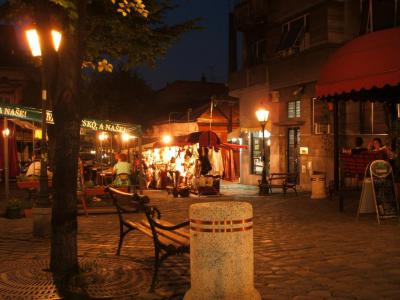
Located in Belgrade's Old Town, Skadarlija is a former municipality. Its vintage and urban feel give it a welcoming vibe, much like Paris' Montmartre. This part of town is one of Belgrade's busiest tourist areas, attracting over 20,000 people daily.
Skadralija Street winds for only 400 meters, running from below Republic Square and connecting Despot Stefan Boulevard with Dušanova Street.
Gypsies built the first houses in the area around 1717, followed by the Serbs and the Turks. In those days, this part of town was known as Gypsy Quarter.
The area has been reconstructed in recent years. A public outcry resulted when plans to pave the distinctive multi-colored cobblestone street came to light. Imported stones from Greece were used, detracting from the original character and drawing much condemnation from the locals.
But it's still a wonderful place to visit and a great place to enjoy the relaxed side of Belgrade. The sides of Skadarlija are lined with restaurants, hotels, and art galleries. It's the perfect place to enjoy lunch at a sidewalk cafe or watch street performers. You'll likely see musicians dressed in traditional Serb costumes playing traditional instruments.
Skadarlija has a Bohemian, down-to-earth atmosphere that will give you all the city's flavors without the poshness found elsewhere. It is favored by young families and couples and is a well-known haunt for poets and writers in town.
Try the local beer (locally known as "pivo") or the grilled meats (locally known as "roštilj"). The street is a pedestrian-only zone, so you can stroll, shop, and enjoy at your own pace.
Skadralija Street winds for only 400 meters, running from below Republic Square and connecting Despot Stefan Boulevard with Dušanova Street.
Gypsies built the first houses in the area around 1717, followed by the Serbs and the Turks. In those days, this part of town was known as Gypsy Quarter.
The area has been reconstructed in recent years. A public outcry resulted when plans to pave the distinctive multi-colored cobblestone street came to light. Imported stones from Greece were used, detracting from the original character and drawing much condemnation from the locals.
But it's still a wonderful place to visit and a great place to enjoy the relaxed side of Belgrade. The sides of Skadarlija are lined with restaurants, hotels, and art galleries. It's the perfect place to enjoy lunch at a sidewalk cafe or watch street performers. You'll likely see musicians dressed in traditional Serb costumes playing traditional instruments.
Skadarlija has a Bohemian, down-to-earth atmosphere that will give you all the city's flavors without the poshness found elsewhere. It is favored by young families and couples and is a well-known haunt for poets and writers in town.
Try the local beer (locally known as "pivo") or the grilled meats (locally known as "roštilj"). The street is a pedestrian-only zone, so you can stroll, shop, and enjoy at your own pace.
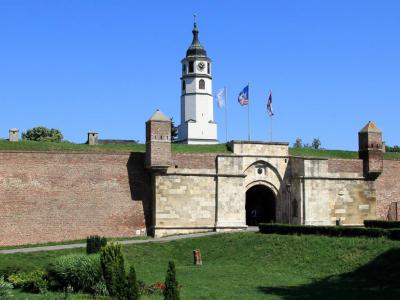
5) Belgrade Fortress (must see)
The Belgrade Fortress is the most visited tourist attraction in Belgrade with over 2 million unique visitors annually. It is the oldest section of the city. The fortress includes the old citadel and Kalemegdan Park. It is located at the top of the Sumadija geological bar, overlooking the Great War Island.
The first fort was built after 100 AD. The remains of this fort are still visible. The fortress was rebuilt by Emperor Justinian I in 535 AD. It was destroyed and rebuilt many times over the years by various warring nations.
The fortress was given to Serbia in the 11th century by Bela I, king of Hungary. It was returned to Hungary in 1427. About 100 years later, it was taken over by the Turks and owned by the Ottoman Empire until 1867. During that time, the fortress was rebuilt and modernized.
In the 1860s, the four outer city gates and walls were demolished and the Serbians regained control of the fortress. It was further damaged during World War I and World War II. In 1965, the fortress became a protected area due to its great cultural significance. Belgrade Fortress was declared a Monument of Culture of Exceptional Importance in 1979.
Some of the areas of interest in the Belgrade Fortress include the Ruzica Church, Despot Stefan Tower, the statue of "The Victor," the Roman Well, Damad Ali Pasha's turbe and the Gunpowder Magazine, among many others. The fortress is also home to the Museum of Natural History, the Military Museum and the Institute for the Protection of Cultural Monuments.
Admission to the fortress is free.
The first fort was built after 100 AD. The remains of this fort are still visible. The fortress was rebuilt by Emperor Justinian I in 535 AD. It was destroyed and rebuilt many times over the years by various warring nations.
The fortress was given to Serbia in the 11th century by Bela I, king of Hungary. It was returned to Hungary in 1427. About 100 years later, it was taken over by the Turks and owned by the Ottoman Empire until 1867. During that time, the fortress was rebuilt and modernized.
In the 1860s, the four outer city gates and walls were demolished and the Serbians regained control of the fortress. It was further damaged during World War I and World War II. In 1965, the fortress became a protected area due to its great cultural significance. Belgrade Fortress was declared a Monument of Culture of Exceptional Importance in 1979.
Some of the areas of interest in the Belgrade Fortress include the Ruzica Church, Despot Stefan Tower, the statue of "The Victor," the Roman Well, Damad Ali Pasha's turbe and the Gunpowder Magazine, among many others. The fortress is also home to the Museum of Natural History, the Military Museum and the Institute for the Protection of Cultural Monuments.
Admission to the fortress is free.
