Custom Walk in Leuven, Belgium by jacruzt_3cb982 created on 2026-07-10
Guide Location: Belgium » Leuven
Guide Type: Custom Walk
# of Sights: 11
Tour Duration: 3 Hour(s)
Travel Distance: 6.6 Km or 4.1 Miles
Share Key: VVLYS
Guide Type: Custom Walk
# of Sights: 11
Tour Duration: 3 Hour(s)
Travel Distance: 6.6 Km or 4.1 Miles
Share Key: VVLYS
How It Works
Please retrieve this walk in the GPSmyCity app. Once done, the app will guide you from one tour stop to the next as if you had a personal tour guide. If you created the walk on this website or come to the page via a link, please follow the instructions below to retrieve the walk in the app.
Retrieve This Walk in App
Step 1. Download the app "GPSmyCity: Walks in 1K+ Cities" on Apple App Store or Google Play Store.



Step 2. In the GPSmyCity app, download(or launch) the guide "Leuven Map and Walking Tours".
Step 3. Tap the menu button located at upper right corner of the "Walks" screen and select "Retrieve custom walk". Enter the share key: VVLYS
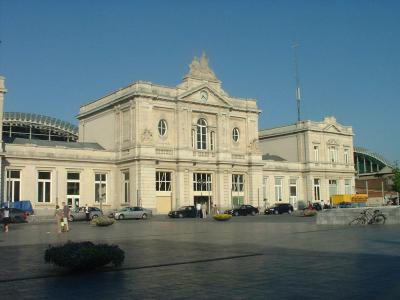
1) Station Leuven (Leuven Railway Station)
Leuven Railway Station is the main railway station in Belgium, serving as a key transportation hub for both domestic and international travel. The station has a rich history, with its original building dating back to the 19th century. It is an important part of Belgium's extensive railway network.
The station's architecture is notable for its impressive and elegant design. The original building features a blend of architectural styles, including neoclassical and neo-Renaissance elements. The façade is adorned with decorative elements, including intricate stonework and statues, giving it a grand and historic appearance.
Over the years, Leuven Railway Station has undergone several modernization and expansion projects to accommodate the increasing number of passengers and improve the overall transportation experience. These efforts have included renovations, platform upgrades, and the addition of new facilities.
The station offers a wide range of services and amenities to travelers, including ticket counters, waiting areas, shops, cafes, and restaurants. Passengers can also access Wi-Fi and other conveniences to enhance their travel experience.
The station's architecture is notable for its impressive and elegant design. The original building features a blend of architectural styles, including neoclassical and neo-Renaissance elements. The façade is adorned with decorative elements, including intricate stonework and statues, giving it a grand and historic appearance.
Over the years, Leuven Railway Station has undergone several modernization and expansion projects to accommodate the increasing number of passengers and improve the overall transportation experience. These efforts have included renovations, platform upgrades, and the addition of new facilities.
The station offers a wide range of services and amenities to travelers, including ticket counters, waiting areas, shops, cafes, and restaurants. Passengers can also access Wi-Fi and other conveniences to enhance their travel experience.
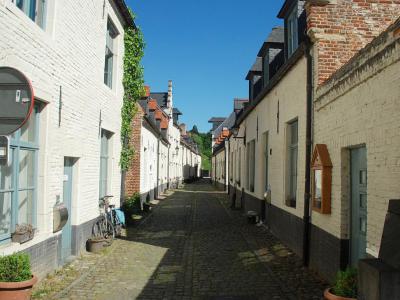
2) Small Beguinage
The Small Beguinage (Klein Begijnhof) in Leuven is a captivating slice of history that dates back to 1272. Initially established as a community for beguines-religious women who lived pious lives without taking formal vows-it served as a residence for women working at the nearby Saint Gertrude’s Abbey. This intimate beguinage never reached the scale or prosperity of its larger counterpart, the Great Beguinage (Groot Begijnhof), and housed fewer than 100 beguines at its peak.
The district comprises a charming street and two blind alleys, showcasing traditional Flemish architecture with houses dating from the 16th to the 18th centuries. The beguinage’s small chapel was demolished during the French Revolution, and its last resident beguine passed away in 1855. By 2000, the remaining structures were meticulously restored and sold to private individuals, preserving their historical and architectural significance.
Today, the Small Beguinage is one of Leuven’s hidden gems, celebrated for its cobblestone streets, serene ambiance, and picturesque setting. Unlike the more famous Groot Begijnhof, this smaller enclave offers an off-the-beaten-path experience. Visitors can wander through its quaint alleys and admire its rich history, making it a must-see for anyone exploring Leuven’s cultural heritage.
For those intrigued by the legacy of beguinages, the Klein Begijnhof stands as a testament to the unique lifestyle of the beguines and the enduring charm of medieval communities.
The district comprises a charming street and two blind alleys, showcasing traditional Flemish architecture with houses dating from the 16th to the 18th centuries. The beguinage’s small chapel was demolished during the French Revolution, and its last resident beguine passed away in 1855. By 2000, the remaining structures were meticulously restored and sold to private individuals, preserving their historical and architectural significance.
Today, the Small Beguinage is one of Leuven’s hidden gems, celebrated for its cobblestone streets, serene ambiance, and picturesque setting. Unlike the more famous Groot Begijnhof, this smaller enclave offers an off-the-beaten-path experience. Visitors can wander through its quaint alleys and admire its rich history, making it a must-see for anyone exploring Leuven’s cultural heritage.
For those intrigued by the legacy of beguinages, the Klein Begijnhof stands as a testament to the unique lifestyle of the beguines and the enduring charm of medieval communities.
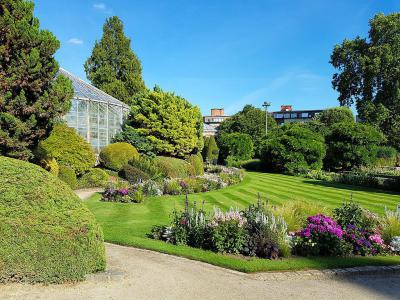
3) Kruidtuin (Botanical Garden) (must see)
Established in 1738 by the University of Leuven for the benefit of its medical students, the Botanical Garden holds the distinction of being the oldest botanical garden in Belgium. Originally intended for medicinal purposes, the garden's name, "Kruidtuin," meaning Herbal Garden, reflects its initial focus on cultivating herbs used in traditional medicine.
Today, the Botanical Garden serves as a haven for botany enthusiasts and nature lovers alike. Spanning across a vast expanse, the garden features diverse plant collections housed within a 450 square meters greenhouse complex. Visitors can explore an array of herbaceous, medicinal, aquatic, and potted plants, along with tropical and subtropical species, offering a captivating glimpse into the world of botanical diversity. Regular exhibitions held in the orangery, gatehouse, and outdoor spaces further enhance the educational and immersive experience.
Beyond its historical significance and botanical wonders, the Botanical Garden provides a tranquil retreat from the hustle and bustle of city life. The outdoor garden offers a serene environment ideal for leisurely activities such as reading, sunbathing, or leisurely strolls amidst vibrant flowers and lush greenery. Additionally, visitors seeking respite from chilly weather can seek refuge in the expansive greenhouse, where they can marvel at exotic plants and cacti, immersing themselves in the ambiance of a tropical oasis.
Today, the Botanical Garden serves as a haven for botany enthusiasts and nature lovers alike. Spanning across a vast expanse, the garden features diverse plant collections housed within a 450 square meters greenhouse complex. Visitors can explore an array of herbaceous, medicinal, aquatic, and potted plants, along with tropical and subtropical species, offering a captivating glimpse into the world of botanical diversity. Regular exhibitions held in the orangery, gatehouse, and outdoor spaces further enhance the educational and immersive experience.
Beyond its historical significance and botanical wonders, the Botanical Garden provides a tranquil retreat from the hustle and bustle of city life. The outdoor garden offers a serene environment ideal for leisurely activities such as reading, sunbathing, or leisurely strolls amidst vibrant flowers and lush greenery. Additionally, visitors seeking respite from chilly weather can seek refuge in the expansive greenhouse, where they can marvel at exotic plants and cacti, immersing themselves in the ambiance of a tropical oasis.
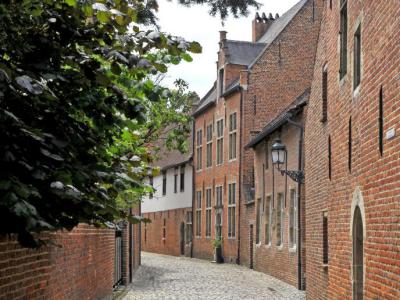
4) Great Beguinage (must see)
The Great Beguinage of Leuven stands as a remarkable testament to medieval communal living and architectural heritage. Situated in the southern part of downtown Leuven, this historical quarter spans about 3 hectares (7.5 acres) and consists of a dozen streets lined with nearly 100 houses containing some 300 apartments. It ranks among the largest and best-preserved beguinages in the Low Countries, offering a glimpse into a bygone era of communal living.
Nestled along the banks of the river Dijle, the Great Beguinage is divided by the river into two parts, forming an island connected by three picturesque bridges. The entire beguinage, owned by the University of Leuven, serves as a campus, primarily housing students and academic guests. Stepping into the Great Beguinage feels like entering a small town, with its network of narrow streets, quaint squares, and charming houses.
The houses within the Great Beguinage, dating primarily from the period between 1630 and 1670, reflect the local traditional architecture enriched with subtle Baroque elements. Characterized by red brick facades adorned with sandstone cross-bar frames for windows and doors, these houses exude a timeless elegance. One of the distinctive features of the beguinage is the abundance of dormers, often embellished with crow-stepped gables and round arched windows, adding to its architectural charm and historical significance.
Nestled along the banks of the river Dijle, the Great Beguinage is divided by the river into two parts, forming an island connected by three picturesque bridges. The entire beguinage, owned by the University of Leuven, serves as a campus, primarily housing students and academic guests. Stepping into the Great Beguinage feels like entering a small town, with its network of narrow streets, quaint squares, and charming houses.
The houses within the Great Beguinage, dating primarily from the period between 1630 and 1670, reflect the local traditional architecture enriched with subtle Baroque elements. Characterized by red brick facades adorned with sandstone cross-bar frames for windows and doors, these houses exude a timeless elegance. One of the distinctive features of the beguinage is the abundance of dormers, often embellished with crow-stepped gables and round arched windows, adding to its architectural charm and historical significance.
5) KU Leuven (Catholic University of Leuven)
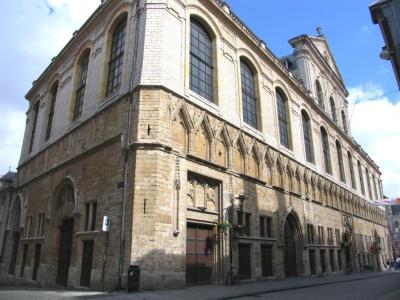
The Catholic University of Leuven stands as a prestigious institution of higher learning with a rich history dating back to its founding in 1425 Established by Pope Martin V at the request of Duke John IV of Brabant, the university was modeled after the esteemed University of Paris. For centuries, it served as a unitary entity until 1970 when it underwent partitioning, driven by linguistic differences, resulting in the creation of two separate universities.
Following student riots, ethnic protests, and government upheavals in 1969, the Catholic University underwent significant reorganization, leading to the establishment of separate Flemish- and French-language divisions. This pivotal moment marked the beginning of distinct legal statuses for each division, with the first faculties being established in Louvain-la-Neuve in 1972.
The university's historical significance is intertwined with the Cloth Hall, originally used by weavers for selling cloth. Following the university's establishment, part of the building was allocated as classroom space. Tragically, during the German occupation in 1914, the Cloth Hall suffered extensive damage in the Great Fire of Leuven, resulting in the loss of 300,000 books and manuscripts. However, the resilient spirit of the university prevailed, leading to the rebuilding of the library at Ladeuzeplein.
Today, the Cloth Hall serves as the university's policy center and remains a central hub for enrollment, while also housing a museum, university shop, and a cozy coffee bar, welcoming visitors to explore its historical significance and academic legacy.
Following student riots, ethnic protests, and government upheavals in 1969, the Catholic University underwent significant reorganization, leading to the establishment of separate Flemish- and French-language divisions. This pivotal moment marked the beginning of distinct legal statuses for each division, with the first faculties being established in Louvain-la-Neuve in 1972.
The university's historical significance is intertwined with the Cloth Hall, originally used by weavers for selling cloth. Following the university's establishment, part of the building was allocated as classroom space. Tragically, during the German occupation in 1914, the Cloth Hall suffered extensive damage in the Great Fire of Leuven, resulting in the loss of 300,000 books and manuscripts. However, the resilient spirit of the university prevailed, leading to the rebuilding of the library at Ladeuzeplein.
Today, the Cloth Hall serves as the university's policy center and remains a central hub for enrollment, while also housing a museum, university shop, and a cozy coffee bar, welcoming visitors to explore its historical significance and academic legacy.
6) Oude Markt (Old Market Square) (must see)
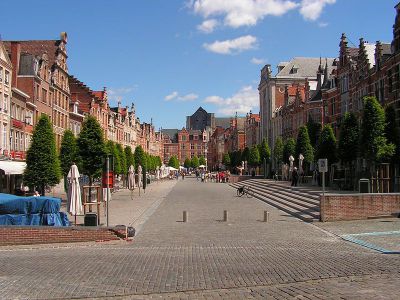
The Old Market Square holds a special place in the heart of the vibrant student city, earning its affectionate nickname as the "longest bar in the world" among locals and students alike. Dating back to 1150, this historic square served as the city's primary marketplace, bustling with activity long before the construction of the newer market square in the 15th century. Despite its unofficial title, the Old Market Square remains the focal point of social gatherings and nightlife in Leuven.
Spanning an impressive 174 meters in length and 34 meters in width, the Old Market Square boasts a rich history intertwined with the city's cultural heritage. However, the square faced adversity during the onset of the First World War in 1914 when the houses lining its perimeter were ravaged by fire. Despite the destruction, the resilient spirit of Leuven prevailed, and the square was meticulously restored to its former glory in the aftermath of the war.
Today, a visit to the Old Market Square offers a quintessential Leuven experience, reminiscent of pulling up a chair at Europe's longest bar. With an array of catering establishments dotting the square, ranging from cozy cafes to lively pubs and trendy bars, the Old Market Square exudes a dynamic atmosphere that captivates visitors day and night. Particularly during warm weather, the numerous terraces lining the square quickly fill up, making it the preferred gathering spot for locals and visitors seeking to immerse themselves in Leuven's vibrant social scene.
Spanning an impressive 174 meters in length and 34 meters in width, the Old Market Square boasts a rich history intertwined with the city's cultural heritage. However, the square faced adversity during the onset of the First World War in 1914 when the houses lining its perimeter were ravaged by fire. Despite the destruction, the resilient spirit of Leuven prevailed, and the square was meticulously restored to its former glory in the aftermath of the war.
Today, a visit to the Old Market Square offers a quintessential Leuven experience, reminiscent of pulling up a chair at Europe's longest bar. With an array of catering establishments dotting the square, ranging from cozy cafes to lively pubs and trendy bars, the Old Market Square exudes a dynamic atmosphere that captivates visitors day and night. Particularly during warm weather, the numerous terraces lining the square quickly fill up, making it the preferred gathering spot for locals and visitors seeking to immerse themselves in Leuven's vibrant social scene.
7) Saint Peter’s Church (must see)
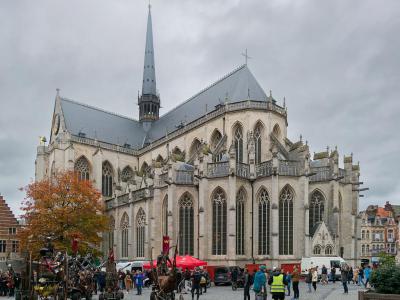
With roots dating back to 986, Saint Peter’s Church ranks among the oldest churches in Leuven. However, its original structure succumbed to flames in 1776, paving the way for the construction of the present-day edifice. The current building, erected shortly thereafter, emerged as a grander and more expansive testament to the town's devout community. In recognition of its historical and architectural importance, Saint Peter’s Church, along with its belfry, was designated as a UNESCO World Heritage site in 1999.
Within the hallowed walls of Saint Peter’s Church, visitors are treated to a rich tapestry of artistic treasures and religious artifacts. One of its most celebrated works is ‘The Last Supper’ by Dieric Bouts, a masterpiece of Flemish Primitive artistry. Painted nearly 600 years ago, this iconic artwork adorns the church's chapel, captivating viewers with its timeless beauty and spiritual resonance. Additionally, Bouts' ‘The Martyrdom of Saint Erasmus’ and the 'Edelheere Triptych' further enrich the church's artistic legacy, offering glimpses into the rich cultural heritage of Leuven.
Innovative technology enhances the visitor experience at Saint Peter’s Church, with the introduction of mixed reality through hololens. This cutting-edge technology allows visitors to immerse themselves in a world where art comes to life. By donning the hololens, viewers can witness spectacular 3D images and animations overlaid onto the physical environment, offering a unique perspective on the church's masterpieces.
Within the hallowed walls of Saint Peter’s Church, visitors are treated to a rich tapestry of artistic treasures and religious artifacts. One of its most celebrated works is ‘The Last Supper’ by Dieric Bouts, a masterpiece of Flemish Primitive artistry. Painted nearly 600 years ago, this iconic artwork adorns the church's chapel, captivating viewers with its timeless beauty and spiritual resonance. Additionally, Bouts' ‘The Martyrdom of Saint Erasmus’ and the 'Edelheere Triptych' further enrich the church's artistic legacy, offering glimpses into the rich cultural heritage of Leuven.
Innovative technology enhances the visitor experience at Saint Peter’s Church, with the introduction of mixed reality through hololens. This cutting-edge technology allows visitors to immerse themselves in a world where art comes to life. By donning the hololens, viewers can witness spectacular 3D images and animations overlaid onto the physical environment, offering a unique perspective on the church's masterpieces.
8) Town Hall (must see)
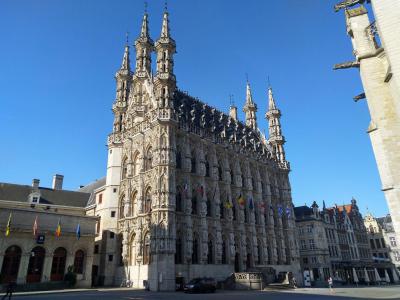
The Town Hall stands as a magnificent example of Gothic architecture and civic pride. Originally part of a larger complex of municipal buildings, construction on the building, known then as the Voirste Huys or "front house," commenced in 1439. Situated at the site of an existing town hall, the structure has since become an iconic symbol of Leuven's rich history and heritage.
Characterized by its striking design, the Town Hall boasts three main stories adorned with pointed Gothic windows, providing a glimpse into the architectural style prevalent during its construction period. Above, a gallery parapet adds to the building's grandeur, leading to a steep roof punctuated by four tiers of dormers. Octagonal turrets situated at the roof's angles feature slits that allow for the passage of light, enhancing the building's aesthetic appeal and functionality.
The main façade of the Town Hall is equally impressive, featuring an entrance staircase and two central portals adorned with intricate carvings. Atop these portals stand figures of Saint Peter and the Madonna and Child, paying homage to the patron saint of the nearby church. Beyond its architectural splendor, the Town Hall's interior houses a captivating collection of artwork, including sculptures by renowned artists Constantin Meunier and Jef Lambeaux. Additionally, visitors can explore portraits of Leuven mayors dating back to 1794, providing insight into the city's governance and leadership over the centuries.
Characterized by its striking design, the Town Hall boasts three main stories adorned with pointed Gothic windows, providing a glimpse into the architectural style prevalent during its construction period. Above, a gallery parapet adds to the building's grandeur, leading to a steep roof punctuated by four tiers of dormers. Octagonal turrets situated at the roof's angles feature slits that allow for the passage of light, enhancing the building's aesthetic appeal and functionality.
The main façade of the Town Hall is equally impressive, featuring an entrance staircase and two central portals adorned with intricate carvings. Atop these portals stand figures of Saint Peter and the Madonna and Child, paying homage to the patron saint of the nearby church. Beyond its architectural splendor, the Town Hall's interior houses a captivating collection of artwork, including sculptures by renowned artists Constantin Meunier and Jef Lambeaux. Additionally, visitors can explore portraits of Leuven mayors dating back to 1794, providing insight into the city's governance and leadership over the centuries.
9) Great Market Square (Grote Markt) (must see)
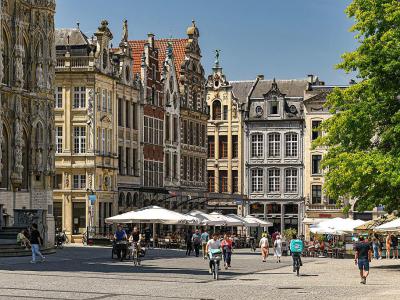
The Great Market Square strategic location at the intersection of some of the city's most famous landmarks makes it a focal point for locals and tourists alike. Despite its vibrant atmosphere, the square has been pedestrian-friendly for several years, with only public transportation buses from De Lijn permitted to traverse its grounds.
Dating back to the 14th century, the Great Market Square has retained much of its original charm and architectural splendor. Its layout has remained largely unchanged since the establishment of the Catholic University Leuven. The square is adorned with Gothic-style buildings, with the town hall serving as a prominent example of this architectural heritage. Alongside the town hall, visitors can marvel at the Church of Saint Peter and several guild houses, each contributing to the square's rich historical tapestry.
In addition to its architectural marvels, the Great Market Square boasts a vibrant social scene, with numerous pubs, taverns, and eateries dotting its perimeter. Here, visitors can experience a blend of formal and traditional establishments alongside trendy, youth-oriented venues. This juxtaposition of styles creates a dynamic atmosphere, catering to a diverse range of tastes and preferences.
Dating back to the 14th century, the Great Market Square has retained much of its original charm and architectural splendor. Its layout has remained largely unchanged since the establishment of the Catholic University Leuven. The square is adorned with Gothic-style buildings, with the town hall serving as a prominent example of this architectural heritage. Alongside the town hall, visitors can marvel at the Church of Saint Peter and several guild houses, each contributing to the square's rich historical tapestry.
In addition to its architectural marvels, the Great Market Square boasts a vibrant social scene, with numerous pubs, taverns, and eateries dotting its perimeter. Here, visitors can experience a blend of formal and traditional establishments alongside trendy, youth-oriented venues. This juxtaposition of styles creates a dynamic atmosphere, catering to a diverse range of tastes and preferences.
10) Fonske Statue
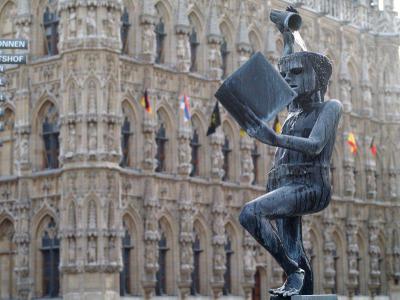
Fonske, a whimsical statue nestled in the heart of Leuven, embodies the city's vibrant student culture and intellectual spirit. Known affectionately as "Fons Sapientiae," meaning "Source of Wisdom," this beloved resident of Leuven has captured the hearts of locals and visitors alike. The statue depicts a man with a book in hand, pouring water over his head in a seemingly carefree manner.
The symbolism behind Fonske is rich and multifaceted. The flowing water is said to represent the flow of knowledge into the man's mind, symbolizing the pursuit of wisdom and enlightenment. Adorning the book he holds is an intricate mathematical formula, which, when solved, forms the Dutch word for "happiness." While some interpret this symbolism earnestly, others take a more lighthearted approach, imagining the pouring water as a symbol of the city's renowned beer culture.
Since its installation in 1975 to commemorate the 550th anniversary of the University of Leuven (KU Leuven), Fonske has become an iconic symbol of the city, often compared to Brussels' famous Manneken Pis statue. Like its counterpart, Fonske is frequently adorned with costumes and accessories, reflecting the playful and creative spirit of the city's residents. As a testament to Leuven's dynamic and lively atmosphere, Fonske continues to delight and entertain, sparking friendly rivalries with other iconic statues while symbolizing the enduring connection between knowledge, community, and joy in the city.
The symbolism behind Fonske is rich and multifaceted. The flowing water is said to represent the flow of knowledge into the man's mind, symbolizing the pursuit of wisdom and enlightenment. Adorning the book he holds is an intricate mathematical formula, which, when solved, forms the Dutch word for "happiness." While some interpret this symbolism earnestly, others take a more lighthearted approach, imagining the pouring water as a symbol of the city's renowned beer culture.
Since its installation in 1975 to commemorate the 550th anniversary of the University of Leuven (KU Leuven), Fonske has become an iconic symbol of the city, often compared to Brussels' famous Manneken Pis statue. Like its counterpart, Fonske is frequently adorned with costumes and accessories, reflecting the playful and creative spirit of the city's residents. As a testament to Leuven's dynamic and lively atmosphere, Fonske continues to delight and entertain, sparking friendly rivalries with other iconic statues while symbolizing the enduring connection between knowledge, community, and joy in the city.
11) University Library and Bell Tower (must see)
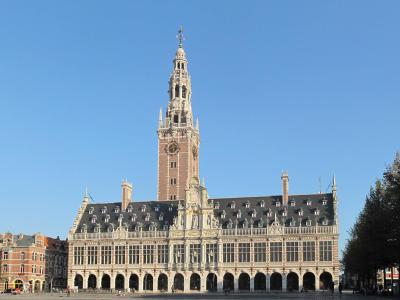
Designed by the visionary American architect Whitney Warren in a neo-Flemish-Renaissance style, the University Library was erected between 1921 and 1928. Its grandiose dimensions, a testament to Allied victory against Germany, establish it as one of the city's most monumental university edifices.
Tragically, in 1940, amidst the tumult of the second German invasion of Leuven, the University Library fell victim to a devastating fire, resulting in the loss of its priceless collection comprising 900,000 manuscripts and books. The inferno, believed to have ignited during an exchange of hostilities between the warring forces rather than a deliberate act, inflicted irreparable damage upon the cultural heritage housed within its walls.
Following the ravages of war, the University Library was painstakingly reconstructed in accordance with Warren's original design, serving as a poignant testament to resilience and the enduring pursuit of knowledge. The rebuilding effort, buoyed by generous contributions from around the globe, reaffirmed the library's significance as a custodian of learning and cultural exchange.
Today, the University Library and its accompanying Bell Tower offers visitors a captivating journey through history and a breathtaking panoramic view of the city. As you ascend the tower, you are immersed in a permanent exhibition that chronicles the stirring history of the University Library and its iconic carillon tower. Delve into the rich tapestry of Leuven's past, from the triumphs of academia to the challenges of war and reconstruction. Discover the architectural marvels and cultural significance of this historic landmark, whose story is woven into the fabric of the city's identity.
Tragically, in 1940, amidst the tumult of the second German invasion of Leuven, the University Library fell victim to a devastating fire, resulting in the loss of its priceless collection comprising 900,000 manuscripts and books. The inferno, believed to have ignited during an exchange of hostilities between the warring forces rather than a deliberate act, inflicted irreparable damage upon the cultural heritage housed within its walls.
Following the ravages of war, the University Library was painstakingly reconstructed in accordance with Warren's original design, serving as a poignant testament to resilience and the enduring pursuit of knowledge. The rebuilding effort, buoyed by generous contributions from around the globe, reaffirmed the library's significance as a custodian of learning and cultural exchange.
Today, the University Library and its accompanying Bell Tower offers visitors a captivating journey through history and a breathtaking panoramic view of the city. As you ascend the tower, you are immersed in a permanent exhibition that chronicles the stirring history of the University Library and its iconic carillon tower. Delve into the rich tapestry of Leuven's past, from the triumphs of academia to the challenges of war and reconstruction. Discover the architectural marvels and cultural significance of this historic landmark, whose story is woven into the fabric of the city's identity.
