Custom Walk in Fort William, Scotland by crisgi40_8ce383 created on 2026-07-21
Guide Location: Scotland » Fort William
Guide Type: Custom Walk
# of Sights: 9
Tour Duration: 3 Hour(s)
Travel Distance: 5.5 Km or 3.4 Miles
Share Key: 6UEAW
Guide Type: Custom Walk
# of Sights: 9
Tour Duration: 3 Hour(s)
Travel Distance: 5.5 Km or 3.4 Miles
Share Key: 6UEAW
How It Works
Please retrieve this walk in the GPSmyCity app. Once done, the app will guide you from one tour stop to the next as if you had a personal tour guide. If you created the walk on this website or come to the page via a link, please follow the instructions below to retrieve the walk in the app.
Retrieve This Walk in App
Step 1. Download the app "GPSmyCity: Walks in 1K+ Cities" on Apple App Store or Google Play Store.



Step 2. In the GPSmyCity app, download(or launch) the guide "Fort William Map and Walking Tours".
Step 3. Tap the menu button located at upper right corner of the "Walks" screen and select "Retrieve custom walk". Enter the share key: 6UEAW
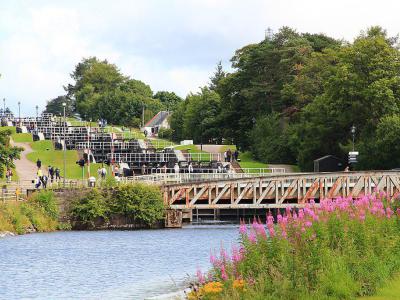
1) Neptune's Staircase
Neptune’s Staircase is the longest staircase lock in Britain and is part of the Caledonian Canal. It has eight connected locks that raise boats by about 20 metres (64 feet). The full length of the staircase is around 180 metres. Today, it is still used by leisure boats, and visitors can walk freely along the paths next to the locks to watch boats moving up or down.
Passing through all eight locks takes about 90 minutes. In the past, the process could take half a day because everything was operated by hand using ropes and gates. The system now uses modern hydraulic equipment, which makes operation faster and safer. Information boards along the route explain how the locks work and describe the engineering behind them in clear terms, making it easy to understand what is happening.
The locks were designed by engineer Thomas Telford and built between 1803 and 1822. Structural problems in the 1990s led to major repairs, finished in the early 2000s. Today, the area is well kept, with open views toward Ben Nevis, grassy spots for short breaks, and cafés and hotels nearby.
Passing through all eight locks takes about 90 minutes. In the past, the process could take half a day because everything was operated by hand using ropes and gates. The system now uses modern hydraulic equipment, which makes operation faster and safer. Information boards along the route explain how the locks work and describe the engineering behind them in clear terms, making it easy to understand what is happening.
The locks were designed by engineer Thomas Telford and built between 1803 and 1822. Structural problems in the 1990s led to major repairs, finished in the early 2000s. Today, the area is well kept, with open views toward Ben Nevis, grassy spots for short breaks, and cafés and hotels nearby.
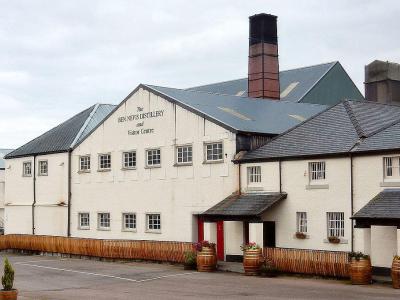
2) Ben Nevis Distillery
Ben Nevis Distillery stands as one of Scotland's oldest licensed distilleries, boasting a rich history dating back to its establishment in 1825. Nestled at the base of Britain's tallest peak, Ben Nevis, this distillery exudes a sense of grandeur and tradition. This distillery sources its water from the Allt a’Mhuilinn, sourced from two pools on Ben Nevis: Coire Leis and Coire na’Ciste.
Renowned for its commitment to traditional methods, Ben Nevis Distillery is celebrated for crafting exceptional Scotch whiskies. Whisky enthusiasts can partake in guided tours and tastings, gaining insight into the meticulous craftsmanship and distinct flavors of their acclaimed spirits.
At the heart of Ben Nevis Distillery lies The Legend of the Dew of Ben Nevis Visitor Centre, housed within a converted distillery warehouse. Here, visitors are treated to a captivating audiovisual presentation featuring Hector McDram, a mythical giant, who unveils the intriguing Legend of the Dew of Ben Nevis.
For those seeking culinary delights, the on-site coffee shop and restaurant offer a tempting array of home-cooked dishes. Additionally, visitors can explore the shop, which boasts a wide selection of gifts, treats, and, of course, whisky, ensuring a memorable visit to Ben Nevis Distillery.
Renowned for its commitment to traditional methods, Ben Nevis Distillery is celebrated for crafting exceptional Scotch whiskies. Whisky enthusiasts can partake in guided tours and tastings, gaining insight into the meticulous craftsmanship and distinct flavors of their acclaimed spirits.
At the heart of Ben Nevis Distillery lies The Legend of the Dew of Ben Nevis Visitor Centre, housed within a converted distillery warehouse. Here, visitors are treated to a captivating audiovisual presentation featuring Hector McDram, a mythical giant, who unveils the intriguing Legend of the Dew of Ben Nevis.
For those seeking culinary delights, the on-site coffee shop and restaurant offer a tempting array of home-cooked dishes. Additionally, visitors can explore the shop, which boasts a wide selection of gifts, treats, and, of course, whisky, ensuring a memorable visit to Ben Nevis Distillery.
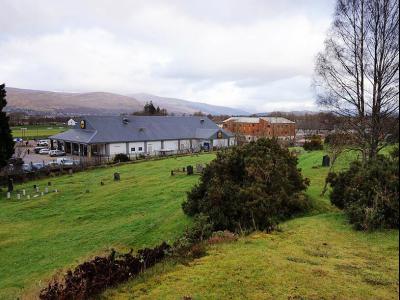
3) Craigs Cemetery
Craigs Cemetery is an old burial ground closely linked to the military fort. While many graves date from the 19th century, some stones go back to the 18th century. The cemetery contains the graves of soldiers such as William Ross and Patrick Campbell, members of local noble families, and people connected to trade and transport. Three Commonwealth war graves from the First World War show that burials continued into the 20th century.
One key feature is the entrance archway. This classical stone arch originally belonged to the fort and was moved here in 1896, after the fort was removed for the railway. It marks the place where Sir Alan Cameron of Erracht raised the 79th Regiment, later the Cameron Highlanders, in 1793. Inside the cemetery are many slate gravestones, simple slabs, and larger memorials, along with a number of unmarked stones, especially on the northern side.
A notable monument is the granite obelisk erected in 1847 to Ewen MacLachlan (1775–1822), a Gaelic scholar and poet. About 427 memorials are recorded at the site. Although privately owned and not always well maintained, the gently rising ground and open views toward the water and hills make it a calm place to reflect on local history.
One key feature is the entrance archway. This classical stone arch originally belonged to the fort and was moved here in 1896, after the fort was removed for the railway. It marks the place where Sir Alan Cameron of Erracht raised the 79th Regiment, later the Cameron Highlanders, in 1793. Inside the cemetery are many slate gravestones, simple slabs, and larger memorials, along with a number of unmarked stones, especially on the northern side.
A notable monument is the granite obelisk erected in 1847 to Ewen MacLachlan (1775–1822), a Gaelic scholar and poet. About 427 memorials are recorded at the site. Although privately owned and not always well maintained, the gently rising ground and open views toward the water and hills make it a calm place to reflect on local history.
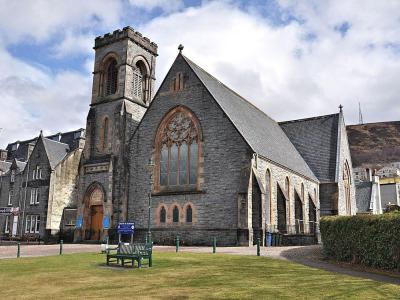
4) Duncansburgh Church
Duncansburgh MacIntosh Parish Church was built in 1881 and opened in August 1882, replacing an earlier church from 1792. Construction cost about £5,000 and reflects a time of growth linked to trade, rail travel, and tourism. The name “Duncansburgh” comes from Duncan Cameron of Fassfern, who renamed the settlement in 1834; it became the Burgh of Fort William in 1874. The current church name dates from a 2007 union with the MacIntosh Memorial congregation.
The church is a stone-built Victorian Gothic kirk. A tall buttressed tower and large pointed windows give the exterior a strong, vertical shape. Traceried windows and solid masonry reflect common church design of the late 19th century. The use of local stone helps the building sit naturally within its setting, while the scale and height make it easy to recognise from nearby viewpoints.
Inside, the church has a calm and well-lit atmosphere. Stained glass windows from the 1880s to the 1970s show biblical scenes and symbols. Historic features still in use include an Austrian oak pulpit from 1905 and an organ from 1906. The church continues to host services as well as choirs, dance classes, and social events, showing how the building remains part of everyday community life.
The church is a stone-built Victorian Gothic kirk. A tall buttressed tower and large pointed windows give the exterior a strong, vertical shape. Traceried windows and solid masonry reflect common church design of the late 19th century. The use of local stone helps the building sit naturally within its setting, while the scale and height make it easy to recognise from nearby viewpoints.
Inside, the church has a calm and well-lit atmosphere. Stained glass windows from the 1880s to the 1970s show biblical scenes and symbols. Historic features still in use include an Austrian oak pulpit from 1905 and an organ from 1906. The church continues to host services as well as choirs, dance classes, and social events, showing how the building remains part of everyday community life.
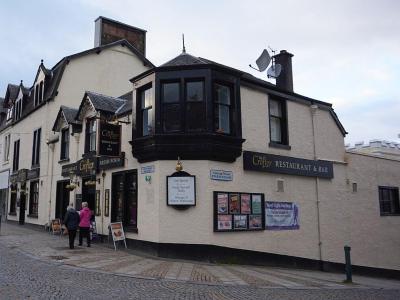
5) Crofter Bar & Restaurant
Crofter Bar & Restaurant is a community pub and restaurant housed in a building from the early 1900s. Although it has a traditional look, there is no proof it was a 19th-century coaching inn. Today, it is a lively meeting place for locals, hikers, and visitors, especially in the evenings. The atmosphere is informal, with space for both casual drinks and sit-down meals, and it is well known for being dog friendly.
The menu is based on Scottish and British comfort food, with dishes such as fish and chips, steak pie, venison burgers, and haggis bites. Vegetarian, vegan, and gluten-free options are also available. Portions are filling, and the kitchen aims to use locally sourced meat and ingredients when possible, with daily specials offered regularly.
The bar has a strong range of Scottish whiskies, local ales, and craft beers. Sports are shown on large TV screens, and live music or other events take place from time to time, mainly at weekends. The place is often busy, and as reservations are not usually taken, guests may need to wait during peak evening hours.
The menu is based on Scottish and British comfort food, with dishes such as fish and chips, steak pie, venison burgers, and haggis bites. Vegetarian, vegan, and gluten-free options are also available. Portions are filling, and the kitchen aims to use locally sourced meat and ingredients when possible, with daily specials offered regularly.
The bar has a strong range of Scottish whiskies, local ales, and craft beers. Sports are shown on large TV screens, and live music or other events take place from time to time, mainly at weekends. The place is often busy, and as reservations are not usually taken, guests may need to wait during peak evening hours.
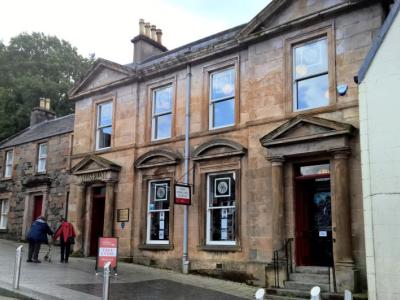
6) West Highland Museum (must see)
The West Highland Museum tells the story of life in the western Highlands through everyday objects, photographs, and written records. It is run by a local charity with help from volunteers, which gives it a clear local focus. The displays are spread over several floors and are easy to follow, allowing visitors to move around at their own pace and dip into topics that interest them.
A key part of the museum looks at the Jacobite uprisings of the 18th century. Original objects from this period include weapons, clothing, and personal items linked to the events of 1745 – 1746. Some exhibits are connected to Bonnie Prince Charlie and people who supported the Jacobite cause. Short texts explain what happened and why these events had a lasting effect on Highland communities, without using complex language.
Other sections focus on daily life and work in the Highlands. Exhibits cover fishing, farming, travel, and local industries, showing how people earned a living and moved around the region. Old tools, household items, and photographs help show how routines changed over time. There is also material on education and the growth of tourism in the 19th century, which brought new visitors and new sources of income.
The museum includes a small shop selling books and items linked to Highland history and culture. Entry is free, making it easy to visit even for a short stop. For visitors who want to better understand the people behind the landscape, the museum offers clear and practical insight into local history.
A key part of the museum looks at the Jacobite uprisings of the 18th century. Original objects from this period include weapons, clothing, and personal items linked to the events of 1745 – 1746. Some exhibits are connected to Bonnie Prince Charlie and people who supported the Jacobite cause. Short texts explain what happened and why these events had a lasting effect on Highland communities, without using complex language.
Other sections focus on daily life and work in the Highlands. Exhibits cover fishing, farming, travel, and local industries, showing how people earned a living and moved around the region. Old tools, household items, and photographs help show how routines changed over time. There is also material on education and the growth of tourism in the 19th century, which brought new visitors and new sources of income.
The museum includes a small shop selling books and items linked to Highland history and culture. Entry is free, making it easy to visit even for a short stop. For visitors who want to better understand the people behind the landscape, the museum offers clear and practical insight into local history.
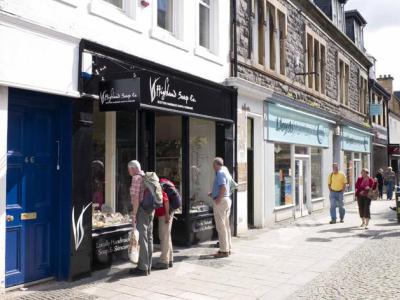
7) The Highland Soap Co.
The Highland Soap Co. started as a small family business in founder Emma Parton’s kitchen and later grew into a company with its own soapworks and visitor centre. It focuses on everyday soap and skincare made using traditional, slow cold-process methods rather than mass production.
The range includes bar and liquid soaps, shampoos, conditioners, hand creams, and body lotions. Products use plant-based oils and botanical ingredients, without synthetic surfactants such as SLS or parabens. Scents are nature-inspired, including heather, seaweed, pine, lavender, wild Scottish raspberry, and whisky & honey, and are well liked by customers. Labels clearly list ingredients and use.
The visitor centre is easy to browse, with space to try hand washes and lotions at a large basin and compare different scents. Information panels and a viewing window into the soapworks explain the production process in a simple way. Staff are on hand to help, and the shop focuses on practical, locally made products meant for everyday use rather than display.
The range includes bar and liquid soaps, shampoos, conditioners, hand creams, and body lotions. Products use plant-based oils and botanical ingredients, without synthetic surfactants such as SLS or parabens. Scents are nature-inspired, including heather, seaweed, pine, lavender, wild Scottish raspberry, and whisky & honey, and are well liked by customers. Labels clearly list ingredients and use.
The visitor centre is easy to browse, with space to try hand washes and lotions at a large basin and compare different scents. Information panels and a viewing window into the soapworks explain the production process in a simple way. Staff are on hand to help, and the shop focuses on practical, locally made products meant for everyday use rather than display.
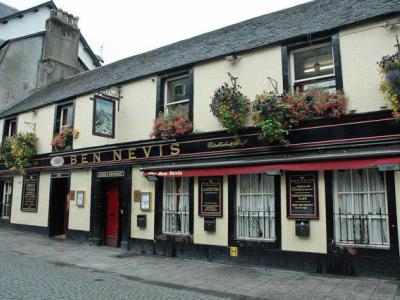
8) Ben Nevis Bar and Restaurant
Ben Nevis Bar and Restaurant dates back to 1806, when it started as an inn for cattle drovers. Today, it includes a separate restaurant and two modern bar areas. The mood is lively and informal, with a mix of locals and visitors, especially walkers and climbers. Evenings are often busy, with live music and regular entertainment.
Food is based on traditional Scottish and British pub cooking. The menu commonly includes steak pie, mussels, burgers, and fish and chips, along with daily specials. Portions are known to be filling, which suits guests looking for a solid meal after physical activity. While the focus is clearly on classic dishes, vegetarian and vegan options are also available, making it accessible to different diets without changing its traditional character.
The bar is known for its whisky range, with over 150 Scottish whiskies listed in a dedicated “Whisky Bible.” Staff are used to helping guests choose and also share local tips. Alongside whisky, the bar serves local beers, real ales, and standard spirits. In summer, reservations are usually not taken, and guests often wait in the bar for a table.
Food is based on traditional Scottish and British pub cooking. The menu commonly includes steak pie, mussels, burgers, and fish and chips, along with daily specials. Portions are known to be filling, which suits guests looking for a solid meal after physical activity. While the focus is clearly on classic dishes, vegetarian and vegan options are also available, making it accessible to different diets without changing its traditional character.
The bar is known for its whisky range, with over 150 Scottish whiskies listed in a dedicated “Whisky Bible.” Staff are used to helping guests choose and also share local tips. Alongside whisky, the bar serves local beers, real ales, and standard spirits. In summer, reservations are usually not taken, and guests often wait in the bar for a table.
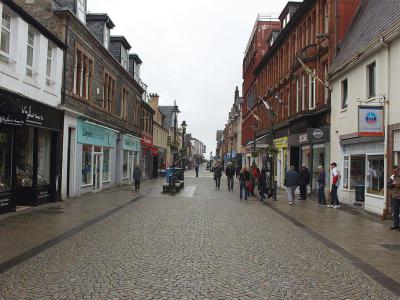
9) High Street
This main street brings together daily life and local activity. It developed mainly in the late 18th and 19th centuries, when the area grew as a market town and port for the western Highlands. Many buildings date from this time and are built of stone, with narrow fronts and simple, practical designs. The gentle curve of the street allows brief views toward the water and the surrounding hills.
Today, the street has a mix of shops and places to eat, including outdoor clothing stores, bookshops, bakeries, cafés, pharmacies, and small souvenir shops. This reflects its close link to walking, climbing, and travel. Long-established businesses sit alongside newer ones, and during the day people stop to buy supplies, have coffee, or pass through on their way elsewhere.
The street also serves as a meeting place, with benches and small open areas where people stop rather than hurry through. In the evening, pubs and restaurants create a calmer mood, especially outside the busy summer season. The pace changes with the time of year, from steady summer crowds to quieter, more local winter days.
Today, the street has a mix of shops and places to eat, including outdoor clothing stores, bookshops, bakeries, cafés, pharmacies, and small souvenir shops. This reflects its close link to walking, climbing, and travel. Long-established businesses sit alongside newer ones, and during the day people stop to buy supplies, have coffee, or pass through on their way elsewhere.
The street also serves as a meeting place, with benches and small open areas where people stop rather than hurry through. In the evening, pubs and restaurants create a calmer mood, especially outside the busy summer season. The pace changes with the time of year, from steady summer crowds to quieter, more local winter days.
