Custom Walk in Rome, Italy by gdrmaq_57c4a created on 2026-07-23
Guide Location: Italy » Rome
Guide Type: Custom Walk
# of Sights: 9
Tour Duration: 3 Hour(s)
Travel Distance: 7.2 Km or 4.5 Miles
Share Key: X4C22
Guide Type: Custom Walk
# of Sights: 9
Tour Duration: 3 Hour(s)
Travel Distance: 7.2 Km or 4.5 Miles
Share Key: X4C22
How It Works
Please retrieve this walk in the GPSmyCity app. Once done, the app will guide you from one tour stop to the next as if you had a personal tour guide. If you created the walk on this website or come to the page via a link, please follow the instructions below to retrieve the walk in the app.
Retrieve This Walk in App
Step 1. Download the app "GPSmyCity: Walks in 1K+ Cities" on Apple App Store or Google Play Store.



Step 2. In the GPSmyCity app, download(or launch) the guide "Rome Map and Walking Tours".
Step 3. Tap the menu button located at upper right corner of the "Walks" screen and select "Retrieve custom walk". Enter the share key: X4C22
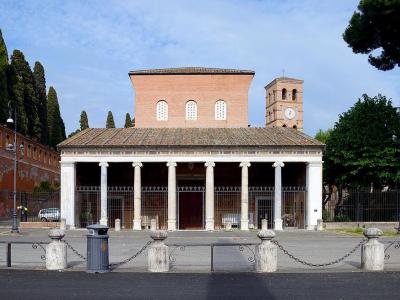
1) San Lorenzo fuori le mura (St. Lawrence Outside the Walls)
One of the Seven Pilgrim Churches of Rome and a minor papal basilica, this sanctuary is well-known as the burial site of Saint Lawrence, one of the first seven deacons of Rome, martyred in 258. Pope Pius IX and several other saints are also interred here, alongside an extensive and ancient burial complex.
The site originally had a small oratory built by Emperor Constantine I over Saint Lawrence's burial place. Later, Pope Damasus I restored or rebuilt it during his time. In the 580s, Pope Pelagius II constructed a church to honor Saint Lawrence, and in the 13th century, Pope Honorius III added another church in front of the earlier structure. These changes resulted in a layout that combines parts of the older church, like the nave and triumphal arch, with the newer construction.
The interior features frescoes depicting the lives of Saints Lawrence and Stephen, both of whom are buried in the crypt beneath the high altar. Excavations have uncovered additional crypts below the current street level. The 13th-century portico has Cosmatesque decorations and includes two ancient sarcophagi, one adorned with images of cherubs and grapes, along with Romanesque stone lions from the original entrance.
The bell tower, built in the 12th century, stands out as a notable feature. Inside, visitors can find the tomb of Cardinal Guglielmo Fieschi, interred in an older sarcophagus that depicts a pagan marital feast. The basilica also inspired painter J. M. W. Turner, who sketched it during his visit in 1819.
The site originally had a small oratory built by Emperor Constantine I over Saint Lawrence's burial place. Later, Pope Damasus I restored or rebuilt it during his time. In the 580s, Pope Pelagius II constructed a church to honor Saint Lawrence, and in the 13th century, Pope Honorius III added another church in front of the earlier structure. These changes resulted in a layout that combines parts of the older church, like the nave and triumphal arch, with the newer construction.
The interior features frescoes depicting the lives of Saints Lawrence and Stephen, both of whom are buried in the crypt beneath the high altar. Excavations have uncovered additional crypts below the current street level. The 13th-century portico has Cosmatesque decorations and includes two ancient sarcophagi, one adorned with images of cherubs and grapes, along with Romanesque stone lions from the original entrance.
The bell tower, built in the 12th century, stands out as a notable feature. Inside, visitors can find the tomb of Cardinal Guglielmo Fieschi, interred in an older sarcophagus that depicts a pagan marital feast. The basilica also inspired painter J. M. W. Turner, who sketched it during his visit in 1819.
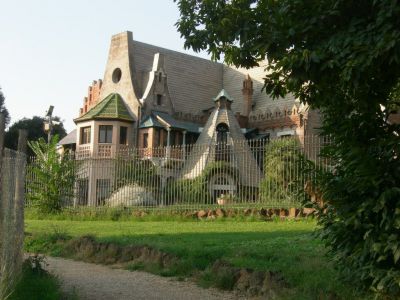
2) Villa Torlonia
Originally constructed for the nouveau-riche Torlonia family, often likened to the Italian Rockefellers of the 19th century, this villa has undergone a transformation from Mussolini's residence to a public park. After years of neglect, the park's flora and structures have recently undergone restoration.
The centerpiece is the Casino Nobile, an impressive neoclassical palace designed by the renowned architect Giuseppe Valadier. Its grandeur is evident in its enormous ballroom, adorned salons with frescoes, and majestic temple-like facade. Although stripped of most of its furniture and art treasures, certain salons still bear remnants of their decorative splendor, including reliefs created by Antonio Canova, the father of Italian neoclassical sculpture.
In stark contrast, within the park lies the Casina delle Civette ("Little House of Owls"), an enchanting representation of the Liberty (art nouveau) style from the early 1900s. This cottage-palace, resembling a fairy tale gabled structure, now showcases exquisite majolica and stained-glass embellishments, with windows featuring owl motifs-a delightful discovery often overlooked by enthusiasts of 19th-century decorative arts. Additionally, temporary exhibits are hosted in the small and elegant Il Casino dei Principi (House of Princes).
Tip:
The chic and modern Pasticceria Gruè nearby is an ideal spot for a quick lunch or a delectable treat. Managed by a talented husband-and-wife duo, their award-winning panettone, available throughout the year, is a must-try. However, the culinary delights extend beyond this renowned pastry. The establishment also offers delectable light lunch options and irresistible sweets inspired by French cuisine.
The centerpiece is the Casino Nobile, an impressive neoclassical palace designed by the renowned architect Giuseppe Valadier. Its grandeur is evident in its enormous ballroom, adorned salons with frescoes, and majestic temple-like facade. Although stripped of most of its furniture and art treasures, certain salons still bear remnants of their decorative splendor, including reliefs created by Antonio Canova, the father of Italian neoclassical sculpture.
In stark contrast, within the park lies the Casina delle Civette ("Little House of Owls"), an enchanting representation of the Liberty (art nouveau) style from the early 1900s. This cottage-palace, resembling a fairy tale gabled structure, now showcases exquisite majolica and stained-glass embellishments, with windows featuring owl motifs-a delightful discovery often overlooked by enthusiasts of 19th-century decorative arts. Additionally, temporary exhibits are hosted in the small and elegant Il Casino dei Principi (House of Princes).
Tip:
The chic and modern Pasticceria Gruè nearby is an ideal spot for a quick lunch or a delectable treat. Managed by a talented husband-and-wife duo, their award-winning panettone, available throughout the year, is a must-try. However, the culinary delights extend beyond this renowned pastry. The establishment also offers delectable light lunch options and irresistible sweets inspired by French cuisine.

3) Museo de Arte Contemporaneo de Roma (Museum of Contemporary Art of Rome)
Even if modern art doesn't typically captivate you, a visit to the Museo de Arte Contemporáneo de Roma, known as the MACRO, should not be missed. Located on Via Reggio Emilia, this municipal art museum was established in 2002, occupying the premises of six former factories that were once part of the Peroni Brewery. The building itself is a testament to contemporary architecture, blending seamlessly with the art collections it houses. The architects faced restrictions that prevented them from demolishing the old factories, so they creatively repurposed the structures, refurbishing the facades, sealing the original windows, and integrating their glass and steel design within the existing walls. The result is a remarkable fusion of the old and the strikingly new.
Inside, you'll encounter a truly futuristic ambiance, featuring a prominent red wooden polygon at the heart of the main atrium, serving as an auditorium. Zigzagging stairways and walkways lead from the atrium to the rooftop terrace, adorned with a central skylight and a captivating fountain. Make sure to visit the restrooms, where the washstands are internally illuminated and change colors, creating a unique experience. The MACRO also offers excellent dining options, including a restaurant, a coffee bar, and a museum shop.
The art collection at MACRO is truly remarkable, representing various contemporary artistic movements from the 1960s to the present day. You'll find an extensive display of Abstract Art by Carla Accardi, one of the co-founders of the Forma 1 Marxist Art Movement. The Art Povera Section showcases exceptional works by Pino Pascali, while the Pop Art Section features compositions by Tano Festa and Schifano Maselli, among other notable artists. Throughout the museum, you'll also encounter captivating sculptures by Leoncillo and Ettore Colla.
Why You Should Visit:
A welcome respite from antiquity.
Tip:
Make sure you visit the catwalk on the 1st floor.
On the 2nd floor there is a bar and a big space to study and just chill.
On the 3rd floor there's a canteen ('tavola calda') where you can have nice lunch and enjoy a terrace.
Inside, you'll encounter a truly futuristic ambiance, featuring a prominent red wooden polygon at the heart of the main atrium, serving as an auditorium. Zigzagging stairways and walkways lead from the atrium to the rooftop terrace, adorned with a central skylight and a captivating fountain. Make sure to visit the restrooms, where the washstands are internally illuminated and change colors, creating a unique experience. The MACRO also offers excellent dining options, including a restaurant, a coffee bar, and a museum shop.
The art collection at MACRO is truly remarkable, representing various contemporary artistic movements from the 1960s to the present day. You'll find an extensive display of Abstract Art by Carla Accardi, one of the co-founders of the Forma 1 Marxist Art Movement. The Art Povera Section showcases exceptional works by Pino Pascali, while the Pop Art Section features compositions by Tano Festa and Schifano Maselli, among other notable artists. Throughout the museum, you'll also encounter captivating sculptures by Leoncillo and Ettore Colla.
Why You Should Visit:
A welcome respite from antiquity.
Tip:
Make sure you visit the catwalk on the 1st floor.
On the 2nd floor there is a bar and a big space to study and just chill.
On the 3rd floor there's a canteen ('tavola calda') where you can have nice lunch and enjoy a terrace.
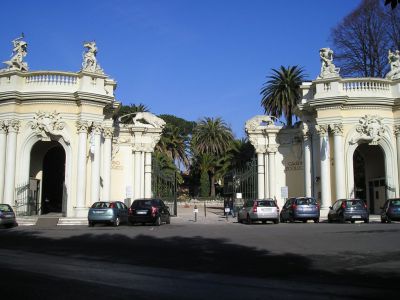
4) Bioparco di Roma (Rome Biopark)
Ideal for a family day trip, this expansive city-center zoo located in the center of the "green heart" of Rome, the park of Villa Borghese, has undergone eco-friendly remodeling and improvements. The focus has been on creating more spacious habitats for the animals, most of which were either transferred from other zoos or born into captivity, ensuring their well-being while respecting wildlife conservation. For instance, the lions now have a den, a water feature, lush vegetation, and even a miniature forest for them to explore.
The macaques' play area is a captivating sight, with a sizeable group of them enjoying the playscape, inside their den, splashing in the water, or relaxing on the rocks. While you won't find koalas, pandas, or polar bears, the zoo houses impressive creatures like big cats, elephants, chimpanzees, and indigenous brown bears from the Abruzzo region, among others.
Informative boards provide valuable insights, and additional attractions include the Reptilarium, the Bioparco train, a picnic area next to the flamingos, and a charming farm.
The macaques' play area is a captivating sight, with a sizeable group of them enjoying the playscape, inside their den, splashing in the water, or relaxing on the rocks. While you won't find koalas, pandas, or polar bears, the zoo houses impressive creatures like big cats, elephants, chimpanzees, and indigenous brown bears from the Abruzzo region, among others.
Informative boards provide valuable insights, and additional attractions include the Reptilarium, the Bioparco train, a picnic area next to the flamingos, and a charming farm.
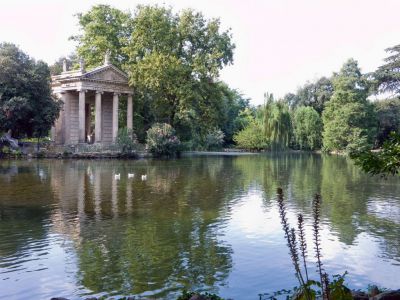
5) Villa Borghese (Rome's Central Park)
Villa Borghese, Rome's Central Park, was initially conceived in the early 17th century by Cardinal Scipione Borghese as an opulent haven of leisure. The term "villa" denoted a suburban sanctuary, following in the footsteps of ancient Roman estates that had been embraced by Renaissance nobility. While the current expanse of the gardens occupies a more modest area, it is worth noting that by 1630, the encompassing perimeter wall stretched an impressive length of approximately 5 kilometers (equivalent to 3 miles). During the late 18th century, the gardens underwent a transformation in the hands of Scottish painter Jacob More, who fashioned them into the prevailing English style of that era.
In addition to the restored Galleria Borghese, which showcases its priceless treasures, the park's crowning jewels include the graceful amphitheater known as Piazza di Siena, the botanical garden on Via Canonica, where an idyllic lake mirrors the serenity of its surroundings, and the neoclassical replica of the Temple of Aesculapius stands as a testament to the artistry of yesteryears. The park also plays host to the Biopark zoo, Rome's own homage to London's famed Globe Theatre, and the esteemed Villa Giulia museum, a bastion of cultural heritage.
Art enthusiasts are drawn to the allure of the Carlo Bilotti Museum, an haven for admirers of Giorgio de Chirico's works. In close proximity lies the Galleria Nazionale d'Arte Moderna e Contemporanea, a sanctuary of modern artistic expression. For cinephiles, a treat awaits at the intimate 63-seat children's movie theater, Cinema dei Piccoli, which transforms into a venue for adult screenings during the evening. Additionally, the Casa del Cinema invites film aficionados to savor the cinematic experience while lounging within its sleek, indoor-outdoor caffè, adorned with a lustrous cherry-red ambiance.
In addition to the restored Galleria Borghese, which showcases its priceless treasures, the park's crowning jewels include the graceful amphitheater known as Piazza di Siena, the botanical garden on Via Canonica, where an idyllic lake mirrors the serenity of its surroundings, and the neoclassical replica of the Temple of Aesculapius stands as a testament to the artistry of yesteryears. The park also plays host to the Biopark zoo, Rome's own homage to London's famed Globe Theatre, and the esteemed Villa Giulia museum, a bastion of cultural heritage.
Art enthusiasts are drawn to the allure of the Carlo Bilotti Museum, an haven for admirers of Giorgio de Chirico's works. In close proximity lies the Galleria Nazionale d'Arte Moderna e Contemporanea, a sanctuary of modern artistic expression. For cinephiles, a treat awaits at the intimate 63-seat children's movie theater, Cinema dei Piccoli, which transforms into a venue for adult screenings during the evening. Additionally, the Casa del Cinema invites film aficionados to savor the cinematic experience while lounging within its sleek, indoor-outdoor caffè, adorned with a lustrous cherry-red ambiance.
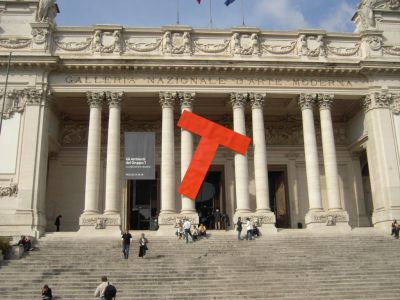
6) Galleria Nazionale d'Arte Moderna e Contemporanea (National Gallery of Modern and Contemporary Art)
Rome is famous for its exquisite churches, museums, and art galleries showcasing the rich history of Ancient Rome and the Holy Roman Empire, which are truly marvelous to explore. However, if you find yourself longing for a change after a few days of admiring countless Madonnas and statues of Roman emperors, why not venture to the Galleria Nazionale d'Arte Moderna, which offers a refreshing perspective on exceptional Italian art.
Established in 1833, this museum of 19th- and 20th-century art in Rome unveils its grandeur from the very threshold with a magnificent cracked-mirror floor skillfully fashioned by the visionary hand of contemporary Italian artist Alfredo Pirri.
Art unfolds across two floors, an ever-changing tapestry of creative marvels. The collection encompasses a section aptly named "Excuse me, is this art?", which features enigmatic works of the illustrious French artist Marcel Duchamp. Alongside, the canvas piercings and slashed masterpieces crafted by Lucio Fontana during the bewitching 1950s stand as daring expressions of artistic audacity.
The luminous realm of Italian Futurism reveals its fervent disciples-Gino Severini, Mario Sironi, and Giacomo Balla-whose palettes dance with vibrant dynamism, immortalizing the spirit of their time. Giorgio de Chirico, the visionary conjurer of metaphysical wonders, intertwines his dreamscape visions with the evocative brushstrokes of Sicilian artist Renato Guttuso.
The gallery's treasures continue to unfold within the realm of Cy Twombly, where ethereal strokes delicately etch the contours of the human soul upon the canvas. The abstract luminary Jean Arp whispers his secrets through sculpted forms, transcending earthly constraints. And amidst this gallery of immortals, the sculptures of Alberto Giacometti stand as intriguing embodiments of the human form, their timeless presence speaking volumes of the human condition. Finally, the monumental creations of Henry Moore, harmonizing man and nature, stand as monuments to the symphony of existence.
The museum has a lovely garden with more statues and beautiful fountains; a great place to sit for a while in the warm afternoon sun.
Why You Should Visit:
The exhibition has a mix of classic and new art; however, there's a beautiful flow to it, as you move from piece to piece and room to room.
While showcasing the works of numerous talented Italian artists, it also features renowned international figures in the art world.
Tip:
There is a coffee shop by the entrance, then another larger cafe that serves light lunches/drinks (follow the signs or ask, as it is not easy to find but worth going to).
Established in 1833, this museum of 19th- and 20th-century art in Rome unveils its grandeur from the very threshold with a magnificent cracked-mirror floor skillfully fashioned by the visionary hand of contemporary Italian artist Alfredo Pirri.
Art unfolds across two floors, an ever-changing tapestry of creative marvels. The collection encompasses a section aptly named "Excuse me, is this art?", which features enigmatic works of the illustrious French artist Marcel Duchamp. Alongside, the canvas piercings and slashed masterpieces crafted by Lucio Fontana during the bewitching 1950s stand as daring expressions of artistic audacity.
The luminous realm of Italian Futurism reveals its fervent disciples-Gino Severini, Mario Sironi, and Giacomo Balla-whose palettes dance with vibrant dynamism, immortalizing the spirit of their time. Giorgio de Chirico, the visionary conjurer of metaphysical wonders, intertwines his dreamscape visions with the evocative brushstrokes of Sicilian artist Renato Guttuso.
The gallery's treasures continue to unfold within the realm of Cy Twombly, where ethereal strokes delicately etch the contours of the human soul upon the canvas. The abstract luminary Jean Arp whispers his secrets through sculpted forms, transcending earthly constraints. And amidst this gallery of immortals, the sculptures of Alberto Giacometti stand as intriguing embodiments of the human form, their timeless presence speaking volumes of the human condition. Finally, the monumental creations of Henry Moore, harmonizing man and nature, stand as monuments to the symphony of existence.
The museum has a lovely garden with more statues and beautiful fountains; a great place to sit for a while in the warm afternoon sun.
Why You Should Visit:
The exhibition has a mix of classic and new art; however, there's a beautiful flow to it, as you move from piece to piece and room to room.
While showcasing the works of numerous talented Italian artists, it also features renowned international figures in the art world.
Tip:
There is a coffee shop by the entrance, then another larger cafe that serves light lunches/drinks (follow the signs or ask, as it is not easy to find but worth going to).
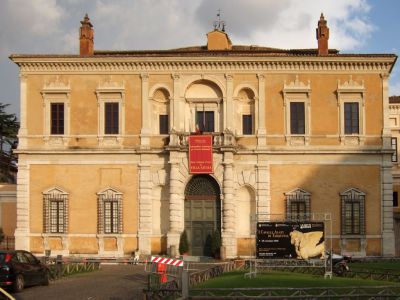
7) Museo Nazionale Etrusco (National Etruscan Museum of Villa Giulia)
Villa Giulia, constructed in the mid-16th century for Pope Julius III, is home to the world's most remarkable collection of Etruscan art & artifacts. Notable figures involved in the planning and construction of the villa included Michelangelo and his fellow Florentine, Vasari; however, the majority of the actual work was carried out by Vignola and Ammannati. A highlight of the villa is its nymphaeum, a sunken sculpture garden that exemplifies the refined aesthetics of the late Renaissance, designed to provide princely enjoyment.
The exact origins of the Etruscans remain uncertain, but many scholars suggest they migrated from Asia Minor, arriving in Italy around 2000 BC and establishing a civilization that served as a dazzling prelude to ancient Rome.
Among the most striking treasures within the collection are the terra-cotta statues, such as the Apollo of Veii and the serenely beautiful Sarcophagus of the Spouses. Dating back to 530–500 BC, the latter depicts a couple (or Sposi) with almond-shaped eyes and archaic smiles, emanating an openness and zest for life rarely seen in Roman art.
Another noteworthy piece is the cinematic frieze from a later temple in Pyrgi (480 BC), resembling Etruscan equivalents of the Elgin marbles, crafted from terra-cotta. The extensive exhibition of Etruscan jewelry, including 8th-century BC fibulae (brooches) made of gold, amber, and bronze, adds to the allure.
The beautiful gardens surrounding the villa are also a sight to behold, making a visit to Villa Giulia truly worthwhile.
The exact origins of the Etruscans remain uncertain, but many scholars suggest they migrated from Asia Minor, arriving in Italy around 2000 BC and establishing a civilization that served as a dazzling prelude to ancient Rome.
Among the most striking treasures within the collection are the terra-cotta statues, such as the Apollo of Veii and the serenely beautiful Sarcophagus of the Spouses. Dating back to 530–500 BC, the latter depicts a couple (or Sposi) with almond-shaped eyes and archaic smiles, emanating an openness and zest for life rarely seen in Roman art.
Another noteworthy piece is the cinematic frieze from a later temple in Pyrgi (480 BC), resembling Etruscan equivalents of the Elgin marbles, crafted from terra-cotta. The extensive exhibition of Etruscan jewelry, including 8th-century BC fibulae (brooches) made of gold, amber, and bronze, adds to the allure.
The beautiful gardens surrounding the villa are also a sight to behold, making a visit to Villa Giulia truly worthwhile.
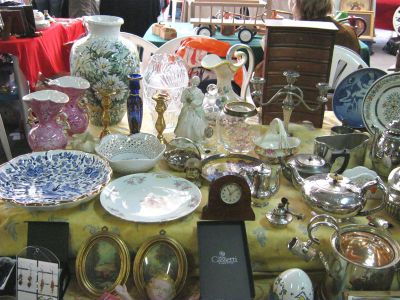
8) Mercatino del Borghetto Flaminio (Borghetto Flaminio Market)
Situated within a spacious courtyard at Piazza della Marina in Rome's Parioli district, Borghetto Flaminio is a vibrant flea market that takes place every Sunday; a treasure trove of diverse offerings, featuring more than 75 vendor stands. Visitors can browse through an extensive range of items, including bric-a-bracs, vintage clothing, handbags, porcelain pieces, postcards, and antique furniture, among others.
Certainly, it was better years ago, but it remains an appealing vintage place with branded clothing and items. Entrance comes at a small cost (of approx. 1.5 euros), serving as a deterrent for time-wasters.
The proximity to upscale neighborhoods elevates the rarity and prices of the goods. Negotiating is recommended before trying on garments, and showing genuine interest may lead to further negotiations.
You may disover items such as genuine crocodile belts for just 15 euros and nearly new linen shirts (carefully treated and washed) for 10 euros. Sellers here are not your typical crude merchants; they often possess knowledge of where to find precious pieces.
Certainly, it was better years ago, but it remains an appealing vintage place with branded clothing and items. Entrance comes at a small cost (of approx. 1.5 euros), serving as a deterrent for time-wasters.
The proximity to upscale neighborhoods elevates the rarity and prices of the goods. Negotiating is recommended before trying on garments, and showing genuine interest may lead to further negotiations.
You may disover items such as genuine crocodile belts for just 15 euros and nearly new linen shirts (carefully treated and washed) for 10 euros. Sellers here are not your typical crude merchants; they often possess knowledge of where to find precious pieces.
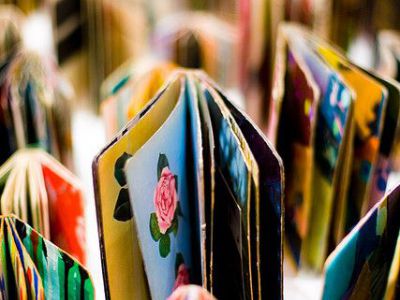
9) Explora (Children's Museum)
Who says museums are just for adults? Not in Rome! The city understands the importance of engaging young minds in a fun and interactive way, which is why the Explora Children's Museum was created.
The entire space is designed to be interactive, allowing children to engage with various materials and tools to learn through hands-on experiences. The museum's philosophy is centered around "Learning by Doing," ensuring that both kids and adults can enjoy their time here.
What sets Explora apart is its child-friendly approach. The museum caters to different age groups, with specific areas tailored for children aged 0-3, 3-6, and 6-12. Each section offers age-appropriate activities, ensuring that children can fully enjoy and engage with the exhibits.
The activities at Explora cover a range of themes, including the environment, communication, economy, and new technologies. Through interactive displays and experiences, children are encouraged to explore and discover the world around them at their own pace.
On the ground floor, you'll find temporary exhibitions and workshops that change periodically. Additionally, there is a special space dedicated to children under three years old, open on Tuesdays and Thursdays. Workshops and other exciting activities are often scheduled on the weekends, adding to the museum's dynamic and ever-evolving experience.
The entire space is designed to be interactive, allowing children to engage with various materials and tools to learn through hands-on experiences. The museum's philosophy is centered around "Learning by Doing," ensuring that both kids and adults can enjoy their time here.
What sets Explora apart is its child-friendly approach. The museum caters to different age groups, with specific areas tailored for children aged 0-3, 3-6, and 6-12. Each section offers age-appropriate activities, ensuring that children can fully enjoy and engage with the exhibits.
The activities at Explora cover a range of themes, including the environment, communication, economy, and new technologies. Through interactive displays and experiences, children are encouraged to explore and discover the world around them at their own pace.
On the ground floor, you'll find temporary exhibitions and workshops that change periodically. Additionally, there is a special space dedicated to children under three years old, open on Tuesdays and Thursdays. Workshops and other exciting activities are often scheduled on the weekends, adding to the museum's dynamic and ever-evolving experience.
