Custom Walk in Warsaw, Poland by rbrownmail59_35e637 created on 2026-07-23
Guide Location: Poland » Warsaw
Guide Type: Custom Walk
# of Sights: 10
Tour Duration: 2 Hour(s)
Travel Distance: 3.2 Km or 2 Miles
Share Key: PN2W9
Guide Type: Custom Walk
# of Sights: 10
Tour Duration: 2 Hour(s)
Travel Distance: 3.2 Km or 2 Miles
Share Key: PN2W9
How It Works
Please retrieve this walk in the GPSmyCity app. Once done, the app will guide you from one tour stop to the next as if you had a personal tour guide. If you created the walk on this website or come to the page via a link, please follow the instructions below to retrieve the walk in the app.
Retrieve This Walk in App
Step 1. Download the app "GPSmyCity: Walks in 1K+ Cities" on Apple App Store or Google Play Store.



Step 2. In the GPSmyCity app, download(or launch) the guide "Warsaw Map and Walking Tours".
Step 3. Tap the menu button located at upper right corner of the "Walks" screen and select "Retrieve custom walk". Enter the share key: PN2W9
1) Monument of Praga's Backyard Orchestra (Pomnik Praskiej Kapeli Podwórkowej)
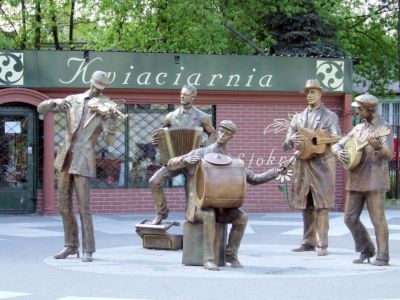
The Monument of Praga's Backyard Orchestra (Pomnik Praskiej Kapeli Podwórkowej) is a significant cultural landmark in Warsaw located at the intersection of Floriańska and K. I. Kłopotowskiego streets in the Praga-Północ district. This unique monument celebrates the essence of ordinary Warsaw residents and their musical traditions.
The idea for this monument was conceived by Archbishop Sławoj Leszek Głódź, who wanted to give back to the city after receiving honorary citizenship of Warsaw. In addition to commissioning a monument to Fr. Ignacy Skorupka in front of the Prague Cathedral in 2005, Głódź initiated the creation of a brass monument dedicated to a Warsaw backyard band. This initiative was realized through the efforts of the Prague Monument Foundation.
The monument, crafted by sculptor Andrzej Renes, features five figures representing a typical backyard band: a violinist, an accordionist, a guitarist, a banjoist, and a drummer. Each figure embodies the spirit of Warsaw's musical culture, bringing to life the sounds and ambiance of the city's courtyards.
Unveiled on September 17, 2006, the inauguration of the monument was a significant event, graced by the presence of its originator, Archbishop Głódź. The ceremony was further enlivened by performances from authentic backyard bands such as Kapela Praska, Różyce Orchestra, and Kurpie band, that specializes in rural folklore.
An innovative feature of the monument was its interactive aspect. Initially, visitors could send an SMS to listen to one of 100 songs, including occupation songs and typical Warsaw tunes. This feature aimed to enhance the experiential aspect of the monument, connecting people more intimately with Warsaw's musical heritage. Unfortunately, due to technical issues, this interactive element is no longer functional.
The idea for this monument was conceived by Archbishop Sławoj Leszek Głódź, who wanted to give back to the city after receiving honorary citizenship of Warsaw. In addition to commissioning a monument to Fr. Ignacy Skorupka in front of the Prague Cathedral in 2005, Głódź initiated the creation of a brass monument dedicated to a Warsaw backyard band. This initiative was realized through the efforts of the Prague Monument Foundation.
The monument, crafted by sculptor Andrzej Renes, features five figures representing a typical backyard band: a violinist, an accordionist, a guitarist, a banjoist, and a drummer. Each figure embodies the spirit of Warsaw's musical culture, bringing to life the sounds and ambiance of the city's courtyards.
Unveiled on September 17, 2006, the inauguration of the monument was a significant event, graced by the presence of its originator, Archbishop Głódź. The ceremony was further enlivened by performances from authentic backyard bands such as Kapela Praska, Różyce Orchestra, and Kurpie band, that specializes in rural folklore.
An innovative feature of the monument was its interactive aspect. Initially, visitors could send an SMS to listen to one of 100 songs, including occupation songs and typical Warsaw tunes. This feature aimed to enhance the experiential aspect of the monument, connecting people more intimately with Warsaw's musical heritage. Unfortunately, due to technical issues, this interactive element is no longer functional.
2) Polish Vodka Museum
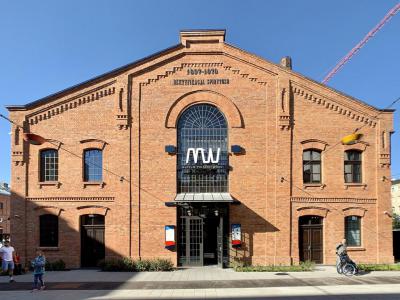
The Polish Vodka Museum in Warsaw is a unique cultural and historical institution dedicated to celebrating and preserving the heritage of one of Poland's most iconic and globally recognized products: vodka. Situated by the Theatre Square in Warsaw, this museum holds the distinction of having the world's largest collection related to the history of vodka. Vodka, being the national spirit of Poland and a globally popular alcoholic beverage, is at the heart of this museum's narrative.
Like France with cognac, Scotland with whisky, Italy with grappa, the Netherlands with gin, America with bourbon, and Mexico with tequila, Poland takes pride in its vodka. This spirit is deeply intertwined with Polish history, tradition, and culture and is celebrated as a premier product in its category.
The museum's collection boasts over 10,000 exhibits, offering an immersive and educational experience. Guests can explore the stories of families who have been involved in vodka manufacturing, understand the impact of the industrial revolution on the vodka industry, and delve into aspects of utility art and advertisement. This is brought to life through an array of bottles, glasses, labels, posters, and advertising signs, each telling its own part of the vodka story.
Enhancing the museum experience, visitors have the opportunity to partake in vodka tastings. These tastings are conducted at the museum itself, Elixir Restaurant, or The Roots cocktail-bar. All these venues are part of the "House of Vodka" project and are conveniently located within the same tenement house, making the Polish Vodka Museum a comprehensive destination for anyone looking to understand and appreciate this significant aspect of Polish heritage.
Like France with cognac, Scotland with whisky, Italy with grappa, the Netherlands with gin, America with bourbon, and Mexico with tequila, Poland takes pride in its vodka. This spirit is deeply intertwined with Polish history, tradition, and culture and is celebrated as a premier product in its category.
The museum's collection boasts over 10,000 exhibits, offering an immersive and educational experience. Guests can explore the stories of families who have been involved in vodka manufacturing, understand the impact of the industrial revolution on the vodka industry, and delve into aspects of utility art and advertisement. This is brought to life through an array of bottles, glasses, labels, posters, and advertising signs, each telling its own part of the vodka story.
Enhancing the museum experience, visitors have the opportunity to partake in vodka tastings. These tastings are conducted at the museum itself, Elixir Restaurant, or The Roots cocktail-bar. All these venues are part of the "House of Vodka" project and are conveniently located within the same tenement house, making the Polish Vodka Museum a comprehensive destination for anyone looking to understand and appreciate this significant aspect of Polish heritage.
3) Praga Neighbourhood
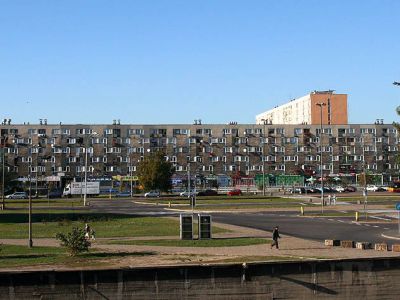
Praga, a district of Warsaw, is located on the east bank of the Vistula river. It was first mentioned in historical records in 1432 and was a separate town until 1791, boasting its own city charter. Originally, Praga was a small settlement directly across the Vistula from the towns of Old Warsaw and Mariensztat, now parts of Warsaw.
In 1648, King Władysław IV of Poland granted Praga a city charter, recognizing it as a city. However, its development was hindered by repeated destructions due to fires, floods, and invasions, as it mostly consisted of wooden buildings. From this early period, the Church of Our Lady of Loreto is the only significant historical monument that survives today.
Efforts to build a permanent bridge across the Vistula to connect Praga with Warsaw were unsuccessful until the late 18th century. Until then, the connection was maintained through privately operated ferries and, during winters, by crossing the frozen river. In 1791, during King Stanisław August Poniatowski's reign, Praga was finally incorporated into Warsaw as a borough.
Remarkably, Praga suffered less damage than central Warsaw during the World War II. In the postwar reconstruction era, it became a crucial area, housing many ministries and public facilities.
Post-1989, after the end of Communism in Poland, Praga underwent a significant transformation. The district, once derelict, experienced a revival as young artists began moving into the abandoned factory buildings. This influx of creativity and youth culture turned Praga into a hub of artistic and cultural activity, drawing visitors in search of experiences different from those offered by the Old Town. Today, Praga is recognized as one of the trendiest neighborhoods in Europe, known for its vibrant and creative energy.
In 1648, King Władysław IV of Poland granted Praga a city charter, recognizing it as a city. However, its development was hindered by repeated destructions due to fires, floods, and invasions, as it mostly consisted of wooden buildings. From this early period, the Church of Our Lady of Loreto is the only significant historical monument that survives today.
Efforts to build a permanent bridge across the Vistula to connect Praga with Warsaw were unsuccessful until the late 18th century. Until then, the connection was maintained through privately operated ferries and, during winters, by crossing the frozen river. In 1791, during King Stanisław August Poniatowski's reign, Praga was finally incorporated into Warsaw as a borough.
Remarkably, Praga suffered less damage than central Warsaw during the World War II. In the postwar reconstruction era, it became a crucial area, housing many ministries and public facilities.
Post-1989, after the end of Communism in Poland, Praga underwent a significant transformation. The district, once derelict, experienced a revival as young artists began moving into the abandoned factory buildings. This influx of creativity and youth culture turned Praga into a hub of artistic and cultural activity, drawing visitors in search of experiences different from those offered by the Old Town. Today, Praga is recognized as one of the trendiest neighborhoods in Europe, known for its vibrant and creative energy.
4) Zabkowska Street
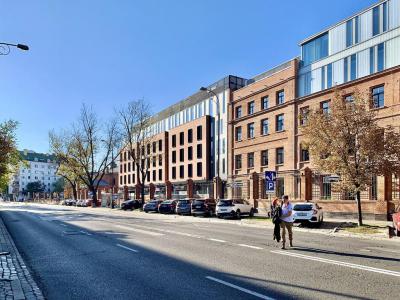
Located in the Praga district, Zabkowska Street is one of the oldest streets in Warsaw. It runs east from Targowa Street and is about one kilometre long. Considered one of the most interesting tourist destinations, it is famous for historical tenement houses that were built at the turn of the 20th century.
Before the First World War Zabkowska Street was inhabited mainly by Jewish people. In most cases, they were real estate owners, traders, and entrepreneurs as they belonged to higher levels of the middle class of society.
Zabkowska Street was a place of entertainment from the very beginning. At Rozyckiego Market, which lies in the heart of the street, everyday hundreds of people exchanged services and spent time together in a friendly, lazy, Warsaw-style atmosphere. Zabkowska Street was also famous for Vodka Factory where top quality alcohol was produced.
Today Zabkowska Street is a busy place with many restaurants and bars. In most of them, one can try Polish and Czech cuisine at a lower price compared to at Warsaw's city center. Zabkowska Street is a student, tourist and hipster friendly place. It has become an artist hub, where many musicians and painters stay here looking for inspiration.
Before the First World War Zabkowska Street was inhabited mainly by Jewish people. In most cases, they were real estate owners, traders, and entrepreneurs as they belonged to higher levels of the middle class of society.
Zabkowska Street was a place of entertainment from the very beginning. At Rozyckiego Market, which lies in the heart of the street, everyday hundreds of people exchanged services and spent time together in a friendly, lazy, Warsaw-style atmosphere. Zabkowska Street was also famous for Vodka Factory where top quality alcohol was produced.
Today Zabkowska Street is a busy place with many restaurants and bars. In most of them, one can try Polish and Czech cuisine at a lower price compared to at Warsaw's city center. Zabkowska Street is a student, tourist and hipster friendly place. It has become an artist hub, where many musicians and painters stay here looking for inspiration.
5) Museum of Praga
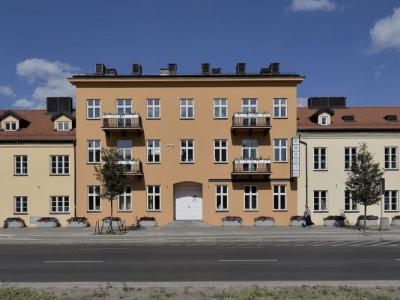
The need to create the Prague Museum and to preserve its vanishing memorabilia has long been discussed. There were different ideas for the final location of the museum. Ultimately, it was decided that the museum would be located in a complex of three historic tenement houses next to the Różycki Bazaar. One of them - the Krzyżanowski's House (Rothblith house) - is the oldest surviving brick residential house in Praga.
Three tenement houses were connected, but different floor levels were kept. They include, among others museum exhibitions, a room for interactive education and oral history and a cafe. The museum also includes a house of prayer and a new building with a projection room. The museum with a permanent exhibition was opened to visitors in 2015.
The Praga Museum of Warsaw organizes exhibitions with free guided tours on selected dates, workshops for children, walks around the district, cultural reviews and theater performances, festivals (including a crafts festival with a craft products fair) and conferences.
Three tenement houses were connected, but different floor levels were kept. They include, among others museum exhibitions, a room for interactive education and oral history and a cafe. The museum also includes a house of prayer and a new building with a projection room. The museum with a permanent exhibition was opened to visitors in 2015.
The Praga Museum of Warsaw organizes exhibitions with free guided tours on selected dates, workshops for children, walks around the district, cultural reviews and theater performances, festivals (including a crafts festival with a craft products fair) and conferences.
6) Bazar Różyckiego (Różyckiego Market)
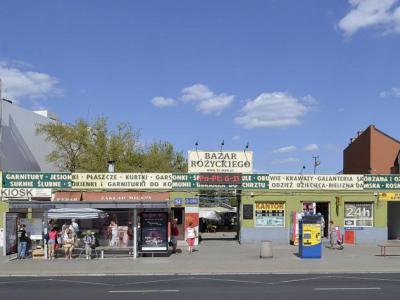
Różyckiego Market (Bazar Różyckiego), located in the Praga district of Warsaw, is steeped in history and culture. Tracing its origins back to the mid-17th century, it stands as the oldest outdoor market in Warsaw. Established more formally in the 19th century by Julian Rożycki, a renowned pharmacist and social activist, the market has been an integral part of Warsaw’s commercial and social landscape.
After World War II, the market gained a unique status. It became one of the few, if not the only, marketplaces offering products unavailable in state-run shops. This distinction drew people from all over the capital and beyond, marking it as a pivotal commercial hub during challenging times.
Today, Różyckiego Market offers an array of goods, from daily necessities like fruits, vegetables, and meats to a wide range of items including clothes, shoes, hats, toys, kitchenware, and even unique finds like wedding gowns. While it may have lost its edge in international fashion trends, the market continues to be a one-stop shop for various needs.
The market, along with its district, Praga Północ, awaits renovation. The marketplace has undergone partial modernization, which has been met with mixed reactions from vendors who often prefer the older parts of the market. Despite its state of deterioration, the market still offers a diverse range of products, including pirated DVDs, clock radios, polyester suits, and incense.
Różyckiego Market is more than just a marketplace; it's a window into the everyday life of the local community. It offers a unique sociological perspective, showcasing the nuances of working-class Warsaw. For visitors and locals alike, the market remains an interesting place to observe and partake in the daily shopping routines of Warsaw residents.
After World War II, the market gained a unique status. It became one of the few, if not the only, marketplaces offering products unavailable in state-run shops. This distinction drew people from all over the capital and beyond, marking it as a pivotal commercial hub during challenging times.
Today, Różyckiego Market offers an array of goods, from daily necessities like fruits, vegetables, and meats to a wide range of items including clothes, shoes, hats, toys, kitchenware, and even unique finds like wedding gowns. While it may have lost its edge in international fashion trends, the market continues to be a one-stop shop for various needs.
The market, along with its district, Praga Północ, awaits renovation. The marketplace has undergone partial modernization, which has been met with mixed reactions from vendors who often prefer the older parts of the market. Despite its state of deterioration, the market still offers a diverse range of products, including pirated DVDs, clock radios, polyester suits, and incense.
Różyckiego Market is more than just a marketplace; it's a window into the everyday life of the local community. It offers a unique sociological perspective, showcasing the nuances of working-class Warsaw. For visitors and locals alike, the market remains an interesting place to observe and partake in the daily shopping routines of Warsaw residents.
7) Cathedral of St. Mary Magdalene
After Warsaw was placed under the control of the Russian Empire as part of the Congress of Vienna in 1815, Warsaw saw a large influx of Russian immigrants who practiced Orthodox. By mid-1800, Orthodox made up roughly ten percent of the population in Praga.
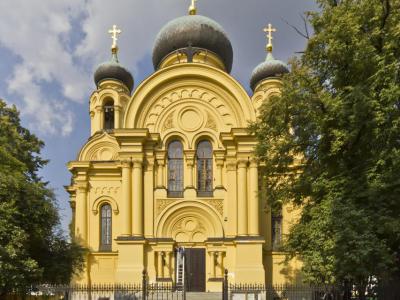
Cathedral of Saint Mary Magdalene was constructed especially to serve the Russian immigrants in Praga and the soldiers of the two Russian garrisons located in the area. The foundation stone of the church was laid in 1867 and it was completed in 1869.
The building was covered with a hipped roof with five onion-domes. The interior was beautifully decorated and a group of 27 murals were painted on the inside walls.
After Poland regained its independence in 1920, most Orthodox churches were demolished or transferred to other religions. Miraculously, Saint Mary Magdalenes survived. During the World War II, the church suffered only minor damages, so today you still see original interior decorations including the main iconostasis and the gilded altars.
In 1944, Nazis confiscated the church bells for the purpose of making missiles, but only to discover that the bells were not suitable for melting down. The broken bells were later welded back together and can be found near the building entrance today.
Visit this church to enjoy its beautiful architecture and exquisitely decorated interiors.
Cathedral of Saint Mary Magdalene was constructed especially to serve the Russian immigrants in Praga and the soldiers of the two Russian garrisons located in the area. The foundation stone of the church was laid in 1867 and it was completed in 1869.
The building was covered with a hipped roof with five onion-domes. The interior was beautifully decorated and a group of 27 murals were painted on the inside walls.
After Poland regained its independence in 1920, most Orthodox churches were demolished or transferred to other religions. Miraculously, Saint Mary Magdalenes survived. During the World War II, the church suffered only minor damages, so today you still see original interior decorations including the main iconostasis and the gilded altars.
In 1944, Nazis confiscated the church bells for the purpose of making missiles, but only to discover that the bells were not suitable for melting down. The broken bells were later welded back together and can be found near the building entrance today.
Visit this church to enjoy its beautiful architecture and exquisitely decorated interiors.
8) St. Florian's Cathedral
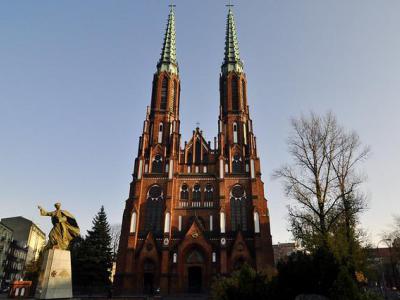
Saint Florian's Cathedral is known for its imposing 75-meter high towers that dominates Warsaw's Praga district. The church was constructed as much to meet pastoral needs as for responding to Russian domination over Poland. Building this church was more of an act of defiance and protest.
After the Congress of Vienna in 1815, Warsaw was placed under the control of the Russian Empire and Russia started exercising its influence over the local population. Among other things, over twenty Russian Orthodox churches were built in Poland, including the Cathedral of Saint Mary Magdalene opened in 1869 on the same street.
As a direct response to the opening of Cathedral of Saint Mary Magdalene, locals started building Saint Florian’s in 1897 and it was opened 1904. The church is named after Saint Florian, the patron saint of professions associated with fire, such as firefighters, steelworkers, chimney sweeps, potters and bakers.
During and after the Siege of Warsaw, churches were used as a hiding place for Jews, the Warsaw Army (Armia Warszawa) and as a general refuge for civilians. Before Nazis left withdraw from Poland in 1944, they blew up this church. The church remained in ruins for several years until a reconstruction effort started in 1950s.
The reconstruction used the 19th Century bricks that made the church look very authentic. The rebuilt church opened in 1972. Today this church is referred to as the Praga’s Cathedral.
After the Congress of Vienna in 1815, Warsaw was placed under the control of the Russian Empire and Russia started exercising its influence over the local population. Among other things, over twenty Russian Orthodox churches were built in Poland, including the Cathedral of Saint Mary Magdalene opened in 1869 on the same street.
As a direct response to the opening of Cathedral of Saint Mary Magdalene, locals started building Saint Florian’s in 1897 and it was opened 1904. The church is named after Saint Florian, the patron saint of professions associated with fire, such as firefighters, steelworkers, chimney sweeps, potters and bakers.
During and after the Siege of Warsaw, churches were used as a hiding place for Jews, the Warsaw Army (Armia Warszawa) and as a general refuge for civilians. Before Nazis left withdraw from Poland in 1944, they blew up this church. The church remained in ruins for several years until a reconstruction effort started in 1950s.
The reconstruction used the 19th Century bricks that made the church look very authentic. The rebuilt church opened in 1972. Today this church is referred to as the Praga’s Cathedral.
9) Praga Park (Park Praski)
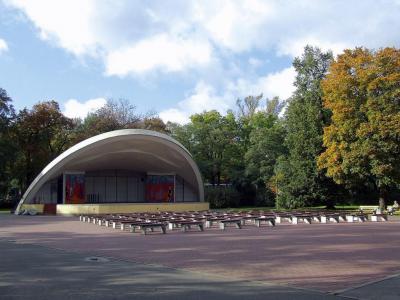
Praga Park (Park Praski), also known as Soldiers of the Polish First Army Park, is a significant and historical park located in the Praga district of Warsaw. Established between 1865-71 and designed by Jan Dobrowolski, the park is situated on the east bank of the Wisła River and spans an area of approximately 30 hectares.
Originally named Aleksandrowski, the park was later renamed Praski after 1916. It was developed on sandy river alluviums and marshy lands that were previously used as meadows and pastures. The park’s layout is in a landscape style, incorporating the existing riverside bushes along the Vistula side. The main feature is an alley that runs through the entire park, part of a star-shaped layout connected to Veterans' Square.
Significantly, in 1927, a portion of the park was allocated for the establishment of the Warsaw Zoological Garden (Ogród Zoologiczny). This zoo has since grown to house over 4,200 animals from more than 500 species, including a bear run established in 1952 and still operational today.
The park is also home to various sculptures and memorials, including a statue of the writer Eliza Orzeszkowa, erected in 1938 by sculptor Henryk Kuna, and a notable giraffe sculpture dating from 1981. Additionally, the park was a burial ground for some Polish army soldiers who died during World War II.
Throughout its expanse, Praga Park offers numerous benches and abundant trees, making it a serene and welcoming spot for relaxation and leisure. The park's flora includes poplars, maples, lindens, elms, ashes, chestnuts, white locusts, spruces, Douglas firs, and larches.
Originally named Aleksandrowski, the park was later renamed Praski after 1916. It was developed on sandy river alluviums and marshy lands that were previously used as meadows and pastures. The park’s layout is in a landscape style, incorporating the existing riverside bushes along the Vistula side. The main feature is an alley that runs through the entire park, part of a star-shaped layout connected to Veterans' Square.
Significantly, in 1927, a portion of the park was allocated for the establishment of the Warsaw Zoological Garden (Ogród Zoologiczny). This zoo has since grown to house over 4,200 animals from more than 500 species, including a bear run established in 1952 and still operational today.
The park is also home to various sculptures and memorials, including a statue of the writer Eliza Orzeszkowa, erected in 1938 by sculptor Henryk Kuna, and a notable giraffe sculpture dating from 1981. Additionally, the park was a burial ground for some Polish army soldiers who died during World War II.
Throughout its expanse, Praga Park offers numerous benches and abundant trees, making it a serene and welcoming spot for relaxation and leisure. The park's flora includes poplars, maples, lindens, elms, ashes, chestnuts, white locusts, spruces, Douglas firs, and larches.
10) Zoo Warszawa
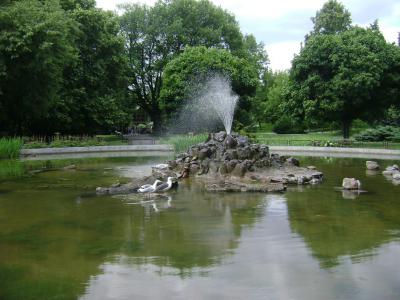
Situated on a sprawling 40-hectare (99-acre) expanse in central Warsaw, the City's Zoo attracts approximately one million visitors annually, ranking among the busiest zoological facilities in Europe. It boasts a diverse collection of over 4,200 animals, representing more than 500 different species.
Established in 1928, the zoo initially served as a habitat for Poland's native wildlife, including storks, brown bears, and otters. Over time, its collection has expanded to include a wide array of exotic creatures such as Rothschild giraffes, African elephants, gibbons, Indian rhinoceroses, reptiles, birds, and tropical fish.
During the winter months, most of the animals are housed indoors, but when they are outdoors, visitors can observe them from designated walkways. The zoo features various aviaries and ponds where many bird species reside, with a primary aviary housing a significant portion of them, including the unique "Hall of Free Flight," a one-of-a-kind feature in Poland.
A must-see attraction within the zoo is the modern pavilion specially designed in a new building for apes. Here, visitors can encounter two young male gorillas and a group of chimpanzees. The new pavilions are equipped with lifts and ramps to accommodate guests with physical disabilities.
After exploring the fascinating world of animals, visitors have the opportunity to dine and rejuvenate themselves at several on-site restaurants. For children, the "Fairytale Zoo" at the heart of the facility offers a delightful experience where they can interact with animals, pet them, and even feed them apples and carrots. A trip to Warsaw would be incomplete without a visit to the renowned Zoological Garden.
Why You Should Visit:
Hundreds of species of animals in spacious surroundings; the zoo itself feels like one of the many parks in the city. Prices are very low, so it is worthwhile.
Tip:
Get a map before you start. Roads are tangled and it is easy to miss some animals while seeing something else twice.
Going early in the day may not be the best idea, especially if it's really hot. Better to go in the afternoon when the cooler environment allows animals to roam around. It's also worth remembering that tropical animals usually hide inside in winter.
Established in 1928, the zoo initially served as a habitat for Poland's native wildlife, including storks, brown bears, and otters. Over time, its collection has expanded to include a wide array of exotic creatures such as Rothschild giraffes, African elephants, gibbons, Indian rhinoceroses, reptiles, birds, and tropical fish.
During the winter months, most of the animals are housed indoors, but when they are outdoors, visitors can observe them from designated walkways. The zoo features various aviaries and ponds where many bird species reside, with a primary aviary housing a significant portion of them, including the unique "Hall of Free Flight," a one-of-a-kind feature in Poland.
A must-see attraction within the zoo is the modern pavilion specially designed in a new building for apes. Here, visitors can encounter two young male gorillas and a group of chimpanzees. The new pavilions are equipped with lifts and ramps to accommodate guests with physical disabilities.
After exploring the fascinating world of animals, visitors have the opportunity to dine and rejuvenate themselves at several on-site restaurants. For children, the "Fairytale Zoo" at the heart of the facility offers a delightful experience where they can interact with animals, pet them, and even feed them apples and carrots. A trip to Warsaw would be incomplete without a visit to the renowned Zoological Garden.
Why You Should Visit:
Hundreds of species of animals in spacious surroundings; the zoo itself feels like one of the many parks in the city. Prices are very low, so it is worthwhile.
Tip:
Get a map before you start. Roads are tangled and it is easy to miss some animals while seeing something else twice.
Going early in the day may not be the best idea, especially if it's really hot. Better to go in the afternoon when the cooler environment allows animals to roam around. It's also worth remembering that tropical animals usually hide inside in winter.
