Custom Walk in Brasov, Romania by isaac_zinner7535 created on 2026-07-25
Guide Location: Romania » Brasov
Guide Type: Custom Walk
# of Sights: 6
Tour Duration: 2 Hour(s)
Travel Distance: 3.3 Km or 2.1 Miles
Share Key: RX96V
Guide Type: Custom Walk
# of Sights: 6
Tour Duration: 2 Hour(s)
Travel Distance: 3.3 Km or 2.1 Miles
Share Key: RX96V
How It Works
Please retrieve this walk in the GPSmyCity app. Once done, the app will guide you from one tour stop to the next as if you had a personal tour guide. If you created the walk on this website or come to the page via a link, please follow the instructions below to retrieve the walk in the app.
Retrieve This Walk in App
Step 1. Download the app "GPSmyCity: Walks in 1K+ Cities" on Apple App Store or Google Play Store.



Step 2. In the GPSmyCity app, download(or launch) the guide "Brasov Map and Walking Tours".
Step 3. Tap the menu button located at upper right corner of the "Walks" screen and select "Retrieve custom walk". Enter the share key: RX96V

1) Council Square (Piața Sfatului) (must see)
The Council Square (Piața Sfatului) is a must-see location in the historical center of Brasov. The Square has been used as a marketplace since 1364, being visited by merchants from the country and abroad.
A pillory once stood in the middle of the square. It was used for punishing those who were thought to be criminals or practitioners of witchcraft. Some were publicly humiliated, while others were beheaded.
The Council Square is surrounded by houses that date to the 18th century. Many of these homes have been declared historical monuments. The most important building in the square is the Council House (Casa Sfatului), which was built in 1420. Located in the middle of Council Square, the building is now the Brasov County Museum of History.
The Black Church (Biserica Neagra) is another building that tourists will see. This church is a must-see site on its own, deserving a full tour thanks to its beautiful architecture and rich history. Another religious edifice located along the square is the Council Square Orthodox Church, a 19th-century, neo-Byzantine church dedicated to the Dormition of the Mother of God.
Muresenilor House Memorial Museum (Muzeul Casa Muresenilor) and the Hirscher House are interesting stops along the square. The Museum of Urban Civilization is worth a visit as well. This museum is housed in a 16th-century building with a reconstructed Renaissance facade. The museum focuses on the building itself and the former owners of the house along with paintings and artifacts from Transylvania's past.
Other attractions near Council Square include the White Tower, Rope Street, Republicii Street, the Black Tower, and many others.
A pillory once stood in the middle of the square. It was used for punishing those who were thought to be criminals or practitioners of witchcraft. Some were publicly humiliated, while others were beheaded.
The Council Square is surrounded by houses that date to the 18th century. Many of these homes have been declared historical monuments. The most important building in the square is the Council House (Casa Sfatului), which was built in 1420. Located in the middle of Council Square, the building is now the Brasov County Museum of History.
The Black Church (Biserica Neagra) is another building that tourists will see. This church is a must-see site on its own, deserving a full tour thanks to its beautiful architecture and rich history. Another religious edifice located along the square is the Council Square Orthodox Church, a 19th-century, neo-Byzantine church dedicated to the Dormition of the Mother of God.
Muresenilor House Memorial Museum (Muzeul Casa Muresenilor) and the Hirscher House are interesting stops along the square. The Museum of Urban Civilization is worth a visit as well. This museum is housed in a 16th-century building with a reconstructed Renaissance facade. The museum focuses on the building itself and the former owners of the house along with paintings and artifacts from Transylvania's past.
Other attractions near Council Square include the White Tower, Rope Street, Republicii Street, the Black Tower, and many others.
2) Catherine's Gate (Poarta Ecaterinei) (must see)
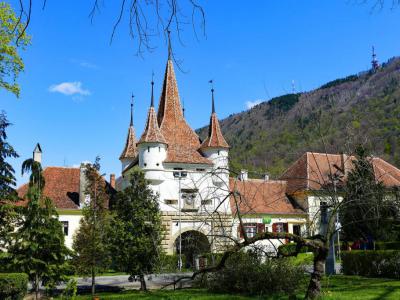
Catherine's Gate (Poarta Ecaterinei) stands as a significant historical monument built in 1559 by the Tailors' Guild. This gate was constructed to replace an earlier one that succumbed to flooding in 1526. It is noteworthy as the only remaining original city gate from medieval Brasov, with its significance further highlighted by its connection to the former Saint Catherine's Monastery, after which it is named.
The gate's architectural design includes a central tower, which is the main surviving part of the original structure. Historical records reveal that there was also a wooden extension, demolished in 1827, with a detailed model of this original structure displayed at the Weaver's Bastion museum, showcasing Brasov circa 1600.
During the Saxon governance from the 13th to the 17th century, the gate also served a socio-economic function. It was known as Porta Valacce, or the Vallah's Gate, and was the only entry point for Romanians living outside the fortress in the neighborhood of Schei. These Romanians, restricted from owning property within the fortress walls, were allowed entry only at designated times and were required to pay tolls for selling their goods inside the citadel.
Symbolically, the gate features four small corner turrets, a common motif in Transylvanian towns, denoting the city's judicial autonomy and the "right of the sword" (ius gladii)-the authority to impose capital punishment. Above the entrance, the tower proudly displays Brasov’s coat of arms, depicting a crown on an oak trunk with roots, symbolizing strength and resilience.
Today, Catherine's Gate functions as a museum, offering visitors a glimpse into its rich history and the broader heritage of Brasov. This gate not only serves as a physical reminder of the past but also as a cultural and educational landmark, illustrating the complex historical interactions between different ethnic groups in Transylvania.
The gate's architectural design includes a central tower, which is the main surviving part of the original structure. Historical records reveal that there was also a wooden extension, demolished in 1827, with a detailed model of this original structure displayed at the Weaver's Bastion museum, showcasing Brasov circa 1600.
During the Saxon governance from the 13th to the 17th century, the gate also served a socio-economic function. It was known as Porta Valacce, or the Vallah's Gate, and was the only entry point for Romanians living outside the fortress in the neighborhood of Schei. These Romanians, restricted from owning property within the fortress walls, were allowed entry only at designated times and were required to pay tolls for selling their goods inside the citadel.
Symbolically, the gate features four small corner turrets, a common motif in Transylvanian towns, denoting the city's judicial autonomy and the "right of the sword" (ius gladii)-the authority to impose capital punishment. Above the entrance, the tower proudly displays Brasov’s coat of arms, depicting a crown on an oak trunk with roots, symbolizing strength and resilience.
Today, Catherine's Gate functions as a museum, offering visitors a glimpse into its rich history and the broader heritage of Brasov. This gate not only serves as a physical reminder of the past but also as a cultural and educational landmark, illustrating the complex historical interactions between different ethnic groups in Transylvania.
3) Reformed Synagogue (Sinagoga Neologa)
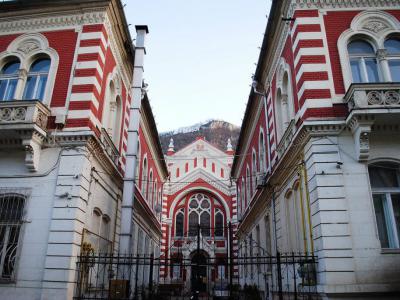
The Reformed Synagogue of Brasov, officially known as Beth Israel Synagogue, is a significant cultural and historical landmark in the heart of Brasov, Transylvania. Situated on Poarta Schei Street, the synagogue reflects the rich heritage of the Neolog Jewish congregation in Romania. Designed by the renowned architect Lipot Baumhorn in the Hungarian Secession style, the synagogue was completed in 1901 and is recognized as a historic monument on Romania's National Register.
Jewish presence in Brasov dates back to the 15th century, though official settlement rights were granted only in 1807. The Jewish community formally organized in 1826, establishing a prayer house, school, and eventually, multiple places of worship. In 1868, the community split into two factions-Neologist and Orthodox-each building its synagogue. The current synagogue, built between 1898 and 1901, was inaugurated by Rabbi Ludovic Pap-Rosenberg on August 20, 1901, amidst heightened security due to antisemitic tensions.
The synagogue spans 657 square meters and features a striking Gothic Revival design with Moorish Revival elements. Its stained-glass windows depict the coats of arms of 32 Israeli settlements, while the facade's large windows allow natural sunlight to illuminate the interior. The roof is crowned by a representation of the stone tablets of the Ten Commandments. Inside, the main nave is flanked by columns supporting balconies designated for women, reflecting traditional synagogue architecture.
The synagogue has been a focal point for the Jewish community, which peaked at 3,494 members in the early 20th century. Despite facing significant damage during World War II under the Iron Guard and subsequent repurposing, the synagogue was restored after the war and underwent further renovations in 2001, marking its centenary.
Today, the synagogue serves a community of approximately 225 members and includes facilities such as a kosher restaurant, community headquarters, and a medical office. In 2014, a Holocaust memorial was erected in its courtyard to honor Transylvanian victims.
Jewish presence in Brasov dates back to the 15th century, though official settlement rights were granted only in 1807. The Jewish community formally organized in 1826, establishing a prayer house, school, and eventually, multiple places of worship. In 1868, the community split into two factions-Neologist and Orthodox-each building its synagogue. The current synagogue, built between 1898 and 1901, was inaugurated by Rabbi Ludovic Pap-Rosenberg on August 20, 1901, amidst heightened security due to antisemitic tensions.
The synagogue spans 657 square meters and features a striking Gothic Revival design with Moorish Revival elements. Its stained-glass windows depict the coats of arms of 32 Israeli settlements, while the facade's large windows allow natural sunlight to illuminate the interior. The roof is crowned by a representation of the stone tablets of the Ten Commandments. Inside, the main nave is flanked by columns supporting balconies designated for women, reflecting traditional synagogue architecture.
The synagogue has been a focal point for the Jewish community, which peaked at 3,494 members in the early 20th century. Despite facing significant damage during World War II under the Iron Guard and subsequent repurposing, the synagogue was restored after the war and underwent further renovations in 2001, marking its centenary.
Today, the synagogue serves a community of approximately 225 members and includes facilities such as a kosher restaurant, community headquarters, and a medical office. In 2014, a Holocaust memorial was erected in its courtyard to honor Transylvanian victims.
4) Orthodox Synagogue (Sinagoga de Rit Ortodox)
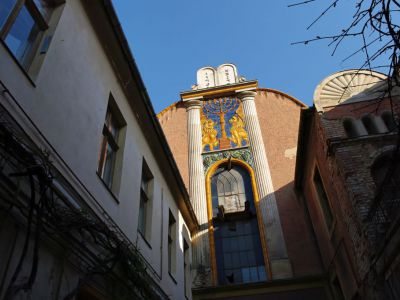
The Orthodox Synagogue in Brasov, located on Castle Street (Strada Castelului), is a significant landmark of the city’s Jewish heritage. Constructed in 1924, it served as a place of worship for the Orthodox (traditionalist) Jewish community, which had split from the Neolog (Reformed) community in 1877. The synagogue’s design reflects the Moorish architectural style, notable for its ornate ceramic mosaics, plant motifs, and the depiction of two lions supporting a menorah above the entrance-an uncommon feature in synagogues.
The building occupies an area of 365 square meters and originally included facilities such as a ritual bath and access to the central Jewish cemetery on Closca Street. Its establishment marked a period when the Jewish community in Brasov was thriving, with members contributing significantly to the city's economic, cultural, and professional life during the interwar years.
However, the Second World War brought immense hardship. Though Brasov’s Jews were not deported, they faced severe restrictions, violence, and property seizures. The Orthodox Synagogue was devastated by legionnaire attacks in 1941, symbolizing the community's suffering during this era.
Following the war, the synagogue resumed limited activity but, like the Jewish population in Brasov, it experienced a steep decline due to emigration, particularly to Palestine. By the 1956 census, only 1,759 Jews remained in the city, a sharp contrast to the pre-war peak of 6,000.
Today, the Orthodox Synagogue is decommissioned and functions as a warehouse. The building stands alongside the Neolog Synagogue on Poarta Schei Street as a testament to Brasov's once-vibrant Jewish community and its enduring legacy.
The building occupies an area of 365 square meters and originally included facilities such as a ritual bath and access to the central Jewish cemetery on Closca Street. Its establishment marked a period when the Jewish community in Brasov was thriving, with members contributing significantly to the city's economic, cultural, and professional life during the interwar years.
However, the Second World War brought immense hardship. Though Brasov’s Jews were not deported, they faced severe restrictions, violence, and property seizures. The Orthodox Synagogue was devastated by legionnaire attacks in 1941, symbolizing the community's suffering during this era.
Following the war, the synagogue resumed limited activity but, like the Jewish population in Brasov, it experienced a steep decline due to emigration, particularly to Palestine. By the 1956 census, only 1,759 Jews remained in the city, a sharp contrast to the pre-war peak of 6,000.
Today, the Orthodox Synagogue is decommissioned and functions as a warehouse. The building stands alongside the Neolog Synagogue on Poarta Schei Street as a testament to Brasov's once-vibrant Jewish community and its enduring legacy.
5) Tampa Cable Car and Tampa Mountain (must see)
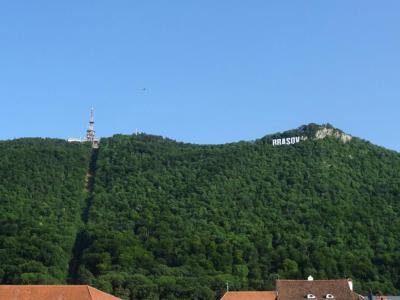
Tampa Mountain is the mountain that looms over Brasov. It is now a nature reservation with multiple walking paths and historic structures. The mountain is part of the Carpathian Mountains.
The stunning, majestic mountain is reachable by foot. It takes about an hour to walk to the top using walking trails that range in difficulty. Another option is the Tampa Car Cable, which takes tourists near the summit, with its panoramic view of the city. It is only a five-minute walk on the path to reach the viewing platform.
Most of the mountain is a nature reserve, established in 1980 due to the rare animal species and plant species that are found there. Animals one might see at Tampa Mountain include brown bears, wild boar, lynxes, wolves, and a variety of birds and insects. Several rare plants are protected.
Historic structures on Mount Tampa include the ruins of one of the seven castles of Transylvania. The Brasovia Citadel was built around 1218. It was demolished by the townspeople in the 15th century and many of the stones were used to fortify the new fortress in the valley. All that remains today are ruins and a 1:100 scale model.
Other buildings, monuments, and ruins located on Tampa Mountain include Knife-Makers' Tower, Shoemakers' Tower, Saint Leonard's Chapel, the Russian Monument of 1849, the Statue of Arpad, the Shooting House, the City Aqueduct, and the Restaurant in Grota Bethlen. The Brasov sign is a popular spot for photos and is located directly at the Tampa Cable Car stop.
The stunning, majestic mountain is reachable by foot. It takes about an hour to walk to the top using walking trails that range in difficulty. Another option is the Tampa Car Cable, which takes tourists near the summit, with its panoramic view of the city. It is only a five-minute walk on the path to reach the viewing platform.
Most of the mountain is a nature reserve, established in 1980 due to the rare animal species and plant species that are found there. Animals one might see at Tampa Mountain include brown bears, wild boar, lynxes, wolves, and a variety of birds and insects. Several rare plants are protected.
Historic structures on Mount Tampa include the ruins of one of the seven castles of Transylvania. The Brasovia Citadel was built around 1218. It was demolished by the townspeople in the 15th century and many of the stones were used to fortify the new fortress in the valley. All that remains today are ruins and a 1:100 scale model.
Other buildings, monuments, and ruins located on Tampa Mountain include Knife-Makers' Tower, Shoemakers' Tower, Saint Leonard's Chapel, the Russian Monument of 1849, the Statue of Arpad, the Shooting House, the City Aqueduct, and the Restaurant in Grota Bethlen. The Brasov sign is a popular spot for photos and is located directly at the Tampa Cable Car stop.
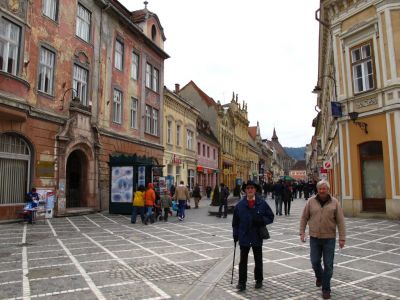
6) Republicii Street (must see)
Republicii Street (Strada Republicii) is a pedestrian street that leads to Council Square. Historically, the street was a site of markets and large fairs. It is now a spot to shop, dine and view historic architecture.
Many of the restaurants located on Republicii Street offer traditional food. There are also seafood choices that include monkfish, carp, and trout. While Brasov continues to grow as a tourist destination, restaurants that feature hamburgers, pizza, and other fast food items are increasingly popping up on Republicii Street.
Shopping is meshed within the history of the street and remains a vital part of its culture today. A variety of boutiques offer souvenirs, jewelry, antiques, clothing, and accessories.
Those visiting Brasov may find locals referring to Republicii Street as Purzengasse or Gate Street, because of the gate with a large, decorative clock originally placed to allow workers to keep track of time.
Many of the restaurants located on Republicii Street offer traditional food. There are also seafood choices that include monkfish, carp, and trout. While Brasov continues to grow as a tourist destination, restaurants that feature hamburgers, pizza, and other fast food items are increasingly popping up on Republicii Street.
Shopping is meshed within the history of the street and remains a vital part of its culture today. A variety of boutiques offer souvenirs, jewelry, antiques, clothing, and accessories.
Those visiting Brasov may find locals referring to Republicii Street as Purzengasse or Gate Street, because of the gate with a large, decorative clock originally placed to allow workers to keep track of time.
