Tunisian Sweets and Pastries
No Tunisian meal is complete without a lavish dessert at the end. And Tunisians do take their sweets seriously, be it fresh seasonal fruits, cakes, fried almond pastries, ice cream, doughnuts or whatever else. Some of these delights have come from Turkey, brought by soldiers of the Ottoman army; others have been known here for centuries. To acquaint yourself with Tunisia's most notable confectioneries, follow this guide.
(To visit the venues mentioned in this article, check out these Self-Guided Walking Tours in Tunis)
Image Courtesy of: Auxdelicesdupalais
1. Makroudh
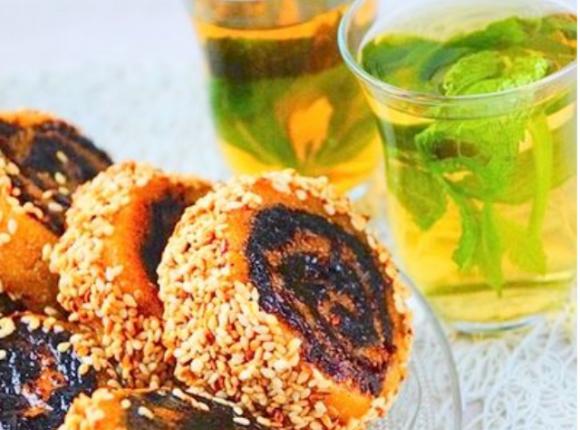
Image Courtesy of: Auxdelicesdupalais
Makroudh cookies are a yummy snack stuffed with dates and nuts; sometimes ground almonds or sesame seeds, or fresh figs are also used in the stuffing. The latter is wrapped in the dough made of flour and semolina, which gives it the specific texture and flavor, and then rolled up and sliced into diamond-shape pieces (the name Makroudh translates as “diamond”). The pastry is fried in oil or baked in the oven, upon which it sometimes also gets further treatment by dipping into a honey syrup with citrus-flavored water (lemon or orange blossom). If you’re a fan of baklava, Makroudh will definitely prove up to your liking, very much so that you will wanna get yourself a full box of these...
Offline reading and travel directions:
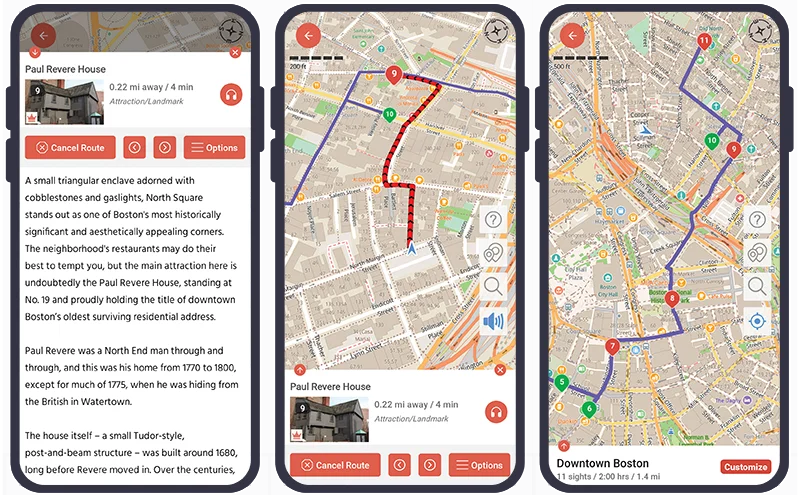
With GPSmyCity App you can read this article offline on your mobile device, use the embedded offline city map and GPS navigation, as well as create a self-guided walk to visit the venues featured in the article.



2. Almond Baklava
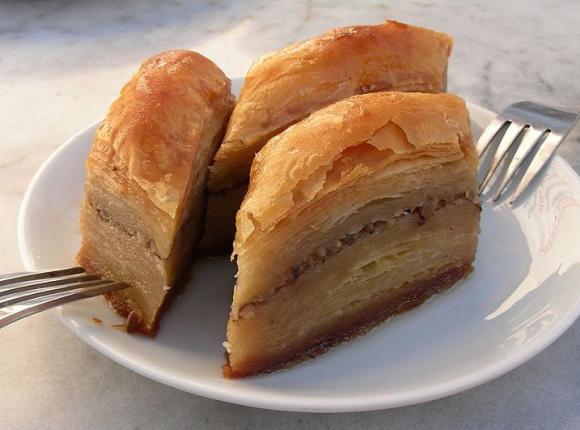
Image Courtesy of: Kultigin
Similarly to the other countries once parts of the Ottoman Empire, Tunisia has its own variation of the traditional Mediterranean baklava. In Tunisia, this flaky pastry, made of layers of filo, sweetened and melded together with honey, is filled with chopped almonds, and sometimes walnuts, instead of the more traditional ground hazelnuts and crushed pistachios. Walnuts and almonds give it a crunchy texture, while the honey syrup gives it a sweet sugary flavor, complete with lemon and clove undertones.
Offline reading and travel directions:
With GPSmyCity App you can read this article offline on your mobile device, use the embedded offline city map and GPS navigation, as well as create a self-guided walk to visit the venues featured in the article.
3. Kaak Warka

Image Courtesy of: Habib M’henni
Kaak Ouarka is a little sweet pastry made of a very thin layer of dough lightened butter, filled with a marzipan-flavored wild geranium and rose water. By form, it resembles an enlarged version of an engagement ring, sometimes adorned with cute little flowers. This type of dessert is very common throughout the Maghreb region, particularly in Libya and Tunisia, and especially during the holly season of Ramadan.
Offline reading and travel directions:
With GPSmyCity App you can read this article offline on your mobile device, use the embedded offline city map and GPS navigation, as well as create a self-guided walk to visit the venues featured in the article.
4. Bambalouni
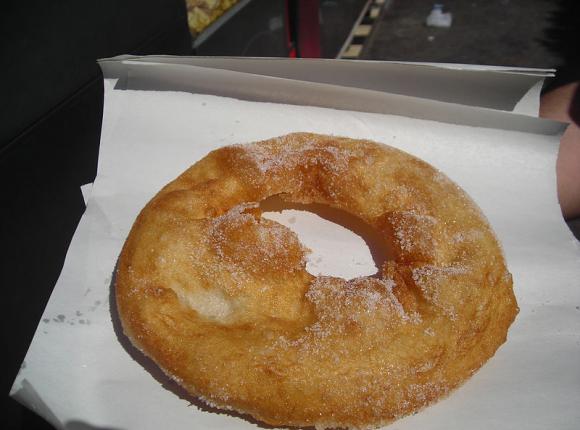
Image Courtesy of: Yamen
If one is to describe Bambalouni, the Tunisian version of American doughnuts, in one word, it would be "sweet" (or "very sweet," if in two words). Otherwise, Bambalouni is the same old round-shaped flour dough fried in oil and sprinkled with sugar or soaked in honey. Widely eaten all over the Maghreb countries, this donut also goes by the name Sfenj. Regardless of what you call it, you must be prepared for a serious sugar boost (in case you're not sweet enough yet), as eating Bambalouni will surely leave you sugar-loaded, big time!!! Still, the sheer deliciousness of this snack is well worth it.
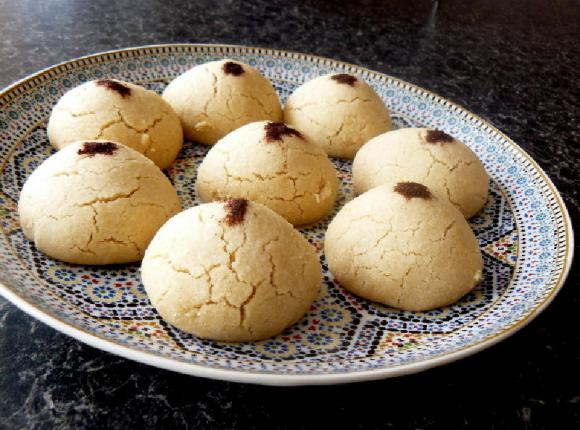
5. Ghraïba Homs (Chickpeas Pastry)
.jpg)
Image Courtesy of: Tililen84
Ghraiba homs pastries are the North African cousin to the Spanish mantecados shortbreads.
Made by hand, of simple ingredients - chickpea flour, sugar, butter or oil (in some parts of Tunisia, they also add a dash of lemon or cinnamon) - these cookies are renowned for their "melting in a mouth" texture and distinctive sesame and almond flavor.
Believed to have originated during the Ottoman period (circa 15th century AD) in the Tunisian city of Ghraïba, hence the name, Ghraiba homs go equally well with coffee and tea, particularly in the morning, as a healthy and balanced breakfast treat.
Made by hand, of simple ingredients - chickpea flour, sugar, butter or oil (in some parts of Tunisia, they also add a dash of lemon or cinnamon) - these cookies are renowned for their "melting in a mouth" texture and distinctive sesame and almond flavor.
Believed to have originated during the Ottoman period (circa 15th century AD) in the Tunisian city of Ghraïba, hence the name, Ghraiba homs go equally well with coffee and tea, particularly in the morning, as a healthy and balanced breakfast treat.
6. YoYos
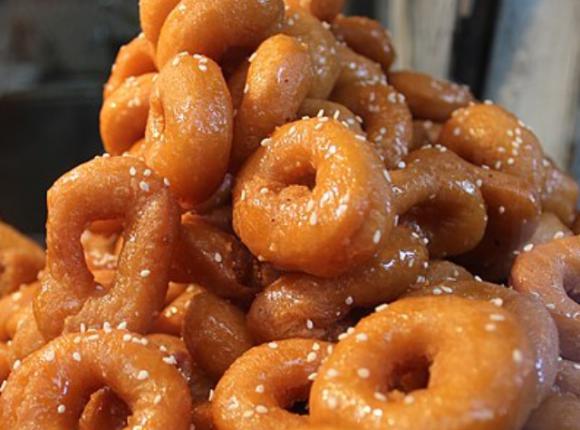
Image Courtesy of: Sami Mlouhi
Tunisians take their sweets seriously, and YoYos - yet another adaptation of North American doughnuts, but with a North African twist in the form of a citrusy glaze - truly stands out. Combining the sweet flavors of honey with a subtle hint of orange, this delicacy is meant to be savored with a nice small glass of mint tea, pine nuts (for a true Tunisian flavor), or a coffee. Oftentimes, the Yoyos are also soaked in sugar syrup and sprinkled with crushed pistachios or almonds. They are a staple snack of certain festivals, as well as the everyday treat that can be bought off little stalls in the streets of many Tunisian cities.
7. Zgougou/ Assidat Zgougou
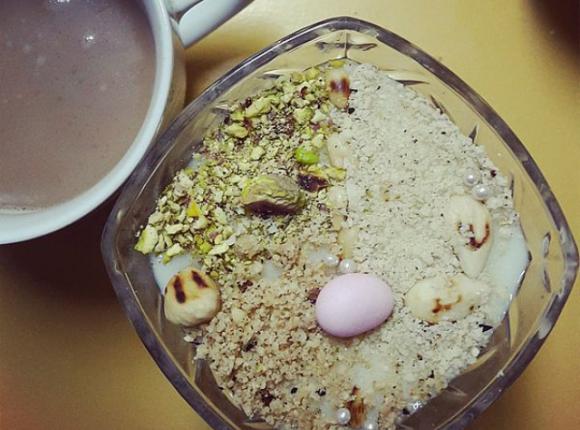
Image Courtesy of: Emna Mizouni
Assidat Zgougou is a very special treat on the list of Tunisian desserts. Prepared for special occasions, such as the birthday of Islamic prophet Muhammad, this is something Tunisians traditionally share with each other, as a token of great respect and brotherly love. The treat is made of sweet cream, pine nuts and dried fruit, and is richly decorated with all sorts of seeds and nuts, ground or whole, varying in form, size and color.
Get GPSmyCity App for iOS or Android
You can read offline thousands of travel articles like this one in the "GPSmyCity: Walks in 1K+ Cities" app on Apple App Store or Google Play Store. The apps also offer city offline maps and GPS navigation to guide you to the places featured in the articles. GPSmyCity app presents you over 7,000 self-guided walks in 1,800+ cities around the world.
Walking Tours in Tunis, Tunisia

Create Your Own Walk in Tunis
Creating your own self-guided walk in Tunis is easy and fun. Choose the city attractions that you want to see and a walk route map will be created just for you. You can even set your hotel as the start point of the walk.
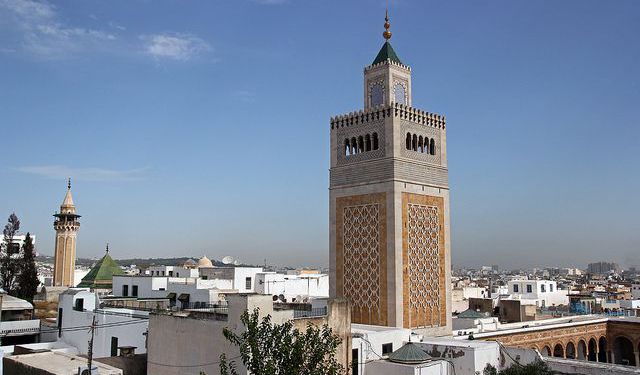
Tunis Introduction Walking Tour
Born in Tunis in 1332, Arab scholar and historian Ibn Khaldun later looked back at his home city when writing the book “Introduction”, describing Tunis itself as a living urban organism shaped by power, trade and learning.
Tunis, the capital of modern Tunisia, stands at a historical crossroads of the Mediterranean, shaped by more than three millennia. The name Tunis is generally believed to... view more
Tour Duration: 1 Hour
Travel Distance: 1.8 Km or 1.1 Miles
Tunis, the capital of modern Tunisia, stands at a historical crossroads of the Mediterranean, shaped by more than three millennia. The name Tunis is generally believed to... view more
Tour Duration: 1 Hour
Travel Distance: 1.8 Km or 1.1 Miles
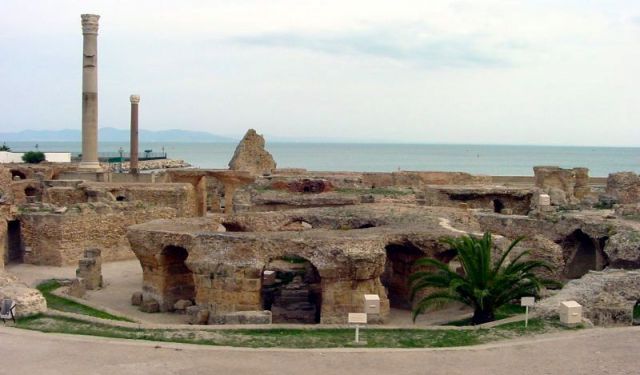
Carthage Walking Tour
The Roman statesman Cato the Elder ended every speech the same way, no matter the subject: “Carthage must be destroyed”. Not because the city was weak, but because it was powerful enough to worry Rome even in silence.
Carthage’s ruins sit on the northeastern edge of modern Tunis, looking out over the Gulf of Tunis. The name Carthage ultimately comes from the Punic word meaning “new... view more
Tour Duration: 2 Hours
Travel Distance: 4 Km or 2.5 Miles
Carthage’s ruins sit on the northeastern edge of modern Tunis, looking out over the Gulf of Tunis. The name Carthage ultimately comes from the Punic word meaning “new... view more
Tour Duration: 2 Hours
Travel Distance: 4 Km or 2.5 Miles