

Aachener Dom (Aachen Cathedral), Aachen (must see)
Aachen Cathedral, also known as the Imperial Cathedral, was built in the late 8th century on the orders of Charlemagne. It is one of the oldest cathedrals in Europe and became the first German site added to the UNESCO World Heritage list in 1978. From the start, the building was meant to express political authority as well as religious power.
At the center of the complex is the Palatine Chapel, completed around 805. Its octagonal plan reflects strong Byzantine influence, especially the church of San Vitale in Ravenna. The number eight had Christian meaning, linked to resurrection and renewal. The design also follows strict proportions: both the dome height and the diameter measure 100 Carolingian feet. In medieval thinking, multiples of ten symbolized order and completeness, reinforcing the chapel’s role as a sacred and carefully planned space.
After Charlemagne’s death, the chapel became his burial place. Over time, the cathedral gained major political importance. Between 936 and 1531, 31 German kings and 12 queens were crowned here, making it a central stage for imperial ceremony in the Holy Roman Empire.
The cathedral’s Treasury is one of the most important church treasuries in Europe. Its objects include the Throne of Charlemagne, the four large Aachen relics-among them a cloth linked by tradition to the Virgin Mary-and the Pala d’Oro, a gold altar screen decorated with detailed metalwork.
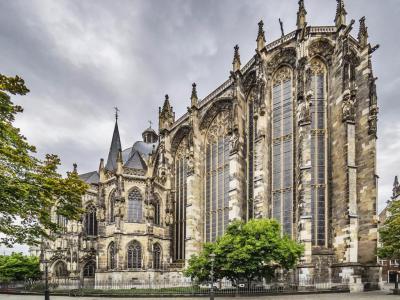
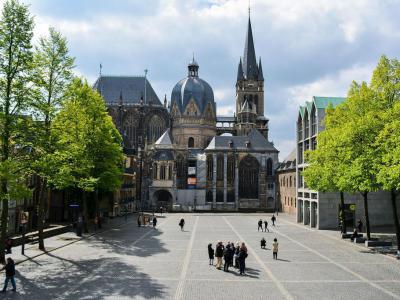
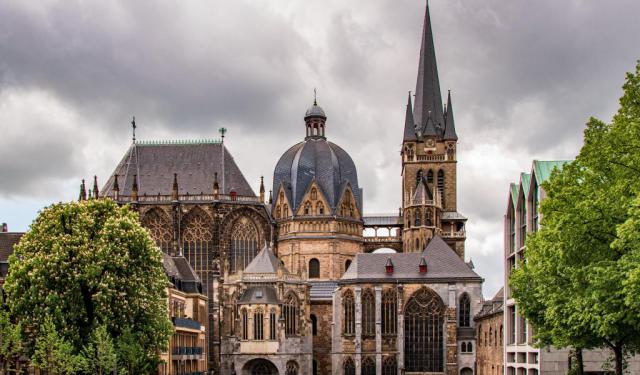
The building did not remain unchanged. Later centuries added new structures around the original chapel. The most striking addition is the Gothic choir hall from the 13th century, built with tall walls and large stained-glass windows. Its height and light contrast clearly with the solid, compact form of the Carolingian core, showing how the cathedral reflects many phases of European history within a single structure.
At the center of the complex is the Palatine Chapel, completed around 805. Its octagonal plan reflects strong Byzantine influence, especially the church of San Vitale in Ravenna. The number eight had Christian meaning, linked to resurrection and renewal. The design also follows strict proportions: both the dome height and the diameter measure 100 Carolingian feet. In medieval thinking, multiples of ten symbolized order and completeness, reinforcing the chapel’s role as a sacred and carefully planned space.
After Charlemagne’s death, the chapel became his burial place. Over time, the cathedral gained major political importance. Between 936 and 1531, 31 German kings and 12 queens were crowned here, making it a central stage for imperial ceremony in the Holy Roman Empire.
The cathedral’s Treasury is one of the most important church treasuries in Europe. Its objects include the Throne of Charlemagne, the four large Aachen relics-among them a cloth linked by tradition to the Virgin Mary-and the Pala d’Oro, a gold altar screen decorated with detailed metalwork.
The building did not remain unchanged. Later centuries added new structures around the original chapel. The most striking addition is the Gothic choir hall from the 13th century, built with tall walls and large stained-glass windows. Its height and light contrast clearly with the solid, compact form of the Carolingian core, showing how the cathedral reflects many phases of European history within a single structure.
Want to visit this sight? Check out these Self-Guided Walking Tours in Aachen. Alternatively, you can download the mobile app "GPSmyCity: Walks in 1K+ Cities" from Apple App Store or Google Play Store. The app turns your mobile device to a personal tour guide and it works offline, so no data plan is needed when traveling abroad.
Download The GPSmyCity App



Aachener Dom (Aachen Cathedral) on Map
Sight Name: Aachener Dom (Aachen Cathedral)
Sight Location: Aachen, Germany (See walking tours in Aachen)
Sight Type: Religious
Guide(s) Containing This Sight:
Sight Location: Aachen, Germany (See walking tours in Aachen)
Sight Type: Religious
Guide(s) Containing This Sight:
Nearby Sights

Walking Tours in Aachen, Germany

Create Your Own Walk in Aachen
Creating your own self-guided walk in Aachen is easy and fun. Choose the city attractions that you want to see and a walk route map will be created just for you. You can even set your hotel as the start point of the walk.
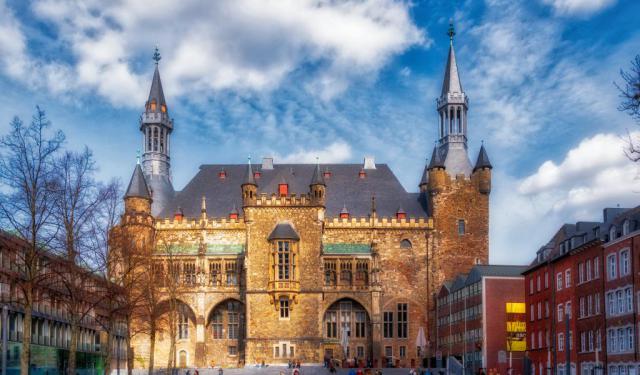
A Walking Tour of Aachen's Historic Old Town
Welcome to Aachen, a city with roots stretching back to Neolithic times. For thousands of years, people have been drawn here by its mineral springs. Archaeologists have uncovered evidence of settlements dating back to the Bronze and Iron Ages. In those ancient days, the Celts made their home here, likely to worship Grannus, the god of light and healing.
By the second century, the Romans had... view more
Tour Duration: 1 Hour(s)
Travel Distance: 1.4 Km or 0.9 Miles
By the second century, the Romans had... view more
Tour Duration: 1 Hour(s)
Travel Distance: 1.4 Km or 0.9 Miles
Aachen's Historical Buildings Tour
Evolved from an ancient Roman settlement, Aachen is one of the oldest and most historic cities in Germany. At one time it served as the capital of Holy Roman Empire. Today's Aachen is just a small city yet with a very rich history and stunning architecture. Despite being heavily damaged during World War II, some of its historical buildings have survived to our days courtesy of the strenuous... view more
Tour Duration: 1 Hour(s)
Travel Distance: 1.7 Km or 1.1 Miles
Tour Duration: 1 Hour(s)
Travel Distance: 1.7 Km or 1.1 Miles