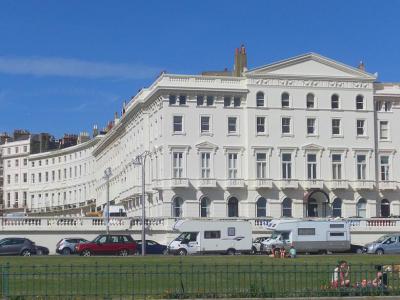


Adelaide Crescent, Brighton
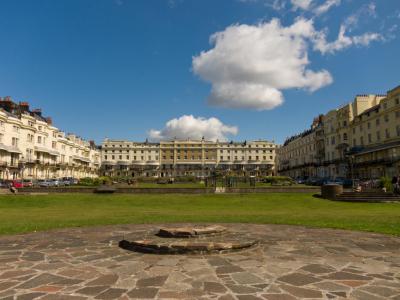
Adelaide Crescent in Brighton and Hove is a distinguished mid-19th-century residential development in the seaside area of Hove. It was originally conceived as an ambitious project aimed at rivaling the grand Kemp Town estate on the eastern side of Brighton. The crescent, along with its continuous northern neighbor, Palmeira Square, forms a significant architectural ensemble that is among the most important in Hove.
Construction of Adelaide Crescent began in 1830, designed by the renowned architect Decimus Burton. However, the project faced significant setbacks, notably the collapse of the Anthaeum-once the world's largest conservatory-on the adjacent land. This event halted construction for several years, and the crescent was not completed until the mid-1860s, with modifications to the original design.
Despite these challenges, Adelaide Crescent stands as one of the foremost pre-Victorian residential developments in the Brighton area, comparable in prestige to the Kemp Town and Brunswick Town estates. The main part of the crescent features buildings that are Grade II* listed, signifying their particular historical and architectural importance. The associated structures at the southern, sea-facing end are listed at the slightly lower Grade II level.
Architecturally, Adelaide Crescent reflects a blend of styles. While hints of the Regency style, which lingered in Brighton and Hove longer than elsewhere, can be detected, the overall design marks a transition from Georgian motifs to the Italianate style that became fashionable in the mid-19th century. The crescent also displays influences of Neo-Renaissance and Neo-Palladian styles, reflecting the stylistic evolution in the area during that period.
Throughout its early years, Adelaide Crescent attracted a notable and affluent population, with census records showing that most heads of households had moved to Hove from outside Sussex-a testament to its appeal and prestige as a residential area. Today, Adelaide Crescent remains a key part of Brighton and Hove's architectural heritage.
Construction of Adelaide Crescent began in 1830, designed by the renowned architect Decimus Burton. However, the project faced significant setbacks, notably the collapse of the Anthaeum-once the world's largest conservatory-on the adjacent land. This event halted construction for several years, and the crescent was not completed until the mid-1860s, with modifications to the original design.
Despite these challenges, Adelaide Crescent stands as one of the foremost pre-Victorian residential developments in the Brighton area, comparable in prestige to the Kemp Town and Brunswick Town estates. The main part of the crescent features buildings that are Grade II* listed, signifying their particular historical and architectural importance. The associated structures at the southern, sea-facing end are listed at the slightly lower Grade II level.
Architecturally, Adelaide Crescent reflects a blend of styles. While hints of the Regency style, which lingered in Brighton and Hove longer than elsewhere, can be detected, the overall design marks a transition from Georgian motifs to the Italianate style that became fashionable in the mid-19th century. The crescent also displays influences of Neo-Renaissance and Neo-Palladian styles, reflecting the stylistic evolution in the area during that period.
Throughout its early years, Adelaide Crescent attracted a notable and affluent population, with census records showing that most heads of households had moved to Hove from outside Sussex-a testament to its appeal and prestige as a residential area. Today, Adelaide Crescent remains a key part of Brighton and Hove's architectural heritage.
Want to visit this sight? Check out these Self-Guided Walking Tours in Brighton. Alternatively, you can download the mobile app "GPSmyCity: Walks in 1K+ Cities" from Apple App Store or Google Play Store. The app turns your mobile device to a personal tour guide and it works offline, so no data plan is needed when traveling abroad.
Download The GPSmyCity App



Adelaide Crescent on Map
Sight Name: Adelaide Crescent
Sight Location: Brighton, England (See walking tours in Brighton)
Sight Type: Attraction/Landmark
Sight Location: Brighton, England (See walking tours in Brighton)
Sight Type: Attraction/Landmark
Nearby Sights
Walking Tours in Brighton, England

Create Your Own Walk in Brighton
Creating your own self-guided walk in Brighton is easy and fun. Choose the city attractions that you want to see and a walk route map will be created just for you. You can even set your hotel as the start point of the walk.
Brighton Seafront Walking Tour
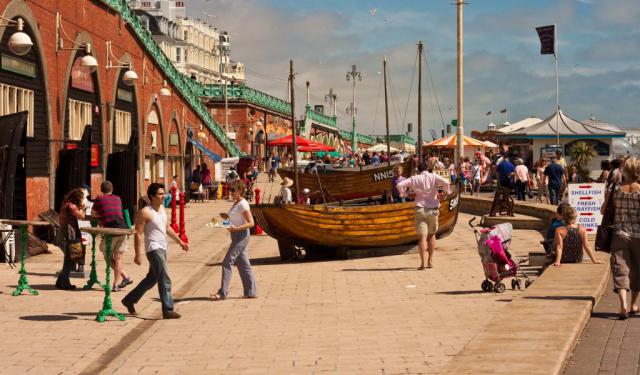
No trip to Brighton is complete without a stroll along the seaside. Here you will know right away that you’re in an English seaside resort, catching the scent of fish and chips and watching deckchairs fluttering in the breeze. Stretching along the pebbly coastline for nearly 5 miles, Brighton's promenade has that Victorian glamour with a dash of youthful energy and style, buzzing with life... view more
Tour Duration: 2 Hours
Travel Distance: 2 Km or 1.2 Miles
Tour Duration: 2 Hours
Travel Distance: 2 Km or 1.2 Miles
A Stroll Through Brighton's Charming Downtown
The town of Bristelmestune is first mentioned in William the Conqueror's Domesday Book of 1085. In 1810 it officially became Brighton. The area of Brighton has known settlements since the Bronze Age. It experienced Celts, Saxons, Romans. But the train stopped with the arrival of the Normans in 1066.
When Conquering William took the helm, Bristelmestune was a fishing village of 400 souls.... view more
Tour Duration: 1 Hour
Travel Distance: 2.2 Km or 1.4 Miles
When Conquering William took the helm, Bristelmestune was a fishing village of 400 souls.... view more
Tour Duration: 1 Hour
Travel Distance: 2.2 Km or 1.4 Miles
City Walks Overview
