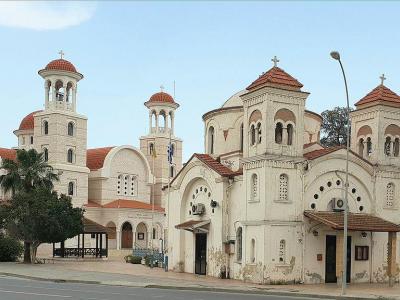


Agia Phaneromeni Church, Larnaca
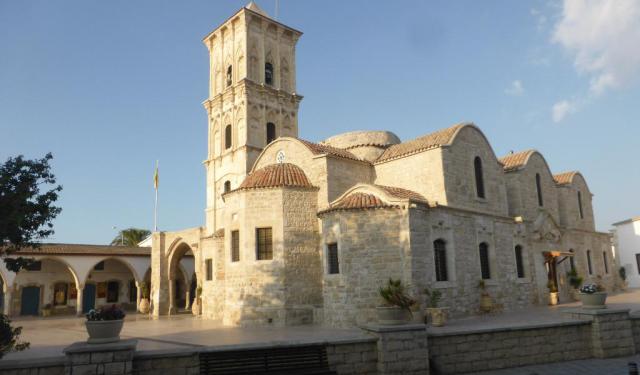
Panagia Faneromeni (Agia Phaneromeni) Church is a symbol of religious tradition and a peaceful place for reflection. This graceful basilica, completed around 1920–1922, is composed in the traditional cruciform style, topped with a central dome and flanked by twin bell towers. Its honey‑coloured stone façade lends a subtle warmth that complements the luminous Mediterranean light, while its modest gardens offer benches and shade for reflection before entering.
More than an architectural landmark, the site encapsulates centuries of devotion. Beneath the church lies a rock‑cut tomb dating from the Mycenaean era (circa 1200 BCE), later repurposed as a catacomb during early Christian times. Excavations during municipal works also unearthed Phoenician burials from the 6th–4th century BCE-an archaeological layer testament to Larnaca’s origin as ancient Kition. In the 8th century, this subterranean sanctuary became a Christian holy site. Pilgrims to this day walk around the catacomb three times and leave tokens like cloth or hair, hoping for healing.
The name “Faneromeni” (‘the revealed one’) is rooted in a local legend: a resident is said to have dreamed of an icon of the Virgin Mary along with a source of holy water near the tomb. Following this revelation, the faithful erected the church in her honor, affirming the sacred presence that had manifested itself. Inside, the modest nave feels peaceful and reverent-wooden icons and delicate frescoes echo stories of Mary’s compassion and divine grace.
Today, Panagia Faneromeni Church invites visitors to a contemplative experience-melding ancient stone, holy discovery, and heartfelt tradition. Whether you pause here en route to the Larnaca Salt Lake or sit on a sunlit bench in its courtyard, the atmosphere fosters a soft communion with Cyprus’s layered spiritual and cultural narrative.
More than an architectural landmark, the site encapsulates centuries of devotion. Beneath the church lies a rock‑cut tomb dating from the Mycenaean era (circa 1200 BCE), later repurposed as a catacomb during early Christian times. Excavations during municipal works also unearthed Phoenician burials from the 6th–4th century BCE-an archaeological layer testament to Larnaca’s origin as ancient Kition. In the 8th century, this subterranean sanctuary became a Christian holy site. Pilgrims to this day walk around the catacomb three times and leave tokens like cloth or hair, hoping for healing.
The name “Faneromeni” (‘the revealed one’) is rooted in a local legend: a resident is said to have dreamed of an icon of the Virgin Mary along with a source of holy water near the tomb. Following this revelation, the faithful erected the church in her honor, affirming the sacred presence that had manifested itself. Inside, the modest nave feels peaceful and reverent-wooden icons and delicate frescoes echo stories of Mary’s compassion and divine grace.
Today, Panagia Faneromeni Church invites visitors to a contemplative experience-melding ancient stone, holy discovery, and heartfelt tradition. Whether you pause here en route to the Larnaca Salt Lake or sit on a sunlit bench in its courtyard, the atmosphere fosters a soft communion with Cyprus’s layered spiritual and cultural narrative.
Want to visit this sight? Check out these Self-Guided Walking Tours in Larnaca. Alternatively, you can download the mobile app "GPSmyCity: Walks in 1K+ Cities" from Apple App Store or Google Play Store. The app turns your mobile device to a personal tour guide and it works offline, so no data plan is needed when traveling abroad.
Download The GPSmyCity App



Agia Phaneromeni Church on Map
Sight Name: Agia Phaneromeni Church
Sight Location: Larnaca, Cyprus (See walking tours in Larnaca)
Sight Type: Religious
Sight Location: Larnaca, Cyprus (See walking tours in Larnaca)
Sight Type: Religious
Nearby Sights


Walking Tours in Larnaca, Cyprus

Create Your Own Walk in Larnaca
Creating your own self-guided walk in Larnaca is easy and fun. Choose the city attractions that you want to see and a walk route map will be created just for you. You can even set your hotel as the start point of the walk.
Seaside Promenade Walk
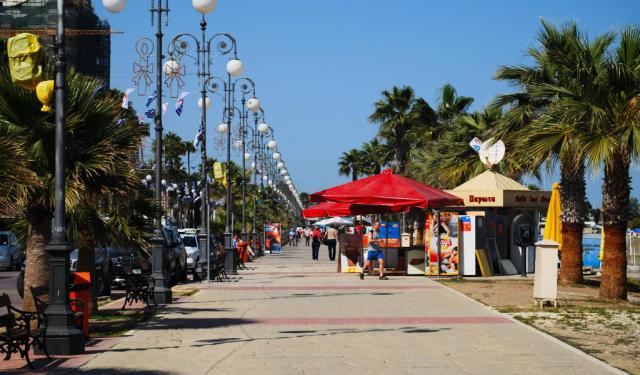
Throughout its multi-thousand-year history, Larnaca has "moved" several times, not only along the sea, but also inland and back, towards the shore. Today, the promenade of Larnaca is the very heart of the city, stretching for three kilometers.
For most tourists Larnaca is just the place where the Airport is located and the first thing they see upon arrival. During the day, herds of... view more
Tour Duration: 2 Hour(s)
Travel Distance: 3.0 Km or 1.9 Miles
For most tourists Larnaca is just the place where the Airport is located and the first thing they see upon arrival. During the day, herds of... view more
Tour Duration: 2 Hour(s)
Travel Distance: 3.0 Km or 1.9 Miles
Larnaca Introduction Walking Tour
Larnaca is the third-largest city in Cyprus. It was once a city-kingdom known as Kitoin. Though Kition was established in the 13th century BCE, the Phoenicians rebuilt the area around 1000 BCE. Some of the remains from this time, like cyclopean walls and temples, can still be seen today.
The modern name, Larnaca, is derived from the Greek word "larnax" due to the numerous burial sites... view more
Tour Duration: 1 Hour(s)
Travel Distance: 1.8 Km or 1.1 Miles
The modern name, Larnaca, is derived from the Greek word "larnax" due to the numerous burial sites... view more
Tour Duration: 1 Hour(s)
Travel Distance: 1.8 Km or 1.1 Miles