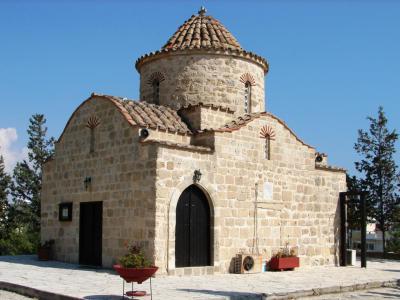


Agios Georgios Makris Church, Larnaca
Situated on a low hill overlooking the Salt Lake area, the small stone chapel of Agios Georgios Makris offers a peaceful retreat from the bustle of Larnaca. Dating back to the 13th century, it embodies the elegance of late Byzantine architecture, with its compact layout, modest dome, and carefully dressed sandstone walls. Once part of the medieval village of Agrinou, the chapel’s location grants sweeping views of Larnaca’s Salt Lake, its seasonal waters reflecting sky and sun in turns.
Though the chapel was unfortunately destroyed in the 1426 Mameluk raid that also saw the capture of Lusignan King Janus, it was soon rebuilt, continuing to anchor local spiritual life. Over subsequent centuries, it served as a modest monastic refuge, expanded during the 18th and 19th centuries. However, all ancillary structures were removed in the 20th century, restoring the chapel to something resembling its original form. Today, its solitary elegance is accentuated by the surviving 13th‑century fresco of Saint George on the northern wall-an evocative glimpse into its medieval devotional art.
For the visiting traveller, Agios Georgios Makris rewards a brief detour with serene charm. Entrance is free, and it remains open during church hours, though it closes on national holidays. A quiet bench nearby invites pause, while the hilltop vantage offers a framed view of the Salt Lake, particularly photogenic at sunrise or sunset.
This chapel is ideally paired with a walk through Faneromeni and a stop at Larnaca’s coastal promenade. Its intimate scale and atmospheric presence speak to Cyprus’s layered history, where Christian worship, medieval conflict, Ottoman and modern eras all merge into a single, humble monument.
Though the chapel was unfortunately destroyed in the 1426 Mameluk raid that also saw the capture of Lusignan King Janus, it was soon rebuilt, continuing to anchor local spiritual life. Over subsequent centuries, it served as a modest monastic refuge, expanded during the 18th and 19th centuries. However, all ancillary structures were removed in the 20th century, restoring the chapel to something resembling its original form. Today, its solitary elegance is accentuated by the surviving 13th‑century fresco of Saint George on the northern wall-an evocative glimpse into its medieval devotional art.
For the visiting traveller, Agios Georgios Makris rewards a brief detour with serene charm. Entrance is free, and it remains open during church hours, though it closes on national holidays. A quiet bench nearby invites pause, while the hilltop vantage offers a framed view of the Salt Lake, particularly photogenic at sunrise or sunset.
This chapel is ideally paired with a walk through Faneromeni and a stop at Larnaca’s coastal promenade. Its intimate scale and atmospheric presence speak to Cyprus’s layered history, where Christian worship, medieval conflict, Ottoman and modern eras all merge into a single, humble monument.
Want to visit this sight? Check out these Self-Guided Walking Tours in Larnaca. Alternatively, you can download the mobile app "GPSmyCity: Walks in 1K+ Cities" from Apple App Store or Google Play Store. The app turns your mobile device to a personal tour guide and it works offline, so no data plan is needed when traveling abroad.
Download The GPSmyCity App



Agios Georgios Makris Church on Map
Sight Name: Agios Georgios Makris Church
Sight Location: Larnaca, Cyprus (See walking tours in Larnaca)
Sight Type: Religious
Sight Location: Larnaca, Cyprus (See walking tours in Larnaca)
Sight Type: Religious
Nearby Sights
Walking Tours in Larnaca, Cyprus

Create Your Own Walk in Larnaca
Creating your own self-guided walk in Larnaca is easy and fun. Choose the city attractions that you want to see and a walk route map will be created just for you. You can even set your hotel as the start point of the walk.
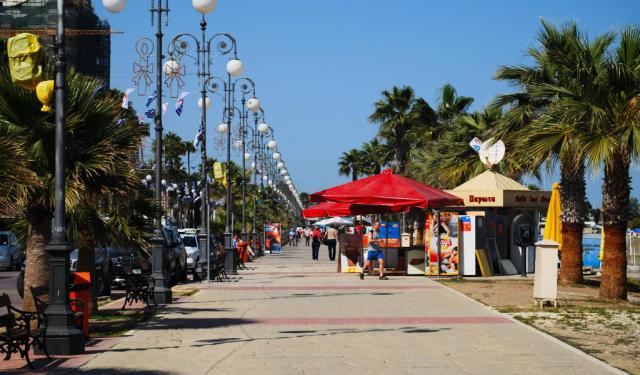
Seaside Promenade Walk
Throughout its multi-thousand-year history, Larnaca has "moved" several times, not only along the sea, but also inland and back, towards the shore. Today, the promenade of Larnaca is the very heart of the city, stretching for three kilometers.
For most tourists Larnaca is just the place where the Airport is located and the first thing they see upon arrival. During the day, herds of... view more
Tour Duration: 2 Hour(s)
Travel Distance: 3.0 Km or 1.9 Miles
For most tourists Larnaca is just the place where the Airport is located and the first thing they see upon arrival. During the day, herds of... view more
Tour Duration: 2 Hour(s)
Travel Distance: 3.0 Km or 1.9 Miles
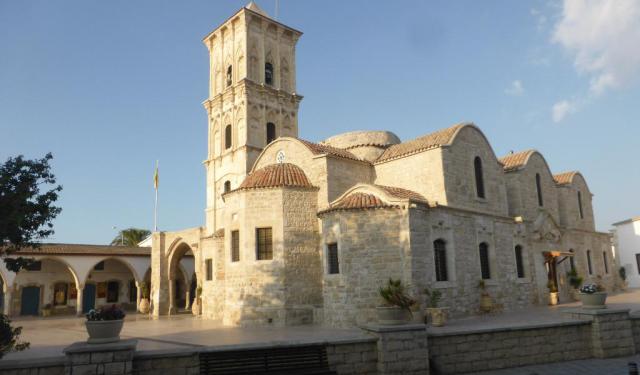
Larnaca Introduction Walking Tour
Larnaca is the third-largest city in Cyprus. It was once a city-kingdom known as Kitoin. Though Kition was established in the 13th century BCE, the Phoenicians rebuilt the area around 1000 BCE. Some of the remains from this time, like cyclopean walls and temples, can still be seen today.
The modern name, Larnaca, is derived from the Greek word "larnax" due to the numerous burial sites... view more
Tour Duration: 1 Hour(s)
Travel Distance: 1.8 Km or 1.1 Miles
The modern name, Larnaca, is derived from the Greek word "larnax" due to the numerous burial sites... view more
Tour Duration: 1 Hour(s)
Travel Distance: 1.8 Km or 1.1 Miles