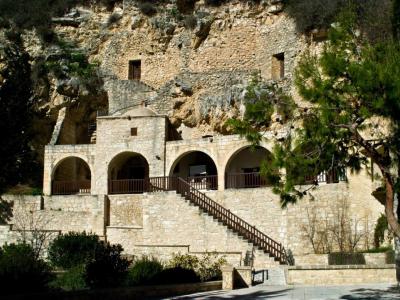


Agios Neophytos Monastery, Paphos (must see)
Agios Neophytos Monastery, located in the community of Tala, 15 km west of Paphos, is a renowned historical and religious site with a rich heritage dating back to the 12th century. Founded by the monk Neophytos, the monastery has an intriguing history and remarkable architecture.
Agios Neophytos Monastery's history began when Neophytos, a devout monk, sought an ascetic and secluded life. In 1159, after facing imprisonment for his religious pursuits, he ventured into the Cypriot hills and discovered a natural cave. He carefully ensured the solitude and serenity of the area before he extended the cave to create his hermitage cell, a small chapel, and eventually his tomb. Originally, this site was his personal hermitage.
As time passed, Neophytos attracted a following, and the hermitage, known as Engleistra, evolved into a monastic community. In 1170, the Bishop of Paphos convinced him to take a pupil, marking the official establishment of the monastery as a quiet monastic community. However, due to Neophytos's strict rejection of materialism and disturbances, the number of monks at the monastery remained smaller than that of contemporary monastic institutions, typically totaling around fifteen to eighteen monks.
The Engleistra, an integral part of Agios Neophytos Monastery, consists of three key elements: the church of the True Cross, Neophytos's cell, and the Refectory. All of these structures are carved into the steep rock face of the cave. A trapezoidal narthex serves as the entrance to the Engleistra, leading to the refectory in the north and Neophytos's cell in the south. The primary body of the church and the bema are adorned with wall paintings that date back throughout the monastery's history. An interesting feature is a cross-shaped niche on the eastern wall, which once held a wooden cross containing a fragment of the True Cross.
A significant portion of the wall paintings within the original Engleistra, created during Neophytos's lifetime, were completed by Theodore Apsuedes in 1183. Further frescoes in other parts of the monastery, also dating back to the 12th century, were likely executed after 1197.
The main church of the monastery, the katholikon, is a large Venetian-inspired basilica, presumably constructed in the early 16th century. Although it was also decorated with wall paintings, only a few fragments have survived. This church stands in contrast to the more ancient and intimate Engleistra.
The Agios Neophytos Monastery now includes a museum dedicated to educating visitors about the history of the monastic community. The museum displays various icons, manuscripts, and historical artifacts related to the monastery.
Agios Neophytos Monastery's history began when Neophytos, a devout monk, sought an ascetic and secluded life. In 1159, after facing imprisonment for his religious pursuits, he ventured into the Cypriot hills and discovered a natural cave. He carefully ensured the solitude and serenity of the area before he extended the cave to create his hermitage cell, a small chapel, and eventually his tomb. Originally, this site was his personal hermitage.
As time passed, Neophytos attracted a following, and the hermitage, known as Engleistra, evolved into a monastic community. In 1170, the Bishop of Paphos convinced him to take a pupil, marking the official establishment of the monastery as a quiet monastic community. However, due to Neophytos's strict rejection of materialism and disturbances, the number of monks at the monastery remained smaller than that of contemporary monastic institutions, typically totaling around fifteen to eighteen monks.
The Engleistra, an integral part of Agios Neophytos Monastery, consists of three key elements: the church of the True Cross, Neophytos's cell, and the Refectory. All of these structures are carved into the steep rock face of the cave. A trapezoidal narthex serves as the entrance to the Engleistra, leading to the refectory in the north and Neophytos's cell in the south. The primary body of the church and the bema are adorned with wall paintings that date back throughout the monastery's history. An interesting feature is a cross-shaped niche on the eastern wall, which once held a wooden cross containing a fragment of the True Cross.
A significant portion of the wall paintings within the original Engleistra, created during Neophytos's lifetime, were completed by Theodore Apsuedes in 1183. Further frescoes in other parts of the monastery, also dating back to the 12th century, were likely executed after 1197.
The main church of the monastery, the katholikon, is a large Venetian-inspired basilica, presumably constructed in the early 16th century. Although it was also decorated with wall paintings, only a few fragments have survived. This church stands in contrast to the more ancient and intimate Engleistra.
The Agios Neophytos Monastery now includes a museum dedicated to educating visitors about the history of the monastic community. The museum displays various icons, manuscripts, and historical artifacts related to the monastery.
Want to visit this sight? Check out these Self-Guided Walking Tours in Paphos. Alternatively, you can download the mobile app "GPSmyCity: Walks in 1K+ Cities" from Apple App Store or Google Play Store. The app turns your mobile device to a personal tour guide and it works offline, so no data plan is needed when traveling abroad.
Download The GPSmyCity App



Agios Neophytos Monastery on Map
Sight Name: Agios Neophytos Monastery
Sight Location: Paphos, Cyprus (See walking tours in Paphos)
Sight Type: Religious
Sight Location: Paphos, Cyprus (See walking tours in Paphos)
Sight Type: Religious
Nearby Sights
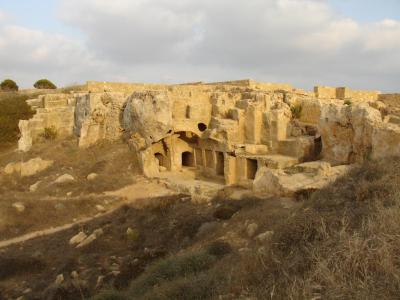

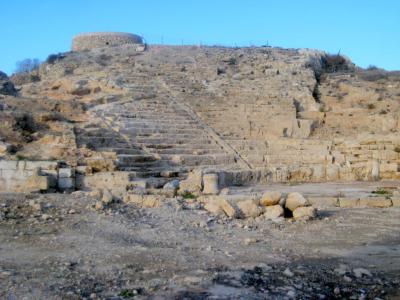
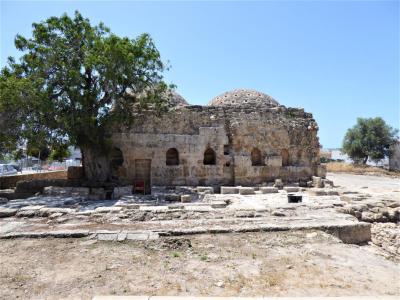
Walking Tours in Paphos, Cyprus

Create Your Own Walk in Paphos
Creating your own self-guided walk in Paphos is easy and fun. Choose the city attractions that you want to see and a walk route map will be created just for you. You can even set your hotel as the start point of the walk.
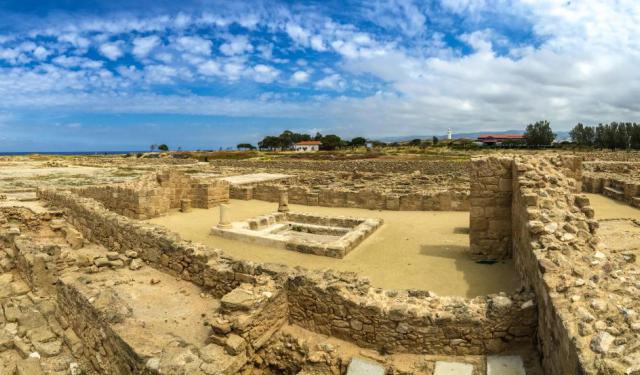
Paphos Archaeological Park Walking Tour
Paphos is divided into two parts. Kato Paphos, the area near the harbor, is where all the archaeological sites are located, while Ktima (Old Town) is where you'll find the museums. The Archaeological Park of Kato Paphos has been included in the UNESCO World Heritage Sites list since 1980.
This park includes sites and monuments from the 4th century BC to the Middle Ages, while most remains... view more
Tour Duration: 1 Hour(s)
Travel Distance: 2.0 Km or 1.2 Miles
This park includes sites and monuments from the 4th century BC to the Middle Ages, while most remains... view more
Tour Duration: 1 Hour(s)
Travel Distance: 2.0 Km or 1.2 Miles
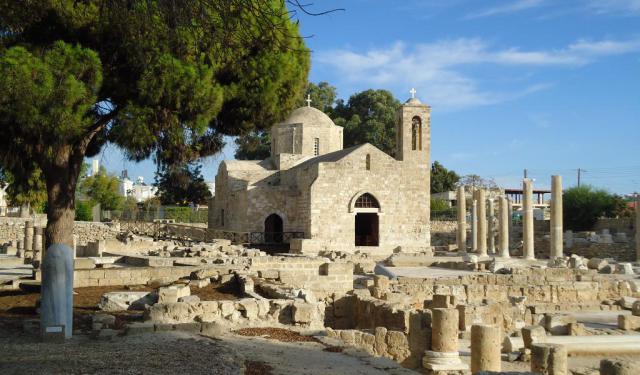
Paphos Introduction Walking Tour
For most people, the mesmerizing town of Paphos on the southwestern coast of Cyprus is all about sun, sand, and sea. However, alongside its beachy vibes, this seaside resort is home to a swag of important historical tourist attractions that contributed to Paphos being anointed European Capital of Culture in 2017.
Indeed, as a UNESCO World Heritage-listed city, Paphos is steeped in both... view more
Tour Duration: 2 Hour(s)
Travel Distance: 4.1 Km or 2.5 Miles
Indeed, as a UNESCO World Heritage-listed city, Paphos is steeped in both... view more
Tour Duration: 2 Hour(s)
Travel Distance: 4.1 Km or 2.5 Miles