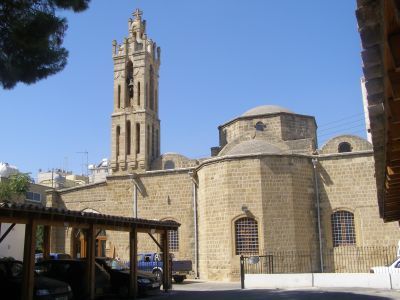


Agios Trypiotis (Archangel Michael Trypiotis Church), Nicosia
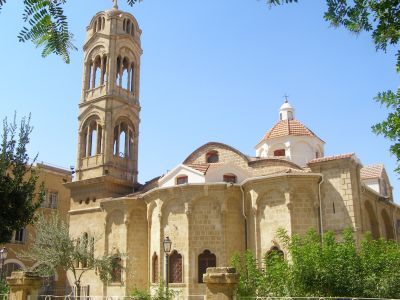
Tucked into a side street just off bustling Onasagorou Street in the heart of Nicosia’s old town, the Archangel Michael Trypiotis Church stands as one of the capital's finest examples of Franco-Byzantine architecture and spiritual heritage. Built in 1695 under Ottoman rule, the church was commissioned by Archbishop Germanos II, with financial contributions from Priest Iakovos and the local Christian community. Its name, Trypiotis-meaning maker of the hole-alludes to the legend of Archangel Michael miraculously saving a monastery from destruction by striking the ground and opening a chasm to divert a torrent.
The present church was erected over the remains of earlier religious structures, including a Gothic church and an Orthodox abbey dating back to the Lusignan and Venetian periods. Traces of these older buildings still survive-such as lintels, coats of arms, and symbolic reliefs-blending eras and traditions into the stonework. The current layout follows a three-aisled, domed basilica plan, its dome nearly square, evoking a sense of sturdy symmetry. Its smooth calcarenite stone façade, combined with a distinct bell tower, gives it an appearance that hints at both a place of worship and a medieval fortress.
The church’s interior is richly decorated, featuring a wide, carved wooden iconostasis made in the 18th century by the artisan Taliadoros, and an icon of Archangel Michael dating back to 1634. Other notable treasures include icons in silver from the Ottoman period, a printed Gospel, and wall frescoes from 1741, one of which depicts the miraculous act of Archangel Michael creating the protective chasm. An additional highlight is an Italian-influenced icon said to echo the style of 15th-century paintings.
Once frequented by Nicosia’s upper class, the church remains an important cultural and spiritual hub. So significant is the church’s presence that the entire Trypiotis Quarter of Nicosia takes its name from it, anchoring the area’s identity in centuries of history, devotion, and architectural splendor.
The present church was erected over the remains of earlier religious structures, including a Gothic church and an Orthodox abbey dating back to the Lusignan and Venetian periods. Traces of these older buildings still survive-such as lintels, coats of arms, and symbolic reliefs-blending eras and traditions into the stonework. The current layout follows a three-aisled, domed basilica plan, its dome nearly square, evoking a sense of sturdy symmetry. Its smooth calcarenite stone façade, combined with a distinct bell tower, gives it an appearance that hints at both a place of worship and a medieval fortress.
The church’s interior is richly decorated, featuring a wide, carved wooden iconostasis made in the 18th century by the artisan Taliadoros, and an icon of Archangel Michael dating back to 1634. Other notable treasures include icons in silver from the Ottoman period, a printed Gospel, and wall frescoes from 1741, one of which depicts the miraculous act of Archangel Michael creating the protective chasm. An additional highlight is an Italian-influenced icon said to echo the style of 15th-century paintings.
Once frequented by Nicosia’s upper class, the church remains an important cultural and spiritual hub. So significant is the church’s presence that the entire Trypiotis Quarter of Nicosia takes its name from it, anchoring the area’s identity in centuries of history, devotion, and architectural splendor.
Want to visit this sight? Check out these Self-Guided Walking Tours in Nicosia. Alternatively, you can download the mobile app "GPSmyCity: Walks in 1K+ Cities" from Apple App Store or Google Play Store. The app turns your mobile device to a personal tour guide and it works offline, so no data plan is needed when traveling abroad.
Download The GPSmyCity App



Agios Trypiotis (Archangel Michael Trypiotis Church) on Map
Sight Name: Agios Trypiotis (Archangel Michael Trypiotis Church)
Sight Location: Nicosia, Cyprus (See walking tours in Nicosia)
Sight Type: Religious
Sight Location: Nicosia, Cyprus (See walking tours in Nicosia)
Sight Type: Religious
Nearby Sights


Walking Tours in Nicosia, Cyprus

Create Your Own Walk in Nicosia
Creating your own self-guided walk in Nicosia is easy and fun. Choose the city attractions that you want to see and a walk route map will be created just for you. You can even set your hotel as the start point of the walk.
Turkish Old Town Walking Tour
Nicosia wasn't always Nicosia. It was originally called Leukosia. In Greek mythology Leukosia was a siren, a daughter of Achelous, a river god, and Melpomene, Muse of Tragedy. They had several daughters, Leukosia was one.
Others say the first settlers were Achaean veterans of the Trojan War. They appeared on the plain of Mesaoria by the river Pedieos in 2,500 BC. They formed the city... view more
Tour Duration: 2 Hour(s)
Travel Distance: 2.2 Km or 1.4 Miles
Others say the first settlers were Achaean veterans of the Trojan War. They appeared on the plain of Mesaoria by the river Pedieos in 2,500 BC. They formed the city... view more
Tour Duration: 2 Hour(s)
Travel Distance: 2.2 Km or 1.4 Miles
Greek Old Town Walking Tour
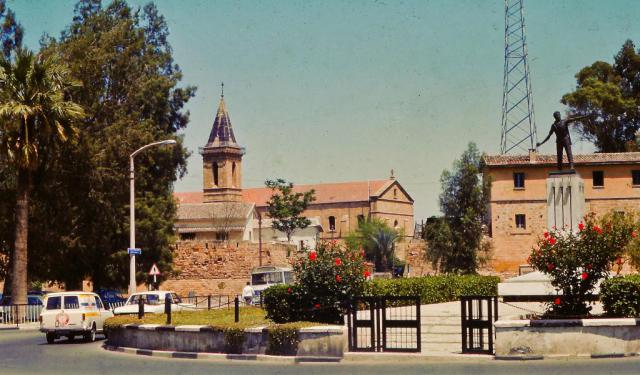
Nicosia is Cyprus’s capital and its largest city. It is Europe’s last divided capital, with Turkish Cypriots living on the north side and Greek Cypriots living on the south side.
Nicosia has been continuously occupied for over 4,500 years and has been Cyprus's capital for over 1,000 years. It has a turbulent political history, and the Franks, Venetians, Ottomans, and British have... view more
Tour Duration: 2 Hour(s)
Travel Distance: 3.0 Km or 1.9 Miles
Nicosia has been continuously occupied for over 4,500 years and has been Cyprus's capital for over 1,000 years. It has a turbulent political history, and the Franks, Venetians, Ottomans, and British have... view more
Tour Duration: 2 Hour(s)
Travel Distance: 3.0 Km or 1.9 Miles
Nicosia Shopping Tour
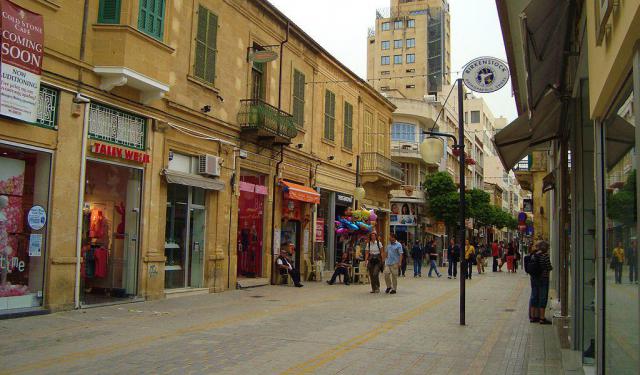
There's probably no better shopping destination for tourists in Cyprus than Nicosia. Indeed, the country's exotic capital offers a vibrant mix of traditional markets and modern fashionable shops, catering to diverse tastes and preferences.
One of the must-visit spots is Bandabuliya Municipal Market, also known as Belediye Pazarı. Here, you can immerse yourself in the bustling... view more
Tour Duration: 1 Hour(s)
Travel Distance: 2.2 Km or 1.4 Miles
One of the must-visit spots is Bandabuliya Municipal Market, also known as Belediye Pazarı. Here, you can immerse yourself in the bustling... view more
Tour Duration: 1 Hour(s)
Travel Distance: 2.2 Km or 1.4 Miles