


Alyscamps, Arles
The Alyscamps, located just outside the old town of Arles, is a Roman necropolis and one of the most renowned burial grounds of the ancient world. Its name, Aliscamps, derived from the Provençal Occitan word, and the Latin Elisii Campi, translates to "Elysian Fields" or, in French, Champs-Élysées. This necropolis held great fame during the Middle Ages and found mention in literary works such as Ariosto's Orlando Furioso and Dante's Inferno.
During Roman times, cities typically prohibited burials within their walls. As a result, roads leading outside the city often featured tombs and mausoleums. The Alyscamps served as Arles' primary burial ground for approximately 1,500 years. Situated along the final stretch of the Aurelian Way, leading to the city gates, it became the resting place for affluent citizens. The memorials within the Alyscamps ranged from simple sarcophagi to elaborate monuments, reflecting the social status of the deceased. This historical significance led to the classification of the Alyscamps as a UNESCO World Heritage Site in 1981, as part of the Arles, Roman, and Romanesque Monuments group.
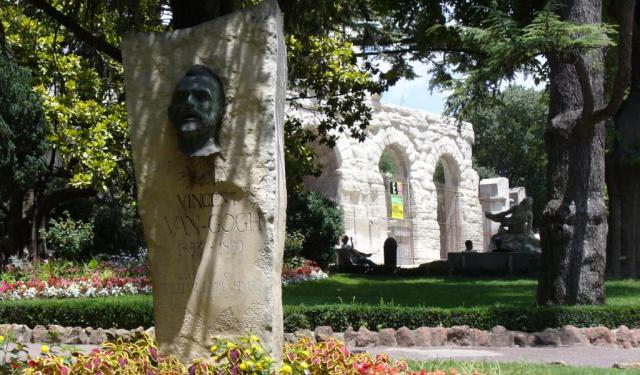
Vincent van Gogh, the famous Dutch painter, depicted the Alyscamps in four of his paintings during October 1888. This period coincided with Paul Gauguin's stay at the Yellow House in Arles. One of the paintings, titled "Les Alyscamps" or "Leaf Fall," adorned Gauguin's room. In a letter to his brother Theo, Vincent described one of the paintings:
"I think that you'd like the leaf-fall that I've done. It's lilac poplar trunks cut by the frame where the leaves begin. These tree-trunks, like pillars, line an avenue where old Roman tombs colored lilac-blue are lined up to right and left. Now the ground is covered as if by a carpet with a thick layer of orange and yellow leaves - fallen. Some are still falling, like snowflakes. And in the avenue dark figurines of lovers. The top of the painting is a very green meadow and no sky, or almost none."
Van Gogh's paintings capture the essence of the Alyscamps, depicting the rows of poplar trees with their trunks reaching skyward, framed by falling leaves. The lilac-blue Roman tombs line the avenue, while the ground is blanketed in a vibrant carpet of orange and yellow leaves. The presence of dark figurines of lovers evokes a sense of romance and mystery. The top of the painting portrays a lush green meadow, creating a vivid contrast with the absence of the sky.
During Roman times, cities typically prohibited burials within their walls. As a result, roads leading outside the city often featured tombs and mausoleums. The Alyscamps served as Arles' primary burial ground for approximately 1,500 years. Situated along the final stretch of the Aurelian Way, leading to the city gates, it became the resting place for affluent citizens. The memorials within the Alyscamps ranged from simple sarcophagi to elaborate monuments, reflecting the social status of the deceased. This historical significance led to the classification of the Alyscamps as a UNESCO World Heritage Site in 1981, as part of the Arles, Roman, and Romanesque Monuments group.
Vincent van Gogh, the famous Dutch painter, depicted the Alyscamps in four of his paintings during October 1888. This period coincided with Paul Gauguin's stay at the Yellow House in Arles. One of the paintings, titled "Les Alyscamps" or "Leaf Fall," adorned Gauguin's room. In a letter to his brother Theo, Vincent described one of the paintings:
"I think that you'd like the leaf-fall that I've done. It's lilac poplar trunks cut by the frame where the leaves begin. These tree-trunks, like pillars, line an avenue where old Roman tombs colored lilac-blue are lined up to right and left. Now the ground is covered as if by a carpet with a thick layer of orange and yellow leaves - fallen. Some are still falling, like snowflakes. And in the avenue dark figurines of lovers. The top of the painting is a very green meadow and no sky, or almost none."
Van Gogh's paintings capture the essence of the Alyscamps, depicting the rows of poplar trees with their trunks reaching skyward, framed by falling leaves. The lilac-blue Roman tombs line the avenue, while the ground is blanketed in a vibrant carpet of orange and yellow leaves. The presence of dark figurines of lovers evokes a sense of romance and mystery. The top of the painting portrays a lush green meadow, creating a vivid contrast with the absence of the sky.
Want to visit this sight? Check out these Self-Guided Walking Tours in Arles. Alternatively, you can download the mobile app "GPSmyCity: Walks in 1K+ Cities" from Apple App Store or Google Play Store. The app turns your mobile device to a personal tour guide and it works offline, so no data plan is needed when traveling abroad.
Download The GPSmyCity App



Alyscamps on Map
Sight Name: Alyscamps
Sight Location: Arles, France (See walking tours in Arles)
Sight Type: Attraction/Landmark
Guide(s) Containing This Sight:
Sight Location: Arles, France (See walking tours in Arles)
Sight Type: Attraction/Landmark
Guide(s) Containing This Sight:
Nearby Sights



Walking Tours in Arles, France

Create Your Own Walk in Arles
Creating your own self-guided walk in Arles is easy and fun. Choose the city attractions that you want to see and a walk route map will be created just for you. You can even set your hotel as the start point of the walk.
Vincent van Gogh Walking Tour
"There's no place quite like it for painters. It's so beautiful and peaceful..." These words, reportedly attributed to Vincent van Gogh, emphasize the beauty and exceptional qualities of Arles with which the renowned Dutch painter had a special connection.
Vincent van Gogh moved to this town in 1888, after having worked in Paris for two years. In the late 19th century,... view more
Tour Duration: 1 Hour
Travel Distance: 2.1 Km or 1.3 Miles
Vincent van Gogh moved to this town in 1888, after having worked in Paris for two years. In the late 19th century,... view more
Tour Duration: 1 Hour
Travel Distance: 2.1 Km or 1.3 Miles
Arles Introduction Walking Tour
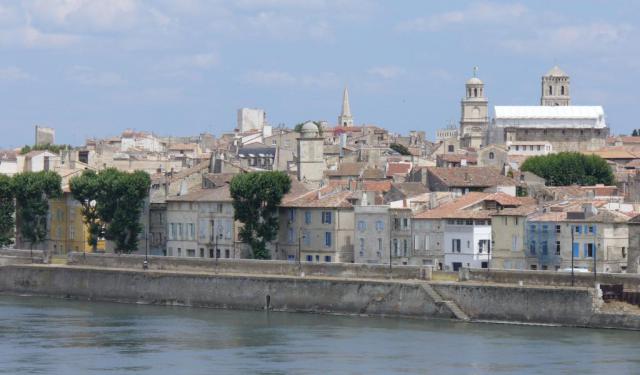
While living in Arles, Vincent van Gogh wrote to his brother Theo about the “soft and tender light” of the region. Although he called the town home for only 15 months, this brief period became the most productive of his career, yielding more than 300 works.
The town’s name comes from the ancient Ligurian and Celtic term Arelate, meaning “the dwelling by the marshes,” a nod to its... view more
Tour Duration: 1 Hour
Travel Distance: 1.3 Km or 0.8 Miles
The town’s name comes from the ancient Ligurian and Celtic term Arelate, meaning “the dwelling by the marshes,” a nod to its... view more
Tour Duration: 1 Hour
Travel Distance: 1.3 Km or 0.8 Miles