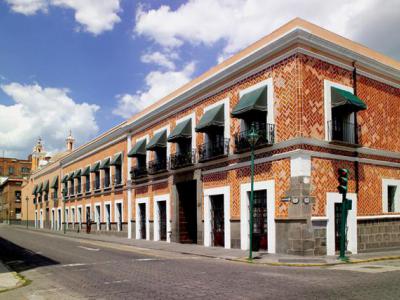


Amparo Museum, Puebla (must see)
The Amparo Museum is one of Mexico’s major art institutions, opened in 1991 through the Amparo Foundation and named in memory of Amparo Rugarcía de Espinosa Yglesias. From the start, it stood out for both its collections and its early use of interactive technology, introducing multilingual multimedia stations and CD-i systems for self-guided visits through the permanent galleries.
The visit begins with a clear timeline. Near the entrance, the “Códice del Tiempo” places Mesoamerican cultures beside events from Egypt, Asia, and Europe, helping visitors see local history in a wider context. The pre-Hispanic collection includes ceramics, stone carvings, ritual objects, figurines, and unusual pieces linked to writing, animals, and ancient beliefs about death and the afterlife.
The museum also preserves a strong domestic and historical layer. Part of the viceregal exhibition occupies the former Espinosa family residence, where 11 rooms recreate the atmosphere of a 19th-century elite household. Furniture, religious portraits, sculpture, textiles, and decorative arts show how status, devotion, and daily life shaped a traditional casa poblana. Rather than presenting these objects as isolated works, the rooms place them in a lived setting, where visitors can imagine how private interiors reflected family identity, religious practice, and social position.
Architecturally, the museum combines historic buildings with modern interventions. Its 1991 adaptation was led by Pedro Ramírez Vázquez, while Enrique Norten and TEN Arquitectos later added glass vestibules, clearer routes, galleries, terraces, and open-air spaces. The rooftop, finished with local marble and Talavera, offers views over domes, towers, and tiled roofs, while exhibitions, programmes, and free-access policies keep the museum active as a public cultural space.
The visit begins with a clear timeline. Near the entrance, the “Códice del Tiempo” places Mesoamerican cultures beside events from Egypt, Asia, and Europe, helping visitors see local history in a wider context. The pre-Hispanic collection includes ceramics, stone carvings, ritual objects, figurines, and unusual pieces linked to writing, animals, and ancient beliefs about death and the afterlife.
The museum also preserves a strong domestic and historical layer. Part of the viceregal exhibition occupies the former Espinosa family residence, where 11 rooms recreate the atmosphere of a 19th-century elite household. Furniture, religious portraits, sculpture, textiles, and decorative arts show how status, devotion, and daily life shaped a traditional casa poblana. Rather than presenting these objects as isolated works, the rooms place them in a lived setting, where visitors can imagine how private interiors reflected family identity, religious practice, and social position.
Architecturally, the museum combines historic buildings with modern interventions. Its 1991 adaptation was led by Pedro Ramírez Vázquez, while Enrique Norten and TEN Arquitectos later added glass vestibules, clearer routes, galleries, terraces, and open-air spaces. The rooftop, finished with local marble and Talavera, offers views over domes, towers, and tiled roofs, while exhibitions, programmes, and free-access policies keep the museum active as a public cultural space.
Want to visit this sight? Check out these Self-Guided Walking Tours in Puebla. Alternatively, you can download the mobile app "GPSmyCity: Walks in 1K+ Cities" from Apple App Store or Google Play Store. The app turns your mobile device to a personal tour guide and it works offline, so no data plan is needed when traveling abroad.
Download The GPSmyCity App



Amparo Museum on Map
Sight Name: Amparo Museum
Sight Location: Puebla, Mexico (See walking tours in Puebla)
Sight Type: Museum/Gallery
Guide(s) Containing This Sight:
Sight Location: Puebla, Mexico (See walking tours in Puebla)
Sight Type: Museum/Gallery
Guide(s) Containing This Sight:
Nearby Sights

Walking Tours in Puebla, Mexico

Create Your Own Walk in Puebla
Creating your own self-guided walk in Puebla is easy and fun. Choose the city attractions that you want to see and a walk route map will be created just for you. You can even set your hotel as the start point of the walk.
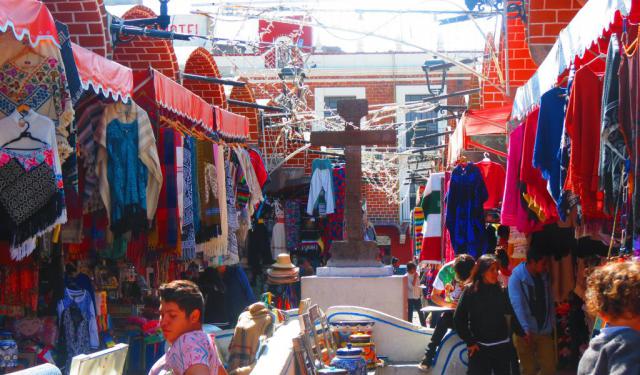
Puebla Food Tasting and Shopping Tour
Among other delights that the Mexican city of Puebla can pride itself on is the abundant food and shopping scene fit to delight even the most discerning travelers with an array of colors and flavors to treat themselves to.
One spot to visit for non-trivial shopping is the Alley of the Frogs (Callejón de los Sapos), where antique stores and vendors line the cobblestone streets, offering a... view more
Tour Duration: 1 Hour(s)
Travel Distance: 2.5 Km or 1.6 Miles
One spot to visit for non-trivial shopping is the Alley of the Frogs (Callejón de los Sapos), where antique stores and vendors line the cobblestone streets, offering a... view more
Tour Duration: 1 Hour(s)
Travel Distance: 2.5 Km or 1.6 Miles
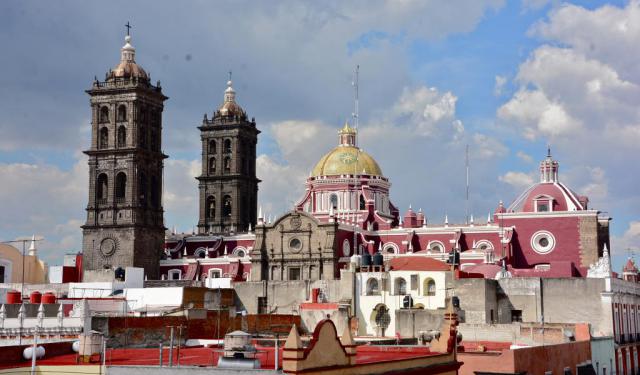
Puebla Introduction Walking Tour
The city of Puebla is the capital of the state of Puebla and the fourth largest city in Mexico. It was founded in 1531 in an uninhabited area between two indigenous settlements of the time, Tlaxcala and Cholula. The area used to be called Cuetlaxcoapan, which means "where serpents change their skin".
Spanish conquistador Hernán Cortés occupied the Puebla region in 1519, killing most... view more
Tour Duration: 2 Hour(s)
Travel Distance: 2.5 Km or 1.6 Miles
Spanish conquistador Hernán Cortés occupied the Puebla region in 1519, killing most... view more
Tour Duration: 2 Hour(s)
Travel Distance: 2.5 Km or 1.6 Miles
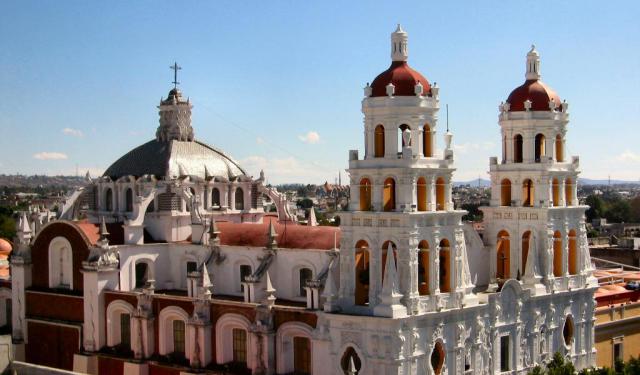
Puebla Colonial Architecture Walking Tour
One of the most authentic and traditional destinations in Mexico, the city of Puebla abounds in Baroque architecture, or rather the peculiar regional form thereof resulted from the fusion of European and indigenous styles in the 17th and 18th centuries.
Visiting this magical place you will find lots of (more than 70!) sumptuous churches, convents and sanctuaries, as well as other incredible... view more
Tour Duration: 2 Hour(s)
Travel Distance: 3.0 Km or 1.9 Miles
Visiting this magical place you will find lots of (more than 70!) sumptuous churches, convents and sanctuaries, as well as other incredible... view more
Tour Duration: 2 Hour(s)
Travel Distance: 3.0 Km or 1.9 Miles