

Antigo Mercado de Escravos (Old Slave Market), Lagos (must see)
The Old Slave Market of Lagos is one of the most historically significant and sobering sites in the Algarve region. Its origins are tied to the earliest phase of the Atlantic slave trade. In 1441, the first recorded cargo of enslaved people was delivered to Lagos by Captain Antão Gonçalves, who had learned of an existing slave trade along the African coast and returned with fourteen captives. Demand grew rapidly. Owning enslaved people soon became a marker of social status, and the trade expanded into a profitable enterprise. Prince Henry the Navigator was entitled to one fifth of the value of all enslaved people brought back to Portugal. In 1444, Captain Lançarote de Freitas arrived in Lagos with 235 captives, forty-seven of whom went directly to Henry, signalling how quickly slavery became big business.
Public slave auctions took place in this area from the 1440s onward, making Lagos the site of the first documented slave market in Europe. However, in 1512 King Manuel I decreed that enslaved people imported into Portugal could be landed only in Lisbon, ending Lagos’s role as an official entry point.
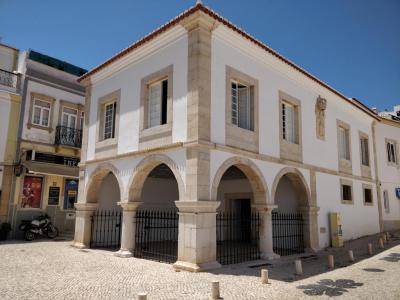
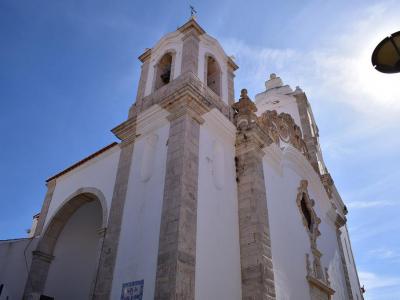
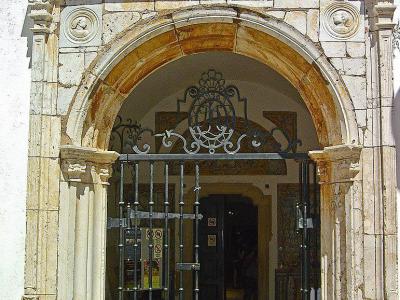
The present building dates from 1691 and was constructed on the site of an earlier 14th-century slave market. Built in a restrained Mannerist style, it has two floors, with the ground level enclosed by stone arches and an iron fence.
In 2014, the city council installed a permanent museum inside the building, transforming it into a space for historical interpretation and public reflection. The site became part of UNESCO’s Slave Route programme, acknowledging its global historical importance. In December 2018, Portugal’s International Observatory of Human Rights designated the building the “International Centre for Living Memory of Human Dignity.”
Public slave auctions took place in this area from the 1440s onward, making Lagos the site of the first documented slave market in Europe. However, in 1512 King Manuel I decreed that enslaved people imported into Portugal could be landed only in Lisbon, ending Lagos’s role as an official entry point.
The present building dates from 1691 and was constructed on the site of an earlier 14th-century slave market. Built in a restrained Mannerist style, it has two floors, with the ground level enclosed by stone arches and an iron fence.
In 2014, the city council installed a permanent museum inside the building, transforming it into a space for historical interpretation and public reflection. The site became part of UNESCO’s Slave Route programme, acknowledging its global historical importance. In December 2018, Portugal’s International Observatory of Human Rights designated the building the “International Centre for Living Memory of Human Dignity.”
Want to visit this sight? Check out these Self-Guided Walking Tours in Lagos. Alternatively, you can download the mobile app "GPSmyCity: Walks in 1K+ Cities" from Apple App Store or Google Play Store. The app turns your mobile device to a personal tour guide and it works offline, so no data plan is needed when traveling abroad.
Download The GPSmyCity App



Antigo Mercado de Escravos (Old Slave Market) on Map
Sight Name: Antigo Mercado de Escravos (Old Slave Market)
Sight Location: Lagos, Portugal (See walking tours in Lagos)
Sight Type: Museum/Gallery
Guide(s) Containing This Sight:
Sight Location: Lagos, Portugal (See walking tours in Lagos)
Sight Type: Museum/Gallery
Guide(s) Containing This Sight:
Nearby Sights


Walking Tours in Lagos, Portugal

Create Your Own Walk in Lagos
Creating your own self-guided walk in Lagos is easy and fun. Choose the city attractions that you want to see and a walk route map will be created just for you. You can even set your hotel as the start point of the walk.
Lagos Old Town Walking Tour
Lagos is one of the oldest towns in the Algarve, with a history shaped by its coastal position, maritime activity, and strategic value. Its name is commonly traced to the Latin Lacobriga, itself likely derived from earlier Celtic roots: lac, meaning “lake” or “lagoon,” and briga, meaning “fortified place” or “hill settlement.”
The settlement’s story stretches back over two... view more
Tour Duration: 2 Hours
Travel Distance: 2.6 Km or 1.6 Miles
The settlement’s story stretches back over two... view more
Tour Duration: 2 Hours
Travel Distance: 2.6 Km or 1.6 Miles
Lagos Coastline Walk
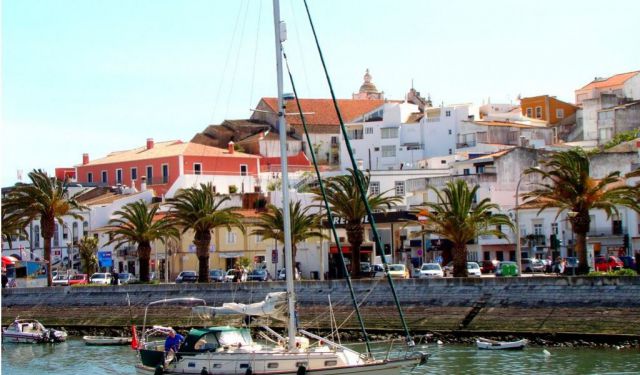
Lagos’s coastline has shaped the town’s character as much as its streets and walls, acting for centuries as both gateway and boundary. The natural harbour formed by the Bensafrim River and the chain of rocky headlands to the east created a sheltered maritime zone that defined how the town engaged with the Atlantic ocean.
For much of its history, the coastline was a working landscape. Under... view more
Tour Duration: 2 Hours
Travel Distance: 3.6 Km or 2.2 Miles
For much of its history, the coastline was a working landscape. Under... view more
Tour Duration: 2 Hours
Travel Distance: 3.6 Km or 2.2 Miles
City Walks Overview
