

Avenue of Sphinxes, Luxor
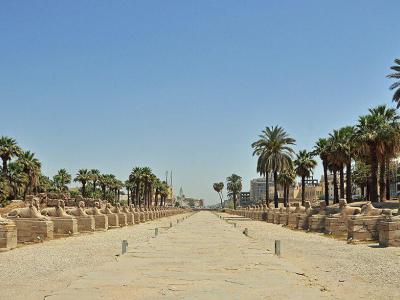
The Avenue of Sphinxes is an ancient ceremonial route that once linked two major temple complexes. Known in ancient Egyptian as Ta-Mit-Rahat, or “the Path of God,” it was used during religious festivals, especially the Opet Festival, when sacred statues were carried in procession. Nectanebo I built much of the final road, with earlier sections linked to Hatshepsut and Tutankhamun.
The avenue is lined with 1,057 original statues, including human-headed sphinxes and ram-headed figures linked to the god Amun. Excavations also revealed chapels, pottery areas, wine presses, flower basins with water channels, and a Nilometer. Hatshepsut built ceremonial chapels along the route, while Cleopatra VII later restored parts of it.
Modern rediscovery began in 1949, when archaeologist Mohammed Zakaria Ghoneim uncovered the first sphinxes by accident. Clearing the full 2.7-kilometer route took decades and required removing many later buildings constructed above the buried ruins. Today, visitors can see how ancient temples were linked by ceremony and worship.
The avenue is lined with 1,057 original statues, including human-headed sphinxes and ram-headed figures linked to the god Amun. Excavations also revealed chapels, pottery areas, wine presses, flower basins with water channels, and a Nilometer. Hatshepsut built ceremonial chapels along the route, while Cleopatra VII later restored parts of it.
Modern rediscovery began in 1949, when archaeologist Mohammed Zakaria Ghoneim uncovered the first sphinxes by accident. Clearing the full 2.7-kilometer route took decades and required removing many later buildings constructed above the buried ruins. Today, visitors can see how ancient temples were linked by ceremony and worship.
Want to visit this sight? Check out these Self-Guided Walking Tours in Luxor. Alternatively, you can download the mobile app "GPSmyCity: Walks in 1K+ Cities" from Apple App Store or Google Play Store. The app turns your mobile device to a personal tour guide and it works offline, so no data plan is needed when traveling abroad.
Download The GPSmyCity App



Avenue of Sphinxes on Map
Sight Name: Avenue of Sphinxes
Sight Location: Luxor, Egypt (See walking tours in Luxor)
Sight Type: Attraction/Landmark
Sight Location: Luxor, Egypt (See walking tours in Luxor)
Sight Type: Attraction/Landmark
Nearby Sights

El Souk
Image Courtesy of Elonas Stravinskas.
Walking Tours in Luxor, Egypt

Create Your Own Walk in Luxor
Creating your own self-guided walk in Luxor is easy and fun. Choose the city attractions that you want to see and a walk route map will be created just for you. You can even set your hotel as the start point of the walk.
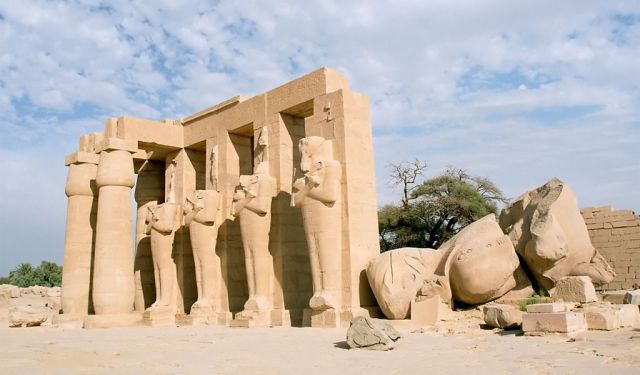
Luxor Archaeology Tour Part 1
The Theban necropolis area - located in Upper Egypt, across the River Nile from the modern city of Luxor - is considered to be one of the most significant archaeological sites in the world. You will be amazed by the many splendid temples, tombs and other historic attractions in this area, which is now known as Luxor's West Bank. The ruins of the Workers Village, the Colossi of Memnon, and... view more
Tour Duration: 3 Hours
Travel Distance: 6.5 Km or 4 Miles
Tour Duration: 3 Hours
Travel Distance: 6.5 Km or 4 Miles
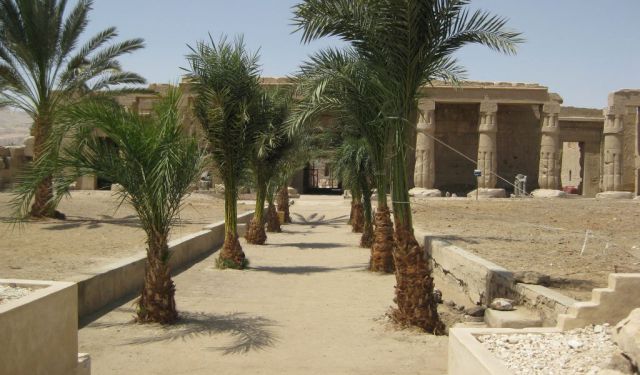
Luxor Archaeology Tour Part 2
The West Bank area of Luxor - located across the River Nile from the modern city itself - is a true archaeological paradise full of must-see sights for any visitor. There are a number of ancient Egyptian pharaoh tombs, necropolises and temples here, dating from the time of the ancient city of Thebes. Take our walking tour to see all the best sights in the area.
Tour Duration: 2 Hours
Travel Distance: 3.9 Km or 2.4 Miles
Tour Duration: 2 Hours
Travel Distance: 3.9 Km or 2.4 Miles
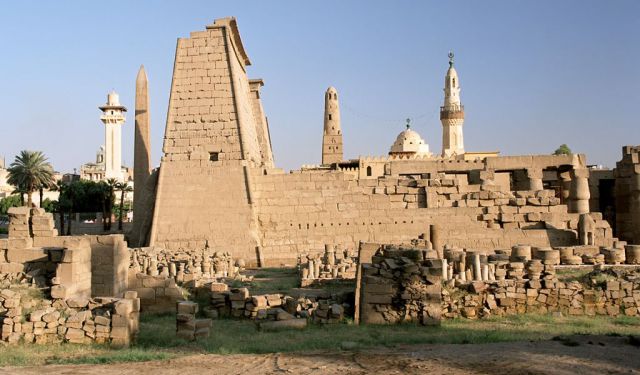
Luxor East Bank Walking Tour
The East Bank area is located in the heart of Luxor city. It has plenty of top sights including wonderful working temples and museums, such as the Luxor Temple, the Karnak Temple Complex, the Luxor Museum and the Mummification Museum. Take our tour to experience the beauty of Luxor’s East Bank district.
Tour Duration: 2 Hours
Travel Distance: 4.7 Km or 2.9 Miles
Tour Duration: 2 Hours
Travel Distance: 4.7 Km or 2.9 Miles