

Baals Bridge, Limerick
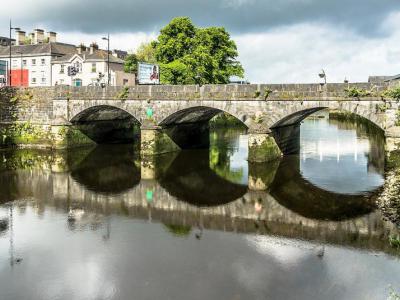
Baals Bridge, located in Limerick, is one of the city’s oldest existing bridges. Constructed between 1830 and 1831, this single-arched hump-back bridge is crafted from limestone and stands as a replacement for a previous four-arched bridge. The earlier structure, significant for being the sole connection between Englishtown and Irishtown-respectively known as English Town and Irish Town-had existed since around 1340. Historical records show the presence of a row of houses on the older bridge, illustrating its role as a crucial passageway and residential area.
Originally, the bridge was known as "The Bald Bridge of Limerick." The term "bald" likely refers to its lack of parapets in its original design. Over time, the bridge’s name underwent several transformations, influenced possibly by its association with the Earl of Shannon, whose family name was Boyle, leading to it being called “Boyle’s Bridge.” This name eventually morphed into “Baal’s Bridge” or “Ball’s Bridge,” amid 19th-century speculations linking such structures to Baal, a pagan deity, though “Ball’s Bridge” became the most commonly accepted name.
The design and construction of the modern Baals Bridge were undertaken by the Pain Brothers in 1831. During its construction, a remarkable archaeological discovery was made in the foundations of the old bridge: a brass Square of Freemasonry, bearing an inscription from 1507. This artifact, inscribed with the motto "I will strive to live with love and care upon the level, by the square," is considered one of the earliest Masonic items found globally, adding a rich historical and cultural layer to the bridge’s legacy.
Today, Baals Bridge remains an iconic structure in Limerick, not only serving as a vital link within the city but also as a bearer of centuries of history and cultural evolution. A benchmark on the bridge adds another point of historical interest, marking it as a significant site in both local and broader contexts.
Originally, the bridge was known as "The Bald Bridge of Limerick." The term "bald" likely refers to its lack of parapets in its original design. Over time, the bridge’s name underwent several transformations, influenced possibly by its association with the Earl of Shannon, whose family name was Boyle, leading to it being called “Boyle’s Bridge.” This name eventually morphed into “Baal’s Bridge” or “Ball’s Bridge,” amid 19th-century speculations linking such structures to Baal, a pagan deity, though “Ball’s Bridge” became the most commonly accepted name.
The design and construction of the modern Baals Bridge were undertaken by the Pain Brothers in 1831. During its construction, a remarkable archaeological discovery was made in the foundations of the old bridge: a brass Square of Freemasonry, bearing an inscription from 1507. This artifact, inscribed with the motto "I will strive to live with love and care upon the level, by the square," is considered one of the earliest Masonic items found globally, adding a rich historical and cultural layer to the bridge’s legacy.
Today, Baals Bridge remains an iconic structure in Limerick, not only serving as a vital link within the city but also as a bearer of centuries of history and cultural evolution. A benchmark on the bridge adds another point of historical interest, marking it as a significant site in both local and broader contexts.
Want to visit this sight? Check out these Self-Guided Walking Tours in Limerick. Alternatively, you can download the mobile app "GPSmyCity: Walks in 1K+ Cities" from Apple App Store or Google Play Store. The app turns your mobile device to a personal tour guide and it works offline, so no data plan is needed when traveling abroad.
Download The GPSmyCity App



Baals Bridge on Map
Sight Name: Baals Bridge
Sight Location: Limerick, Ireland (See walking tours in Limerick)
Sight Type: Attraction/Landmark
Sight Location: Limerick, Ireland (See walking tours in Limerick)
Sight Type: Attraction/Landmark
Nearby Sights

Walking Tours in Limerick, Ireland

Create Your Own Walk in Limerick
Creating your own self-guided walk in Limerick is easy and fun. Choose the city attractions that you want to see and a walk route map will be created just for you. You can even set your hotel as the start point of the walk.
A Walk in Limerick's Historic City Center
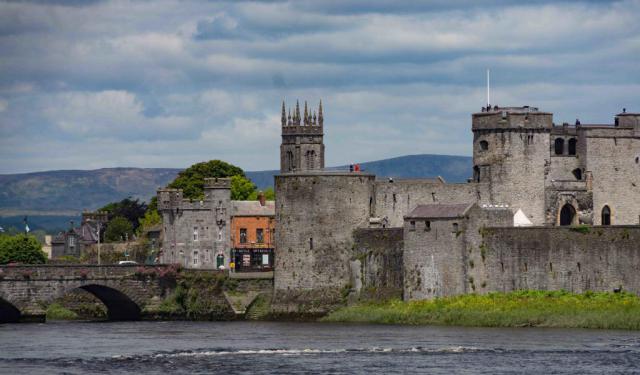
Claudius Ptolemy, the great geographer of the ancient world, drew a map of Ireland in 150 AD. Indicated on the map was a place now called King's Island. It is said generous King Cormac ruled here in the 4th century. Here is where St Patrick baptized King Carthann the Fair in 434. Here is the ancient heart of Limerick.
Saint Munchin had been the first bishop of Limerick in 652. In 812,... view more
Tour Duration: 2 Hours
Travel Distance: 3 Km or 1.9 Miles
Saint Munchin had been the first bishop of Limerick in 652. In 812,... view more
Tour Duration: 2 Hours
Travel Distance: 3 Km or 1.9 Miles