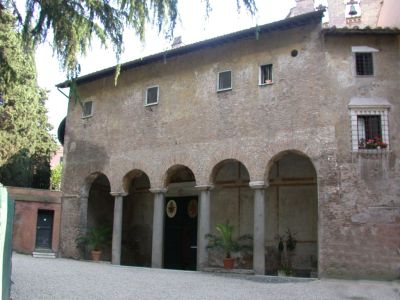


Basilica of Saint Stephen in the Round on the Caelian Hill, Rome
The Basilica of Saint Stephen in the Round on the Caelian Hill, commonly known as Santo Stefano Rotondo, is one of the most architecturally unique and historically significant churches in Rome. Consecrated between 468 and 483 AD by Pope Simplicius, this ancient basilica was the first church in Rome built on a circular plan-a design inspired by early Christian martyria and highly unusual in the context of Roman architecture. Located on the Caelian Hill, the church was financed by the noble Valerius family, who had strong ties to the Holy Land and were influential in establishing this sacred space. Saint Stephen in the Round is not only dedicated to Saint Stephen the Protomartyr but also to Stephen I, the first canonized king of Hungary, making it Hungary’s national church in Rome and the rectory church of the Pontifical Collegium Germanicum et Hungaricum.
Though its interior retains the original circular design, the church’s exterior features a cruciform layout, with a striking 12th-century portico added by Pope Innocent II. Inside, the circular nave is ringed with tall Corinthian columns and richly adorned with frescoes. Among the most powerful visual elements are the 34 graphic martyrdom scenes painted in the 16th century by Niccolò Circignani (Pomarancio) and Antonio Tempesta, commissioned by Pope Gregory XIII. These frescoes offer a vivid reminder of early Christian suffering and faith. The high altar, created by the Renaissance artist Bernardo Rossellino, and a 6th-century chair attributed to Pope Gregory the Great further enhance the church’s spiritual and artistic significance.
Several chapels add further depth to Saint Stephen in the Round’s cultural and religious legacy. The Chapel of Saints Primus and Felician, built in the 7th century by Pope Theodore I, houses mosaics depicting the martyrs with a jeweled cross and preserves their relics alongside those of the pope’s father. The so-called "Hungarian Chapel" is dedicated to Stephen I of Hungary, featuring recently restored late-antique marble flooring and 18th-century frescoes that conceal older layers of artwork still being studied. These chapels reflect the church’s enduring connections to both Eastern Christianity and Central European history.
Beneath the basilica lies an intriguing archaeological layer: a 2nd-century mithraeum, a subterranean sanctuary used for the worship of the Persian god Mithras, once frequented by Roman soldiers stationed nearby.
Though its interior retains the original circular design, the church’s exterior features a cruciform layout, with a striking 12th-century portico added by Pope Innocent II. Inside, the circular nave is ringed with tall Corinthian columns and richly adorned with frescoes. Among the most powerful visual elements are the 34 graphic martyrdom scenes painted in the 16th century by Niccolò Circignani (Pomarancio) and Antonio Tempesta, commissioned by Pope Gregory XIII. These frescoes offer a vivid reminder of early Christian suffering and faith. The high altar, created by the Renaissance artist Bernardo Rossellino, and a 6th-century chair attributed to Pope Gregory the Great further enhance the church’s spiritual and artistic significance.
Several chapels add further depth to Saint Stephen in the Round’s cultural and religious legacy. The Chapel of Saints Primus and Felician, built in the 7th century by Pope Theodore I, houses mosaics depicting the martyrs with a jeweled cross and preserves their relics alongside those of the pope’s father. The so-called "Hungarian Chapel" is dedicated to Stephen I of Hungary, featuring recently restored late-antique marble flooring and 18th-century frescoes that conceal older layers of artwork still being studied. These chapels reflect the church’s enduring connections to both Eastern Christianity and Central European history.
Beneath the basilica lies an intriguing archaeological layer: a 2nd-century mithraeum, a subterranean sanctuary used for the worship of the Persian god Mithras, once frequented by Roman soldiers stationed nearby.
Want to visit this sight? Check out these Self-Guided Walking Tours in Rome. Alternatively, you can download the mobile app "GPSmyCity: Walks in 1K+ Cities" from Apple App Store or Google Play Store. The app turns your mobile device to a personal tour guide and it works offline, so no data plan is needed when traveling abroad.
Download The GPSmyCity App



Basilica of Saint Stephen in the Round on the Caelian Hill on Map
Sight Name: Basilica of Saint Stephen in the Round on the Caelian Hill
Sight Location: Rome, Italy (See walking tours in Rome)
Sight Type: Religious
Sight Location: Rome, Italy (See walking tours in Rome)
Sight Type: Religious
Nearby Sights

Walking Tours in Rome, Italy

Create Your Own Walk in Rome
Creating your own self-guided walk in Rome is easy and fun. Choose the city attractions that you want to see and a walk route map will be created just for you. You can even set your hotel as the start point of the walk.
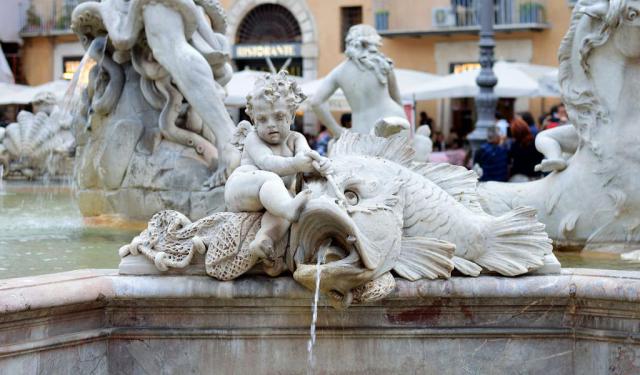
Fountains and Squares Walking Tour
In Rome there is a lively piazza round almost every corner, each with its own unique atmosphere and its own story to tell. These public squares have been the center of Roman culture for centuries, and some of the city’s most popular attractions are located within them.
Most piazzas have a fountain in the center and a lot of cafes around. In fact, Rome holds the largest number of fountains in... view more
Tour Duration: 2 Hour(s)
Travel Distance: 4.1 Km or 2.5 Miles
Most piazzas have a fountain in the center and a lot of cafes around. In fact, Rome holds the largest number of fountains in... view more
Tour Duration: 2 Hour(s)
Travel Distance: 4.1 Km or 2.5 Miles
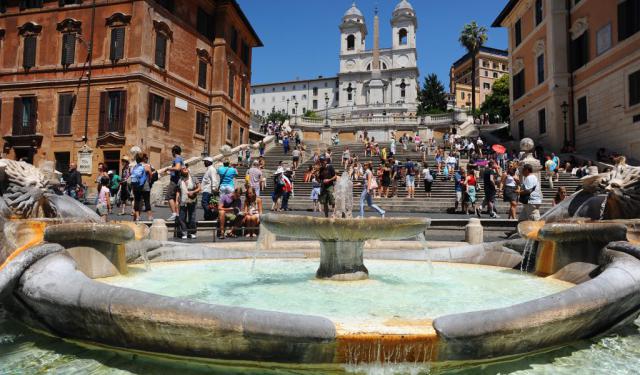
Rome Introduction Walking Tour II
Rome, the Eternal City, carries a legacy shaped by centuries of resilience, transformation, and cultural flourishing. The fall of the Roman Empire in 476 AD marked the end of an era, plunging Western Europe into the dark Middle Ages. Yet, even amid the disarray, Rome endured as a beacon of unity, largely due to its status as the center of Catholicism. The papacy wielded spiritual influence,... view more
Tour Duration: 2 Hour(s)
Travel Distance: 3.4 Km or 2.1 Miles
Tour Duration: 2 Hour(s)
Travel Distance: 3.4 Km or 2.1 Miles
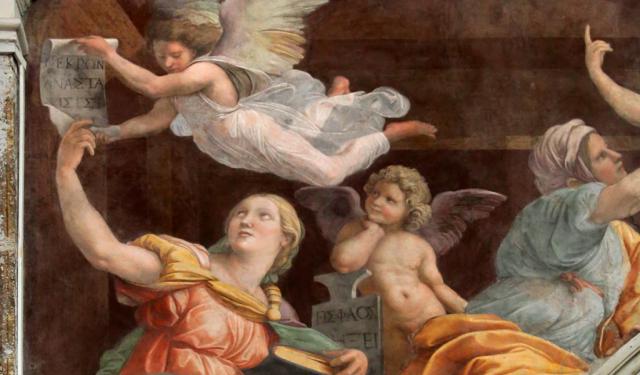
Hidden Art Treasures in Rome
Rome is one of the world's top living museums, replete with some of the most iconic pieces of art on the face of the planet. Famous artists, such as Michelangelo, Caravaggio, Raphael, Bernini, to mention but a few, had lived and worked here and left indelible marks in the city.
Needless to say that the abundance of masterpieces makes Rome crowded with tourists anxious to see them, causing... view more
Tour Duration: 1 Hour(s)
Travel Distance: 2.6 Km or 1.6 Miles
Needless to say that the abundance of masterpieces makes Rome crowded with tourists anxious to see them, causing... view more
Tour Duration: 1 Hour(s)
Travel Distance: 2.6 Km or 1.6 Miles
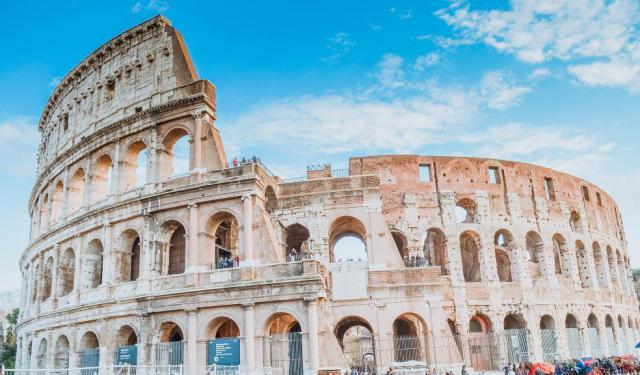
Rome Introduction Walking Tour I
Often referred to as the Eternal City, Rome holds a unique place in the story of Western civilization. Its influence shaped European culture through language, governance, and monumental architecture.
The name “Rome” originates from Romulus, the mythical founder of the city, who, according to legend, was the son of the war god Mars and Rhea Silvia, the priestess of goddess Vesta. Both... view more
Tour Duration: 2 Hour(s)
Travel Distance: 3.7 Km or 2.3 Miles
The name “Rome” originates from Romulus, the mythical founder of the city, who, according to legend, was the son of the war god Mars and Rhea Silvia, the priestess of goddess Vesta. Both... view more
Tour Duration: 2 Hour(s)
Travel Distance: 3.7 Km or 2.3 Miles
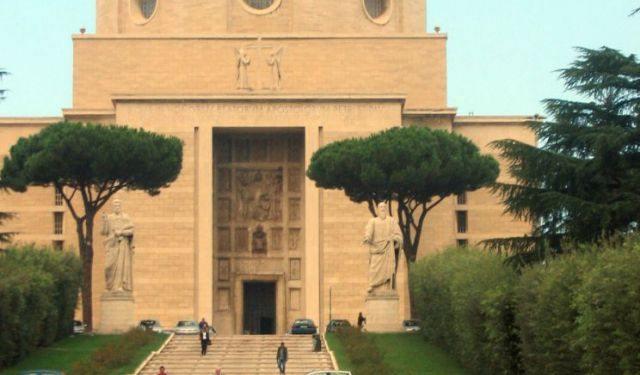
EUR Sightseeing Walking Tour
The Esposizione Universale di Roma (EUR), located in the southern suburb of Rome, was originally constructed for an international exhibition that was planned by Mussolini as a grand celebration of Fascist Italy. However, due to the outbreak of World War II, the exhibition never took place. The architecture of EUR was designed to glorify Fascism and showcases a distinct style that sets it apart... view more
Tour Duration: 2 Hour(s)
Travel Distance: 3.6 Km or 2.2 Miles
Tour Duration: 2 Hour(s)
Travel Distance: 3.6 Km or 2.2 Miles
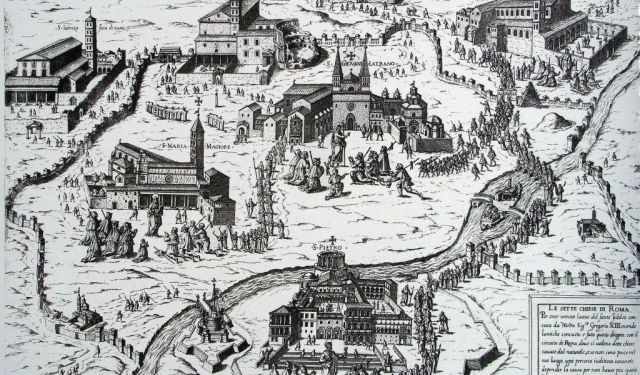
Seven Pilgrim Churches of Rome Walking Tour
Rome has long played host to pilgrims-after all, it's home to the Pope, the Catholic Curia, and a treasure trove of relics linked to apostles, saints, and martyrs. Back in the day, the Via Francigena provided a straight shot for the faithful traveling from England to Rome. Upon arrival, it was tradition to visit the tombs of Saints Peter and Paul. When a Jubilee rolled around, the spiritual... view more
Tour Duration: 6 Hour(s)
Travel Distance: 17.4 Km or 10.8 Miles
Tour Duration: 6 Hour(s)
Travel Distance: 17.4 Km or 10.8 Miles
Useful Travel Guides for Planning Your Trip
10 Best Food Markets in Rome Italy
Of all the things Italy is most famous for (cars, music, fashion, movies, etc.), food is, undoubtedly, top of the list. Rome may well not be the whole Italy, but no Italy is whole without Rome... And the Romans, much as all their fellow-Italians, like it "fresco", hence the abundance of...
17 Best Gelaterias in Rome Italy
For ice cream lovers and dabblers this guide is a treasure chest of Rome’s best gelato shops. There are gelaterias everywhere. Many visitors to Rome only have a few days to explore the city. You owe it to yourself to make the most of your time and find the gelato locals eat. Often the authentic...
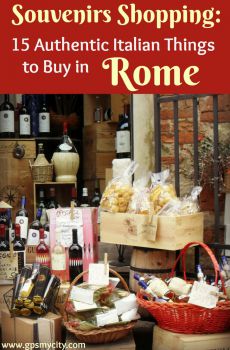
Souvenirs Shopping: 15 Authentic Italian Things To Buy in Rome
Rome is the Eternal City and, as such, the list of gift options available here is countless. Whether it's something edible, drinkable, wearable or pleasing to the eye that you want - you will find it all here in abundance. However, if time or budget is the factor, perhaps you might want to...