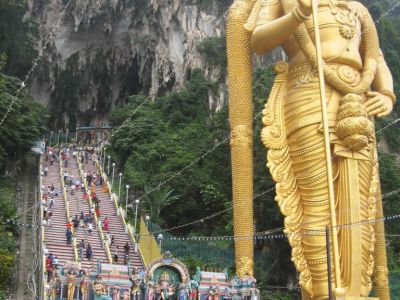


Batu Caves, Kuala Lumpur (must see)
Batu Caves, located in the Gombak district, approximately 13 kilometers north of Kuala Lumpur, is a limestone hill featuring a series of caves and cave temples. Its name is derived from the Sungai Batu, or Batu River, which flows alongside it. Additionally, there is a village nearby that shares the same name.
This cave complex is renowned as one of the most prominent Hindu shrines found outside of India and is dedicated to Lord Murugan. It plays a central role in the Hindu festival of Thaipusam in Malaysia.
Geologically, the limestone that comprises Batu Caves is believed to be approximately 400 million years old. Historically, some of the cave entrances were utilized as shelters by the indigenous Temuan people, a tribe of the Orang Asli.
In the early 1860s, Chinese settlers began mining guano from the caves for use as fertilizer in their agricultural activities. However, Batu Caves gained significant recognition only after colonial authorities, including Daly and Syers, as well as American Naturalist William Hornaday, documented the limestone hills in 1878.
The transformation of Batu Caves into a place of worship can be attributed to K. Thamboosamy Pillai, an Indian trader. He was inspired by the 'vel'-shaped entrance of the primary cave and decided to establish a temple dedicated to Lord Murugan within the caves. In 1890, Pillai, who was also responsible for founding the Sri Mahamariamman Temple in Kuala Lumpur, placed the consecrated statue (murti) of Sri Murugan Swami in what is now known as the Temple Cave. Since 1892, the Thaipusam festival has been celebrated there during the Tamil month of Thai, which typically falls in late January or early February.
The original wooden steps leading to the Temple Cave were constructed in 1920 and have since been replaced by 272 concrete steps. Among the various cave temples found at the site, the most significant and well-known is the Temple or Cathedral Cave, named for the numerous Hindu shrines it houses beneath its lofty vaulted ceiling.
This cave complex is renowned as one of the most prominent Hindu shrines found outside of India and is dedicated to Lord Murugan. It plays a central role in the Hindu festival of Thaipusam in Malaysia.
Geologically, the limestone that comprises Batu Caves is believed to be approximately 400 million years old. Historically, some of the cave entrances were utilized as shelters by the indigenous Temuan people, a tribe of the Orang Asli.
In the early 1860s, Chinese settlers began mining guano from the caves for use as fertilizer in their agricultural activities. However, Batu Caves gained significant recognition only after colonial authorities, including Daly and Syers, as well as American Naturalist William Hornaday, documented the limestone hills in 1878.
The transformation of Batu Caves into a place of worship can be attributed to K. Thamboosamy Pillai, an Indian trader. He was inspired by the 'vel'-shaped entrance of the primary cave and decided to establish a temple dedicated to Lord Murugan within the caves. In 1890, Pillai, who was also responsible for founding the Sri Mahamariamman Temple in Kuala Lumpur, placed the consecrated statue (murti) of Sri Murugan Swami in what is now known as the Temple Cave. Since 1892, the Thaipusam festival has been celebrated there during the Tamil month of Thai, which typically falls in late January or early February.
The original wooden steps leading to the Temple Cave were constructed in 1920 and have since been replaced by 272 concrete steps. Among the various cave temples found at the site, the most significant and well-known is the Temple or Cathedral Cave, named for the numerous Hindu shrines it houses beneath its lofty vaulted ceiling.
Want to visit this sight? Check out these Self-Guided Walking Tours in Kuala Lumpur. Alternatively, you can download the mobile app "GPSmyCity: Walks in 1K+ Cities" from Apple App Store or Google Play Store. The app turns your mobile device to a personal tour guide and it works offline, so no data plan is needed when traveling abroad.
Download The GPSmyCity App



Batu Caves on Map
Sight Name: Batu Caves
Sight Location: Kuala Lumpur, Malaysia (See walking tours in Kuala Lumpur)
Sight Type: Religious
Sight Location: Kuala Lumpur, Malaysia (See walking tours in Kuala Lumpur)
Sight Type: Religious
Nearby Sights
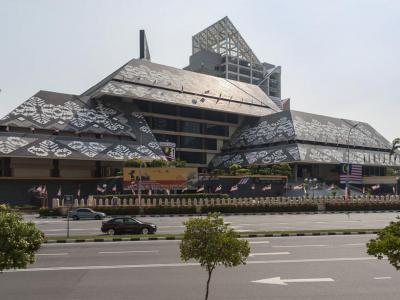




Walking Tours in Kuala Lumpur, Malaysia

Create Your Own Walk in Kuala Lumpur
Creating your own self-guided walk in Kuala Lumpur is easy and fun. Choose the city attractions that you want to see and a walk route map will be created just for you. You can even set your hotel as the start point of the walk.
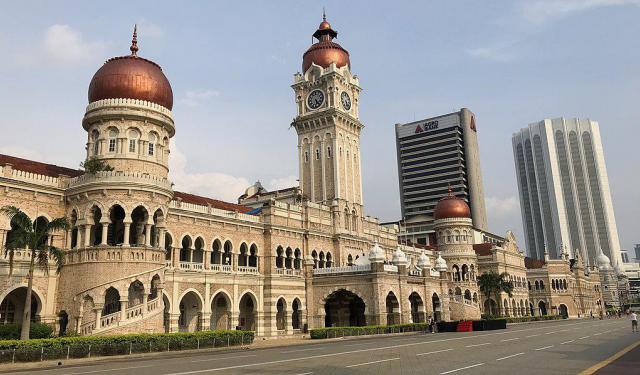
Historical Buildings Walking Tour
A city where even the buildings speak more than one language: look closely, and you’ll see it. Domes shaped by Islamic tradition, arches inspired by Mughal design, and symmetry rooted in European planning all stand side by side.
Kuala Lumpur’s historic buildings reflect the layered story of a city that grew from a rough tin-mining settlement into Malaysia’s capital. Founded in the... view more
Tour Duration: 2 Hour(s)
Travel Distance: 2.6 Km or 1.6 Miles
Kuala Lumpur’s historic buildings reflect the layered story of a city that grew from a rough tin-mining settlement into Malaysia’s capital. Founded in the... view more
Tour Duration: 2 Hour(s)
Travel Distance: 2.6 Km or 1.6 Miles
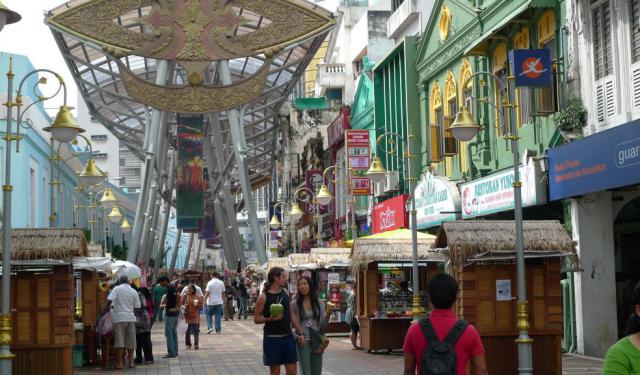
Kuala Lumpur Shopping Tour
Shopping is one of the top activities for those visiting Kuala Lumpur. In this vibrant city there’s something for every taste and budget, from high-end boutiques offering designer labels to the lively street markets drawing crowds with artsy finds and cheap reproductions, where cheap doesn’t necessarily mean a less enjoyable experience.
With a shopping scene as comprehensive as that of... view more
Tour Duration: 2 Hour(s)
Travel Distance: 3.6 Km or 2.2 Miles
With a shopping scene as comprehensive as that of... view more
Tour Duration: 2 Hour(s)
Travel Distance: 3.6 Km or 2.2 Miles
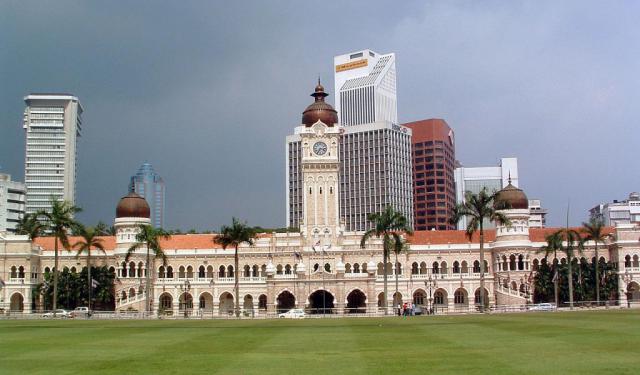
Kuala Lumpur Old Town Walking Tour
Kuala Lumpur, the capital of Malaysia, began as a modest frontier settlement shaped by geography and opportunity. Its name comes from the Malay words kuala and lumpur, together translating as “muddy confluence,” a reference to its location at the meeting point of the Klang and Gombak rivers.
The city’s origins date to the 1850s, when Chinese miners arrived in the area to exploit rich tin... view more
Tour Duration: 1 Hour(s)
Travel Distance: 1.4 Km or 0.9 Miles
The city’s origins date to the 1850s, when Chinese miners arrived in the area to exploit rich tin... view more
Tour Duration: 1 Hour(s)
Travel Distance: 1.4 Km or 0.9 Miles
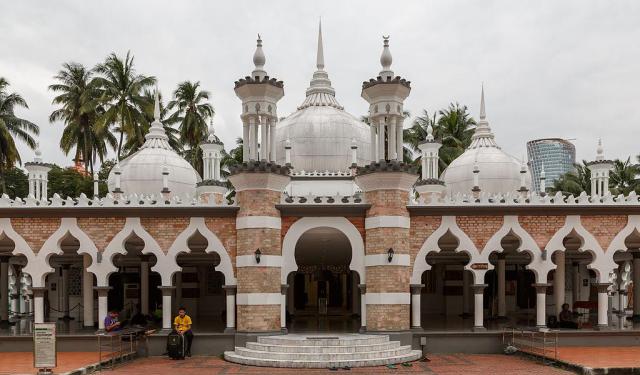
Historical Religious Buildings
Just as the whole of Malaysia, Kuala Lumpur is a culturally diverse and tolerant city where all of the world’s major religions coexist in perfect harmony. Back in the 1800s-early 1900s, along with the large influx of laborers and merchants of different backgrounds, brought in by the British colonization, came the unique sets of faiths and religious systems: Buddhism, Taoism, Hinduism,... view more
Tour Duration: 1 Hour(s)
Travel Distance: 2.0 Km or 1.2 Miles
Tour Duration: 1 Hour(s)
Travel Distance: 2.0 Km or 1.2 Miles
Useful Travel Guides for Planning Your Trip
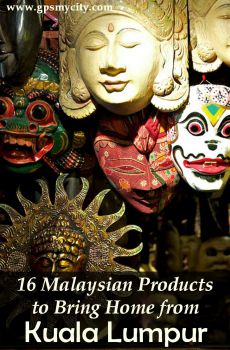
16 Malaysian Things to Buy as Souvenirs in Kuala Lumpur
"Malaysia, Truly Asia" is what you hear en route to Malaysia. Indeed, there's practically every bit of Asia to be found here, as the country's population is made up primarily of three groups: Malay, Chinese and Indians. Quite expectedly, the diversity of Malaysian handcrafts is...