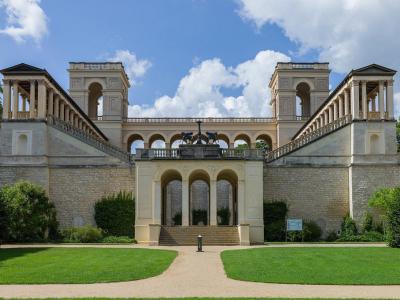


Belvedere Castle on the Pfingstberg, Potsdam
The Belvedere on the Pfingstberg is a historic palace located north of the New Garden in Potsdam, atop the Pfingstberg hill. Commissioned by King Friedrich Wilhelm IV of Prussia, it was constructed between 1847 and 1863 as a viewing platform, intended as part of a larger project for the hilltop site. The palace is noted for its architectural eclecticism, blending Italian Renaissance and Roman styles with Greek-inspired decorative details. The Belvedere features twin towers, each containing a small room with distinctive but mostly lost mural decorations in Roman-Etruscan and Moorish styles.
Designed by architects Ludwig Persius, Friedrich August Stüler, and Ludwig Ferdinand Hesse, the Belvedere's grounds were landscaped by Peter Joseph Lenné in the English landscape garden style, with serpentine paths and dense hardwood copses. These plantings, while obstructing views of the Belvedere from most parts of Potsdam, were an intentional design choice by Lenné.
The Belvedere's design includes a high podium topped by twin prospect towers that offer views over Potsdam, accessible only from the upper levels due to dense tree plantings. The courtyard, featuring a central reflecting pool, is surrounded on three sides by colonnaded terraces, two of which are Corinthian and one with astylar round arches. Access to the viewing platforms involves a series of steps culminating in a narrow iron spiral staircase.
The Belvedere serves not only as a historic monument but also as a venue for events, hosting concerts on a stage in the reflecting pool and offering its tower rooms and courtyard by the pool for weddings, making it a picturesque spot for special occasions. Today, the Belvedere is part of the UNESCO World Heritage Site Palaces and Parks of Potsdam and Berlin, recognized in 1999 for its architectural and historical significance.
Designed by architects Ludwig Persius, Friedrich August Stüler, and Ludwig Ferdinand Hesse, the Belvedere's grounds were landscaped by Peter Joseph Lenné in the English landscape garden style, with serpentine paths and dense hardwood copses. These plantings, while obstructing views of the Belvedere from most parts of Potsdam, were an intentional design choice by Lenné.
The Belvedere's design includes a high podium topped by twin prospect towers that offer views over Potsdam, accessible only from the upper levels due to dense tree plantings. The courtyard, featuring a central reflecting pool, is surrounded on three sides by colonnaded terraces, two of which are Corinthian and one with astylar round arches. Access to the viewing platforms involves a series of steps culminating in a narrow iron spiral staircase.
The Belvedere serves not only as a historic monument but also as a venue for events, hosting concerts on a stage in the reflecting pool and offering its tower rooms and courtyard by the pool for weddings, making it a picturesque spot for special occasions. Today, the Belvedere is part of the UNESCO World Heritage Site Palaces and Parks of Potsdam and Berlin, recognized in 1999 for its architectural and historical significance.
Want to visit this sight? Check out these Self-Guided Walking Tours in Potsdam. Alternatively, you can download the mobile app "GPSmyCity: Walks in 1K+ Cities" from Apple App Store or Google Play Store. The app turns your mobile device to a personal tour guide and it works offline, so no data plan is needed when traveling abroad.
Download The GPSmyCity App



Belvedere Castle on the Pfingstberg on Map
Sight Name: Belvedere Castle on the Pfingstberg
Sight Location: Potsdam, Germany (See walking tours in Potsdam)
Sight Type: Attraction/Landmark
Sight Location: Potsdam, Germany (See walking tours in Potsdam)
Sight Type: Attraction/Landmark
Nearby Sights
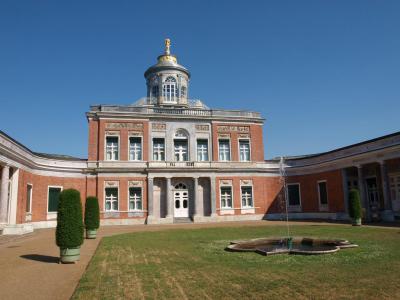
Walking Tours in Potsdam, Germany

Create Your Own Walk in Potsdam
Creating your own self-guided walk in Potsdam is easy and fun. Choose the city attractions that you want to see and a walk route map will be created just for you. You can even set your hotel as the start point of the walk.
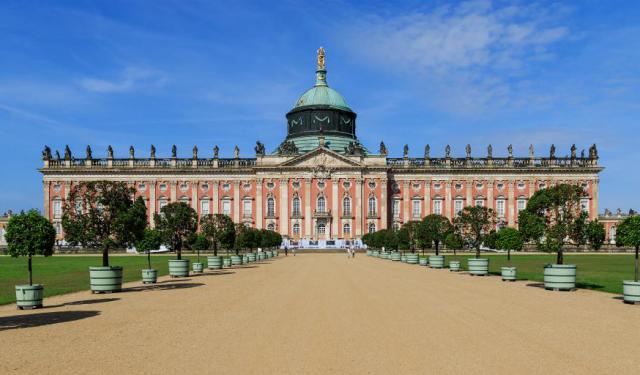
Sanssouci Park Walking Tour
Sanssouci Park is a unique Potsdam landmark that occupies 290 hectares in the heart of the city. The Park is named after the Sanssouci Palace that it surrounds, which in turn takes its name from the French phrase "sans souci", which means carefree, and implies that the palace was designated as a place of fun, rather than a seat of power.
Indeed, the Sanssouci Palace was built in 1747... view more
Tour Duration: 2 Hour(s)
Travel Distance: 3.9 Km or 2.4 Miles
Indeed, the Sanssouci Palace was built in 1747... view more
Tour Duration: 2 Hour(s)
Travel Distance: 3.9 Km or 2.4 Miles
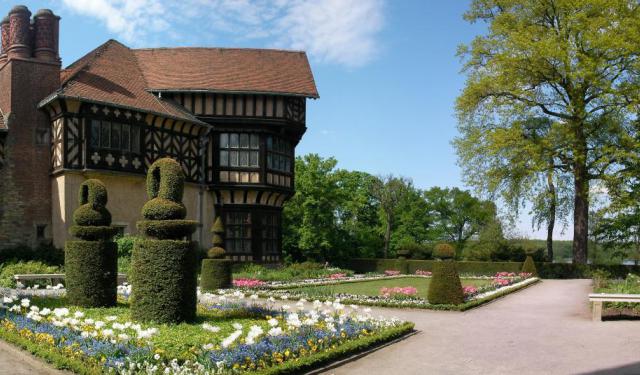
Neuer Garten Walking Tour
Laid out at the behest of Friedrich William II in 1787, Potsdam's Neuer Garten (New Garden) was indeed "new" compared to the already in place Sanssouci Park.
Between 1816 and 1828, the area was modified further as an English-style, open landscape garden, with an aim to reproduce nature – trees and plants were left to grow naturally, unshaped and untrimmed. Rural life was also... view more
Tour Duration: 2 Hour(s)
Travel Distance: 2.8 Km or 1.7 Miles
Between 1816 and 1828, the area was modified further as an English-style, open landscape garden, with an aim to reproduce nature – trees and plants were left to grow naturally, unshaped and untrimmed. Rural life was also... view more
Tour Duration: 2 Hour(s)
Travel Distance: 2.8 Km or 1.7 Miles
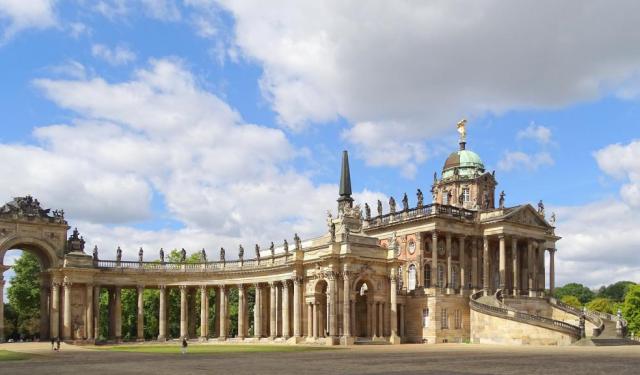
Potsdam City Center and Sanssouci Palace Walking Tour
Potsdam was likely founded during the seventh century by the Hevelli tribe. The town was mentioned by the name of Poztupimi in a document from Emperor Otto III. The name likely came from an old Western Slavonic term roughly meaning "beneath the oaks."
By the early 1300s, a small town had formed with a town charter. By 1573 the town had around 2,000 people living there. Potsdam rose to... view more
Tour Duration: 2 Hour(s)
Travel Distance: 3.8 Km or 2.4 Miles
By the early 1300s, a small town had formed with a town charter. By 1573 the town had around 2,000 people living there. Potsdam rose to... view more
Tour Duration: 2 Hour(s)
Travel Distance: 3.8 Km or 2.4 Miles