

Biblioteca Palafoxiana (Palafoxiana Library), Puebla (must see)
Biblioteca Palafoxiana is a rare colonial-era library whose collection remains close to its original setting. Its origins date to 1646, when Bishop Juan de Palafox y Mendoza donated thousands of books to the seminary, making them available to clergy and educated lay readers. Later, the collection expanded with volumes taken from Jesuit colleges after the order’s expulsion from the Spanish Empire in 1767.
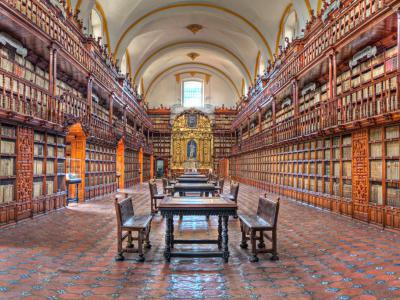
The 18th-century hall preserves the atmosphere of a learned institution shaped by religion, humanism, and early science. Its three-tiered shelves, carved from cedar, white pine, and ayacahuite, combine strength with natural protection, as cedar helps repel insects. The collection ranges from theology, law, medicine, and astronomy to rare Indigenous-language grammars and dictionaries used for missionary translation.
The interior is carefully arranged and visually balanced. Dark wood bookcases, a vaulted ceiling, reading tables, and a large altarpiece-like composition at the far end give the room a solemn but accessible character. One of its unusual pieces is an old rotating book wheel, a wooden device that allowed scholars to consult several open volumes at once without constantly lifting and closing them. The library also held prohibited works in a restricted section known as “El Infierno,” or “Hell,” accessible only with special permission.
Visitors usually view the library from protected areas, but the room still conveys its scale, craftsmanship, and long scholarly life. After the 1999 earthquakes, restoration work helped stabilise the hall and safeguard its shelves and books. Its UNESCO Memory of the World recognition reflects its value as a record of how knowledge was collected, organised, restricted, and shared in colonial society.
The 18th-century hall preserves the atmosphere of a learned institution shaped by religion, humanism, and early science. Its three-tiered shelves, carved from cedar, white pine, and ayacahuite, combine strength with natural protection, as cedar helps repel insects. The collection ranges from theology, law, medicine, and astronomy to rare Indigenous-language grammars and dictionaries used for missionary translation.
The interior is carefully arranged and visually balanced. Dark wood bookcases, a vaulted ceiling, reading tables, and a large altarpiece-like composition at the far end give the room a solemn but accessible character. One of its unusual pieces is an old rotating book wheel, a wooden device that allowed scholars to consult several open volumes at once without constantly lifting and closing them. The library also held prohibited works in a restricted section known as “El Infierno,” or “Hell,” accessible only with special permission.
Visitors usually view the library from protected areas, but the room still conveys its scale, craftsmanship, and long scholarly life. After the 1999 earthquakes, restoration work helped stabilise the hall and safeguard its shelves and books. Its UNESCO Memory of the World recognition reflects its value as a record of how knowledge was collected, organised, restricted, and shared in colonial society.
Want to visit this sight? Check out these Self-Guided Walking Tours in Puebla. Alternatively, you can download the mobile app "GPSmyCity: Walks in 1K+ Cities" from Apple App Store or Google Play Store. The app turns your mobile device to a personal tour guide and it works offline, so no data plan is needed when traveling abroad.
Download The GPSmyCity App



Biblioteca Palafoxiana (Palafoxiana Library) on Map
Sight Name: Biblioteca Palafoxiana (Palafoxiana Library)
Sight Location: Puebla, Mexico (See walking tours in Puebla)
Sight Type: Attraction/Landmark
Guide(s) Containing This Sight:
Sight Location: Puebla, Mexico (See walking tours in Puebla)
Sight Type: Attraction/Landmark
Guide(s) Containing This Sight:
Nearby Sights
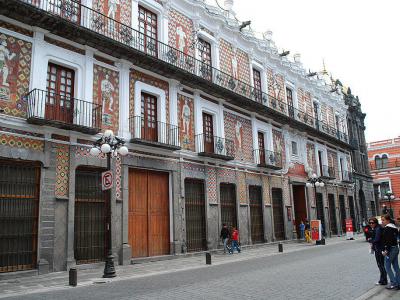
Walking Tours in Puebla, Mexico

Create Your Own Walk in Puebla
Creating your own self-guided walk in Puebla is easy and fun. Choose the city attractions that you want to see and a walk route map will be created just for you. You can even set your hotel as the start point of the walk.
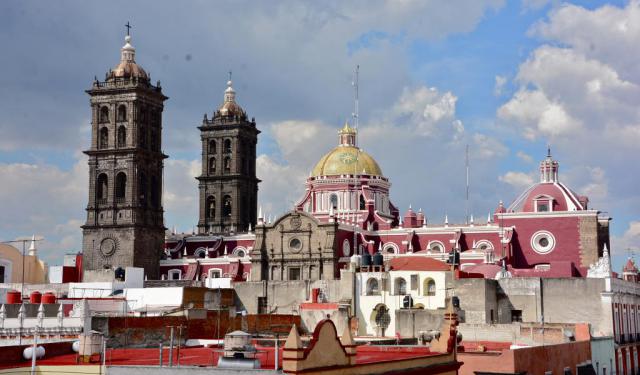
Puebla Introduction Walking Tour
The city of Puebla is the capital of the state of Puebla and the fourth largest city in Mexico. It was founded in 1531 in an uninhabited area between two indigenous settlements of the time, Tlaxcala and Cholula. The area used to be called Cuetlaxcoapan, which means "where serpents change their skin".
Spanish conquistador Hernán Cortés occupied the Puebla region in 1519, killing most... view more
Tour Duration: 2 Hour(s)
Travel Distance: 2.5 Km or 1.6 Miles
Spanish conquistador Hernán Cortés occupied the Puebla region in 1519, killing most... view more
Tour Duration: 2 Hour(s)
Travel Distance: 2.5 Km or 1.6 Miles
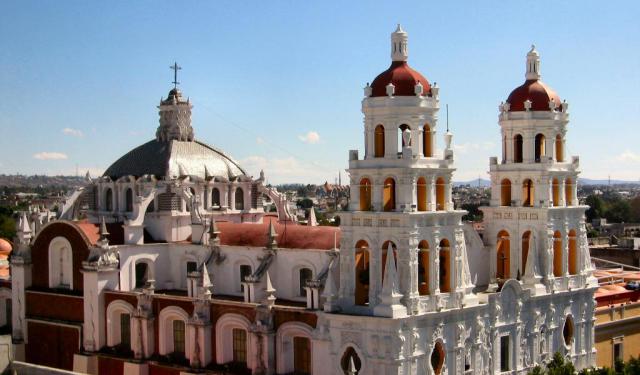
Puebla Colonial Architecture Walking Tour
One of the most authentic and traditional destinations in Mexico, the city of Puebla abounds in Baroque architecture, or rather the peculiar regional form thereof resulted from the fusion of European and indigenous styles in the 17th and 18th centuries.
Visiting this magical place you will find lots of (more than 70!) sumptuous churches, convents and sanctuaries, as well as other incredible... view more
Tour Duration: 2 Hour(s)
Travel Distance: 3.0 Km or 1.9 Miles
Visiting this magical place you will find lots of (more than 70!) sumptuous churches, convents and sanctuaries, as well as other incredible... view more
Tour Duration: 2 Hour(s)
Travel Distance: 3.0 Km or 1.9 Miles
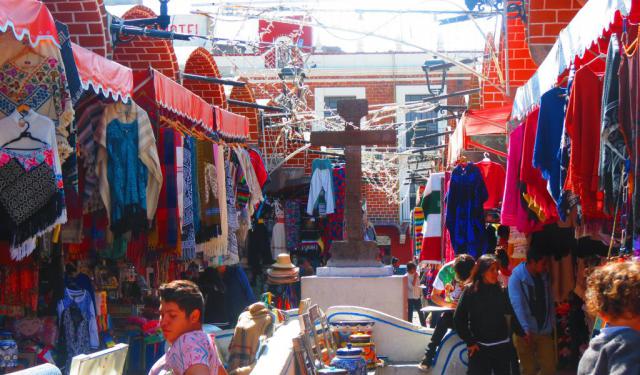
Puebla Food Tasting and Shopping Tour
Among other delights that the Mexican city of Puebla can pride itself on is the abundant food and shopping scene fit to delight even the most discerning travelers with an array of colors and flavors to treat themselves to.
One spot to visit for non-trivial shopping is the Alley of the Frogs (Callejón de los Sapos), where antique stores and vendors line the cobblestone streets, offering a... view more
Tour Duration: 1 Hour(s)
Travel Distance: 2.5 Km or 1.6 Miles
One spot to visit for non-trivial shopping is the Alley of the Frogs (Callejón de los Sapos), where antique stores and vendors line the cobblestone streets, offering a... view more
Tour Duration: 1 Hour(s)
Travel Distance: 2.5 Km or 1.6 Miles